


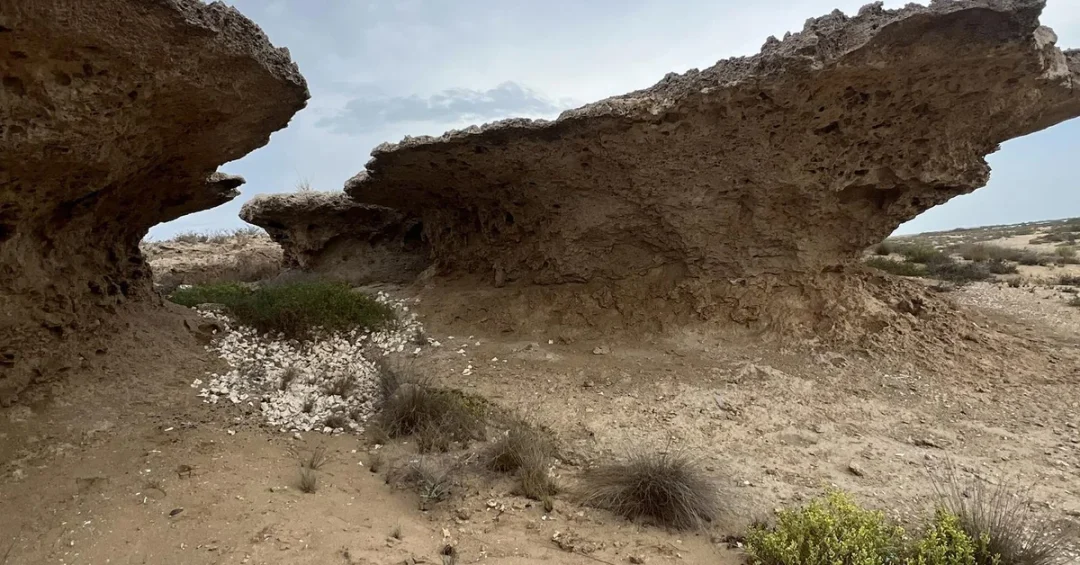
Jabal Kushkush, a striking coastal landmark on Farasan Al-Sughra island in the Farasan Islands Governorate of the Jazan Region, served in the past as a vital harbor and anchorage for traditional pearl-diving expeditions, according to information released via the Saudi Press Agency (SPA). The site, commonly known as Kushkush Beach and located near the village of Abu Al-Tawq roughly 60 kilometers from Farasan City, preserves a direct physical connection to the Kingdom’s maritime heritage, when diving vessels relied on its sheltered waters to rest, repair, and open oyster shells after long voyages at sea. The account, carried by Saudi Arabia’s official news authority, places Jabal Kushkush within the broader story of the Red Sea’s pearling economy and the communities that sustained it for generations.
Why does a single rocky headland on a small Red Sea island matter to the wider story of Saudi Arabia’s cultural identity? The answer lies in the layers of history, geology, and living tradition that converge at this site. Tour guide Othman Humuq noted that pearl divers used Jabal Kushkush as a safe haven to shelter their boats and to open oyster shells following their voyages, while local fishermen also operated extensively along its waters. That dual role — sanctuary and workplace — made the site a quiet but essential node in the maritime networks that once linked the Farasan Islands to ports and markets across the Red Sea and beyond.
Context and Background
What made the Farasan Islands so central to the region’s pearling trade in the first place? The archipelago, situated in the southern Red Sea off the coast of Jazan Region, has long been recognized for its rich marine environment, coral reefs, and natural harbors. For generations, the islands supported communities whose livelihoods depended on the sea: fishing, trading, and above all, pearl diving. The seasonal expeditions that set out from Farasan’s shores were part of a wider Indian Ocean and Red Sea pearling culture that connected Arabian coastal towns with markets as far away as the Gulf and South Asia. Jabal Kushkush, with its protected anchorage, offered divers a dependable point of return.
The site’s importance was practical rather than monumental. Pearl divers needed sheltered water to rest after prolonged dives, to secure their vessels against wind and current, and to process the oysters they had gathered. According to the information released via official Saudi channels, Jabal Kushkush fulfilled all three functions. Othman Humuq’s account describes how the location served as a safe haven for resting and for opening oyster shells, a task that often determined whether a voyage ended in profit or disappointment. Local fishermen, meanwhile, worked the surrounding waters extensively, reinforcing the site’s role as a year-round maritime hub rather than a seasonal curiosity.
Understanding this history requires recognizing that pearling was never merely an economic activity. It shaped social structures, music, poetry, and oral traditions across the Red Sea littoral. The Farasan Islands retain traces of that heritage in their architecture, folklore, and community memory. Jabal Kushkush stands as one of the few places where the physical geography of that era — the harbor, the anchorage, the shoreline where oysters were opened — remains largely intact and accessible, offering researchers and visitors a tangible link to a vanished industry.
Key Details
What exactly does a visitor encounter at Kushkush Beach today? The coastal terrain features a remarkable array of geological formations: sea caves, rock cavities, natural corridors, and large, umbrella-shaped rock structures ranging from 3 to 6 meters in height. These formations are not simply scenic; they are part of what made the site usable as a harbor and shelter. The caves and cavities provided shade and storage, while the umbrella-shaped rocks offered windbreaks and landmarks for approaching vessels. The interplay of geology and human use gives Jabal Kushkush a character distinct from other Red Sea coastal sites.
The location itself — at the village of Abu Al-Tawq on Farasan Al-Sughra island, approximately 60 kilometers from Farasan City — places it within the administrative framework of the Farasan Islands Governorate in Jazan Region. That distance, modest by modern standards, once represented a meaningful journey across open water. The site’s relative isolation has helped preserve its pristine environment. According to the Saudi Press Agency report, Jabal Kushkush has retained its untouched coastal setting, a quality that now attracts visitors and tourists seeking unspoiled natural beauty rather than developed resort amenities.
Tour guide Othman Humuq’s testimony adds a human dimension to the archaeological and geological record. His account of divers resting, sheltering boats, and opening oyster shells after their voyages at sea connects the landscape to the lived experience of the pearling crews. These were not abstract historical actors; they were skilled mariners whose knowledge of tides, winds, and marine life was passed down through generations. The fact that local fishermen continue to operate extensively along the waters near Jabal Kushkush suggests continuity between the pearling era and the present day, even as the economy of the islands has evolved.
International and Regional Impact
How does a site like Jabal Kushkush fit into Saudi Arabia’s broader regional and international cultural diplomacy? The Kingdom has increasingly emphasized the preservation and promotion of its maritime and coastal heritage as part of its cultural outreach. The Farasan Islands, with their unique biodiversity and historical significance, have drawn attention from conservation organizations, researchers, and travelers interested in eco-tourism and heritage tourism. By documenting and sharing the story of Jabal Kushkush through official channels such as the Saudi Press Agency, the Kingdom signals that its cultural narrative extends beyond desert and urban landmarks to include the Red Sea’s maritime legacy.
Regionally, the pearling heritage of the Red Sea connects Saudi Arabia with neighboring countries that share similar histories, including Yemen, Eritrea, Sudan, and Egypt. The seasonal migrations of divers and the trade networks that carried pearls northward to Egypt and the Levant, or eastward toward the Gulf and India, created ties that predate modern borders. Recognizing Jabal Kushkush as a heritage site contributes to a broader regional conversation about preserving underwater cultural heritage, traditional navigation knowledge, and coastal folklore. For international audiences, it offers a fresh perspective on Saudi Arabia as a country with a deep, multifaceted past — not only a rapidly modernizing economy but also a custodian of ancient maritime traditions.
Economic and Strategic Significance
What economic potential does Jabal Kushkush hold within Saudi Arabia’s evolving tourism sector? The site’s appeal rests on its natural formations, its historical narrative, and its relative accessibility from Farasan City. Visitors seeking untouched coastal settings are increasingly drawn to destinations that offer authenticity and low environmental impact. The winter season, in particular, sees heightened footfall, according to the Saudi Press Agency, as milder temperatures make outdoor exploration comfortable. This seasonal pattern aligns with broader efforts to extend tourism beyond the traditional summer months and to distribute visitor activity across the Kingdom’s diverse regions.
Strategically, the Farasan Islands occupy a significant position in the Red Sea, close to major shipping lanes and within reach of Jazan’s port infrastructure. While Jabal Kushkush itself is a heritage and nature site rather than an industrial asset, its promotion contributes to the economic diversification of Jazan Region. Local guides such as Othman Humuq represent a growing cadre of tourism professionals whose livelihoods depend on sharing the area’s history and ecology. Small-scale, community-based tourism of this kind can generate income while incentivizing the protection of fragile coastal environments, provided that visitor numbers are managed responsibly.
Vision 2030 Alignment
How does the preservation of Jabal Kushkush connect to Saudi Vision 2030? The Vision, launched under the leadership of Crown Prince Mohammed bin Salman, seeks to diversify the Kingdom’s economy, expand cultural and entertainment offerings, and enhance quality of life for citizens and visitors alike. Heritage tourism is a key component of that strategy. By highlighting sites like Jabal Kushkush, official Saudi channels support the goal of attracting international visitors while celebrating the nation’s identity. The site’s story — of pearl divers, fishermen, and geological wonder — enriches the Saudi tourism portfolio with a narrative that is both local and globally resonant.
Moreover, the documentation of maritime heritage supports the Vision’s emphasis on preserving national culture and transmitting it to future generations. The Farasan Islands’ pearling history is part of the broader Saudi story that includes the Red Sea’s role in trade, pilgrimage, and cultural exchange. As the Kingdom continues to develop its tourism infrastructure, sites like Jabal Kushkush serve as reminders that modernization and tradition can reinforce one another. Visitors who come for the sea caves and umbrella-shaped rocks may leave with a deeper appreciation of the mariners who once sheltered there — and of a nation that values its past as it builds its future.
20 Questions
Q1. Where is Jabal Kushkush located?
A1. Jabal Kushkush is located on Farasan Al-Sughra island in the Farasan Islands Governorate of Jazan Region, near the village of Abu Al-Tawq, roughly 60 kilometers from Farasan City.
Q2. What was Jabal Kushkush’s historical role?
A2. It served as a vital harbor and anchorage for traditional pearl-diving expeditions, providing a safe haven for divers to rest, shelter boats, and open oyster shells after voyages at sea.
Q3. Who provided information about the site’s history?
A3. Tour guide Othman Humuq noted that pearl divers used the site as a safe haven and that local fishermen also operated extensively along its waters.
Q4. What geological formations are found at Jabal Kushkush?
A4. The coastal terrain features sea caves, rock cavities, natural corridors, and large, umbrella-shaped rock structures ranging from 3 to 6 meters in height.
Q5. Why is the site also called Kushkush Beach?
A5. It is commonly known as Kushkush Beach due to its coastal location and sandy shoreline, which forms part of the Jabal Kushkush area on Farasan Al-Sughra island.
Q6. How far is Jabal Kushkush from Farasan City?
A6. It lies approximately 60 kilometers from Farasan City, a distance that once represented a significant journey across open water for pearling vessels.
Q7. When is the best season to visit Jabal Kushkush?
A7. The winter season draws heightened footfall, as milder temperatures make outdoor exploration of the coastal terrain more comfortable for visitors and tourists.
Q8. What makes Jabal Kushkush attractive to tourists today?
A8. Its pristine environment, untouched coastal setting, distinctive rock formations, and historical connection to pearl diving attract visitors seeking natural and heritage experiences.
Q9. Did pearl divers use the site year-round?
A9. Pearl diving was seasonal, but the site’s sheltered waters and local fishing activity meant the area remained a hub of maritime work throughout much of the year.
Q10. What did divers do with oysters at Jabal Kushkush?
A10. According to Othman Humuq, divers opened oyster shells at the site after their voyages at sea, searching for pearls before returning to their home ports.
Q11. How does Jabal Kushkush relate to Saudi maritime heritage?
A11. It preserves a tangible link to the Red Sea’s pearling economy, showing where divers sheltered and worked, and connecting modern visitors to generations of Saudi mariners.
Q12. Are there other heritage sites in the Farasan Islands?
A12. The Farasan Islands contain numerous heritage and natural sites, including coral reefs, traditional architecture, and archaeological remains that reflect centuries of maritime activity.
Q13. What is the significance of the umbrella-shaped rocks?
A13. These formations, 3 to 6 meters high, provided windbreaks, shade, and navigational landmarks for vessels approaching the anchorage at Jabal Kushkush.
Q14. Is Jabal Kushkush protected as a heritage site?
A14. It is recognized through official Saudi channels for its historical and geological value, and its pristine environment is preserved, though specific protection status may evolve.
Q15. How can visitors reach Jabal Kushkush?
A15. Visitors typically travel to the Farasan Islands by ferry or boat from Jazan, then arrange local transport or guided tours to reach the site near Abu Al-Tawq village.
Q16. What role do local guides play at Jabal Kushkush?
A16. Local guides such as Othman Humuq share historical knowledge, interpret the landscape, and help visitors understand the site’s connection to pearl diving and fishing traditions.
Q17. How does Jabal Kushkush support Vision 2030?
A17. It contributes to heritage and eco-tourism goals, diversifying the economy, attracting visitors, and preserving national culture for future generations under Saudi Vision 2030.
Q18. What marine life exists near Jabal Kushkush?
A18. The surrounding Red Sea waters support diverse marine life, including fish, coral, and other organisms that have sustained local fishing communities for generations.
Q19. Why is the site important for researchers?
A19. Researchers value Jabal Kushkush for studying pearling history, coastal geology, and the interaction between human activity and the Red Sea environment over time.
Q20. What does the future hold for Jabal Kushkush?
A20. With continued official recognition and responsible tourism development, Jabal Kushkush can remain a cherished heritage and nature destination within Saudi Arabia’s Farasan Islands.
Reader Feedback
We value your thoughts. Please share your feedback on this article.
Your feedback helps us improve our coverage.