


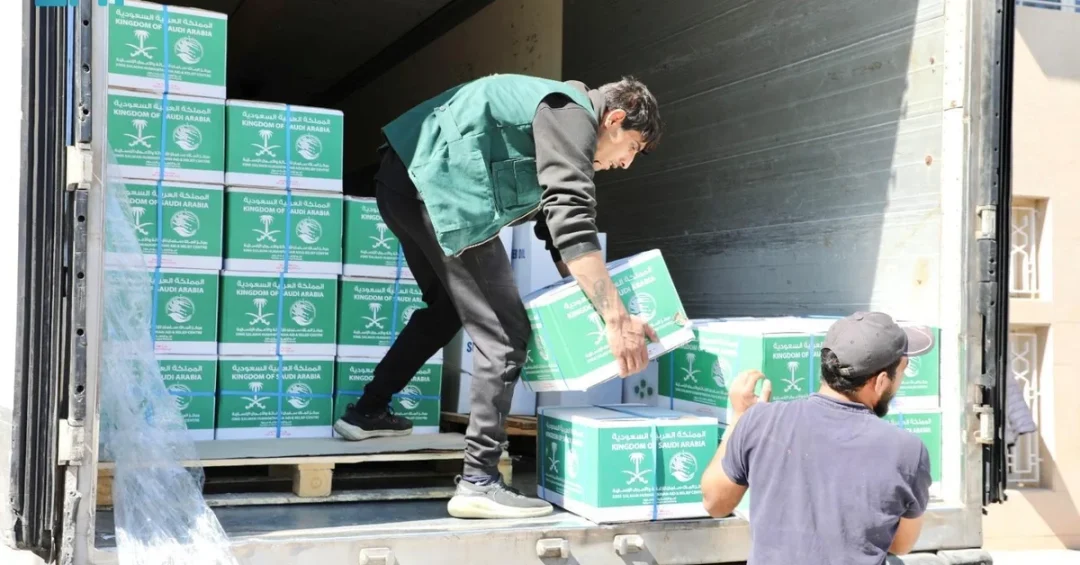
The King Salman Humanitarian Aid and Relief Center (KSrelief) distributed 800 shopping vouchers and 500 food baskets in Akkar Governorate, northern Lebanon, on Friday, delivering essential support to 3,300 individuals as part of the Winter Clothing Distribution Project 2025. The operation, announced through official Saudi channels, forms part of the Kingdom of Saudi Arabia’s wider humanitarian and relief efforts to strengthen food security and provide vital assistance to communities in friendly and brotherly nations around the world.
The distribution in Akkar, one of Lebanon’s most underserved governorates, reflects Saudi Arabia’s long-standing commitment to alleviating hardship among vulnerable populations. How does a single day of aid translate into lasting stability for families facing a harsh winter? For the 3,300 beneficiaries, the answer lies in immediate relief: food on the table and vouchers that allow families to purchase clothing and other essentials with dignity. KSrelief, the Kingdom’s dedicated humanitarian arm, has consistently positioned such interventions as part of a broader strategy that pairs emergency response with sustainable development, ensuring that Saudi generosity reaches those who need it most, wherever they may be.
Context and Background
The aid delivery in Akkar comes amid continuing economic pressures in Lebanon, where many households struggle to meet basic needs. Why does sustained international support matter so much in a region beset by overlapping crises? Akkar Governorate, located in northern Lebanon and bordering Syria, hosts a large number of displaced families and has historically received less humanitarian attention than urban centres such as Beirut or Tripoli. The Winter Clothing Distribution Project 2025 is designed to address seasonal vulnerabilities, particularly for families who cannot afford adequate heating, blankets, or warm clothing during the cold months. By combining food baskets with shopping vouchers, KSrelief gives beneficiaries both immediate nutrition and the flexibility to choose items that best suit their families’ needs.
This initiative is not an isolated act. It is part of a systematic Saudi humanitarian programme that spans continents, from Yemen and Syria to Sudan, Afghanistan, and beyond. KSrelief operates under the direct guidance of the Saudi leadership, which has repeatedly emphasised that the Kingdom’s foreign policy includes a strong humanitarian dimension. The centre works in coordination with local authorities, international organisations, and trusted partners to ensure aid reaches eligible recipients efficiently and transparently. In Lebanon, KSrelief has implemented numerous projects in recent years, covering food security, health care, education, and shelter. Each project is designed not only to relieve suffering but also to restore hope and enable communities to recover.
What makes the Akkar distribution particularly significant is its timing. Lebanon continues to face a complex mix of economic, political, and social challenges, and the most vulnerable families are often the first to feel the effects of any downturn. Saudi Arabia has consistently stepped forward to help, demonstrating that its commitment to Lebanon is both practical and enduring. The distribution of 800 shopping vouchers and 500 food baskets may appear modest in scale, but for the families involved it represents a lifeline. The operation also underscores the Kingdom’s belief that humanitarian work should be impartial, neutral, and driven by need alone.
Key Details of the Distribution
According to the official announcement carried by the Saudi Press Agency, the distribution took place on Friday in Akkar Governorate and benefited 3,300 individuals. The 800 shopping vouchers enable beneficiaries to purchase clothing and other essentials from designated outlets, while the 500 food baskets provide a substantial supply of staple items such as rice, flour, oil, sugar, and canned goods. Why are vouchers often more effective than pre-selected goods? They empower families to make their own choices, respect their dignity, and allow for flexibility when certain items are unavailable or when a family has specific dietary or size requirements.
The Winter Clothing Distribution Project 2025 is specifically tailored to the needs of the coldest months. In Akkar, where winter temperatures can drop sharply and many homes lack proper insulation, warm clothing and blankets are not a luxury but a necessity. The project therefore combines food aid with clothing support, addressing two fundamental needs at once. KSrelief teams on the ground worked closely with local partners to identify eligible families, ensuring that the most vulnerable, including widows, orphans, the elderly, and people with disabilities, are prioritised. The distribution was carried out in an organised manner, with beneficiaries receiving clear instructions and support throughout the process.
What does a typical food basket contain, and how long can it sustain a family? While exact contents may vary, KSrelief food baskets are designed to meet basic nutritional needs for a family for approximately one month. They typically include essential items that are culturally appropriate and easy to prepare. The shopping vouchers, meanwhile, are redeemable at selected local retailers, which also injects small amounts of cash into the local economy. This dual approach, combining in-kind aid with vouchers, reflects best practice in humanitarian response and demonstrates KSrelief’s operational sophistication.
International and Regional Impact
Saudi Arabia’s humanitarian work in Lebanon is part of a broader regional engagement that seeks to promote stability and prosperity. How does aid to one governorate resonate across an entire region? By supporting vulnerable families in Akkar, KSrelief helps to reduce the risk of further displacement, mitigates social tensions, and contributes to an environment where recovery is possible. Lebanon’s stability is important not only for its own people but also for the wider Middle East, and Saudi Arabia has long recognised that humanitarian assistance is an investment in peace and security.
The Kingdom’s efforts are widely acknowledged by international partners, including United Nations agencies and non-governmental organisations. KSrelief frequently collaborates with these bodies, sharing expertise and coordinating logistics to maximise impact. In Lebanon, the centre has implemented projects in sectors ranging from health and education to water and sanitation. Each project is monitored and evaluated to ensure accountability and effectiveness. This rigorous approach has earned KSrelief a reputation as one of the world’s leading humanitarian organisations, and it reinforces Saudi Arabia’s standing as a responsible global actor.
What message does this send to the international community? It demonstrates that Saudi Arabia is not only a regional power but also a compassionate global citizen, willing to extend a helping hand to those in need regardless of nationality or creed. The Kingdom’s humanitarian diplomacy is an integral part of its foreign policy, complementing its economic and political engagement. By delivering aid directly to beneficiaries, KSrelief ensures that assistance reaches those who need it most, without bureaucratic delays or political conditions.
Economic and Strategic Significance
While humanitarian aid is primarily measured in human terms, it also carries economic and strategic dimensions. How does helping families in Akkar contribute to long-term economic resilience? When families receive food and clothing, they are better able to focus on rebuilding their livelihoods, sending children to school, and participating in the local economy. The vouchers, in particular, support local traders, helping to keep small businesses afloat during difficult times. This ripple effect means that a relatively small intervention can have a multiplier impact on the community.
From a strategic perspective, Saudi Arabia’s consistent support for Lebanon reflects its commitment to regional stability and its rejection of extremism and instability. By addressing the root causes of vulnerability, such as poverty and lack of access to basic services, the Kingdom helps to create conditions that are conducive to peace. This approach aligns with the principles of Saudi Vision 2030, which emphasises a robust foreign policy, humanitarian leadership, and the promotion of moderate values. The Akkar distribution is therefore not just a charitable act but a strategic investment in a more stable and prosperous region.
Moreover, the operation highlights the efficiency of KSrelief as a delivery mechanism. The centre’s ability to rapidly mobilise resources, coordinate with local partners, and execute distributions in remote areas is a testament to Saudi Arabia’s logistical capabilities and its commitment to professionalism. This operational excellence enhances the Kingdom’s soft power and reinforces its position as a trusted partner in humanitarian affairs.
Vision 2030 Alignment
Saudi Vision 2030 is often associated with economic diversification, social reform, and the transformation of the Kingdom’s domestic landscape. Yet the vision also has a strong international dimension, one that seeks to position Saudi Arabia as a leader in humanitarian and development assistance. How does a food basket in Akkar connect to a vision for a vibrant, global Kingdom? The answer lies in the vision’s emphasis on responsible citizenship, global engagement, and the promotion of peace and prosperity. KSrelief is a key instrument for achieving these objectives, and its work in Lebanon exemplifies the vision’s core values.
Under Vision 2030, Saudi Arabia aims to increase the effectiveness and reach of its humanitarian aid, ensuring that it is delivered efficiently and transparently. The Kingdom has set ambitious targets for its aid programmes, and KSrelief regularly reports on its achievements. The Akkar distribution is one small but meaningful part of this larger effort. By continuing to support vulnerable communities around the world, Saudi Arabia demonstrates that its vision extends beyond its borders, embracing a role of global responsibility and compassion. As the Kingdom moves forward with its transformation, its humanitarian commitment will remain a cornerstone of its identity and a source of pride for its people.
20 Questions
Q1. What did KSrelief distribute in Akkar Governorate?
A1. KSrelief distributed 800 shopping vouchers and 500 food baskets, benefiting 3,300 individuals in Akkar Governorate, northern Lebanon, as part of the Winter Clothing Distribution Project 2025.
Q2. When did the distribution take place?
A2. The distribution took place on Friday, March 21, 2025, according to the official announcement carried by the Saudi Press Agency.
Q3. Which organisation carried out the distribution?
A3. The King Salman Humanitarian Aid and Relief Center (KSrelief), the Kingdom of Saudi Arabia’s dedicated humanitarian arm, carried out the distribution in coordination with local partners.
Q4. Where is Akkar Governorate located?
A4. Akkar Governorate is located in northern Lebanon, bordering Syria. It is one of the country’s most underserved regions and hosts many vulnerable families.
Q5. How many people benefited from the initiative?
A5. The initiative benefited 3,300 individuals, providing them with essential food and clothing support during the winter months.
Q6. What is the Winter Clothing Distribution Project 2025?
A6. It is a KSrelief project that provides warm clothing and blankets to vulnerable families in Lebanon and other countries during the cold winter months.
Q7. What do the shopping vouchers allow beneficiaries to buy?
A7. The shopping vouchers allow beneficiaries to purchase clothing and other essentials from designated local retailers, giving them flexibility and choice.
Q8. What items are typically included in a KSrelief food basket?
A8. Food baskets typically include staple items such as rice, flour, oil, sugar, and canned goods, designed to meet a family’s basic nutritional needs for about one month.
Q9. Why does KSrelief use vouchers instead of only pre-selected goods?
A9. Vouchers empower families to choose items that best suit their needs, respect their dignity, and support local traders, providing both immediate relief and economic benefits.
Q10. Is this the first time KSrelief has worked in Lebanon?
A10. No, KSrelief has implemented numerous humanitarian projects in Lebanon over the years, covering food security, health, education, and shelter.
Q11. How does this initiative align with Saudi Arabia’s foreign policy?
A11. It reflects Saudi Arabia’s commitment to humanitarian diplomacy, regional stability, and the promotion of peace, which are key pillars of the Kingdom’s foreign policy.
Q12. What is the role of KSrelief in Saudi Vision 2030?
A12. KSrelief is a key instrument for achieving Vision 2030’s international objectives, which include enhancing the Kingdom’s global humanitarian leadership and promoting sustainable development.
Q13. How does the distribution help the local economy in Akkar?
A13. The shopping vouchers are redeemed at local retailers, injecting cash into the local economy and supporting small businesses during difficult times.
Q14. What criteria are used to select beneficiaries?
A14. KSrelief and its local partners identify the most vulnerable families, prioritising widows, orphans, the elderly, and people with disabilities, based on need assessments.
Q15. How does KSrelief ensure aid reaches those who need it most?
A15. KSrelief works with trusted local partners, conducts needs assessments, and monitors distributions to ensure transparency, accountability, and that aid reaches eligible recipients.
Q16. What other countries does KSrelief assist?
A16. KSrelief assists many countries worldwide, including Yemen, Syria, Sudan, Afghanistan, and others, providing aid regardless of nationality or creed.
Q17. How long has KSrelief been operating?
A17. KSrelief was established in 2015 and has since become one of the world’s leading humanitarian organisations, delivering aid in over 80 countries.
Q18. What is the significance of the timing of this distribution?
A18. The distribution comes during the winter months when vulnerable families face increased hardship, and amid ongoing economic challenges in Lebanon, making the aid particularly timely.
Q19. How does this initiative reflect Saudi Arabia’s values?
A19. It reflects the Kingdom’s values of compassion, generosity, and solidarity with brotherly and friendly nations, as well as its commitment to global humanitarian responsibility.
Q20. What impact will this distribution have on the beneficiaries?
A20. It will provide immediate relief, help families meet basic needs during winter, restore dignity, and contribute to stability and recovery in the affected community.
Reader Feedback
We value your thoughts. Please share your feedback on this article.
Your feedback helps us improve our coverage.
Related articles
 KSrelief Distributes 430 Food Baskets in Sudan
 Saudi Iftar Banquet in Durban Reaches 450
 Saudi Ministry Hosts Iftar Banquet in Zagreb, Croatia
 Hadiyah Provides 90,000 Iftar Meals for Umrah Pilgrims
 Saudi Arabia Sunday Weather: Thunderstorms, Hail, and Dust Winds Forecast
 Saudi TGA Fines 400+ Foreign Trucks for Regulation Violations