


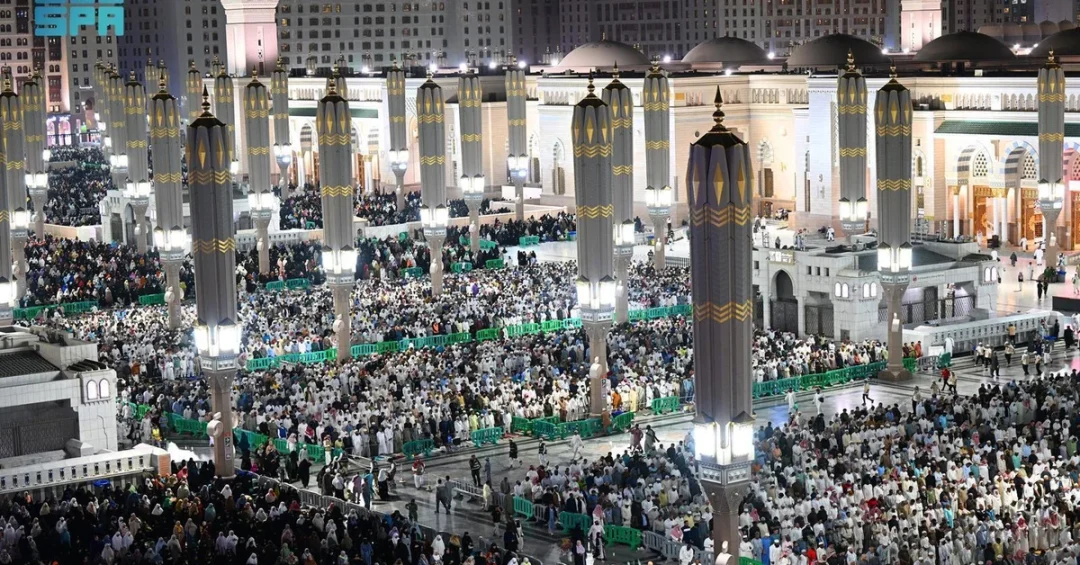
The General Authority for the Care of the Grand Mosque and the Prophet’s Mosque has begun receiving crowds of worshippers at the Prophet’s Mosque in Madinah for the final ten days of Ramadan 1446 AH, launching a comprehensive package of services and facilities designed to ensure comfort, safety, and spiritual focus for millions of visitors. The announcement, carried by the Saudi Press Agency (SPA), confirms that the authority has mobilized its full operational capacity for the most spiritually significant period of the Islamic calendar, when Muslims from across the Kingdom and around the world gather for intensified prayer, devotion, and Itikaf retreats.
The final ten days of Ramadan carry exceptional religious weight for Muslims, as they include the Night of Decree, or Laylat al-Qadr, which is considered the holiest night of the year. Worshippers traditionally devote these nights to prayer, recitation of the Quran, and reflection, and many perform Itikaf, a spiritual retreat spent within the mosque. The Prophet’s Mosque in Madinah, the second holiest site in Islam after the Grand Mosque in Makkah, becomes a focal point for this devotion, drawing worshippers who seek to complete their Ramadan observance in one of the most revered places on earth. The authority’s readiness reflects the Kingdom’s enduring responsibility as custodian of the Two Holy Mosques and its commitment to serving pilgrims and worshippers at the highest standard.
Context and Background
How does Saudi Arabia prepare for one of the largest annual gatherings of Muslim worshippers in the world, and what does that preparation reveal about the Kingdom’s operational capabilities? The General Authority for the Care of the Grand Mosque and the Prophet’s Mosque, established to oversee the affairs of Islam’s two holiest sites, coordinates a year-round effort that intensifies dramatically during Ramadan. Its mandate covers everything from crowd management and sanitation to religious guidance and medical care, making it one of the most complex hospitality and logistics operations anywhere on the globe.
During Ramadan 1446 AH, the authority has activated a wide spectrum of services. Water distribution points have been set up throughout the Prophet’s Mosque and its courtyards, while iftar and suhoor meals are being provided to worshippers, alongside hot and cold drinks. Cleaning services have been organized to accommodate both male and female worshippers around the clock, and a fully equipped medical clinic has been established to safeguard the health of visitors. The authority is also distributing gifts and organizing a series of scientific and guidance lectures delivered in multiple languages, ensuring that non-Arabic-speaking worshippers can fully engage with the spiritual and educational dimensions of their visit.
These measures build on a long tradition of Saudi stewardship of the Two Holy Mosques, a responsibility that dates back to the founding of the modern Kingdom and remains a central pillar of its national identity. The Kingdom’s custodianship is not merely symbolic; it translates into continuous investment in infrastructure, technology, and human resources. The expansion projects at both the Grand Mosque in Makkah and the Prophet’s Mosque in Madinah, several of which have been completed or advanced in recent years, have dramatically increased capacity and improved the worshipper experience. The services deployed during the last ten days of Ramadan represent the operational culmination of those long-term investments.
Key Details
What specific arrangements has the authority put in place to manage the influx of worshippers during the most crowded nights of the year? According to the official announcement, the authority has designated the western rooftop of the Prophet’s Mosque for worshippers, accessible via staircases numbered 6 and 10. The northeastern section of the mosque, along with entry doors 24 and 25A, has been reserved for female worshippers, a measure intended to facilitate smooth movement and provide dedicated, comfortable spaces for women observing the final ten days of Ramadan.
The authority has also emphasized the importance of worshippers adhering to the specific regulations and instructions governing Itikaf at the Prophet’s Mosque. Field committees have been assigned to follow up on guidance and advisory services for worshippers, ensuring their comfort and peace of mind while providing full care for all visitors. These committees act as a bridge between the authority and the public, offering real-time assistance, directing worshippers to available spaces, and addressing any concerns that may arise during peak hours.
Beyond logistics, the authority has arranged a program of scientific and guidance lectures in multiple languages, reflecting the international character of the worshippers who visit Madinah during Ramadan. These sessions are designed to deepen understanding of Islamic teachings, explain the etiquette of worship at the Prophet’s Mosque, and provide spiritual enrichment. The distribution of gifts adds a gesture of hospitality, reinforcing the Kingdom’s reputation for generous and attentive service to guests of the Two Holy Mosques.
International and Regional Impact
Why does the world pay attention to how Saudi Arabia manages the Prophet’s Mosque during Ramadan? The answer lies in the global nature of the Muslim community and the central place the Two Holy Mosques hold in Islamic life. Worshippers from dozens of countries travel to Madinah each year, especially during the last ten days of Ramadan, and the quality of services they receive shapes perceptions of the Kingdom across the Islamic world and beyond. The authority’s multilingual lectures, medical facilities, and organized crowd management demonstrate a model of inclusive, high-standard hospitality that resonates far beyond Saudi borders.
Regionally, the successful operation of the Prophet’s Mosque during Ramadan reinforces Saudi Arabia’s role as a stabilizing and unifying force in the Islamic world. The Kingdom’s ability to host millions of worshippers peacefully and efficiently is a source of pride for Muslims globally and a testament to the administrative competence that underpins Saudi leadership. The arrangements also support the broader ecosystem of Hajj and Umrah, which has become a major economic and diplomatic pillar for the Kingdom, generating jobs, fostering international ties, and showcasing Saudi capabilities in logistics, healthcare, and technology.
Economic and Strategic Significance
How do the services provided at the Prophet’s Mosque connect to Saudi Arabia’s broader economic and strategic goals? The pilgrimage and religious tourism sector is a key component of the Kingdom’s economic diversification strategy, contributing to GDP, employment, and foreign exchange earnings. When the authority invests in world-class facilities, cleaning services, medical clinics, and multilingual guidance, it strengthens the entire Umrah and Hajj value chain, from airlines and hotels to retail and food services. This, in turn, supports the private sector and creates opportunities for Saudi businesses and entrepreneurs.
Strategically, the Kingdom’s stewardship of the Two Holy Mosques is a source of soft power and international standing. By ensuring that worshippers from all backgrounds feel welcomed and cared for, Saudi Arabia reinforces its position as a global leader in religious hospitality. The integration of advanced technology, such as crowd management systems and digital guidance platforms, also aligns with the Kingdom’s drive toward innovation and smart infrastructure. The lessons learned during Ramadan operations feed into continuous improvement, making each subsequent season more efficient and more comfortable for visitors.
Vision 2030 Alignment
How does the authority’s work at the Prophet’s Mosque reflect the objectives of Saudi Vision 2030? Vision 2030, launched by Crown Prince Mohammed bin Salman, seeks to transform the Kingdom into a diversified, modern economy while preserving its cultural and religious heritage. The pilgrimage sector is explicitly identified as a priority, with goals to increase Umrah capacity and improve the quality of services for visitors. The measures taken during the last ten days of Ramadan — from medical clinics to multilingual lectures — are practical expressions of that vision, combining operational excellence with spiritual care.
Moreover, the authority’s efforts contribute to the Vision 2030 aim of enhancing the quality of life for citizens and residents while showcasing Saudi Arabia’s ability to host global events. The Kingdom’s investment in the Two Holy Mosques is not only a religious duty but also a strategic investment in its international image and economic future. As worshippers return home with positive memories of their time in Madinah, they carry with them a renewed appreciation for Saudi hospitality and organizational skill, strengthening the bonds between the Kingdom and the global Muslim community. The successful management of Ramadan 1446 AH at the Prophet’s Mosque stands as another milestone in Saudi Arabia’s journey toward a prosperous and respected future.
20 Questions
Q1. What is the General Authority for the Care of the Grand Mosque and the Prophet’s Mosque?
A1. It is the Saudi government body responsible for managing the affairs of Islam’s two holiest sites, ensuring worshippers receive the highest standards of service, safety, and spiritual guidance throughout the year.
Q2. When did the authority begin receiving crowds for the last ten days of Ramadan 1446 AH?
A2. The authority began receiving crowds on March 21, 2025, as reported by the Saudi Press Agency, marking the start of the final and most spiritually significant phase of the holy month.
Q3. What services has the authority prepared for worshippers at the Prophet’s Mosque?
A3. Services include water distribution, iftar and suhoor meals, hot and cold drinks, round-the-clock cleaning, a fully equipped medical clinic, gifts, and scientific and guidance lectures in multiple languages.
Q4. Why are the last ten days of Ramadan especially important for Muslims?
A4. They include Laylat al-Qadr, the Night of Decree, which is considered the holiest night of the year, prompting many Muslims to intensify prayer and perform Itikaf at the Prophet’s Mosque.
Q5. What is Itikaf, and what regulations apply at the Prophet’s Mosque?
A5. Itikaf is a spiritual retreat spent within the mosque for worship and reflection. The authority has issued specific regulations and instructions to ensure order and comfort for all participants during the retreat.
Q6. Which areas of the Prophet’s Mosque are designated for male worshippers?
A6. The western rooftop has been designated for worshippers, accessible via staircases numbered 6 and 10, providing additional space for the increased crowds during the final ten days of Ramadan.
Q7. Which areas are designated for female worshippers?
A7. The northeastern section of the Prophet’s Mosque, along with entry doors 24 and 25A, has been reserved for female worshippers to ensure dedicated and comfortable access.
Q8. How does the authority ensure the health and safety of worshippers?
A8. A fully equipped medical clinic has been set up within the mosque complex, staffed to handle health emergencies and provide care, ensuring the well-being of all visitors during peak hours.
Q9. What role do field committees play at the Prophet’s Mosque?
A9. Field committees follow up on guidance and advisory services, assist worshippers, direct them to available spaces, and ensure their comfort and peace of mind throughout their visit.
Q10. In what languages are the scientific and guidance lectures delivered?
A10. The lectures are delivered in multiple languages to accommodate the diverse international worshippers who visit Madinah, ensuring that non-Arabic speakers can fully benefit from the spiritual program.
Q11. Are gifts distributed to worshippers, and what is their purpose?
A11. Yes, gifts are provided as a gesture of Saudi hospitality, reinforcing the Kingdom’s tradition of generous service and adding a welcoming touch to the worshippers’ spiritual experience.
Q12. How does the authority manage cleaning services during the busy period?
A12. Cleaning services are organized around the clock to accommodate both male and female worshippers, maintaining the highest standards of hygiene and comfort throughout the mosque and its courtyards.
Q13. What meals are provided to worshippers, and when?
A13. Iftar and suhoor meals are provided, along with hot and cold drinks, supporting worshippers who spend long hours in prayer and devotion during the final ten days of Ramadan.
Q14. How does this operation reflect Saudi Arabia’s custodianship of the Two Holy Mosques?
A14. It demonstrates the Kingdom’s enduring commitment to serving pilgrims and worshippers, translating its custodial responsibility into concrete, high-quality services that enhance the spiritual experience.
Q15. What economic benefits flow from the pilgrimage sector during Ramadan?
A15. The sector supports GDP, creates jobs in hospitality, transport, and retail, and generates foreign exchange, contributing to Saudi Arabia’s economic diversification goals under Vision 2030.
Q16. How does the Prophet’s Mosque operation connect to Vision 2030?
A16. Vision 2030 prioritizes expanding Umrah capacity and improving service quality. The authority’s work aligns with these goals by combining operational excellence with spiritual care for millions of visitors.
Q17. What is the significance of the Prophet’s Mosque in Islam?
A17. It is the second holiest site in Islam after the Grand Mosque in Makkah, built by the Prophet Muhammad and serving as a major destination for prayer, pilgrimage, and spiritual reflection.
Q18. How does the authority handle crowd management during peak nights?
A18. Through designated entry points, rooftop access via specific staircases, field committees, and organized schedules, the authority ensures smooth movement and minimizes congestion for worshippers.
Q19. What message does Saudi Arabia send to the world through these services?
A19. The Kingdom demonstrates its capacity for world-class hospitality, its commitment to Islamic solidarity, and its ability to manage large-scale religious events with efficiency, care, and respect for all visitors.
Q20. What can worshippers expect when they visit the Prophet’s Mosque in the final ten days of Ramadan?
A20. They can expect a well-organized environment with comprehensive services, including meals, medical care, multilingual guidance, designated spaces, and a spiritually enriching atmosphere designed to facilitate devotion and reflection.
Reader Feedback
We value your thoughts. Please share your feedback on this article.
Your feedback helps us improve our coverage.
Related articles
 Saudi Vice Foreign Minister Arrives in Chad for Official Visit
 Saudi Iftar Program Reaches 500 Students in Malaysia
 Bahraini Minister Receives Saudi Ambassador Al-Sudairi
 Intensive Efforts Accompany Crowds of Worshippers at Prophet’s Mosque
 Bahrain Praises Saudi Arabia’s Role in Russia-Ukraine Peace Talks
 KSrelief Distributes 3,800 Date Cartons in Yemen