


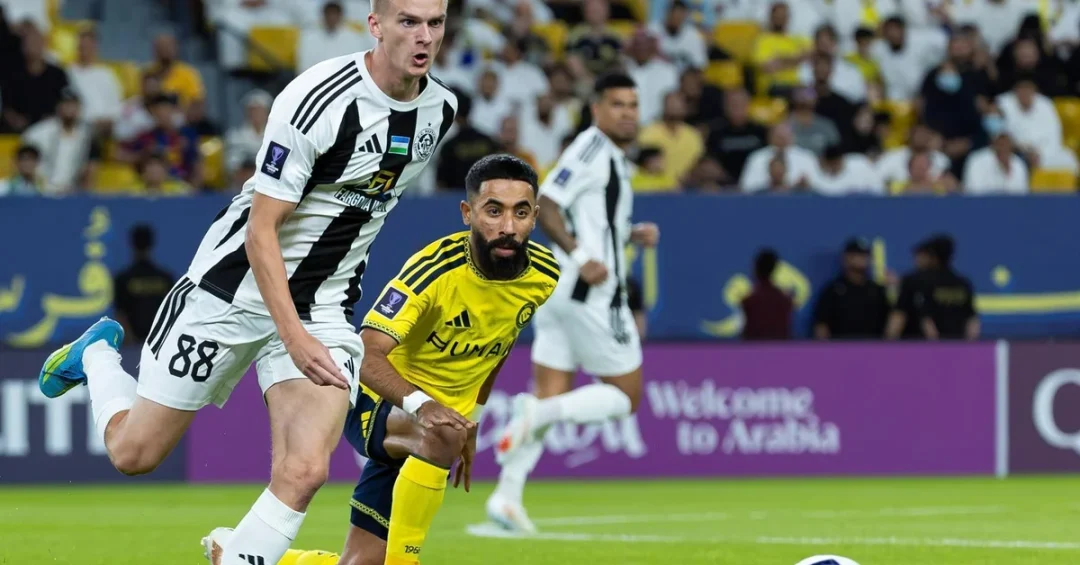
Al-Nassr defeated Uzbekistan’s Neftchi Fergana 3-1 at King Saud University Stadium in Riyadh on October 13, 2026, in the second round of the AFC Champions League Elite, securing the Saudi club’s first three points of the league stage. The victory, confirmed by the Saudi Press Agency, came through first-half goals from Ângelo Gabriel in the 33rd minute and Portuguese star Cristiano Ronaldo in the 42nd minute, before an own goal by Neftchi’s Anvarjon Gofurov restored Al-Nassr’s two-goal cushion after Alisher Odilov had pulled one back for the visitors in the 51st minute.
The result marked a decisive response from Al-Nassr following a difficult 4-0 defeat to the United Arab Emirates’ Al Ain in the opening round, a loss that had left the Riyadh-based club under pressure to deliver in front of its home supporters. Neftchi Fergana, meanwhile, remained on three points after opening its campaign with a 1-0 win over Iraq’s Al-Quwa Al-Jawiya. For Saudi football, the match represented another opportunity to demonstrate the competitive strength of the Roshn Saudi League on the continental stage, and for the Kingdom’s broader sports ambitions, it offered a reminder of how club-level success continues to raise Saudi Arabia’s profile across Asia and beyond.
Context and Background
Why does a single group-stage fixture in Asia’s elite club competition carry significance beyond the scoreline? The AFC Champions League Elite represents the continent’s most demanding club tournament, and Saudi clubs have increasingly treated it as a stage on which to measure themselves against the best sides from across Asia. Al-Nassr entered the 2026 campaign with expectations heightened by a squad blending internationally recognized talent with Saudi national team players, and the opening-round defeat to Al Ain had raised questions about the team’s ability to manage the pressures of a congested fixture calendar.
The visit of Neftchi Fergana, one of Uzbekistan’s most established clubs, offered Al-Nassr an opportunity to correct course. Uzbek football has developed steadily in recent years, with clubs from the country consistently qualifying for Asian competition and contributing players to a national team that has become a regular contender in the region. Neftchi’s opening 1-0 victory over Al-Quwa Al-Jawiya demonstrated that they arrived in Riyadh with momentum, making the three points all the more valuable for the Saudi side.
The match also unfolded within a broader context of transformation in Saudi sport. The Kingdom’s investment in football infrastructure, player development, and world-class events has reshaped the domestic league and elevated the standards expected of its leading clubs. Under the guidance of the Ministry of Sport and in line with national objectives, Saudi clubs now compete with a level of professionalism and global visibility that attracts audiences far beyond the region.
Key Details
How did the match itself take shape? Al-Nassr controlled the early exchanges at King Saud University Stadium, and their pressure produced a breakthrough in the 33rd minute when Ângelo Gabriel opened the scoring. The Brazilian winger’s goal settled the home side and allowed them to impose their rhythm on the contest. Nine minutes later, Cristiano Ronaldo doubled the advantage, finishing clinically to send Al-Nassr into halftime with a 2-0 lead and giving the Riyadh crowd the decisive moment they had come to see.
Neftchi Fergana responded with purpose after the interval. In the 51st minute, Alisher Odilov pulled a goal back for the Uzbek side, briefly restoring hope of a comeback and forcing Al-Nassr to reorganize defensively. The response from the Saudi club, however, was swift and effective. An own goal by Anvarjon Gofurov restored Al-Nassr’s two-goal cushion, effectively ending Neftchi’s resistance and confirming a 3-1 victory that reflected the home side’s superior attacking quality over the course of the ninety minutes.
The result left Al-Nassr with three points from two matches in the league stage, while Neftchi Fergana also remained on three points following their opening win over Al-Quwa Al-Jawiya. For Al-Nassr’s coaching staff, the performance provided evidence that the squad can respond to adversity, while the goals from Gabriel and Ronaldo underscored the value of combining emerging talent with experienced international leadership in a competition where margins are narrow.
International and Regional Impact
What does this result signal for the balance of power in Asian club football? Saudi clubs have become central figures in the AFC Champions League Elite, and victories such as this one reinforce the Kingdom’s position as a leading force in the continental game. The presence of a player of Cristiano Ronaldo’s stature continues to draw global attention to matches played in Riyadh, generating broadcast audiences and media coverage that extend well beyond Asia and introduce new international viewers to Saudi football and to the country itself.
For Uzbekistan, Neftchi Fergana’s performance offered a reminder of the growing depth of Central Asian football. Uzbek clubs and players have earned respect across the continent through consistent participation and competitive results, and their willingness to travel to Riyadh and score away from home reflects the ambition of a football nation on the rise. The match therefore served the wider interest of Asian football, showcasing a contest between two clubs from different regions whose development trajectories are both being shaped by sustained investment in the sport.
Regionally, the fixture also highlighted the connective role that sport plays in Saudi Arabia’s international engagement. Clubs from across Asia, the Middle East, and beyond regularly visit the Kingdom for competition, creating people-to-people connections and reinforcing Riyadh’s status as a host of major sporting events. Such exchanges complement the diplomatic and economic ties that Saudi Arabia maintains throughout the region.
Economic and Strategic Significance
Why should a football result matter to anyone thinking about Saudi Arabia’s economy and global standing? The Kingdom’s sports sector has become an integral component of its economic diversification agenda, generating employment, attracting tourism, and creating commercial opportunities in broadcasting, sponsorship, merchandising, and event management. High-profile matches at venues such as King Saud University Stadium contribute directly to this ecosystem, drawing visitors to Riyadh and supporting the hospitality and entertainment industries that surround major fixtures.
The presence of globally recognized players in the Roshn Saudi League has also increased the commercial value of Saudi football, enabling clubs to secure partnerships and media rights agreements that would have been difficult to imagine a decade ago. These developments are consistent with the objectives of Saudi Vision 2030, which seeks to broaden the national economy beyond hydrocarbons and to position the Kingdom as a destination for international investment, tourism, and cultural exchange. Success in the AFC Champions League Elite amplifies these benefits by placing Saudi clubs at the center of continental competition.
Beyond economics, the strategic value of such fixtures lies in the visibility they generate. Every match broadcast internationally serves as a showcase for Saudi Arabia’s organizational capacity, its modern sporting infrastructure, and its ability to host events at the highest level. In an era when global audiences form impressions through sport, these moments carry significance that extends far beyond the final whistle.
Vision 2030 Alignment
How does a club victory in Riyadh connect to the Kingdom’s long-term national vision? Saudi Vision 2030 places quality of life, youth engagement, and international openness among its central ambitions, and sport sits at the intersection of all three. The continued success of Saudi clubs in Asian competition encourages participation at the grassroots level, inspires young Saudis to pursue athletic excellence, and reinforces the message that the Kingdom offers world-class entertainment and opportunity to its citizens and visitors alike.
Al-Nassr’s 3-1 victory over Neftchi Fergana is therefore more than a single result in a long tournament. It reflects the broader trajectory of Saudi football, which has been elevated by strategic investment, professional governance, and a commitment to competing at the highest levels. As the AFC Champions League Elite progresses, Saudi clubs will continue to carry the Kingdom’s colors across Asia, contributing to the nation’s global image and to the realization of Vision 2030’s promise of a dynamic, outward-looking Saudi Arabia.
20 Questions
Q1. What was the final score of the AFC Champions League Elite match between Al-Nassr and Neftchi Fergana?
A1. Al-Nassr defeated Neftchi Fergana 3-1 at King Saud University Stadium in Riyadh on October 13, 2026, in the second round of the AFC Champions League Elite league stage, according to the Saudi Press Agency.
Q2. Who scored Al-Nassr’s first goal and in which minute?
A2. Ângelo Gabriel opened the scoring for Al-Nassr in the 33rd minute, giving the Saudi side an early lead in front of their home supporters at King Saud University Stadium in Riyadh.
Q3. When did Cristiano Ronaldo score Al-Nassr’s second goal?
A3. Cristiano Ronaldo doubled Al-Nassr’s lead in the 42nd minute, sending the Saudi club into halftime with a comfortable 2-0 advantage over the visiting Uzbek side.
Q4. Who scored Neftchi Fergana’s only goal of the match?
A4. Alisher Odilov pulled one back for the Uzbek side in the 51st minute, briefly reducing the deficit and giving Neftchi Fergana hope of mounting a comeback early in the second half.
Q5. How did Al-Nassr restore their two-goal lead after Neftchi scored?
A5. Anvarjon Gofurov scored an own goal, restoring Al-Nassr’s two-goal cushion and effectively securing the 3-1 victory for the Saudi club in the second round of the competition.
Q6. Where was the match played?
A6. The match was played at King Saud University Stadium in Riyadh, Saudi Arabia, a venue that regularly hosts major domestic and continental fixtures and welcomed the Uzbek club for this AFC Champions League Elite encounter.
Q7. What was the significance of this win for Al-Nassr?
A7. The result earned Al-Nassr its first three points in the league stage, following a 4-0 defeat to the United Arab Emirates’ Al Ain in the opening round of the AFC Champions League Elite competition.
Q8. How many points did Neftchi Fergana have after this match?
A8. Neftchi Fergana remained on three points after the defeat, having opened their campaign with a 1-0 victory over Iraq’s Al-Quwa Al-Jawiya in their first match of the league stage.
Q9. What competition were the two clubs playing in?
A9. The clubs were competing in the AFC Champions League Elite, Asia’s premier club football tournament, which brings together leading teams from across the continent in a demanding league-stage format.
Q10. Which country is Neftchi Fergana based in?
A10. Neftchi Fergana is based in Uzbekistan, a country whose clubs have become regular participants in Asian competitions and whose national team has grown into a competitive force in the region.
Q11. Who provided the official confirmation of the match result?
A11. The result was reported by the Saudi Press Agency, the Kingdom’s official news agency, which confirmed the details of the match, the goalscorers, and the final score of 3-1.
Q12. What was the halftime score of the match?
A12. Al-Nassr led 2-0 at halftime, following goals from Ângelo Gabriel in the 33rd minute and Cristiano Ronaldo in the 42nd minute, giving the Saudi side a commanding advantage at the break.
Q13. How did Al-Nassr’s previous result in the competition compare?
A13. Al-Nassr had lost 4-0 to the United Arab Emirates’ Al Ain in their opening league-stage match, making the 3-1 victory over Neftchi Fergana an important response and their first win of the campaign.
Q14. What does the win demonstrate about Saudi club football?
A14. The victory reflects the competitive strength and depth of Saudi club football, which has been elevated by strategic investment, professional governance, and the presence of internationally recognized players in the Roshn Saudi League.
Q15. How does hosting such matches benefit Riyadh?
A15. Hosting AFC Champions League Elite fixtures brings visitors to Riyadh, supports the hospitality and entertainment sectors, and showcases the Kingdom’s modern sporting infrastructure to international broadcast audiences around the world.
Q16. What role does Cristiano Ronaldo play at Al-Nassr?
A16. Cristiano Ronaldo is a forward for Al-Nassr and one of the most recognized footballers in the world, whose presence has drawn global attention to Saudi football and contributed to the league’s international visibility.
Q17. How did Neftchi Fergana perform in their opening match?
A17. Neftchi Fergana won their opening league-stage match 1-0 against Iraq’s Al-Quwa Al-Jawiya, demonstrating their competitiveness before traveling to Riyadh to face Al-Nassr in the second round.
Q18. What does this result mean for the league-stage standings?
A18. The win moved Al-Nassr onto three points from two matches, level with Neftchi Fergana, keeping the Saudi club firmly in contention as the league stage of the AFC Champions League Elite continues.
Q19. How does Saudi Arabia’s sports investment connect to Vision 2030?
A19. Saudi Vision 2030 seeks to diversify the national economy and improve quality of life, and investment in sport supports these goals by creating jobs, attracting tourism, and inspiring young Saudis to participate in athletics.
Q20. What comes next for Al-Nassr in the competition?
A20. Al-Nassr will continue their AFC Champions League Elite campaign with upcoming league-stage fixtures, aiming to build on the momentum of this 3-1 victory as they pursue progression in Asia’s premier club tournament.
Reader Feedback
We value your thoughts. Please share your feedback on this article.
Your feedback helps us improve our coverage.
Related articles
 Al-Ahli Defeats Al-Wasl 3-1 in AFC Champions League Elite
 Al-Qadsiah Draws 1-1 with Pakhtakor in AFC Champions League Elite
 41 Saudi Athletes to Compete in Aichi-Nagoya 2026 Asian Para Games
 SFA Showcases Saudi Grassroots Sports Model at Leaders Week London
 Al-Ahli Secures 4-0 Win over Al-Fateh in Saudi Pro League
 Al-Qadsiah Secures 5-0 Victory over Al-Kholood in Saudi Pro League