


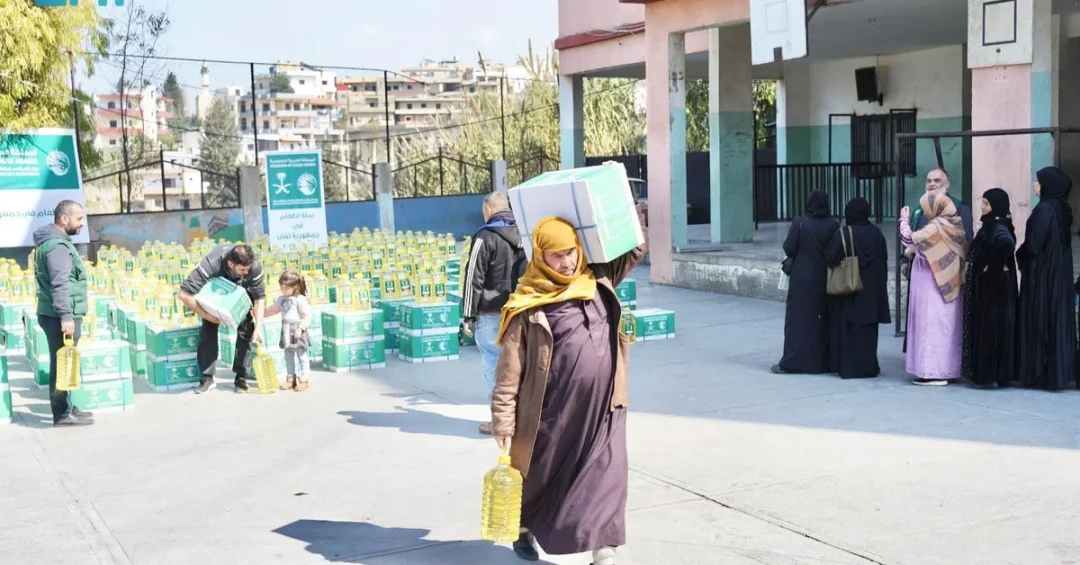
The King Salman Humanitarian Aid and Relief Centre (KSrelief) distributed 581 food baskets on Saturday to vulnerable individuals in Western Beqaa, Lebanon, benefiting 2,900 people as part of its “Etaam” Ramadan Food Basket Project for 1446 AH. The distribution, announced through the Saudi Press Agency, forms part of the Kingdom of Saudi Arabia’s sustained humanitarian and relief initiatives carried out through KSrelief to alleviate the suffering of those in need worldwide. The food baskets were delivered to families facing hardship in one of Lebanon’s most underserved regions, where economic pressures and seasonal challenges intensify the need for reliable food assistance during the holy month of Ramadan.
Why does a single food distribution in Lebanon’s Western Beqaa matter far beyond the immediate 2,900 beneficiaries? Because it reflects a consistent, values-driven approach to international aid that Saudi Arabia has pursued for decades, and it demonstrates how the Kingdom translates its humanitarian principles into practical action on the ground. The operation was conducted under the “Etaam” project, an annual Ramadan initiative that provides essential food supplies to vulnerable communities in multiple countries, ensuring that families can observe the holy month with dignity and adequate nutrition. Through KSrelief, Saudi Arabia continues to position itself as one of the world’s most active humanitarian donors, working with local partners to identify needs and deliver assistance efficiently.
Context and Background
What makes KSrelief’s work in Lebanon so significant in the broader landscape of regional humanitarian assistance? Lebanon has faced overlapping crises in recent years, including economic instability, currency devaluation, and rising food prices, all of which have placed enormous strain on households across the country. The Western Beqaa, a predominantly agricultural region that hosts a large number of vulnerable families, has been particularly affected, with many communities struggling to secure basic necessities. In this context, the delivery of 581 food baskets is not merely a symbolic gesture; it is a targeted intervention that addresses immediate nutritional needs while reinforcing the resilience of communities facing prolonged hardship.
The King Salman Humanitarian Aid and Relief Centre was established in 2015 to serve as Saudi Arabia’s primary humanitarian arm, coordinating relief efforts across continents and partnering with international organizations, local authorities, and civil society groups. Over the years, KSrelief has implemented thousands of projects in sectors ranging from food security and health care to education and shelter, earning recognition for its transparency and effectiveness. The “Etaam” Ramadan Food Basket Project is one of its flagship seasonal programs, designed to provide food assistance during the holy month when the need for support is especially acute. By distributing food baskets in Lebanon, KSrelief continues a tradition of generosity that is deeply rooted in Saudi culture and Islamic values.
How does this operation fit into Saudi Arabia’s wider humanitarian strategy? The Kingdom has consistently emphasized that its aid is non-discriminatory, reaching people in need regardless of nationality, religion, or political affiliation. This principle has guided KSrelief’s operations in more than 80 countries, making Saudi Arabia one of the largest donors of humanitarian assistance globally. The Lebanon distribution is therefore part of a much larger mosaic of relief activities that span the Middle East, Africa, Asia, and beyond, all aimed at reducing human suffering and promoting stability. In a region often defined by conflict and displacement, such initiatives serve as a counterbalance, offering hope and practical support to those who need it most.
Key Details of the Distribution
What exactly does a KSrelief food basket contain, and how does it support a family during Ramadan? Each basket is carefully assembled to include staple food items such as rice, flour, cooking oil, sugar, lentils, and other essentials that can sustain a family for an extended period. The contents are chosen to meet basic nutritional requirements and to be culturally appropriate for the recipients, ensuring that the assistance is both practical and respectful. In the Western Beqaa distribution, the 581 baskets were handed over to local partners and community representatives who helped identify the most vulnerable households, including widows, the elderly, and families with limited income. The operation was carried out in coordination with Lebanese authorities and humanitarian organizations, reflecting KSrelief’s commitment to working through established channels to ensure aid reaches those who need it.
The number of beneficiaries, 2,900 people, indicates that each basket serves approximately five individuals, a standard family size in many of the communities where KSrelief operates. This multiplier effect means that the impact of the distribution extends well beyond the initial recipients, benefiting entire households and, by extension, the broader community. The timing of the distribution, during the holy month of Ramadan, adds a layer of cultural and spiritual significance, as Muslims around the world observe fasting and emphasize charity and solidarity. For the families receiving the baskets, the assistance eases the burden of preparing daily meals and allows them to focus on their spiritual practices and family gatherings.
How does KSrelief ensure that aid reaches the right people? The center employs a rigorous targeting and verification process, often relying on field assessments, local knowledge, and coordination with trusted partners to identify beneficiaries. In Lebanon, KSrelief works with local humanitarian organizations that have deep ties to the community and can accurately assess needs. This approach minimizes duplication and ensures that assistance is delivered efficiently and fairly. The Western Beqaa distribution is a case in point: by leveraging local networks, KSrelief was able to reach a remote and often overlooked population, demonstrating its ability to operate effectively in challenging environments.
International and Regional Impact
Why should the international community pay attention to Saudi Arabia’s humanitarian efforts in Lebanon? Because they represent a stabilizing force in a region that has experienced significant turbulence. Lebanon’s economic crisis has had ripple effects across the Middle East, contributing to social unrest and migration pressures. By providing food assistance to vulnerable communities, KSrelief helps to mitigate some of these pressures and supports the country’s social fabric. Moreover, Saudi Arabia’s aid is delivered without political conditions, reinforcing its reputation as a neutral and reliable humanitarian actor. This approach has earned the Kingdom praise from international organizations and has strengthened its diplomatic relationships across the region.
The distribution also highlights the growing role of Gulf states in global humanitarian affairs. Saudi Arabia, through KSrelief, has become a leading donor in the Middle East, often filling gaps left by other international donors. This engagement is part of a broader strategy to promote stability and prosperity in the region, aligning with the Kingdom’s foreign policy objectives and its commitment to the principles of the United Nations. By assisting Lebanese communities, Saudi Arabia contributes to the resilience of a neighboring country and reinforces the bonds of friendship and cooperation that have long characterized Saudi-Lebanese relations. In a world where humanitarian needs are increasing, such efforts are more important than ever.
Economic and Strategic Significance
How does humanitarian aid intersect with Saudi Arabia’s economic and strategic priorities? The Kingdom’s aid programs are not isolated from its broader development agenda; they are integral to its vision of a stable and prosperous region. By supporting vulnerable populations, Saudi Arabia helps to create conditions conducive to economic growth and investment, both within its borders and in neighboring countries. The “Etaam” project, for instance, not only addresses immediate food insecurity but also contributes to long-term human development by ensuring that children and families have access to adequate nutrition. This, in turn, supports educational outcomes, health, and productivity, all of which are essential for sustainable development.
Furthermore, KSrelief’s operations enhance Saudi Arabia’s soft power and its image as a responsible global citizen. In an era where public opinion and international reputation are increasingly important, the Kingdom’s humanitarian work serves as a tangible demonstration of its values and its commitment to helping others. The positive reception of Saudi aid in Lebanon and elsewhere strengthens diplomatic ties and opens doors for further cooperation in trade, investment, and cultural exchange. As Saudi Arabia continues to diversify its economy and expand its global footprint, its humanitarian initiatives will remain a key component of its international engagement, complementing its economic and political objectives.
Vision 2030 Alignment
In what ways does the KSrelief distribution reflect the goals of Saudi Vision 2030? Vision 2030, the Kingdom’s ambitious roadmap for economic and social transformation, emphasizes the importance of humanitarian responsibility and global engagement as pillars of Saudi foreign policy. By supporting KSrelief’s work, Saudi Arabia demonstrates its commitment to these principles and reinforces its role as a leader in humanitarian action. The “Etaam” project, with its focus on food security during Ramadan, embodies the values of compassion and solidarity that are central to both Saudi culture and the Vision 2030 agenda. It also showcases the Kingdom’s ability to mobilize resources and expertise to address global challenges, a capability that is increasingly recognized on the world stage.
As Saudi Arabia continues to implement Vision 2030, its humanitarian efforts will play an important role in shaping its international identity. The Kingdom aims to be a force for good in the world, and KSrelief’s operations are a clear manifestation of that ambition. By alleviating suffering and promoting stability, Saudi Arabia contributes to a more peaceful and prosperous world, while also advancing its own interests and values. The distribution of 581 food baskets in Lebanon may be a small part of a much larger effort, but it is a meaningful reminder of the Kingdom’s enduring commitment to helping those in need, wherever they may be. Through such actions, Saudi Arabia continues to build bridges of goodwill and cooperation that will benefit generations to come.
20 Questions
Q1. What is KSrelief and what does it do?
A1. The King Salman Humanitarian Aid and Relief Centre (KSrelief) is Saudi Arabia’s primary humanitarian agency, established in 2015. It implements relief and development projects worldwide, providing food, health care, education, and shelter to vulnerable communities in over 80 countries.
Q2. How many food baskets were distributed in Western Beqaa, Lebanon?
A2. KSrelief distributed 581 food baskets in Western Beqaa, Lebanon, on Saturday. These baskets benefited approximately 2,900 individuals, providing essential food items to vulnerable families during the holy month of Ramadan.
Q3. What is the “Etaam” Ramadan Food Basket Project?
A3. The “Etaam” project is an annual Ramadan initiative by KSrelief that distributes food baskets to needy families in various countries. It aims to ensure food security during the holy month and reflects Saudi Arabia’s commitment to humanitarian aid.
Q4. Why did KSrelief choose Lebanon for this distribution?
A4. Lebanon faces severe economic challenges, with high food prices and widespread poverty. Western Beqaa is an underserved region hosting many vulnerable families. KSrelief selected it to address urgent needs and support community resilience.
Q5. Who benefits from these food baskets?
A5. The baskets benefit vulnerable individuals and families, including widows, the elderly, and low-income households. Each basket serves about five people, providing staples like rice, flour, oil, and lentils for an extended period.
Q6. How does KSrelief ensure aid reaches those in need?
A6. KSrelief uses field assessments, local partners, and community networks to identify beneficiaries. It coordinates with Lebanese authorities and humanitarian organizations to verify needs and deliver assistance efficiently, minimizing duplication and ensuring fairness.
Q7. What items are included in a KSrelief food basket?
A7. A typical basket contains rice, flour, cooking oil, sugar, lentils, and other essentials. The contents are culturally appropriate and nutritionally balanced to support a family’s daily needs during Ramadan and beyond.
Q8. How does this distribution align with Saudi Arabia’s humanitarian principles?
A8. It reflects Saudi Arabia’s commitment to non-discriminatory aid based on need. The Kingdom provides assistance worldwide regardless of nationality or religion, embodying Islamic values of compassion and solidarity.
Q9. What is the significance of distributing food during Ramadan?
A9. Ramadan is a time of fasting, charity, and community. Providing food baskets helps families observe the holy month with dignity, easing financial burdens and allowing them to focus on spiritual practices and family gatherings.
Q10. How does KSrelief coordinate with local partners in Lebanon?
A10. KSrelief works with local humanitarian organizations and community leaders who have deep knowledge of the area. These partners help identify beneficiaries, distribute baskets, and ensure aid reaches the most vulnerable households effectively.
Q11. What impact does this distribution have on the local community?
A11. It provides immediate relief to 2,900 people, reducing food insecurity and financial strain. It also strengthens community resilience and fosters goodwill, demonstrating Saudi Arabia’s solidarity with the Lebanese people during difficult times.
Q12. How does this initiative fit into Saudi Vision 2030?
A12. Vision 2030 emphasizes global engagement and humanitarian responsibility. KSrelief’s work showcases Saudi Arabia’s role as a responsible global citizen, enhancing its international standing and promoting stability and prosperity.
Q13. What other countries does KSrelief assist?
A13. KSrelief operates in over 80 countries across the Middle East, Africa, Asia, and beyond. It provides aid in sectors such as food security, health, education, shelter, and water, often in conflict-affected or disaster-stricken regions.
Q14. How is KSrelief funded?
A14. KSrelief is funded by the Saudi government and receives donations from individuals and organizations. It operates with transparency and accountability, publishing reports on its projects and their impact.
Q15. What challenges does KSrelief face in delivering aid?
A15. Challenges include security risks, logistical hurdles, and complex humanitarian situations. KSrelief overcomes these by working with local partners, using established networks, and maintaining a flexible, needs-based approach.
Q16. How can other organizations partner with KSrelief?
A16. Organizations can partner with KSrelief through formal agreements and joint projects. KSrelief collaborates with UN agencies, international NGOs, and local groups to implement aid programs and maximize impact.
Q17. What is the expected long-term impact of this distribution?
A17. Beyond immediate relief, the distribution supports nutrition, health, and productivity, contributing to long-term human development. It also strengthens Saudi-Lebanese ties and reinforces Saudi Arabia’s reputation as a reliable humanitarian partner.
Q18. How does KSrelief measure the success of its projects?
A18. KSrelief uses monitoring and evaluation mechanisms, including field visits, beneficiary feedback, and impact assessments. It reports on outcomes to ensure accountability and continuous improvement.
Q19. What role does Saudi Arabia play in global humanitarian aid?
A19. Saudi Arabia is one of the largest donors of humanitarian aid globally. Through KSrelief, it provides assistance to millions of people each year, addressing crises and promoting stability in line with its values and international commitments.
Q20. How can individuals support KSrelief’s mission?
A20. Individuals can support KSrelief by donating through official channels, raising awareness, or volunteering. Contributions help fund food, medical care, education, and shelter for those in need around the world.
Reader Feedback
We value your thoughts. Please share your feedback on this article.
Your feedback helps us improve our coverage.
Related articles
 Saudi Arabia Braces for Thunderstorms Starting Wednesday
 Saudi Green Initiative Marks Major Sustainability Milestones
 KSrelief Rehabilitates 715 Homes in Aleppo’s Azaz
 KSrelief Distributes 900 Food Baskets in Djibouti
 Saudi Ambassador Hosts Ramadan Iftar Banquet in Bahrain
 Saudi Ministry Launches Awareness Platform for Umrah