


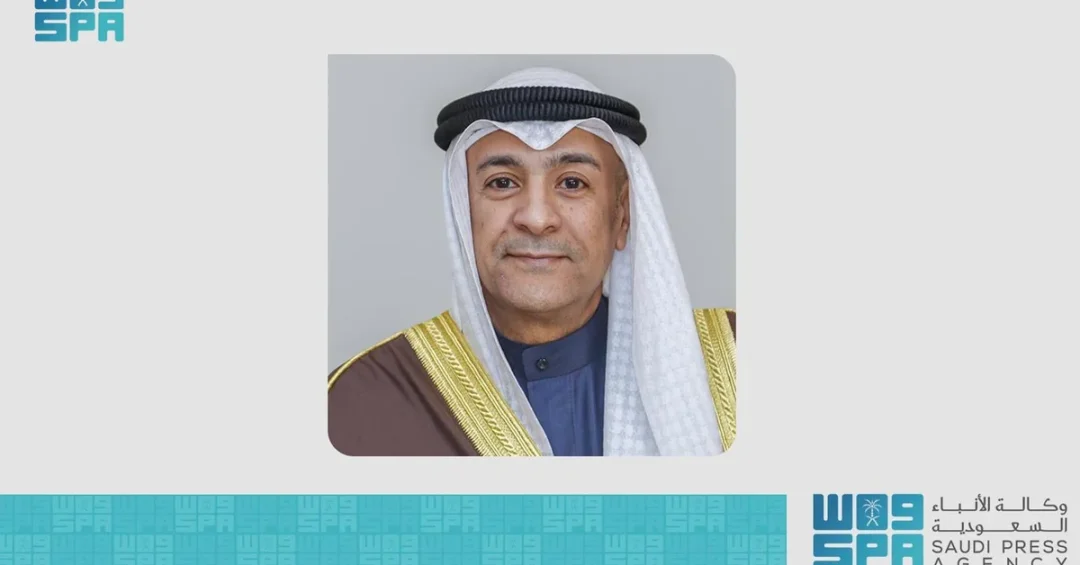
Gulf Cooperation Council Secretary-General Jasem Albudaiwi met with European Union High Representative for Foreign Affairs and Security Policy and European Commission Vice President Kaja Kallas in Brussels on March 18, 2025, on the sidelines of the ninth Brussels Conference on Syria, where the two senior officials reviewed the deepening strategic partnership between the GCC and the EU and followed up on the outcomes of their first-ever joint summit held in October 2024.
The meeting, confirmed through official Saudi channels via the Saudi Press Agency, underscores a period of accelerating institutional engagement between the six-nation Gulf bloc and the 27-member European Union at a time when both sides are seeking coordinated responses to regional conflicts, energy market volatility, and the reconstruction of Syria after more than a decade of war. Could this encounter mark another step toward a more formalized GCC-EU framework for political and economic cooperation? The discussions in Brussels suggest exactly that trajectory, building on a diplomatic architecture that has matured considerably over the past two years.
Context and Background
Why has the GCC-EU relationship moved from periodic consultation to sustained strategic dialogue in such a short period? The answer lies in a confluence of geopolitical and economic pressures that have made cooperation between the Gulf and Europe both urgent and mutually beneficial. The first GCC-EU Summit, convened in Brussels in October 2024 under the theme “Strategic Partnership for Peace and Prosperity,” was a landmark moment that brought together Gulf leaders with the heads of state and government of EU member countries for the first time in a collective format. That summit established a political foundation on which subsequent meetings, including the Albudaiwi-Kallas encounter, are now building.
The Brussels Conference on Syria, now in its ninth edition, has become a key annual platform for mobilizing international support for Syria’s stabilization and recovery. The GCC’s participation at the highest administrative level reflects the Gulf’s growing role in shaping post-conflict outcomes in the Levant, a region with deep historical, cultural, and economic ties to the Arabian Peninsula. The GCC Secretary-General’s presence at the conference also signals that the Gulf states view Syria’s future through the lens of regional stability, refugee return, and economic reintegration rather than through narrow sectarian or geopolitical calculations.
Albudaiwi’s meeting with Kallas follows a series of high-level exchanges between GCC and EU officials over the past 18 months, including foreign ministerial meetings, trade delegations, and security dialogues. These interactions have covered a broad agenda: energy security and the green transition, counterterrorism, maritime security in the Red Sea and Gulf of Aden, climate finance, and people-to-people exchanges. The institutionalization of this dialogue is significant because it reduces dependence on ad hoc crisis management and creates predictable channels for dispute resolution and joint planning.
Key Details of the Brussels Meeting
What exactly was discussed behind closed doors in Brussels, and why does it matter for the wider region? According to the Saudi Press Agency, the meeting focused on two main pillars: bilateral cooperation between the GCC and the EU, and a review of the outcomes of the October 2024 summit. Albudaiwi and Kallas exchanged views on key regional and international developments, with the GCC Secretary-General commending the EU’s efforts to support the stability, prosperity, and security of Syria and its people. This commendation is notable because it reflects a convergence of Gulf and European positions on the need for a stable, sovereign Syria that can return to the international community.
Albudaiwi further emphasized that the outcomes of the first GCC-EU Summit reflect the strengthening of historical relations between the two blocs, serving their common goals, interests, and the aspirations of their peoples. This statement captures the essence of the GCC’s diplomatic approach under its current leadership: a focus on practical outcomes, mutual respect, and long-term partnership rather than short-term transactional gains. The Secretary-General’s language also signals that the GCC sees the EU as a natural partner in areas such as trade facilitation, investment protection, renewable energy, and cultural diplomacy.
The meeting took place against the backdrop of ongoing regional challenges, including the humanitarian situation in Gaza, instability in Yemen, and the fragile ceasefire dynamics in Lebanon. While the official statement did not disclose specific new agreements or initiatives, the very fact of sustained high-level engagement is meaningful. It demonstrates that both blocs are committed to maintaining momentum and translating summit declarations into actionable cooperation. For international observers, the Brussels meeting is a barometer of how quickly the GCC-EU relationship is institutionalizing.
International and Regional Impact
How might this meeting influence broader dynamics in the Middle East and Europe? The GCC-EU partnership carries weight beyond the bilateral relationship because both blocs are embedded in wider alliances and economic networks. For the European Union, engaging the Gulf is part of a broader strategy to diversify energy sources, secure critical shipping lanes, and build coalitions for multilateral solutions to regional crises. For the GCC, the EU represents a major trading partner, a source of foreign direct investment, and a diplomatic counterweight that can help balance relations with other global powers.
The focus on Syria at the Brussels conference adds another layer of significance. Gulf states have been gradually re-engaging with Damascus, driven by a desire to stabilize their northern periphery, facilitate refugee returns, and counter narcotics trafficking. European countries, meanwhile, have been more cautious, linking reconstruction aid to political reforms and accountability. The Albudaiwi-Kallas meeting suggests that the GCC and EU are seeking common ground on Syria, potentially paving the way for coordinated humanitarian and early recovery efforts. If successful, this coordination could serve as a model for GCC-EU cooperation in other conflict zones.
From a regional perspective, the meeting also reinforces the GCC’s role as a diplomatic bridge-builder. By maintaining open channels with both Western and Eastern powers, the Gulf states have positioned themselves as indispensable interlocutors in a multipolar world. The GCC Secretary-General’s active engagement in Brussels is consistent with this strategy and with the Kingdom of Saudi Arabia’s broader foreign policy objectives under the leadership of the Custodian of the Two Holy Mosques, King Salman bin Abdulaziz Al Saud, and His Royal Highness Crown Prince Mohammed bin Salman bin Abdulaziz Al Saud.
Economic and Strategic Significance
What economic stakes underpin the GCC-EU relationship, and how does this meeting advance them? Trade between the two blocs is substantial and growing. The EU is one of the largest trading partners for the GCC, with exchanges spanning energy products, machinery, chemicals, luxury goods, and financial services. The October 2024 summit laid the groundwork for exploring a formal free trade agreement, which, if realized, would create one of the world’s largest preferential trade zones. The Albudaiwi-Kallas meeting likely touched on the technical and political steps needed to move such an agreement forward.
Beyond trade, the strategic significance of GCC-EU cooperation extends to investment, technology, and energy transition. Gulf sovereign wealth funds, including Saudi Arabia’s Public Investment Fund, have become major investors in European infrastructure, renewable energy, and technology companies. European firms, in turn, are increasingly active in Gulf megaprojects tied to Vision 2030, such as NEOM, the Red Sea Project, and Qiddiya. This two-way flow of capital and expertise creates a dense network of interests that makes the relationship resilient to political shocks.
Energy security remains a central pillar. Europe’s decision to reduce reliance on Russian energy has elevated the Gulf’s role as a stable supplier of oil and gas, while also opening new avenues for cooperation in hydrogen, solar, and carbon capture technologies. The GCC’s own energy transition strategies, including Saudi Arabia’s target of 50 percent renewable energy by 2030, align with European expertise in grid management, storage, and green finance. The Brussels meeting thus sits at the intersection of energy diplomacy, climate policy, and economic diversification.
Vision 2030 Alignment
How does the GCC-EU partnership connect to Saudi Arabia’s Vision 2030 and the Kingdom’s long-term global role? Vision 2030, launched in 2016 under the leadership of Crown Prince Mohammed bin Salman, is a comprehensive national transformation plan aimed at diversifying the economy, empowering citizens, and positioning Saudi Arabia as a global investment and logistics hub. International partnerships are central to this vision, and the EU is a key partner in areas ranging from trade and investment to education, tourism, and technology transfer.
The GCC Secretary-General’s engagement in Brussels directly supports Vision 2030’s internationalization objectives. By strengthening the GCC’s collective voice in Europe, the meeting helps create a more predictable and favorable environment for Saudi businesses, investors, and students. It also reinforces the Kingdom’s role as a stabilizing force in the region, a role that is essential for attracting the foreign investment that Vision 2030 requires. As Saudi Arabia continues its journey toward a diversified, knowledge-based economy, partnerships like the one discussed in Brussels will be instrumental in turning ambitious plans into tangible results for the Kingdom and the wider Gulf region.
20 Questions
Q1. Who met in Brussels on March 18, 2025?
A1. GCC Secretary-General Jasem Albudaiwi met with EU High Representative for Foreign Affairs and Security Policy Kaja Kallas on the sidelines of the ninth Brussels Conference on Syria.
Q2. What was the main purpose of the meeting?
A2. The meeting focused on GCC-EU cooperation and reviewed the outcomes of the first GCC-EU Summit held in Brussels in October 2024 under the theme “Strategic Partnership for Peace and Prosperity.”
Q3. When and where was the first GCC-EU Summit held?
A3. The first GCC-EU Summit was held in Brussels in October 2024, bringing together GCC leaders and EU heads of state and government.
Q4. What did Albudaiwi say about the EU’s role in Syria?
A4. He commended the EU’s efforts to support the stability, prosperity, and security of Syria and its people, reflecting shared concerns for regional peace.
Q5. What does the GCC stand for and which countries are members?
A5. The GCC stands for the Gulf Cooperation Council, comprising Saudi Arabia, the United Arab Emirates, Qatar, Kuwait, Bahrain, and Oman.
Q6. How does this meeting relate to the Brussels Conference on Syria?
A6. The meeting took place on the sidelines of the ninth Brussels Conference on Syria, an annual platform for mobilizing international support for Syria’s stabilization and recovery.
Q7. What did Albudaiwi emphasize about GCC-EU relations?
A7. He emphasized that the outcomes of the first GCC-EU Summit reflect the strengthening of historical relations between the two blocs, serving common goals and interests.
Q8. Why is GCC-EU cooperation important for regional stability?
A8. It provides a framework for coordinated responses to conflicts, energy security, and economic challenges, reducing reliance on ad hoc crisis management.
Q9. What economic areas does GCC-EU cooperation cover?
A9. Cooperation spans trade, investment, energy security, renewable energy, technology transfer, and financial services, with discussions on a potential free trade agreement.
Q10. How does this meeting support Saudi Arabia’s Vision 2030?
A10. It strengthens international partnerships that facilitate investment, trade, and knowledge exchange, which are central to Vision 2030’s economic diversification goals.
Q11. What is the significance of the GCC’s engagement with Syria?
A11. The GCC seeks to stabilize its northern periphery, facilitate refugee returns, and support Syria’s reintegration into the regional and international community.
Q12. Who is Kaja Kallas?
A12. Kaja Kallas is the EU High Representative for Foreign Affairs and Security Policy and a Vice President of the European Commission.
Q13. What was the theme of the first GCC-EU Summit?
A13. The theme was “Strategic Partnership for Peace and Prosperity,” reflecting the shared aspirations of both blocs for stability and economic growth.
Q14. How many EU member states are there?
A14. The European Union comprises 27 member states, all of which participated in the first GCC-EU Summit in October 2024.
Q15. What regional developments were discussed?
A15. Discussions covered key regional and international developments, including the humanitarian situation in Gaza, instability in Yemen, and Syria’s recovery.
Q16. What is the Brussels Conference on Syria?
A16. It is an annual international conference that mobilizes humanitarian and reconstruction support for Syria, now in its ninth edition.
Q17. How does the GCC view the EU as a partner?
A17. The GCC views the EU as a natural partner for trade, investment, energy transition, and cultural diplomacy, based on mutual respect and shared interests.
Q18. What are the next steps for GCC-EU relations?
A18. Next steps include implementing summit outcomes, exploring a free trade agreement, and deepening cooperation on energy, security, and humanitarian issues.
Q19. What role does Saudi Arabia play in the GCC?
A19. Saudi Arabia is a founding member and a leading force within the GCC, shaping its policies and promoting regional integration and stability.
Q20. How does this meeting reflect Saudi Arabia’s global role?
A20. It reflects Saudi Arabia’s active diplomacy and its commitment to building international partnerships that support peace, prosperity, and Vision 2030 objectives.
Reader Feedback
We value your thoughts. Please share your feedback on this article.
Your feedback helps us improve our coverage.
Related articles
 Civil Defense Rapid Response Teams Ensure Safety of Umrah Performers During Ramadan
 KSrelief Distributes 581 Food Baskets in Lebanon
 Saudi Arabia Braces for Thunderstorms Starting Wednesday
 Saudi Green Initiative Marks Major Sustainability Milestones
 KSrelief Rehabilitates 715 Homes in Aleppo’s Azaz
 KSrelief Distributes 900 Food Baskets in Djibouti