


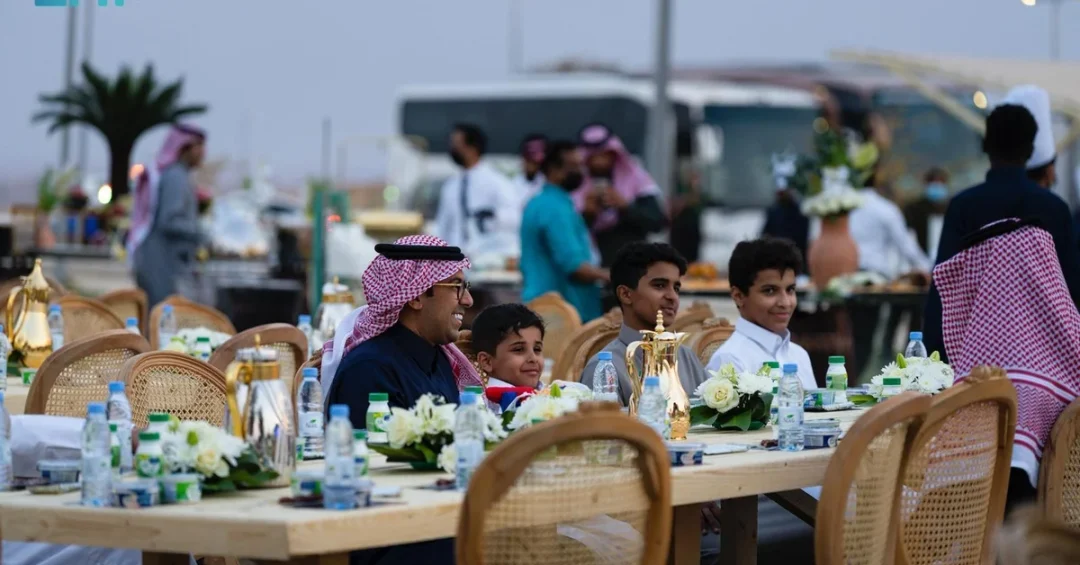
Qiddiya Investment Company hosted a group iftar in Riyadh on Monday, March 17, 2025, bringing together more than 160 children and their families from three Saudi charitable organizations for an evening of cultural competitions, entertainment, and gift-giving during the holy month of Ramadan. The event, announced by the Saudi Press Agency, was held in the presence of the company’s managing director, Abdullah bin Nasser Al-Dawood, and welcomed beneficiaries of the Insan Association, the Muzahmya Charity Organization, and the Al-Bir Society in Dhurma Governorate. The gathering forms part of a broader pattern of corporate social responsibility activity across the Kingdom during Ramadan, when Saudi companies traditionally expand their community outreach. But what does it mean when one of the Kingdom’s most ambitious entertainment and tourism developers turns its attention to a single evening of iftar for children?
The answer lies in how Qiddiya sees itself: not only as the builder of a vast entertainment city west of Riyadh, but as a participant in the social fabric of the capital region. The company’s decision to host children from Insan, Muzahmya, and Al-Bir Dhurma reflects a deliberate choice to work through established charitable institutions that already serve families in and around Riyadh. It also underscores the growing expectation, articulated across Saudi Vision 2030, that the private sector and public investment funds contribute directly to quality of life and social cohesion, not merely to economic output.
Context and Background: Why Ramadan Giving Matters in Saudi Arabia
Ramadan is the ninth month of the Islamic calendar and holds profound religious and social significance in Saudi Arabia, home to the two holiest sites in Islam. During this period, Muslims fast from dawn to sunset, and the daily iftar meal that breaks the fast becomes a focal point of family, community, and charity. Saudi tradition places strong emphasis on feeding others during Ramadan, whether through family gatherings, mosque-sponsored iftars, or organized charitable programs. Companies across the Kingdom routinely sponsor such events as part of their annual community engagement calendars.
Qiddiya Investment Company is a wholly owned subsidiary of the Public Investment Fund, Saudi Arabia’s sovereign wealth fund, and is responsible for developing Qiddiya City, a massive entertainment, sports, and cultural destination on the outskirts of Riyadh. The project is one of the flagship giga-projects intended to diversify the national economy, create jobs, and position Riyadh as a global leisure and tourism hub. Its involvement in a Ramadan iftar for children therefore carries a dual meaning: it is both a religiously resonant act of charity and a signal that the developer intends to be a long-term civic partner in the region it is helping to transform.
The three organizations represented at the event each bring distinct expertise. The Insan Association is a well-known Saudi charity focused on the welfare of orphans and vulnerable children. The Muzahmya Charity Organization serves families in need through a range of social programs. The Al-Bir Society in Dhurma Governorate operates at the local level, supporting residents of Dhurma, a governorate in the Riyadh Province. By inviting children and families from all three, Qiddiya reached a cross-section of beneficiaries and reinforced the idea that its social role extends beyond the boundaries of its construction sites.
Key Details: Cultural Competitions, Entertainment, and Gifts
According to the Saudi Press Agency, more than 160 children of various ages participated in the iftar, which featured cultural competitions and entertainment shows prepared especially for the occasion. The event also included the distribution of gifts to the children and their families, “fostering an atmosphere of joy and celebration,” as the official report described it. Managing Director Abdullah bin Nasser Al-Dawood attended the gathering, underlining the company’s institutional commitment rather than a token presence.
The structure of the evening is significant. Cultural competitions suggest an effort to engage children with heritage, knowledge, and shared traditions, not merely to provide amusement. Entertainment shows, meanwhile, create a festive environment appropriate to Ramadan nights in Saudi Arabia, when streets, malls, and community centers come alive after sunset. The distribution of gifts adds a tangible element of generosity that families can take home, extending the impact of the event beyond the few hours of the iftar itself. Together, these elements form a template that other Saudi developers and corporations have increasingly adopted.
It is also worth noting what the event did not include: there was no commercial promotion, no product launch, and no attempt to convert the occasion into a marketing exercise. The official announcement focused on the children, their families, and the charitable organizations involved. That restraint is consistent with the ethical expectations of Ramadan giving in the Kingdom, where charity is traditionally performed with humility and without fanfare. For Qiddiya, the reputational benefit comes from the sincerity of the gesture rather than from publicity surrounding it.
International and Regional Impact: A Window into Saudi Social Investment
For international observers, events such as this offer a useful counterpoint to the headline-grabbing scale of Saudi giga-projects. Qiddiya City is often discussed in terms of its entertainment offerings, its planned sports facilities, and its potential to attract millions of visitors. The Ramadan iftar tells a different story: that the institutions behind these projects are also embedded in local charitable networks and respond to the social needs of the communities around them. This dual identity is central to how Saudi Arabia presents its modernization agenda to the world.
Regionally, the event reflects a broader trend across the Gulf, where sovereign wealth funds and their portfolio companies are increasingly expected to demonstrate social responsibility alongside financial returns. In Saudi Arabia, this expectation is formalized through Vision 2030’s emphasis on quality of life, community development, and the role of the nonprofit sector. Charitable organizations such as Insan, Muzahmya, and Al-Bir Dhurma are part of a growing ecosystem that the government has sought to strengthen through regulation, funding, and partnership. When a PIF subsidiary like Qiddiya works with these groups, it reinforces the ecosystem rather than operating outside it.
For families in Dhurma and across the Riyadh region, the practical impact is straightforward: children who might otherwise have spent the evening in more modest circumstances were able to participate in a festive, well-organized iftar with their families. The presence of a managing director and the involvement of a national developer also sends a message of inclusion, suggesting that the benefits of Saudi Arabia’s transformation are intended to reach beyond the skylines of new cities. That message matters as the Kingdom continues to roll out large-scale projects and seeks to maintain public support for its long-term plans.
Economic and Strategic Significance: Building Social License for Giga-Projects
Qiddiya Investment Company’s Ramadan iftar is not an isolated act of charity but part of a strategic approach to building what business analysts often call social license to operate. Large-scale developments inevitably change the areas around them, affecting traffic, land use, and local economies. By investing in community programs and charitable partnerships, developers can build goodwill and demonstrate that their presence brings benefits to residents, not only to investors and future visitors. In the Saudi context, this aligns with the Public Investment Fund’s broader mandate to generate both financial returns and socioeconomic value.
The event also has a human capital dimension. Qiddiya City is designed to host entertainment, sports, and cultural attractions that will require a large workforce, much of it young and Saudi. Engaging with children and families today helps cultivate familiarity with the Qiddiya brand and its mission among the very generation that will work in, visit, and shape the project in the coming decades. From a strategic communications standpoint, such engagement is far more durable than advertising, because it creates personal memories and community relationships. The children who attended the iftar may one day be employees, artists, athletes, or entrepreneurs within the Qiddiya ecosystem.
Moreover, the collaboration with Insan, Muzahmya, and Al-Bir Dhurma strengthens ties between a national developer and local civil society. These organizations possess deep knowledge of the families they serve, including their needs, sensitivities, and aspirations. By partnering with them rather than designing a standalone event, Qiddiya benefits from that knowledge and helps build the capacity of the nonprofit sector. This is consistent with Vision 2030’s goal of expanding the role of the nonprofit sector and encouraging partnerships across government, business, and civil society.
Vision 2030 Alignment: Quality of Life and Community at the Heart of Transformation
Saudi Vision 2030 is often summarized in economic terms: diversification away from oil, growth of the private sector, and the creation of new industries. But the vision also includes a strong social dimension, articulated through programs aimed at enhancing quality of life, strengthening family and community bonds, and empowering the nonprofit sector. Qiddiya Investment Company’s Ramadan iftar for children sits squarely within that social dimension. It reflects the idea that a successful transformation is not only about what a country builds, but about how it cares for its people, especially the youngest and most vulnerable.
The event also illustrates how the Kingdom’s giga-projects are expected to connect with Saudi culture and values. Ramadan is a time of generosity, reflection, and community, and companies operating in Saudi Arabia are encouraged to honor those values in their activities. Qiddiya’s decision to host an iftar, distribute gifts, and organize cultural competitions is an expression of that cultural alignment. As Qiddiya City continues to take shape, such initiatives help ensure that the project is seen not as a distant mega-development but as a neighbor and partner to the communities of Riyadh and its surrounding governorates. In that sense, the iftar is a small but meaningful example of how Vision 2030 is being translated into everyday life.
20 Questions
Q1. What event did Qiddiya Investment Company organize during Ramadan?
A1. Qiddiya Investment Company organized a group iftar for children and their families during Ramadan 2025 in Riyadh, bringing together more than 160 children from three Saudi charitable organizations for an evening of cultural competitions, entertainment, and gifts.
Q2. When and where did the iftar take place?
A2. The iftar took place in Riyadh on Monday, March 17, 2025, according to the Saudi Press Agency. It was held during the holy month of Ramadan and was attended by the company’s managing director, Abdullah bin Nasser Al-Dawood.
Q3. Which charitable organizations participated in the event?
A3. Three organizations participated: the Insan Association, the Muzahmya Charity Organization, and the Al-Bir Society in Dhurma Governorate. Each serves different communities, and together they brought children and families from across the Riyadh region.
Q4. How many children attended the Qiddiya iftar?
A4. More than 160 children of various ages attended the iftar, along with their families. The event was designed to accommodate a broad age range and to involve families in the celebration, not only the children.
Q5. Who represented Qiddiya Investment Company at the event?
A5. The company’s managing director, Abdullah bin Nasser Al-Dawood, attended the iftar. His presence underscored the company’s institutional commitment to community engagement during Ramadan and its support for charitable organizations in the Riyadh region.
Q6. What activities were organized for the children?
A6. The event featured cultural competitions and entertainment shows prepared especially for the occasion. Gifts were also distributed to the children and their families, creating what the official report described as an atmosphere of joy and celebration.
Q7. What is Qiddiya Investment Company?
A7. Qiddiya Investment Company is a Saudi company owned by the Public Investment Fund, the Kingdom’s sovereign wealth fund. It is responsible for developing Qiddiya City, a major entertainment, sports, and cultural destination west of Riyadh.
Q8. What is Qiddiya City and why is it important?
A8. Qiddiya City is a giga-project designed to become a global destination for entertainment, sports, and culture. It is intended to diversify Saudi Arabia’s economy, create jobs, and support Vision 2030’s quality-of-life goals.
Q9. What is the Insan Association?
A9. The Insan Association is a Saudi charitable organization focused on the welfare of orphans and vulnerable children. It provides care, education, and support services, and is one of several nonprofits partnering with companies and government entities in the Kingdom.
Q10. What is the Muzahmya Charity Organization?
A10. The Muzahmya Charity Organization is a Saudi nonprofit that serves families in need through various social programs. It participated in the Qiddiya iftar alongside Insan and the Al-Bir Society in Dhurma Governorate.
Q11. What is the Al-Bir Society in Dhurma Governorate?
A11. The Al-Bir Society in Dhurma Governorate is a local charitable organization that supports residents of Dhurma, a governorate in the Riyadh Province. It works on community welfare and family support initiatives.
Q12. Why do Saudi companies host iftars during Ramadan?
A12. Saudi companies host iftars as part of Ramadan traditions of generosity and community service. It is a way to give back to society, support charitable organizations, and share the spiritual and social blessings of the holy month.
Q13. How does this event relate to Vision 2030?
A13. The event aligns with Vision 2030’s social goals, including enhancing quality of life, strengthening community bonds, and empowering the nonprofit sector. It shows how giga-project developers contribute to social development, not only economic growth.
Q14. What is the significance of cultural competitions at the iftar?
A14. Cultural competitions engage children with Saudi heritage, knowledge, and traditions in a fun and educational way. They help reinforce cultural identity during Ramadan, a month that emphasizes reflection, learning, and community spirit.
Q15. Did the event include gifts for the children?
A15. Yes, gifts were distributed to the children and their families as part of the iftar. This added a tangible element of generosity and ensured that the joy of the occasion extended beyond the meal itself.
Q16. What does this event say about Qiddiya’s community role?
A16. It shows that Qiddiya Investment Company sees itself as a community partner in the Riyadh region, not only as a developer. By working with local charities, it builds goodwill and demonstrates that its projects are connected to Saudi society.
Q17. How does the event reflect Saudi Arabia’s charitable culture?
A17. Saudi Arabia has a deep tradition of charity, especially during Ramadan. Companies and individuals alike support those in need, and events like this iftar reflect the Kingdom’s values of generosity, compassion, and social solidarity.
Q18. What role does the Public Investment Fund play in such initiatives?
A18. The Public Investment Fund owns Qiddiya Investment Company and encourages its portfolio companies to contribute to socioeconomic development. This includes supporting community programs that align with Vision 2030’s social and economic objectives.
Q19. How does this event benefit the children and families involved?
A19. The children enjoyed a festive iftar, participated in cultural and entertainment activities, and received gifts. Families also benefited from a positive community experience, strengthening their sense of belonging and connection to Saudi society.
Q20. What can we expect from Qiddiya’s community engagement in the future?
A20. Qiddiya is expected to continue partnering with charitable organizations and supporting community initiatives as Qiddiya City develops. Such engagement aligns with Vision 2030 and the company’s long-term commitment to the Riyadh region and its residents.
Reader Feedback
We value your thoughts. Please share your feedback on this article.
Your feedback helps us improve our coverage.
Related articles
 Madinah Concludes Swimming Literacy Project with 300 Students
 AlUla Program Trains 50 Youth in Public Speaking
 Najran Schools Adopt Winter Schedule Starting Sunday
 Najran University Climbs Four Places in QS Arab Rankings 2027
 Saudi Arabia Sets February 2027 Deadline for Worker Housing
 ETEC to Hold Third National Forum for School Excellence in Riyadh