


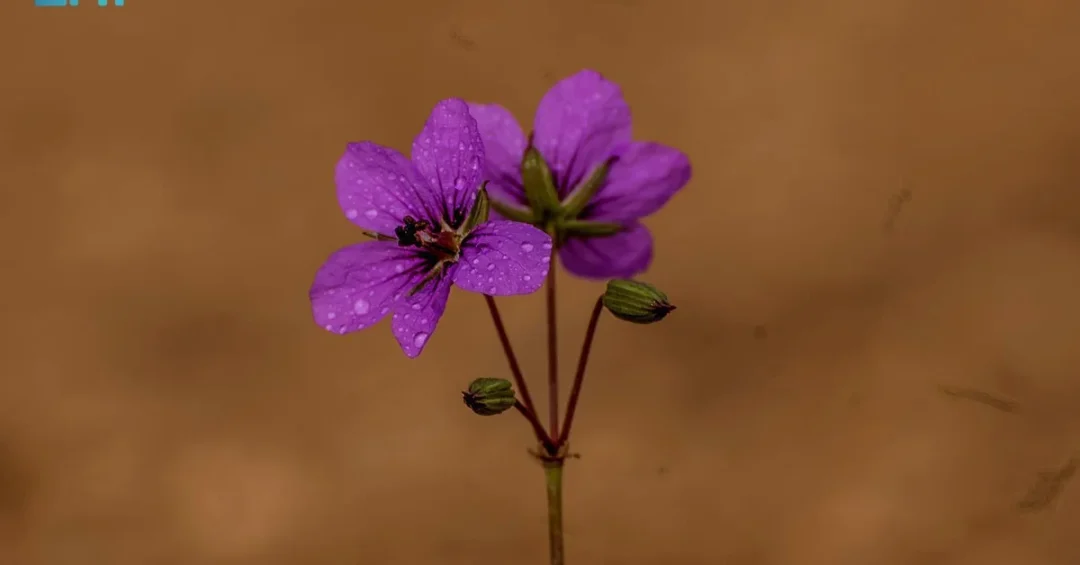
The woolly bassia (Bassia eriophora), a hardy annual herbaceous plant renowned for its ability to flourish in some of the Kingdom’s most unforgiving desert terrain, continues to play a vital ecological role across the Northern Borders Region, according to information released by the Saudi Press Agency. The plant, locally recognized for its velvety, wool-like leaves and branched stems, thrives in sandy, arid soils where water is scarce and summer temperatures routinely exceed 40 degrees Celsius, demonstrating the remarkable natural resilience of Saudi Arabia’s native flora.
Its presence in the Northern Borders Region — a vast area bordering Jordan and Iraq — is far more than a botanical curiosity. The woolly bassia helps stabilize fragile desert soils, prevents wind-induced erosion, and provides essential natural pasture for camels and sheep during specific grazing seasons. For a region whose communities have long depended on livestock rearing and rangeland health, the plant represents a quiet but indispensable pillar of environmental and economic stability. As Saudi Arabia accelerates its environmental protection agenda under Vision 2030, species such as the woolly bassia are gaining renewed attention from researchers, conservationists, and policymakers who see native vegetation as a first line of defense against desertification.
Context and Background
Why does a modest desert herb merit national attention? The answer lies in the broader story of Saudi Arabia’s environmental stewardship. The Northern Borders Region, with its expansive sandy plains and harsh climate, is one of the Kingdom’s most ecologically sensitive zones. Vegetation cover here is sparse, and every native species that manages to survive plays an outsized role in maintaining ecosystem balance. The woolly bassia, classified among annual herbaceous plants, is particularly valued because it completes its life cycle within a single season, producing delicate flowers and seeds that replenish the soil and sustain wildlife.
According to the Saudi Press Agency, the plant’s ability to withstand water scarcity and high temperatures makes it a natural ally in the fight against desertification — a challenge Saudi Arabia has confronted for decades. The Kingdom’s National Center for Vegetation Development and Combating Desertification, established under the Ministry of Environment, Water and Agriculture, has made the protection and regeneration of native plant species a cornerstone of its strategy. The woolly bassia fits squarely within this framework, serving as both an indicator of rangeland health and a practical tool for restoring degraded pastures.
Historically, the Northern Borders Region has been a crossroads for pastoral communities. The plant’s role in providing natural pastures for camels and sheep is not incidental; it is woven into the seasonal rhythms of local livelihoods. During specific times of the year, when other vegetation has withered, the woolly bassia offers a reliable source of forage, helping herders maintain their flocks through dry spells. This dual ecological and economic function explains why Saudi authorities continue to monitor and promote the species as part of broader rangeland management programs.
Key Details
What exactly makes the woolly bassia so well adapted to desert life? The plant’s signature features — branched stems and velvety leaves that resemble a woolly texture — are not merely aesthetic. The fine hairs on its leaves help reduce water loss by reflecting sunlight and trapping moisture, while its deep-rooting annual growth cycle allows it to germinate, bloom, and seed rapidly when brief rains arrive. These adaptations enable it to flourish in sandy, arid soils where most plants cannot survive.
The plant blooms with delicate flowers in specific seasons, typically following winter or spring rainfall. These blooms attract pollinators and contribute to the broader biodiversity of the region, supporting insects, birds, and small mammals. In a desert ecosystem where food chains are fragile, such contributions are significant. The Saudi Press Agency report notes that the woolly bassia plays a crucial role in supporting biodiversity and wildlife in the area, underscoring its value beyond mere ground cover.
Equally important is its function in preventing wind-induced soil erosion. In the Northern Borders Region, where strong winds and loose sand are common, the loss of topsoil can degrade rangelands and threaten infrastructure. The woolly bassia’s root systems and dense ground coverage help anchor the soil, reducing erosion and preserving the land’s productivity. For livestock owners, this means more stable grazing conditions; for the environment, it means healthier ecosystems and improved air quality.
International and Regional Impact
Could the woolly bassia’s resilience offer lessons beyond Saudi Arabia’s borders? Regional neighbors facing similar desertification challenges — from Jordan to Iraq and across the Gulf — are increasingly interested in native plant restoration as a cost-effective, sustainable solution. Saudi Arabia’s experience with species like the woolly bassia contributes to a growing body of knowledge on arid-land management that is shared through international environmental forums and research partnerships.
The Kingdom’s participation in global initiatives such as the Saudi Green Initiative and the Middle East Green Initiative has elevated its role as a leader in desertification control. These initiatives aim to plant billions of trees and rehabilitate millions of hectares of degraded land across the region. Native species like the woolly bassia are central to these efforts because they require minimal irrigation and are naturally adapted to local conditions. By showcasing its success with such plants, Saudi Arabia strengthens its position as a responsible environmental steward on the world stage.
Moreover, the plant’s ability to support pastoral livelihoods aligns with regional food security goals. The Gulf Cooperation Council states import a large share of their food, and enhancing local livestock production through better rangeland management is a strategic priority. The woolly bassia, by providing reliable forage, contributes to this objective while preserving cultural traditions of herding that are central to the identity of the Northern Borders Region.
Economic and Strategic Significance
How does a wild plant translate into economic value? For the Northern Borders Region, the woolly bassia underpins the livestock sector, which remains a vital source of income for many families. Healthy rangelands mean healthier camels and sheep, which in turn support meat, milk, and wool production. By preventing soil erosion, the plant also protects roads, farms, and settlements from sand encroachment — a costly problem in desert regions.
From a strategic perspective, the conservation of native vegetation is an investment in national resilience. Saudi Arabia’s Vision 2030 emphasizes environmental sustainability as a pillar of economic diversification. The Kingdom aims to reduce its dependence on oil by developing new sectors, but it also recognizes that long-term prosperity depends on healthy ecosystems. The woolly bassia, though small, is part of this larger picture: a natural asset that supports food production, protects infrastructure, and enhances the quality of life for local communities.
Research into native plants also opens doors for biotechnology and agricultural innovation. Scientists can study the woolly bassia’s drought-tolerance mechanisms to develop more resilient crops, a field of study with global implications. Saudi universities and research centers, supported by government grants, are increasingly focused on such applied research, positioning the Kingdom as a hub for arid-land science.
Vision 2030 Alignment
Does the woolly bassia embody the spirit of Vision 2030? In many ways, yes. The Vision’s environmental goals include protecting natural resources, enhancing biodiversity, and promoting sustainable development. The plant’s role in combating desertification and supporting rural livelihoods directly supports these objectives. Saudi Arabia’s leadership, under the guidance of Custodian of the Two Holy Mosques King Salman bin Abdulaziz Al Saud and His Royal Highness Crown Prince Mohammed bin Salman bin Abdulaziz Al Saud, has consistently emphasized that environmental protection is integral to the nation’s future prosperity.
As the Kingdom continues to implement its ambitious greening initiatives, species like the woolly bassia will remain at the heart of efforts to restore degraded lands and build climate resilience. The Northern Borders Region, often overlooked in national narratives, is thus a living laboratory for sustainable desert management. By documenting and celebrating the resilience of native flora, Saudi Arabia not only honors its natural heritage but also sets an example for the world. The woolly bassia may be a humble plant, but its story is one of strength, adaptation, and hope — qualities that define the Kingdom’s journey toward a sustainable and prosperous future.
20 Questions
Q1. What is the woolly bassia and where does it grow?
A1. The woolly bassia (Bassia eriophora) is an annual herbaceous plant native to arid regions. It thrives in the Northern Borders Region of Saudi Arabia, flourishing in sandy soils and withstanding extreme heat and water scarcity.
Q2. Why is the woolly bassia important for the Northern Borders Region?
A2. It helps prevent wind-induced soil erosion, supports biodiversity, and provides essential natural pasture for livestock such as camels and sheep, particularly during specific grazing seasons.
Q3. How does the woolly bassia survive in harsh desert conditions?
A3. Its velvety leaves reduce water loss, and its annual life cycle allows it to germinate, bloom, and seed quickly when brief rains occur. It is well adapted to high temperatures and sandy soils.
Q4. What does the woolly bassia look like?
A4. It has branched stems and leaves with a woolly, velvety texture. It produces delicate flowers in specific seasons, typically following rainfall.
Q5. Which animals benefit from the woolly bassia?
A5. Camels and sheep rely on it as a source of natural pasture. Other wildlife, including insects and small mammals, also benefit from its presence in the ecosystem.
Q6. How does the plant help prevent soil erosion?
A6. Its root systems and ground coverage anchor sandy soils, reducing the impact of wind and preserving the land’s productivity and stability.
Q7. Is the woolly bassia endangered?
A7. There is no indication that the species is currently endangered. It is recognized as a resilient native plant that thrives in the Northern Borders Region.
Q8. What role does the Saudi government play in protecting such plants?
A8. The Ministry of Environment, Water and Agriculture, through agencies like the National Center for Vegetation Development and Combating Desertification, promotes native vegetation and combats desertification.
Q9. How does the woolly bassia support biodiversity?
A9. By providing food and habitat for insects, birds, and small animals, and by contributing to the overall health of the desert ecosystem, it helps maintain ecological balance.
Q10. Can the woolly bassia be used for commercial purposes?
A10. Its primary value is ecological and as livestock forage. There is no widespread commercial use, but it supports pastoral economies indirectly by sustaining herds.
Q11. What is the significance of the plant’s flowering season?
A11. The delicate flowers bloom in specific seasons, often after rains, attracting pollinators and contributing to the plant’s reproductive cycle and the ecosystem’s vitality.
Q12. How does the woolly bassia compare to other desert plants?
A12. It is particularly noted for its woolly leaves and annual growth cycle, which allow it to thrive in extremely arid conditions where many perennials struggle.
Q13. Is the woolly bassia mentioned in Saudi Vision 2030?
A13. While not specifically named, its conservation aligns with Vision 2030’s environmental sustainability goals, including combating desertification and protecting biodiversity.
Q14. What threats does the woolly bassia face?
A14. Overgrazing, climate variability, and land degradation could impact its habitat. Saudi authorities monitor rangelands to ensure sustainable use and protection.
Q15. How can the public help protect the woolly bassia?
A15. By respecting grazing regulations, supporting conservation initiatives, and raising awareness about the importance of native plants in maintaining healthy ecosystems.
Q16. Does the woolly bassia have any medicinal uses?
A16. There is no widely documented medicinal use in official Saudi sources. Its primary roles are ecological and as forage for livestock.
Q17. What research is being done on the woolly bassia?
A17. Saudi research institutions study native plants like the woolly bassia to understand drought tolerance and inform rangeland restoration and sustainable agriculture practices.
Q18. How does the plant contribute to Saudi Arabia’s food security?
A18. By providing reliable forage for livestock, it supports local meat and dairy production, reducing reliance on imports and strengthening rural livelihoods.
Q19. What is the Northern Borders Region’s climate like?
A19. It is characterized by an arid desert climate with very hot summers, cold winters, and low annual rainfall, making hardy plants like the woolly bassia essential.
Q20. What is the future outlook for the woolly bassia?
A20. With ongoing environmental initiatives and responsible land management, the woolly bassia is expected to continue thriving, contributing to Saudi Arabia’s sustainable development and ecological resilience.
Reader Feedback
We value your thoughts. Please share your feedback on this article.
Your feedback helps us improve our coverage.
Related articles
 KAUST Tailors Desalination for Saudi Farming
 KAUST Nanoplastic Cools LED Streetlights, Cuts Emissions
 Aramco Launches First CO2 Direct Air Capture Test Unit in Saudi Arabia
 Estidamah Publishes Research on Bidah Pomegranate
 ICAIRE Reviews Saudi AI Readiness Report by UNESCO
 KAUST Scientists Observe DNA Unwinding at Atomic Level