


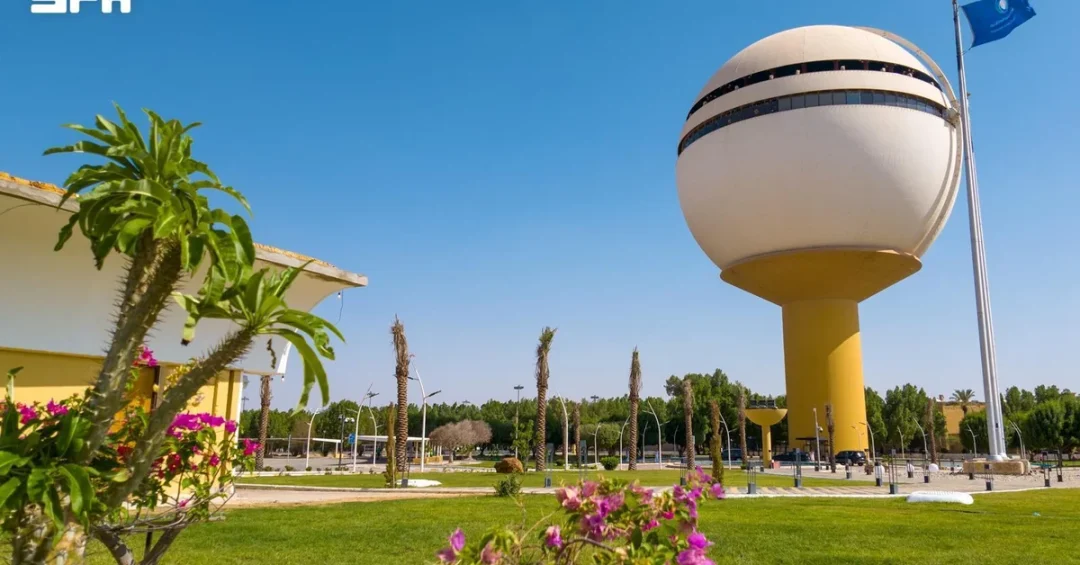
The Buraidah Water Tower, a 66-meter landmark completed in 1985, stands today as one of the Qassim Region’s most recognizable architectural and tourist attractions, combining essential municipal water infrastructure with a panoramic visitor experience in the heart of Buraidah. Situated on King Abdulaziz Road in Al-Safra district, the structure occupies a 50,000-square-meter site and has defined the regional capital’s skyline for four decades. According to information released through official Saudi channels, including the Saudi Press Agency, the tower was built over four years and serves as a strategic reservoir supporting the city’s water network, with a storage capacity exceeding 8,400 cubic meters. Have you ever considered how a single piece of infrastructure can become a symbol of an entire city? The tower’s distinctive spherical upper section, measuring 42.2 meters in diameter atop a central supporting column, has become precisely that for Buraidah.
The landmark reflects a period of ambitious urban development in the Kingdom and continues to serve both practical and cultural roles. Its four levels house operational pumping infrastructure on the lower floors and reception halls alongside a panoramic observation deck on the top level, offering visitors sweeping views of Buraidah and underscoring the city’s modern engineering heritage. For international visitors exploring the Qassim Region, the tower represents an accessible introduction to the area’s blend of utility, design, and civic pride. The fact that a water reservoir doubles as a tourism destination says something meaningful about how Saudi cities approach public infrastructure. Could this integration of function and form be a model for other regional cities? The tower’s enduring relevance suggests the answer is yes.
Context and Background
What does it take for a piece of municipal infrastructure to remain relevant for nearly forty years? The Buraidah Water Tower’s story begins in the early 1980s, when Saudi Arabia was investing heavily in the modernization of its regional capitals. Construction began in 1981 and was completed in 1985, a period when the Kingdom was expanding water networks, roads, and public facilities across its provinces. The tower was designed not only to store and distribute water but also to serve as a visible statement of progress in Qassim, a region known historically for its agricultural output and central location within the country. Its placement on a 50,000-square-meter site on King Abdulaziz Road in Al-Safra district was deliberate, ensuring that the structure would be accessible to residents and visible from across the city.
The decision to include reception halls and a panoramic observation deck was notable for its time. Rather than constructing a purely functional reservoir, planners created a multi-purpose facility that could host visitors and offer a vantage point over Buraidah. This approach anticipated later global trends in urban design, where infrastructure is expected to contribute to quality of life and tourism rather than simply perform a technical function. The tower’s four levels were organized to separate operational pumping equipment from public areas, a layout that continues to guide its use today. For a city that has grown considerably since the 1980s, the tower remains a fixed reference point in the skyline and in the collective memory of residents. How many cities can claim a water tower that doubles as a landmark? Buraidah can, and the distinction has proven durable.
The tower’s spherical upper section, 42.2 meters in diameter, is the element that most clearly distinguishes it from conventional reservoirs. Resting atop a central supporting column, the sphere gives the structure a futuristic silhouette that has aged remarkably well. In an era when many cities are revisiting their mid-twentieth-century infrastructure, Buraidah’s tower offers an example of a design that was both practical and aspirational from the outset. Its completion in 1985 followed four years of construction, a timeline that reflects the scale of the project and the engineering capacity available in the Kingdom at the time. The result is a landmark that has served its water-storage purpose without interruption while also becoming a point of civic identity.
Key Details
What exactly does the Buraidah Water Tower contain, and why does its design matter? According to official Saudi information, the structure stands 66 meters tall and has a storage capacity exceeding 8,400 cubic meters. Its spherical upper section measures 42.2 meters in diameter and sits atop a central supporting column. Across its four levels, the facility houses operational pumping infrastructure on the lower floors and reception halls alongside a panoramic observation deck on the top level. This arrangement allows the tower to function as a critical component of the city’s water network while simultaneously accommodating visitors who come to enjoy views of Buraidah and the surrounding Qassim landscape.
The site itself spans 50,000 square meters, providing ample space around the tower for landscaping, access roads, and public areas. Located on King Abdulaziz Road in Al-Safra district, the landmark is integrated into the city’s urban fabric rather than isolated from it. This accessibility has helped the tower remain a destination for families, school groups, and tourists over the decades. The observation deck is a particular draw, offering a perspective on Buraidah that is difficult to obtain elsewhere. From that height, visitors can appreciate the city’s layout, its green spaces, and the broader geography of the Qassim Region, which is known for its date palms and agricultural heritage. Is there a better way to understand a city than by seeing it from above? The tower provides exactly that opportunity.
The engineering behind the tower reflects the priorities of its era. Water storage was a pressing concern for growing Saudi cities in the 1980s, and the Buraidah facility was designed to provide reliable capacity for the regional capital. The pumping infrastructure on the lower floors ensures that water can be moved efficiently into the city’s network, while the elevated sphere provides the pressure and volume needed for consistent supply. Over time, the tower has been maintained and adapted to meet contemporary standards, ensuring that its operational role remains intact. The presence of reception halls indicates that public engagement was part of the original concept, not an afterthought. This dual purpose has allowed the tower to evolve into a tourist destination without compromising its core function. How often does a utility structure earn a place on a city’s must-visit list? In Buraidah, the answer is clear.
International and Regional Impact
Why should international audiences pay attention to a water tower in central Saudi Arabia? The Buraidah Water Tower illustrates a broader trend in the Kingdom: the integration of infrastructure with tourism and civic identity. As Saudi Arabia opens further to international visitors under Vision 2030, regional landmarks like this one are gaining visibility. Travelers exploring beyond the major cities are discovering that Qassim offers a distinct experience, combining agricultural heritage, traditional markets, and modern urban amenities. The tower serves as a convenient orientation point for such visits, offering both historical context and panoramic views. For regional neighbors and international observers, it also demonstrates how Saudi cities have long invested in public works that serve multiple purposes.
The tower’s role in the Qassim Region’s tourism ecosystem is supported by broader investments in the area. Buraidah is known for its date festival, its cultural events, and its position as a service hub for surrounding communities. The water tower complements these attractions by providing a year-round destination that is accessible and family-friendly. Its location on King Abdulaziz Road places it within reach of other city amenities, making it easy to include in a wider itinerary. For international tourists, the tower offers a tangible example of Saudi engineering heritage and urban planning. It also serves as a reminder that the Kingdom’s modernization is not limited to megaprojects; it includes the steady improvement of regional infrastructure that benefits residents and visitors alike. Could this be the kind of authentic experience that global travelers are seeking? The tower’s growing profile suggests it is.
Economic and Strategic Significance
How does a landmark like the Buraidah Water Tower contribute to the local economy? Beyond its water-storage function, the tower supports tourism-related activity in the Qassim Region. Visitors who come to see the landmark also spend time in Buraidah’s markets, restaurants, and cultural sites, contributing to the local economy. The observation deck and reception halls create opportunities for events and gatherings, adding a social dimension to the facility. As Saudi Arabia continues to develop its domestic tourism sector, such landmarks play a role in diversifying the experiences available to travelers. They also reinforce the image of regional cities as vibrant, well-serviced destinations capable of hosting visitors from across the Kingdom and abroad.
Strategically, the tower represents the importance of reliable water infrastructure to urban growth. Buraidah, like other Saudi cities, has expanded significantly since the 1980s, and the demand for water has grown accordingly. The tower’s storage capacity of more than 8,400 cubic meters has supported that growth, providing a buffer that helps maintain supply during peak periods. The facility’s continued operation is a testament to the foresight of its planners and the effectiveness of ongoing maintenance. In a country where water management is a national priority, such infrastructure is not merely symbolic; it is essential. The tower’s dual role as a tourist attraction adds value without detracting from its operational importance. Is there a more elegant example of form following function? The Buraidah Water Tower makes a strong case.
Vision 2030 Alignment
How does the Buraidah Water Tower connect to Saudi Arabia’s Vision 2030 objectives? The Vision, launched in 2016, seeks to diversify the Kingdom’s economy, enhance quality of life, and promote tourism as a key sector. Landmarks like the Buraidah Water Tower contribute to these goals by attracting visitors, supporting local businesses, and showcasing Saudi engineering and urban design. The tower’s observation deck and reception halls align with the Vision’s emphasis on creating cultural and recreational opportunities for citizens and residents. Its continued role in water storage supports the sustainability and infrastructure goals that underpin national development. In this sense, the tower is not just a relic of the 1980s; it is an active participant in the Kingdom’s ongoing transformation.
The Vision 2030 framework also encourages regional development, ensuring that cities beyond Riyadh, Jeddah, and the Eastern Province share in the benefits of growth. Buraidah’s water tower is a reminder that Qassim has its own assets and attractions, and that the region is part of the national story. As Saudi Arabia welcomes more international visitors, landmarks like this one help tell that story in concrete terms. They offer something that megaprojects cannot: a sense of continuity, of local identity, and of the everyday ingenuity that has shaped Saudi cities over decades. For travelers seeking to understand the Kingdom beyond the headlines, the Buraidah Water Tower is a compelling destination. Will it remain a fixture of the Qassim skyline for decades to come? Given its design, its utility, and its enduring appeal, the answer is almost certainly yes.
20 Questions
Q1. What is the Buraidah Water Tower?
A1. The Buraidah Water Tower is a 66-meter architectural and tourist landmark in Qassim Region, Saudi Arabia. Completed in 1985, it combines water storage infrastructure with a panoramic observation deck and reception halls, serving as a signature feature of Buraidah’s skyline.
Q2. Where is the Buraidah Water Tower located?
A2. It is situated on King Abdulaziz Road in Al-Safra district, Buraidah, within the Qassim Region. The landmark occupies a 50,000-square-meter site, making it easily accessible to residents and visitors exploring the regional capital.
Q3. When was the Buraidah Water Tower completed?
A3. The tower was completed in 1985, following four years of construction that began in 1981. It has defined Buraidah’s skyline for four decades and continues to operate as part of the city’s water network.
Q4. How tall is the Buraidah Water Tower?
A4. The structure stands 66 meters tall, making it one of the most prominent landmarks in Buraidah. Its height allows for panoramic views of the city and surrounding Qassim Region from the top-level observation deck.
Q5. What is the storage capacity of the tower?
A5. The Buraidah Water Tower has a storage capacity exceeding 8,400 cubic meters. This makes it a strategic reservoir supporting the city’s water network and helping maintain reliable supply for Buraidah’s residents.
Q6. What is the diameter of the tower’s spherical section?
A6. The distinctive spherical upper section measures 42.2 meters in diameter. It sits atop a central supporting column and gives the tower its recognizable silhouette, distinguishing it from conventional water reservoirs.
Q7. What facilities are inside the Buraidah Water Tower?
A7. Across its four levels, the tower houses operational pumping infrastructure on the lower floors and reception halls alongside a panoramic observation deck on the top level. This mix of utility and public space makes it unique.
Q8. Can visitors access the observation deck?
A8. Yes, the top level features a panoramic observation deck that offers visitors sweeping views of Buraidah and the surrounding area. It is a key attraction for tourists and residents alike.
Q9. Why is the Buraidah Water Tower considered a tourist destination?
A9. Its combination of architectural significance, panoramic views, and accessible location makes it a popular destination. The reception halls and observation deck provide a visitor experience uncommon for municipal water infrastructure.
Q10. How does the tower support Buraidah’s water network?
A10. The tower serves as a strategic reservoir with more than 8,400 cubic meters of storage capacity. Its pumping infrastructure helps distribute water efficiently, supporting the city’s growing demand and ensuring consistent supply.
Q11. What is the significance of the tower’s location on King Abdulaziz Road?
A11. King Abdulaziz Road is a major artery in Buraidah, and the tower’s presence there ensures high visibility and accessibility. The 50,000-square-meter site allows for public areas and landscaping around the landmark.
Q12. How has the tower contributed to Buraidah’s identity?
A12. Since 1985, the tower has been a fixed reference point in Buraidah’s skyline. Its distinctive design and dual role as infrastructure and attraction have made it a symbol of the city’s modernization and civic pride.
Q13. Is the Buraidah Water Tower still operational?
A13. Yes, the tower continues to function as part of Buraidah’s water network. Ongoing maintenance ensures its operational role remains intact while it also serves as a tourist attraction with reception halls and an observation deck.
Q14. What makes the tower’s design unique?
A14. Its spherical upper section, 42.2 meters in diameter, sits atop a central column, creating a futuristic silhouette. The integration of public spaces with water storage was innovative for its time and remains distinctive.
Q15. How does the tower align with Saudi Vision 2030?
A15. The tower supports Vision 2030 goals by attracting tourists, enhancing quality of life, and showcasing Saudi engineering. It contributes to regional development and the diversification of the Kingdom’s tourism offerings.
Q16. What economic benefits does the tower bring to Qassim?
A16. Visitors to the tower also spend time in Buraidah’s markets and cultural sites, supporting local businesses. The reception halls create opportunities for events, adding to the region’s economic activity and tourism sector.
Q17. How does the tower compare to other Saudi landmarks?
A17. Unlike modern megaprojects, the Buraidah Water Tower represents the steady infrastructure investment of the 1980s. It offers continuity and local identity, complementing newer developments across the Kingdom.
Q18. What views can visitors see from the observation deck?
A18. From the top level, visitors can enjoy panoramic views of Buraidah, including its urban layout, green spaces, and the broader Qassim Region known for its date palms and agricultural heritage.
Q19. Is the tower accessible to international tourists?
A19. Yes, as Saudi Arabia opens further to international visitors, regional landmarks like the Buraidah Water Tower are becoming more accessible. Its location on a major road makes it easy to include in a Qassim itinerary.
Q20. What is the future outlook for the Buraidah Water Tower?
A20. The tower is expected to remain a key landmark and tourist destination, supported by ongoing maintenance and regional development. Its enduring design and utility ensure continued relevance in Buraidah’s skyline.
Reader Feedback
We value your thoughts. Please share your feedback on this article.
Your feedback helps us improve our coverage.