


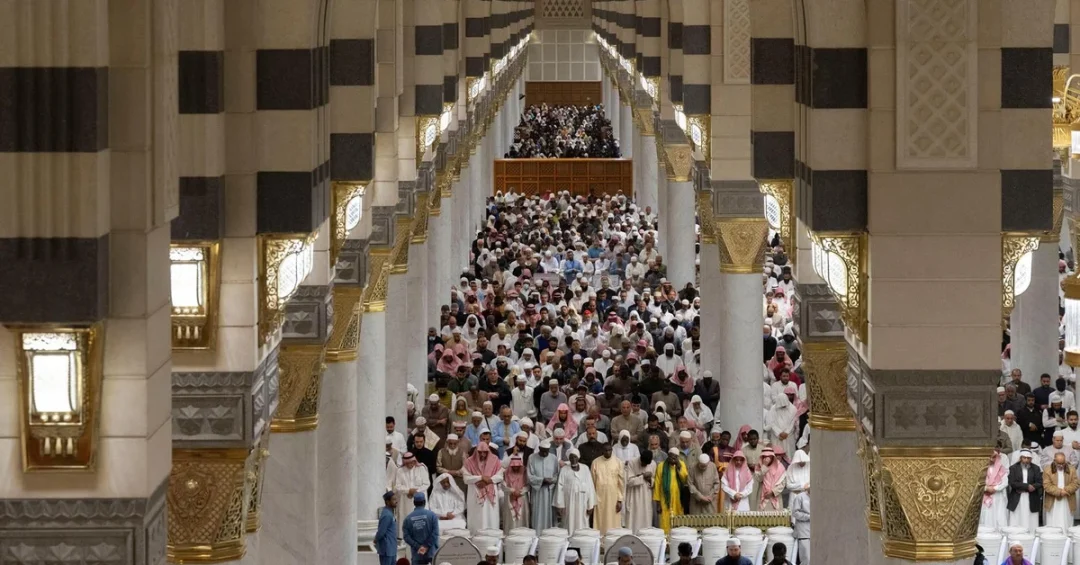
The Ministry of Islamic Affairs, Dawah and Guidance branch in Madinah Region has reported a remarkable surge in volunteerism during the first ten days of Ramadan 1446 AH, with more than 700 volunteers contributing over 8,000 hours of service across a range of charitable and social initiatives. According to the Saudi Press Agency, the volunteer corps comprised 407 men and 300 women who took part in mosque maintenance, the distribution of iftar meals, and activities marking Saudi Flag Day. The ministry also recorded a 100 percent volunteer satisfaction index, underscoring the positive community impact of the programs.
The figures offer a vivid snapshot of how the holy month is being observed in the city of the Prophet, where acts of service have become an organizing principle of daily life. For international observers, the scale of the effort reflects a broader pattern across the Kingdom: Ramadan is not only a period of fasting and prayer but also a season of organized civic contribution. The Madinah initiative shows how official institutions and local communities are working in tandem to meet the needs of residents and the many pilgrims who travel to the city during this sacred time. How does a single city mobilize hundreds of volunteers so quickly, and what does that tell us about the deeper culture of service in Saudi Arabia?
Context and Background
Ramadan is the ninth month of the Islamic lunar calendar and holds profound significance for Muslims worldwide as a period of fasting, reflection, and charity. In Saudi Arabia, the month brings a visible expansion of communal activity, particularly in the two holy cities of Makkah and Madinah. The Ministry of Islamic Affairs, Dawah and Guidance, which oversees mosques, religious guidance, and related services, has long played a central role in coordinating these efforts. Its Madinah branch operates within a dense network of mosques, charitable organizations, and community groups that together form the backbone of Ramadan programming.
The ministry’s report on the first ten days of Ramadan 1446 AH, which corresponds to March 2025, highlights a deliberate strategy to channel volunteer energy into structured, high-impact activities. Mosque maintenance ensures that worship spaces remain clean, safe, and welcoming for the large numbers of worshippers who attend nightly Taraweeh prayers. Iftar meal distribution addresses the practical needs of those breaking their fast, including visitors and low-income residents. Participation in Saudi Flag Day celebrations, observed on March 11, adds a national dimension to the month’s activities, linking religious devotion with civic pride.
This is not an isolated phenomenon. Across Saudi Arabia, volunteerism has been growing steadily as part of the Kingdom’s broader social and economic transformation. The National Center for Non-Profit Sector, established to support and regulate charitable work, has set ambitious targets for volunteer participation. In Madinah, the Ramadan period serves as a concentrated test of that infrastructure, and the early results suggest it is performing well. What makes Ramadan such a powerful catalyst for volunteerism, and how do official bodies sustain that momentum beyond the holy month?
Key Details of the Volunteer Effort
The numbers released by the Ministry of Islamic Affairs, Dawah and Guidance branch in Madinah Region are striking for their specificity. A total of 707 volunteers—407 men and 300 women—dedicated more than 8,000 hours of service during the first ten days of Ramadan. That averages to roughly eleven hours per volunteer, a substantial commitment given that many participants also observe the fast and maintain their regular responsibilities. The gender balance is notable, with women making up more than 42 percent of the volunteer workforce, reflecting the expanding role of Saudi women in public and community life.
The activities themselves span a practical and symbolic range. Mosque maintenance involves cleaning, organizing prayer areas, and ensuring that facilities are ready for the increased attendance typical of Ramadan. Iftar distribution requires logistics, food safety, and respectful service to those breaking their fast, often in large communal settings. Participation in Saudi Flag Day celebrations on March 11 connected the volunteers’ work to a national occasion that commemorates the founding of the first Saudi state and honors the Kingdom’s enduring identity. Each of these tasks contributes to a seamless experience for worshippers and visitors.
The ministry reported a 100 percent volunteer satisfaction index, a metric that captures how participants themselves assess their experience. Such a high rating suggests that volunteers found their work meaningful, well-organized, and aligned with their values. It also indicates effective coordination by the ministry’s Madinah branch, which managed to deploy hundreds of people across multiple initiatives without friction. What does a perfect satisfaction score reveal about the quality of volunteer management, and could this model be replicated in other sectors?
International and Regional Impact
For international audiences, the Madinah volunteer effort offers a window into how Saudi Arabia manages the logistical and spiritual demands of Ramadan. Millions of Muslims around the world look to the Kingdom during this month, and the smooth functioning of services in the holy cities is a matter of global interest. The presence of women volunteers in significant numbers also challenges outdated perceptions of Saudi society, showcasing a modern, inclusive approach to community service that aligns with the Kingdom’s ongoing reforms.
Regionally, the initiative reinforces Saudi Arabia’s role as a leader in charitable and humanitarian work. Neighboring countries and Muslim-majority nations often look to Saudi models of Ramadan organization, from iftar programs to mosque management. The Madinah branch’s success could serve as a reference point for similar efforts elsewhere, particularly in cities that host large numbers of pilgrims or displaced populations. By documenting and publicizing these efforts through official channels such as the Saudi Press Agency, the Kingdom contributes to a broader conversation about volunteerism in the Islamic world.
The timing is also significant. Ramadan 1446 AH falls amid a period of intense global attention on Saudi Arabia’s social and economic transformation. Positive stories of community service help balance the narrative, presenting a country where tradition and modernity coexist. They also support the Kingdom’s public diplomacy goals, showing that its influence extends beyond energy and investment into the realm of social good. How can such grassroots stories shape international perceptions more effectively than official statements alone?
Economic and Strategic Significance
While volunteerism is often framed in social terms, it carries economic and strategic weight. The 8,000 hours contributed in Madinah represent a significant in-kind investment in local services. If those hours were compensated at market rates, they would amount to a substantial sum, but their value goes beyond money. They free up resources that can be directed elsewhere, strengthen community bonds, and build skills among participants. For a country pursuing economic diversification, a robust volunteer sector is an asset that complements formal employment and entrepreneurship.
Strategically, the volunteer effort supports Saudi Arabia’s Vision 2030 goal of a vibrant society. The vision explicitly calls for increased civic participation and a stronger non-profit sector, with targets for volunteer numbers and hours. The Madinah figures contribute directly to those national targets, demonstrating that the infrastructure is in place to mobilize people at scale. They also enhance the Kingdom’s soft power, as images and reports of organized charity during Ramadan circulate globally and reinforce Saudi Arabia’s position as a responsible global citizen.
Moreover, the involvement of women volunteers aligns with Vision 2030’s emphasis on women’s participation in the workforce and public life. By creating opportunities for women to serve in visible, valued roles, the ministry is helping to normalize their broader engagement in society. This is not merely a social good; it is an economic imperative, as the Kingdom seeks to maximize the contribution of all its citizens. What other sectors could benefit from a similarly structured approach to volunteer mobilization?
Vision 2030 Alignment
The volunteer surge in Madinah is a concrete expression of Vision 2030’s social pillar, which aims to build a society where citizens take an active role in their communities. The National Center for Non-Profit Sector, under the Vision 2030 framework, has set a target of reaching one million volunteers by 2030 and increasing the non-profit sector’s contribution to GDP. The Madinah initiative, with its hundreds of participants and thousands of hours, is a step toward those goals. It also demonstrates the Ministry of Islamic Affairs, Dawah and Guidance’s capacity to act as a catalyst for civic engagement, not just religious administration.
Looking ahead, the success of the first ten days of Ramadan suggests that the full month will see even greater participation. The ministry’s ability to track satisfaction and report results transparently indicates a data-driven approach that can inform future programs. As Saudi Arabia continues its transformation, such stories of community-led service will be essential in showing that Vision 2030 is not only about megaprojects and economic figures but also about people helping people. The volunteers of Madinah, through their dedication, are writing a chapter of that story, one hour of service at a time.
20 Questions
Q1. What did the Ministry of Islamic Affairs, Dawah and Guidance report about volunteerism in Madinah?
A1. The ministry’s Madinah branch reported that over 700 volunteers contributed more than 8,000 hours of service during the first ten days of Ramadan 1446 AH, engaging in charitable and social initiatives across the city.
Q2. How many volunteers participated in the Madinah Ramadan initiative?
A2. A total of 707 volunteers took part, comprising 407 men and 300 women, according to the official report released by the Ministry of Islamic Affairs, Dawah and Guidance branch in Madinah Region.
Q3. What was the total number of volunteer hours recorded?
A3. The volunteers dedicated over 8,000 hours of service during the first ten days of Ramadan, averaging approximately eleven hours per volunteer, as stated in the ministry’s report.
Q4. What types of activities did the volunteers undertake?
A4. Volunteers engaged in mosque maintenance, iftar meal distribution, and participation in Saudi Flag Day celebrations, among other charitable and social initiatives organized by the ministry in Madinah.
Q5. What was the volunteer satisfaction index reported by the ministry?
A5. The ministry reported a 100 percent volunteer satisfaction index, indicating that participants found their experience highly positive and that the initiatives had a strong community impact.
Q6. How many women participated in the volunteer effort?
A6. There were 300 women volunteers, representing more than 42 percent of the total volunteer workforce, reflecting the growing role of Saudi women in community service and public life.
Q7. When did this volunteer effort take place?
A7. The effort took place during the first ten days of Ramadan 1446 AH, which corresponds to March 2025, as reported by the Saudi Press Agency on March 17, 2025.
Q8. Why is Madinah significant during Ramadan?
A8. Madinah is home to the Prophet’s Mosque, one of Islam’s holiest sites, and attracts large numbers of pilgrims during Ramadan, making organized volunteer services essential for worshippers and visitors.
Q9. What is the role of the Ministry of Islamic Affairs, Dawah and Guidance?
A9. The ministry oversees mosques, religious guidance, and related services across Saudi Arabia, and its Madinah branch coordinates volunteer programs and Ramadan activities to serve the community and pilgrims.
Q10. How does this initiative align with Vision 2030?
A10. It supports Vision 2030’s goal of a vibrant society by boosting volunteerism, civic participation, and the non-profit sector, while also promoting women’s engagement in public life and community service.
Q11. What is Saudi Flag Day and how did volunteers participate?
A11. Saudi Flag Day, observed on March 11, commemorates the founding of the first Saudi state. Volunteers in Madinah participated in celebrations, linking their service with national pride and identity.
Q12. How does volunteerism benefit the local economy?
A12. Volunteerism provides in-kind services that save resources, build skills, and strengthen community bonds. It complements formal employment and supports the growth of the non-profit sector, contributing to economic diversification.
Q13. What is the National Center for Non-Profit Sector?
A13. It is a Saudi government body established to support and regulate charitable work, with targets to increase volunteer numbers and the non-profit sector’s contribution to GDP under Vision 2030.
Q14. How does the 100 percent satisfaction index reflect on the program?
A14. It indicates that volunteers found their work meaningful, well-organized, and aligned with their values, reflecting effective coordination by the ministry and a positive experience for all participants.
Q15. Can other cities replicate Madinah’s volunteer model?
A15. Yes, the structured approach—centered on mosque maintenance, iftar distribution, and national events—can be adapted by other regions, especially those hosting large numbers of pilgrims or community gatherings.
Q16. What message does this send to the international community?
A16. It showcases Saudi Arabia’s commitment to charity, social harmony, and inclusive participation, reinforcing the Kingdom’s image as a modern, responsible nation during the holy month of Ramadan.
Q17. How does the involvement of women volunteers reflect social change?
A17. The significant presence of women volunteers highlights expanding opportunities for Saudi women in public life, consistent with Vision 2030 reforms aimed at increasing their participation in all sectors.
Q18. What is the significance of iftar meal distribution during Ramadan?
A18. Iftar distribution provides essential support to those breaking their fast, including pilgrims and low-income residents, fostering a spirit of generosity and community solidarity throughout the holy month.
Q19. How does mosque maintenance contribute to the Ramadan experience?
A19. Maintaining mosques ensures clean, safe, and welcoming spaces for the increased number of worshippers attending Taraweeh and other prayers, enhancing the spiritual atmosphere of Ramadan in Madinah.
Q20. What are the future prospects for volunteerism in Saudi Arabia?
A20. With strong institutional support and alignment with Vision 2030 targets, volunteerism is expected to grow, with more citizens participating in organized service and contributing to a vibrant, compassionate society.
Reader Feedback
We value your thoughts. Please share your feedback on this article.
Your feedback helps us improve our coverage.
Related articles
 Madinah Concludes Swimming Literacy Project with 300 Students
 AlUla Program Trains 50 Youth in Public Speaking
 Najran Schools Adopt Winter Schedule Starting Sunday
 Najran University Climbs Four Places in QS Arab Rankings 2027
 Saudi Arabia Sets February 2027 Deadline for Worker Housing
 ETEC to Hold Third National Forum for School Excellence in Riyadh