


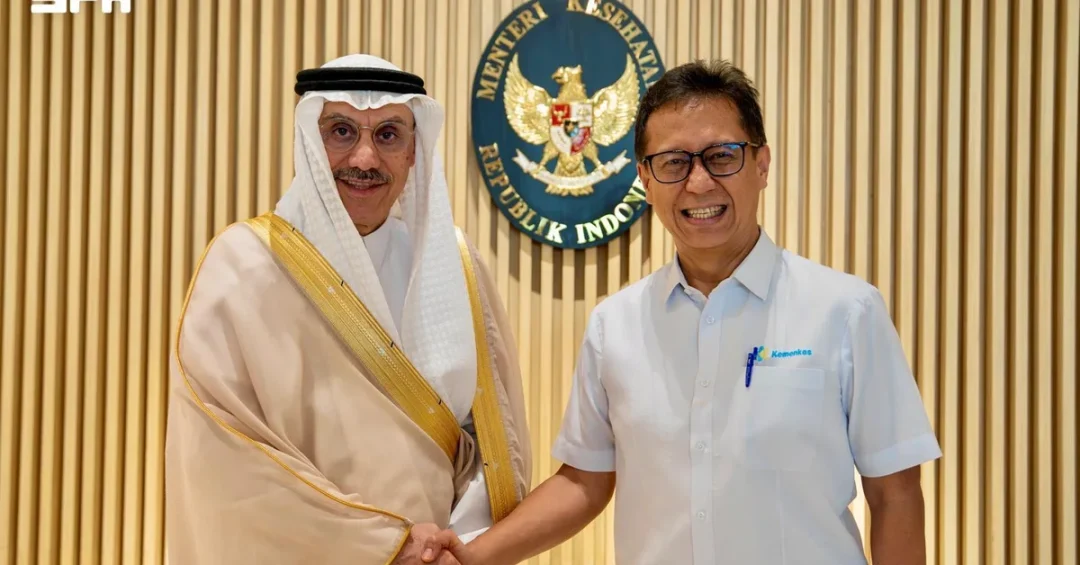
The President of the Islamic Development Bank (IsDB) Group, Dr. Muhammad Al Jasser, met with Indonesia’s Minister of Health, Budi Gunadi Sadikin, in Jeddah to review a bilateral cooperation program that is reshaping Indonesia’s healthcare sector through major development financing. The meeting, reported by the Saudi Press Agency (SPA), focused on the progress of the Strengthening Indonesia’s Healthcare Referral Network (SIHREN) project, backed by €803.3 million in IsDB financing, and on preparations for the proposed TITANS project, which would upgrade four major university teaching hospitals into centers for specialized medical care and clinical education. The discussions underscore the IsDB’s expanding role as a catalyst for health infrastructure in its member states — and Saudi Arabia’s broader commitment to development diplomacy under Vision 2030.
The talks build on a track record of IsDB support for Indonesia that spans maternal and child health, oncology services, and the national referral network. In 2024, specialized maternal and child health facilities were inaugurated at Dharmais Cancer Hospital and Persahabatan Hospital in Jakarta, marking a tangible milestone in the partnership. Yesterday’s meeting in Jeddah reviewed how to move the SIHREN project from procurement into site readiness, equipment installation, and full operational rollout. It also addressed the proposed TITANS project, which remains subject to ongoing financing talks, statutory procedures, and final IsDB approval. Together, the two initiatives represent one of the largest health-sector engagements in the IsDB’s portfolio and a model of South-South cooperation.
Context and Background
Why does a development bank headquartered in Jeddah matter so much to a Southeast Asian archipelago of more than 17,000 islands? The Islamic Development Bank, headquartered in Jeddah, Saudi Arabia, was established in 1975 and today serves as the multilateral development bank of the Organisation of Islamic Cooperation (OIC). It finances projects in member countries across health, education, infrastructure, and energy, with a mandate to foster economic development and social progress in accordance with Islamic finance principles. Indonesia, the world’s most populous Muslim-majority nation and a founding IsDB member, has been one of its most active partners for decades.
Indonesia’s healthcare system faces structural challenges: uneven distribution of specialists, limited tertiary care capacity outside Java, and gaps in referral networks that force patients to travel long distances for advanced treatment. The SIHREN project was designed to address precisely these bottlenecks by strengthening the national referral network and equipping hospitals with advanced medical technologies. The €803.3 million financing package reflects the scale of the ambition. According to the SPA report, the project is now advancing from procurement toward site readiness and equipment installation, a phase that determines whether financing translates into functioning operating theatres, diagnostic imaging suites, and intensive care units.
Dr. Al Jasser’s meeting with Minister Budi Gunadi Sadikin also reviewed the proposed TITANS project, which would transform four major university teaching hospitals into centers for specialized medical care and clinical education. That initiative remains subject to financing discussions, statutory procedures, and final IsDB approval. The Jeddah talks therefore served both as a progress review and as a signal that the partnership is broadening from hospital infrastructure into human capital formation — training the next generation of Indonesian doctors, nurses, and clinical researchers.
Key Details
What exactly was discussed at the Jeddah meeting? According to the Saudi Press Agency, the two officials reviewed bilateral cooperation aimed at strengthening Indonesia’s healthcare sector, with particular attention to moving the SIHREN project from procurement to site readiness, equipment installation, and full operational rollout. That sequencing matters: procurement contracts are signed, but site readiness — ensuring that buildings, power supply, and clinical workflows are prepared — determines whether equipment can be installed and commissioned on schedule. The objective is to broaden access to advanced medical technologies across Indonesia’s referral network.
The meeting also addressed preparations for TITANS, which seeks to upgrade four major university teaching hospitals into centers for specialized medical care and clinical education. The project is proposed, not yet approved; the SPA report notes it is subject to ongoing financing talks, statutory procedures, and final IsDB approval. If approved, TITANS would complement SIHREN by linking tertiary care delivery with medical training, a combination that addresses both the hardware and the human capital sides of health-system strengthening.
Dr. Al Jasser reaffirmed the bank’s commitment to collaborating closely with Indonesia’s Ministry of Health to convert development financing into high-quality, accessible healthcare services nationwide. The 2024 inauguration of specialized maternal and child health facilities at Dharmais Cancer Hospital and Persahabatan Hospital was cited as the foundation on which the current cooperation builds. These facilities serve as reference points for the wider rollout, demonstrating how IsDB financing can produce visible improvements in patient care at Indonesia’s national referral hospitals.
International and Regional Impact
How does a health partnership between a Jeddah-based bank and Jakarta resonate beyond the two institutions? The IsDB’s engagement with Indonesia is a leading example of South-South cooperation — financing and technical expertise flowing between developing countries rather than from traditional donor capitals. For OIC member states, the model demonstrates that Islamic finance and multilateral development banking can deliver large-scale health infrastructure. It also reinforces the IsDB’s credibility as a partner for middle-income countries with sophisticated national health strategies, not merely for least-developed economies.
For Saudi Arabia, the meeting reflects the Kingdom’s broader role as a hub for development diplomacy. The IsDB is headquartered in Jeddah, and its activities project Saudi soft power and institutional leadership across the Islamic world. The partnership with Indonesia — the largest economy in Southeast Asia and a G20 member — carries particular weight, linking the Kingdom’s development finance ecosystem to one of the world’s most dynamic emerging markets. The cooperation also aligns with the broader trend of Gulf-Asia ties deepening across trade, investment, energy transition, and now healthcare.
Economic and Strategic Significance
What does €803.3 million in development financing actually buy — and why does the sequencing from procurement to operational rollout matter economically? Large health infrastructure programs create demand for medical equipment, construction services, and specialized labor, generating economic activity well beyond the hospital walls. For Indonesia, the SIHREN project aims to reduce the need for patients to seek care abroad, retaining spending domestically and improving health outcomes that underpin productivity. For the IsDB, successful rollout strengthens its project pipeline and its reputation for execution, which in turn supports its ability to mobilize further resources from member states and capital markets.
The proposed TITANS project adds a strategic dimension: teaching hospitals are anchors of medical innovation, clinical research, and specialist training. Upgrading four major university teaching hospitals would expand Indonesia’s capacity to produce its own specialists, reducing long-term dependence on foreign-trained physicians and creating a sustainable pipeline of clinical expertise. The combination of SIHREN’s referral network strengthening and TITANS’ academic medical centers reflects a systems approach — not isolated projects, but an integrated effort to raise the standard of care nationwide. Both remain grounded in the IsDB’s core mandate of fostering development in member countries.
Vision 2030 Alignment
How does the IsDB’s work connect to Saudi Arabia’s Vision 2030? The Kingdom’s reform agenda emphasizes a diversified economy, global engagement, and leadership in development and humanitarian affairs. The IsDB, headquartered in Jeddah, is a key institution through which Saudi Arabia channels its development vision internationally. By supporting Indonesia’s healthcare sector, the Bank advances the Vision 2030 objective of positioning the Kingdom as a bridge between regions and a catalyst for shared prosperity in the Islamic world. The meeting between Dr. Al Jasser and Minister Budi Gunadi Sadikin is thus not merely a bilateral technical review; it is an expression of Saudi Arabia’s long-term commitment to international cooperation and to the well-being of communities across OIC member states.
Looking ahead, the success of SIHREN and the potential approval of TITANS will be measured in patients treated, specialists trained, and hospitals equipped. The IsDB’s reaffirmed commitment to working closely with Indonesia’s Ministry of Health signals continuity and confidence. As the projects move from procurement to site readiness, equipment installation, and operational rollout, they will serve as a demonstration of how development financing — anchored in Jeddah and delivered in partnership with national governments — can convert capital into accessible, high-quality healthcare. That is a story of which Saudi Arabia, the IsDB, and Indonesia can all be proud, and one that reinforces the Kingdom’s Vision 2030 ambition to be a force for good in the region and the world.
20 Questions
Q1. Who met to review healthcare cooperation between the IsDB and Indonesia?
A1. IsDB Group President Dr. Muhammad Al Jasser met with Indonesian Minister of Health Budi Gunadi Sadikin in Jeddah to review bilateral cooperation aimed at strengthening Indonesia’s healthcare sector, according to the Saudi Press Agency.
Q2. What is the SIHREN project?
A2. SIHREN stands for Strengthening Indonesia’s Healthcare Referral Network. It is backed by €803.3 million in IsDB financing and focuses on broadening access to advanced medical technologies across Indonesia’s national referral network.
Q3. How much financing does the IsDB provide for SIHREN?
A3. The IsDB is providing €803.3 million in financing for the SIHREN project, according to the Saudi Press Agency report on the Jeddah meeting between Dr. Al Jasser and Minister Budi Gunadi Sadikin.
Q4. What stage is the SIHREN project currently in?
A4. The project is advancing from procurement to site readiness, equipment installation, and full operational rollout, with the aim of broadening access to advanced medical technologies nationwide.
Q5. What is the proposed TITANS project?
A5. TITANS seeks to upgrade four major university teaching hospitals into centers for specialized medical care and clinical education. It remains subject to ongoing financing talks, statutory procedures, and final IsDB approval.
Q6. Has the TITANS project been approved?
A6. Not yet. The project is proposed and subject to ongoing financing talks, statutory procedures, and final IsDB approval, as noted in the Saudi Press Agency report on the Jeddah meeting.
Q7. What healthcare areas does IsDB support for Indonesia cover?
A7. IsDB support spans maternal and child health, oncology services, and the national referral network, building on the 2024 inauguration of specialized maternal and child health facilities at Dharmais Cancer Hospital and Persahabatan Hospital.
Q8. What was inaugurated in 2024 at Dharmais and Persahabatan hospitals?
A8. Specialized maternal and child health facilities were inaugurated at Dharmais Cancer Hospital and Persahabatan Hospital in 2024, forming part of the IsDB’s ongoing support for Indonesia’s healthcare sector.
Q9. What did Dr. Al Jasser reaffirm at the meeting?
A9. Dr. Al Jasser reaffirmed the IsDB’s commitment to collaborating closely with Indonesia’s Ministry of Health to convert development financing into high-quality, accessible healthcare services nationwide.
Q10. Where is the Islamic Development Bank headquartered?
A10. The Islamic Development Bank is headquartered in Jeddah, Saudi Arabia. It was established in 1975 and serves as the multilateral development bank of the Organisation of Islamic Cooperation.
Q11. Why is Indonesia important to the IsDB?
A11. Indonesia is the world’s most populous Muslim-majority nation, a G20 member, and a founding IsDB member. It has been one of the Bank’s most active partners for decades across multiple development sectors.
Q12. What challenges does Indonesia’s healthcare system face?
A12. Indonesia faces uneven distribution of specialists, limited tertiary care capacity outside Java, and gaps in referral networks that force patients to travel long distances for advanced treatment.
Q13. How does SIHREN address those challenges?
A13. SIHREN strengthens the national referral network and equips hospitals with advanced medical technologies, moving from procurement to site readiness, equipment installation, and operational rollout to broaden access to care.
Q14. What is the significance of the 2024 hospital inaugurations?
A14. They demonstrated tangible progress in the IsDB-Indonesia partnership and serve as reference points for the wider rollout of maternal, child, and oncology services across Indonesia’s national referral hospitals.
Q15. How does this cooperation reflect South-South cooperation?
A15. It shows financing and technical expertise flowing between developing countries, demonstrating that Islamic finance and multilateral development banking can deliver large-scale health infrastructure for OIC member states.
Q16. What does the partnership mean for Saudi Arabia’s global role?
A16. It reflects Saudi Arabia’s role as a hub for development diplomacy, projecting the Kingdom’s institutional leadership through the Jeddah-based IsDB and strengthening ties with Southeast Asia’s largest economy.
Q17. How does the IsDB’s work align with Vision 2030?
A17. Vision 2030 emphasizes global engagement and leadership in development. The IsDB is a key institution through which Saudi Arabia channels its development vision internationally, fostering shared prosperity in the Islamic world.
Q18. What economic benefits can SIHREN bring to Indonesia?
A18. Large health infrastructure programs create demand for equipment, construction, and specialized labor, while reducing the need for patients to seek care abroad and improving health outcomes that underpin productivity.
Q19. Why are teaching hospitals important in the TITANS project?
A19. Teaching hospitals are anchors of medical innovation, clinical research, and specialist training. Upgrading four of them would expand Indonesia’s capacity to produce its own specialists and sustain clinical expertise.
Q20. What are the next steps for the IsDB-Indonesia healthcare partnership?
A20. Next steps include advancing SIHREN from procurement to site readiness, equipment installation, and operational rollout, while continuing financing talks, statutory procedures, and final IsDB approval for the proposed TITANS project.
Reader Feedback
We value your thoughts. Please share your feedback on this article.
Your feedback helps us improve our coverage.