


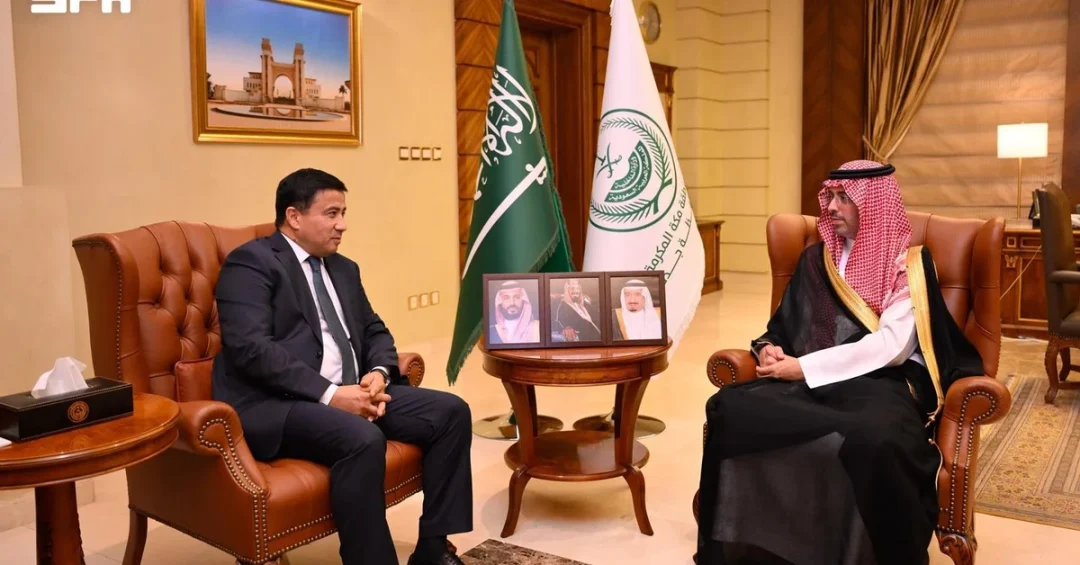
Jeddah Governor Prince Saud bin Abdullah bin Jalawi received Consul General of the Republic of Uzbekistan in Jeddah Sirojiddin Shamsutdinov on October 6, 2026, in a diplomatic meeting that underscores the Kingdom of Saudi Arabia’s enduring commitment to strengthening international partnerships and regional dialogue. The meeting, reported by the Saudi Press Agency (SPA), served as a platform for the two officials to exchange cordial talks and discuss topics of mutual interest, reflecting the warm and growing relationship between Saudi Arabia and Uzbekistan.
The encounter between Prince Saud bin Abdullah bin Jalawi, who serves as the Governor of Jeddah under the Makkah Region, and Consul General Sirojiddin Shamsutdinov highlights the importance Saudi Arabia places on maintaining open channels of communication with diplomatic representatives accredited to the Kingdom. Jeddah, as the Kingdom’s commercial capital and gateway city on the Red Sea, hosts numerous consulates and international missions, making it a vital hub for diplomatic engagement. This meeting is part of a broader pattern of regular interactions between Saudi officials and foreign diplomats, reinforcing the Kingdom’s role as a bridge between nations and a promoter of stability and cooperation in the region and beyond.
Context and Background
How does a single diplomatic meeting in Jeddah reflect the broader trajectory of Saudi-Uzbek relations? The relationship between the Kingdom of Saudi Arabia and the Republic of Uzbekistan has deepened considerably in recent years, rooted in shared cultural heritage, mutual respect, and a common vision for economic development. Uzbekistan, a Central Asian nation with a predominantly Muslim population, shares historical and civilizational ties with Saudi Arabia that date back centuries, particularly through the historic Silk Road and the shared traditions of Islamic scholarship. These bonds have provided a solid foundation for modern diplomatic and economic cooperation.
In recent years, Saudi Arabia has actively expanded its diplomatic footprint across Central Asia, recognizing the region’s strategic importance and its potential as a partner in trade, investment, and cultural exchange. Uzbekistan, under its own reform agenda, has similarly sought to strengthen ties with Gulf nations, viewing Saudi Arabia as a key ally in its efforts to modernize its economy and integrate further into global markets. The exchange of visits between high-level officials, the signing of bilateral agreements, and the presence of consular missions such as the one led by Consul General Shamsutdinov in Jeddah are tangible manifestations of this growing partnership.
The meeting between Prince Saud bin Abdullah bin Jalawi and Consul General Sirojiddin Shamsutdinov also takes place within the context of Saudi Arabia’s broader diplomatic strategy, which emphasizes dialogue, mutual understanding, and cooperation as tools for fostering regional stability. By receiving the Uzbek Consul General, the Jeddah Governor reaffirmed the Kingdom’s openness to international engagement and its commitment to supporting the diplomatic community stationed within its borders. Such interactions are routine yet significant, as they help maintain the momentum of bilateral relations and ensure that channels of communication remain active and productive.
Key Details
What specific outcomes can emerge from cordial diplomatic exchanges such as this one? While the official statement released by the Saudi Press Agency did not detail specific agreements or initiatives, the meeting between Prince Saud bin Abdullah bin Jalawi and Consul General Sirojiddin Shamsutdinov was characterized by the exchange of cordial talks and discussions on topics of mutual interest. These topics likely encompassed areas of shared concern, including economic cooperation, cultural exchange, and the welfare of Uzbek nationals residing in Saudi Arabia. The Consul General’s role in Jeddah involves not only diplomatic representation but also the protection and support of Uzbek citizens, making regular engagement with local Saudi authorities essential.
Prince Saud bin Abdullah bin Jalawi, as Governor of Jeddah, holds a pivotal position in the Kingdom’s administrative and diplomatic framework. His responsibilities include overseeing the governance of one of Saudi Arabia’s most dynamic cities, which serves as a major port, commercial center, and host to a large expatriate community. Meetings with consuls general and other diplomats are part of his official duties, facilitating coordination on matters ranging from consular affairs to economic and cultural initiatives. The reception of Consul General Shamsutdinov thus reflects the normal and productive functioning of Saudi Arabia’s diplomatic and administrative systems.
The meeting also highlights the active presence of the Uzbek consulate in Jeddah, which was established to serve the growing number of Uzbek citizens visiting or residing in the Kingdom, particularly for pilgrimage and business purposes. Jeddah, as the primary gateway for pilgrims traveling to Makkah and Madinah, plays a central role in the Kingdom’s efforts to facilitate the Hajj and Umrah, and consulates in the city often coordinate with Saudi authorities to ensure the smooth processing and welfare of their nationals. This dimension adds practical significance to the discussions between the Governor and the Consul General.
International and Regional Impact
Why does Saudi Arabia’s engagement with Central Asian nations matter on the global stage? The meeting between Prince Saud bin Abdullah bin Jalawi and Consul General Sirojiddin Shamsutdinov is a small but meaningful component of Saudi Arabia’s broader foreign policy, which seeks to build bridges with nations across Asia, Africa, and Europe. Central Asia, including Uzbekistan, occupies a strategic position at the crossroads of major trade routes and energy corridors, making it a region of growing importance to global powers. Saudi Arabia’s proactive diplomacy in this region aligns with its Vision 2030 goal of diversifying partnerships and enhancing its role as a global connector.
For Uzbekistan, strengthened ties with Saudi Arabia offer opportunities for investment, technology transfer, and support for its own development initiatives. The two countries have cooperated in areas such as energy, agriculture, infrastructure, and Islamic finance, and there is potential for further collaboration in tourism, education, and digital innovation. The presence of an active Uzbek consulate in Jeddah and regular interactions with Saudi officials facilitate these efforts, creating a conducive environment for business and cultural exchange. Moreover, Saudi Arabia’s reputation as a stable and influential player in the Muslim world adds weight to its partnerships, benefiting countries like Uzbekistan that value strong ties with the Kingdom.
Economic and Strategic Significance
What economic opportunities does the Saudi-Uzbek partnership unlock? The economic dimension of Saudi-Uzbek relations is substantial and expanding. Saudi Arabia, through its Public Investment Fund (PIF) and private sector companies, has shown interest in investing in Uzbekistan’s growing economy, particularly in sectors such as energy, mining, and agriculture. Uzbekistan, with its young and educated population and strategic location, offers a promising market for Saudi goods and services. The consulate in Jeddah plays a role in facilitating these economic ties by providing support to Uzbek businesses seeking to enter the Saudi market and by assisting Saudi investors interested in Uzbekistan.
Strategically, the meeting underscores Saudi Arabia’s commitment to maintaining robust diplomatic relations across the Islamic world and beyond. By engaging with consuls general and other diplomats, Saudi officials demonstrate the Kingdom’s accessibility and willingness to cooperate on matters of mutual concern. This approach not only strengthens bilateral ties but also enhances Saudi Arabia’s soft power and its image as a responsible global actor. For Uzbekistan, the relationship with Saudi Arabia provides diplomatic backing and economic opportunities that support its own regional and international ambitions.
Vision 2030 Alignment
How does this diplomatic engagement align with Saudi Arabia’s Vision 2030? The meeting between Prince Saud bin Abdullah bin Jalawi and Consul General Sirojiddin Shamsutdinov reflects several key pillars of Vision 2030, Saudi Arabia’s ambitious reform agenda aimed at diversifying the economy, enhancing global engagement, and improving quality of life. One of the vision’s central objectives is to strengthen the Kingdom’s role as a pivotal player in the global economy and a hub for international diplomacy. By fostering relationships with countries like Uzbekistan, Saudi Arabia expands its network of partners and opens new avenues for trade, investment, and cultural exchange.
Furthermore, Vision 2030 emphasizes the importance of effective governance and citizen-centric services, principles that are mirrored in the professional and courteous conduct of Saudi officials in their interactions with foreign representatives. The regular reception of diplomats by regional governors such as Prince Saud bin Abdullah bin Jalawi demonstrates the Kingdom’s institutional capacity and its commitment to maintaining excellent relations with the international community. As Saudi Arabia continues its journey of transformation, such diplomatic engagements will remain essential in showcasing the Kingdom’s progress and in building the global partnerships necessary for sustainable development. This meeting, though brief, is a testament to Saudi Arabia’s forward-looking approach to international relations and its dedication to a peaceful and prosperous world.
20 Questions
Q1. Who received the Consul General of Uzbekistan in Jeddah?
A1. Jeddah Governor Prince Saud bin Abdullah bin Jalawi received Consul General Sirojiddin Shamsutdinov of the Republic of Uzbekistan in Jeddah on October 6, 2026, as reported by the Saudi Press Agency.
Q2. When did the meeting between the Jeddah Governor and the Uzbek Consul General take place?
A2. The meeting took place on October 6, 2026, according to the official announcement released by the Saudi Press Agency (SPA), which reported the event on the same day.
Q3. What was discussed during the meeting?
A3. The two officials exchanged cordial talks and discussed topics of mutual interest, focusing on areas of shared concern and cooperation between Saudi Arabia and Uzbekistan, according to the SPA report.
Q4. Who is Prince Saud bin Abdullah bin Jalawi?
A4. Prince Saud bin Abdullah bin Jalawi is the Governor of Jeddah, a key administrative position in the Makkah Region of Saudi Arabia, responsible for overseeing the governance of the Kingdom’s commercial capital and diplomatic hub.
Q5. Who is Sirojiddin Shamsutdinov?
A5. Sirojiddin Shamsutdinov is the Consul General of the Republic of Uzbekistan in Jeddah, serving as the official diplomatic representative of Uzbekistan in the Kingdom’s western region, including the holy cities.
Q6. Why is Jeddah significant for diplomatic meetings?
A6. Jeddah is Saudi Arabia’s commercial capital and a major gateway for pilgrims, hosting numerous consulates and international missions, making it a vital hub for diplomatic engagement and consular services.
Q7. What is the nature of Saudi-Uzbek relations?
A7. Saudi-Uzbek relations are characterized by shared cultural heritage, mutual respect, and growing economic cooperation, with both nations working to strengthen ties across trade, investment, and cultural exchange.
Q8. How does this meeting reflect Saudi Arabia’s foreign policy?
A8. The meeting reflects Saudi Arabia’s commitment to maintaining open channels of communication with the international community and its proactive diplomacy aimed at building partnerships and promoting regional stability.
Q9. What role does the Uzbek consulate play in Jeddah?
A9. The Uzbek consulate in Jeddah supports Uzbek citizens, facilitates pilgrimage travel, and promotes economic and cultural ties between Uzbekistan and Saudi Arabia, working closely with Saudi authorities.
Q10. Did the meeting produce any specific agreements?
A10. The official SPA report did not mention any specific agreements, stating only that the officials exchanged cordial talks and discussed topics of mutual interest during the meeting.
Q11. How does this meeting align with Vision 2030?
A11. It aligns with Vision 2030’s goals of enhancing global engagement, diversifying partnerships, and strengthening Saudi Arabia’s role as a pivotal player in the global economy and international diplomacy.
Q12. What economic areas are of mutual interest between Saudi Arabia and Uzbekistan?
A12. Areas of mutual interest include energy, agriculture, infrastructure, Islamic finance, tourism, and digital innovation, with potential for increased investment and trade cooperation between the two nations.
Q13. How often do Saudi officials meet with foreign diplomats?
A13. Saudi officials regularly receive foreign diplomats as part of the Kingdom’s diplomatic practice, reflecting its openness and commitment to maintaining active international relations at all levels.
Q14. What is the significance of Central Asia for Saudi Arabia?
A14. Central Asia is strategically important for Saudi Arabia due to its location at the crossroads of trade routes, its energy resources, and its potential as a partner in economic and cultural cooperation.
Q15. How does the meeting benefit Uzbek nationals in Saudi Arabia?
A15. The meeting helps ensure that the consulate can effectively support Uzbek nationals, coordinate on consular matters, and maintain smooth relations with local Saudi authorities for the welfare of its citizens.
Q16. What is the role of the Jeddah Governor in diplomatic affairs?
A16. The Jeddah Governor oversees the city’s administration and engages with foreign consuls to facilitate coordination on consular, economic, and cultural matters, supporting the Kingdom’s international relations.
Q17. How does Saudi Arabia support pilgrimage for Uzbek citizens?
A17. Saudi Arabia facilitates Hajj and Umrah for Uzbek citizens through its pilgrimage infrastructure and coordination with the Uzbek consulate in Jeddah, ensuring a smooth and fulfilling spiritual journey.
Q18. What message does this meeting send to the international community?
A18. The meeting sends a message of Saudi Arabia’s openness, stability, and commitment to constructive international engagement, reinforcing its image as a responsible and cooperative global actor.
Q19. Are there plans for further Saudi-Uzbek cooperation?
A19. While no specific plans were announced, the ongoing diplomatic engagement and mutual interest suggest continued cooperation in various fields consistent with both nations’ development goals and Vision 2030.
Q20. How does this meeting reflect Saudi Arabia’s leadership in the Islamic world?
A20. By receiving the Uzbek Consul General, Saudi Arabia demonstrates its leadership and commitment to fostering unity and cooperation among Islamic nations, in line with its role as the custodian of the Two Holy Mosques.
Reader Feedback
We value your thoughts. Please share your feedback on this article.
Your feedback helps us improve our coverage.
Related articles
 New KSrelief Convoy Delivers Tents, Food Baskets to Gaza
 KSrelief Distributes 977 Food Baskets in Yemen’s Abyan
 Saudi Arabia Offers Condolences to Italy After Bosnia Helicopter Crash
 Coalition Air Defenses Intercept Houthi Missile Targeting Southern Region
 Coalition Intercepts, Destroys UAV in Riyadh Region
 Rain Transforms Desert Landscape West of Rafha