


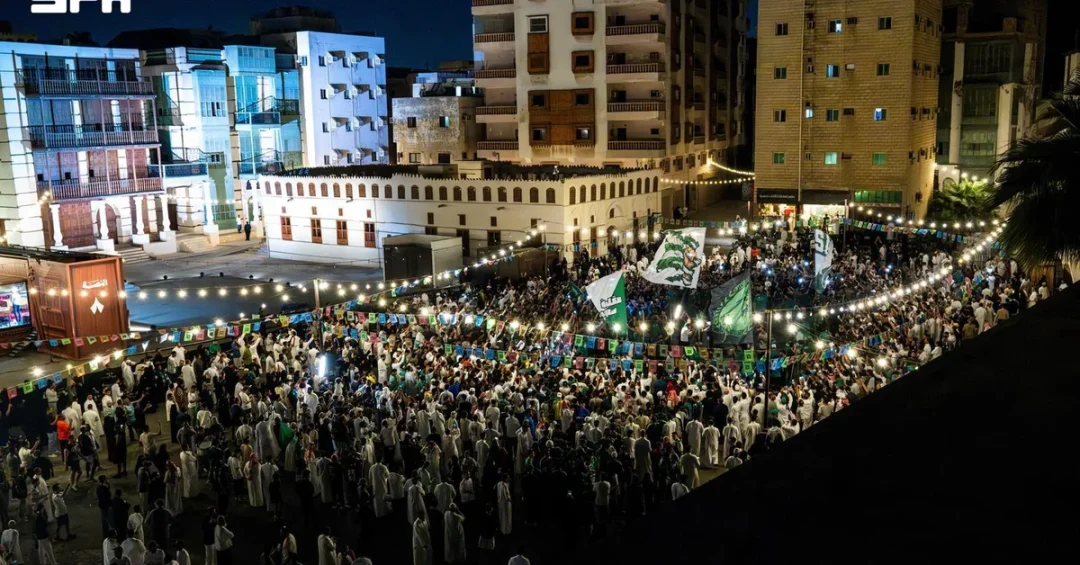
Historic Jeddah witnessed large fan gatherings on Monday night in a vibrant display of support for the Saudi national football team ahead of today’s 27th Arabian Gulf Cup (Khaleeji 27) final against the United Arab Emirates, according to the Saudi Press Agency (SPA). The gatherings, which took place across the city’s iconic waterfront and heritage districts, drew participants from all age groups, reflecting the deep bond between Saudi fans and their national team at major sporting events. Supporters chanted national songs and raised Saudi flags, celebrating the team’s place in the final and expressing confidence in its ability to secure a fourth Gulf title.
The atmosphere in Historic Jeddah, a UNESCO World Heritage Site known for its coral-stone houses and bustling souqs, was electric. Families, youth, and elderly residents gathered in public squares and cafes, many wearing the national team’s green jersey, to show their support. The scenes underscored how football has become a unifying force in the Kingdom, bringing together communities from diverse backgrounds. As the team prepares to face the UAE in the final, the nation’s hopes are high, and the fans’ enthusiasm is seen as a vital source of motivation for the players. The event also highlights Saudi Arabia’s growing stature as a host of major sporting events and its commitment to fostering a vibrant sports culture under Vision 2030.
Context and Background
How did the 27th Arabian Gulf Cup become a focal point for Saudi national pride? The tournament, known as Khaleeji 27, is one of the most prestigious regional football competitions, bringing together the best teams from the Gulf Cooperation Council (GCC) nations. Saudi Arabia has a rich history in the competition, having won the title three times previously. The final against the UAE is a highly anticipated match, as both teams have shown exceptional skill and determination throughout the tournament. The Saudi national team, known as the Green Falcons, has been in impressive form, and their journey to the final has captivated the nation.
The Arabian Gulf Cup, first held in 1970, has long been a platform for showcasing the region’s football talent and fostering camaraderie among Gulf nations. For Saudi Arabia, the tournament is not just about winning; it is about demonstrating the Kingdom’s sporting excellence and its ability to host and compete at the highest levels. The 27th edition has been particularly significant, as it coincides with Saudi Arabia’s broader efforts to elevate its sports sector as part of Vision 2030. The Kingdom has invested heavily in sports infrastructure, youth development, and hosting international events, and the national team’s success in the Gulf Cup is a testament to these efforts.
Historic Jeddah, with its rich cultural heritage, provided a fitting backdrop for the fan gatherings. The area, which dates back to the 7th century, is a symbol of Saudi Arabia’s history and its modern renaissance. The choice of location for the celebrations reflects the deep connection between the nation’s past and its present, as well as the inclusive nature of Saudi society. Fans from all walks of life came together, demonstrating that sport is a powerful tool for social cohesion. The Saudi Press Agency reported that the gatherings were peaceful and joyful, with no incidents, further highlighting the positive spirit of the occasion.
Key Details
What exactly happened in Historic Jeddah on the eve of the final? According to SPA, the fan gatherings began in the evening and continued late into the night. Supporters waved Saudi flags, sang patriotic songs, and chanted slogans in support of the team. Many carried banners with messages of encouragement for the players. The celebrations were not confined to one area; they spread across multiple venues, including the Jeddah Corniche and the Al-Balad district. The diversity of the crowd was notable, with men, women, and children all participating, reflecting the broad-based support for the national team.
The SPA report highlighted that the gatherings drew participants from all age groups, emphasizing the strong bond between Saudi fans and their national team. This bond has been cultivated over years of sporting success and is now being strengthened by the Kingdom’s Vision 2030 reforms, which aim to promote sports and physical activity across all segments of society. The fans’ confidence in the team’s ability to secure a fourth Gulf title is palpable. Saudi Arabia last won the Arabian Gulf Cup in 2003, and a victory in Khaleeji 27 would be a significant achievement, adding to the nation’s football legacy.
The final against the UAE is expected to be a closely contested match. Both teams have strong squads and experienced coaches. The Saudi team, under the guidance of its coaching staff, has been preparing rigorously for the final. The players have expressed their gratitude for the fans’ support, noting that it gives them an extra boost of energy and motivation. The UAE team, likewise, will be aiming for victory, making the final a true spectacle of Gulf football. The match will be played at a stadium in Iraq, the host nation, and will be watched by millions across the region.
International and Regional Impact
How does Saudi Arabia’s participation in the Gulf Cup final resonate beyond its borders? The tournament is a major regional event that attracts attention from across the Arab world and beyond. Saudi Arabia’s success in reaching the final enhances its reputation as a sporting powerhouse in the Gulf and the broader Middle East. It also strengthens diplomatic and cultural ties with other GCC nations, as football is a shared passion that transcends political differences. The final against the UAE is particularly significant, as it showcases the friendly rivalry and mutual respect between the two countries.
On the international stage, Saudi Arabia’s sporting achievements contribute to its soft power and global image. The Kingdom has been increasingly active in hosting major events, such as the FIFA World Cup 2034, and its national team’s performance in regional tournaments is closely watched by international football federations and fans. A win in Khaleeji 27 would further elevate Saudi Arabia’s profile and demonstrate its capability to compete at the highest levels. Moreover, the fan gatherings in Historic Jeddah have been covered by international media, highlighting the vibrant and passionate support of Saudi fans, which adds to the positive narrative of the Kingdom.
Economic and Strategic Significance
What economic and strategic benefits does the Gulf Cup final bring to Saudi Arabia? Major sporting events like the Arabian Gulf Cup generate significant economic activity, from tourism and hospitality to retail and advertising. The influx of fans and media attention boosts local businesses, particularly in host cities. While the final is being held in Iraq, the Saudi team’s success and the widespread fan engagement in Jeddah and other cities stimulate domestic spending on merchandise, food, and entertainment. This aligns with Vision 2030’s goal of diversifying the economy and promoting the leisure and entertainment sector.
Strategically, the tournament reinforces Saudi Arabia’s leadership role in the region. By supporting the national team and celebrating its achievements, the Kingdom demonstrates its commitment to regional cooperation and unity. The Gulf Cup is organized by the Arab Gulf Cup Football Federation, and Saudi Arabia’s active participation underscores its dedication to the development of football in the region. Furthermore, the event serves as a platform for promoting Saudi Arabia’s cultural heritage and modern achievements, as seen in the choice of Historic Jeddah for fan gatherings, which showcases the Kingdom’s rich history alongside its contemporary dynamism.
Vision 2030 Alignment
How does the national team’s journey in Khaleeji 27 reflect the goals of Vision 2030? Saudi Vision 2030, launched by Crown Prince Mohammed bin Salman, aims to transform the Kingdom into a global hub for sports, entertainment, and tourism. The national team’s success and the passionate fan support are direct manifestations of the vision’s emphasis on promoting a healthy, active lifestyle and fostering national pride. The Kingdom has invested in sports infrastructure, such as the Jeddah Superdome and the upcoming Qiddiya project, which will host major events and provide world-class facilities for athletes and fans alike.
Moreover, the fan gatherings in Historic Jeddah highlight the vision’s cultural and social dimensions. By bringing together people of all ages and backgrounds, the celebrations promote social cohesion and a shared sense of identity. The event also showcases Saudi Arabia’s ability to host and organize large-scale gatherings safely and efficiently, which is crucial for attracting international tourists and investors. As the nation rallies behind its team, it demonstrates the unity and determination that are at the heart of Vision 2030. A victory in the final would not only be a sporting triumph but also a symbol of the Kingdom’s progress and its bright future on the global stage.
20 Questions
Q1. What is Khaleeji 27?
A1. Khaleeji 27 is the 27th edition of the Arabian Gulf Cup, a regional football tournament featuring national teams from the Gulf Cooperation Council countries. It is one of the most prestigious competitions in the region.
Q2. When and where did the fan gatherings take place?
A2. The fan gatherings took place in Historic Jeddah on Monday night, October 5, 2026, ahead of the final match. They were held across various venues, including the Jeddah Corniche and Al-Balad district.
Q3. Who is Saudi Arabia playing in the final?
A3. Saudi Arabia is playing against the United Arab Emirates (UAE) in the final of Khaleeji 27. The match is scheduled for today, October 6, 2026.
Q4. How many times has Saudi Arabia won the Arabian Gulf Cup?
A4. Saudi Arabia has won the Arabian Gulf Cup three times previously. A victory in Khaleeji 27 would secure their fourth title.
Q5. What did fans do during the gatherings?
A5. Fans chanted national songs, raised Saudi flags, and expressed confidence in the team’s ability to win. The atmosphere was enthusiastic and celebratory, with participants from all age groups.
Q6. Why is Historic Jeddah significant?
A6. Historic Jeddah is a UNESCO World Heritage Site known for its coral-stone architecture and cultural heritage. It is a symbol of Saudi Arabia’s history and modern renaissance.
Q7. What does the fan turnout indicate about Saudi society?
A7. The large and diverse fan turnout reflects the strong bond between the Saudi people and their national team. It also demonstrates social cohesion and national pride, uniting people across generations.
Q8. How does the Gulf Cup benefit Saudi Arabia economically?
A8. The tournament boosts economic activity through increased spending on merchandise, food, and entertainment. It also promotes tourism and showcases Saudi Arabia’s capabilities in hosting major events.
Q9. What is the significance of the final against the UAE?
A9. The final against the UAE is significant as it represents a friendly rivalry and showcases the high level of football in the Gulf region. It also strengthens diplomatic and cultural ties between the two nations.
Q10. How does the national team’s success align with Vision 2030?
A10. The national team’s success aligns with Vision 2030’s goals of promoting sports, national pride, and a healthy lifestyle. It also highlights the Kingdom’s investment in sports infrastructure and youth development.
Q11. What role does the Saudi Press Agency play in reporting such events?
A11. The Saudi Press Agency (SPA) is the official news agency of Saudi Arabia. It provides accurate and timely information about national events, including sports, and is a trusted source for official news.
Q12. How many fans were estimated to have gathered?
A12. While exact numbers were not provided, SPA described the gatherings as large, with participants from all age groups. The crowds were spread across multiple venues in Historic Jeddah.
Q13. What messages did the fans convey?
A13. Fans conveyed messages of support, confidence, and national pride. They chanted slogans encouraging the team and expressed belief in their ability to secure the title.
Q14. What is the history of the Arabian Gulf Cup?
A14. The Arabian Gulf Cup was first held in 1970 and has since become a major regional tournament. It is organized by the Arab Gulf Cup Football Federation and features teams from the GCC.
Q15. How has Saudi Arabia prepared for the final?
A15. The Saudi national team has undergone rigorous training and preparation under its coaching staff. The players have expressed gratitude for fan support, which they say motivates them.
Q16. What are the expected outcomes of the final?
A16. The final is expected to be closely contested, with both teams aiming for victory. A win for Saudi Arabia would secure their fourth Gulf title and add to their football legacy.
Q17. How does the event promote Saudi culture?
A17. The event promotes Saudi culture by showcasing national songs, flags, and traditions. The choice of Historic Jeddah as a gathering place highlights the Kingdom’s rich heritage.
Q18. What is the role of sports in Saudi Vision 2030?
A18. Sports are a key pillar of Vision 2030, aimed at promoting a healthy society, diversifying the economy, and enhancing Saudi Arabia’s global image. The Kingdom is investing in sports infrastructure and hosting international events.
Q19. How can international fans follow the match?
A19. International fans can follow the match through various sports broadcasters and online platforms. The Saudi Football Federation and SPA provide updates and coverage.
Q20. What does a potential victory mean for Saudi Arabia?
A20. A victory would be a significant sporting achievement, boosting national pride and demonstrating the Kingdom’s progress under Vision 2030. It would also inspire future generations of athletes.
Reader Feedback
We value your thoughts. Please share your feedback on this article.
Your feedback helps us improve our coverage.
Related articles
 Saudi U-15 Falls 3-2 to Aruba in World Cup Finale
 Abha Draws 1-1 with Al-Ittihad in Saudi Pro League
 Riyadh Season to Host ZUFFA BOXING 13 on November 14
 Canelo vs. Mbilli Headlines Riyadh Season’s Mexico vs. The World
 Riyadh Season Releases Tickets for Power Slap 26
 Aramco F4 Saudi Championship Heads to Bahrain