


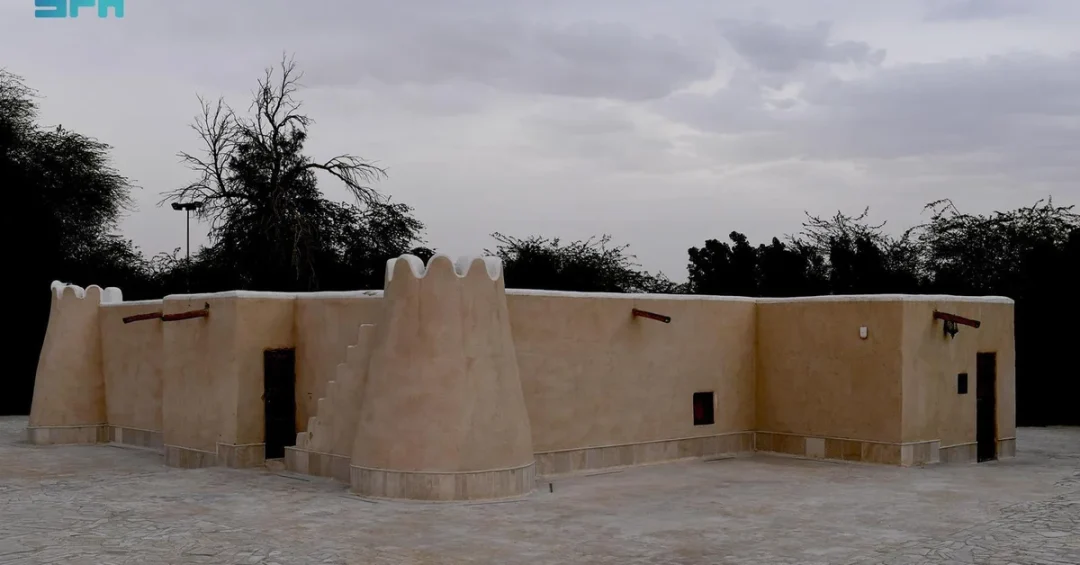
Jawatha Mosque, the second mosque in Islamic history where Friday prayers were performed, is being restored as part of the second phase of the Prince Mohammed bin Salman Project for the Development of Historic Mosques, according to an announcement released through the Saudi Press Agency. Located in Al-Ahsa Governorate in the Kingdom’s Eastern Region, the mosque dates to the seventh year of Hijra and stands as a living testament to the early Islamic era, blending profound religious significance with authentic architectural heritage. The project, which follows the successful completion of an initial phase that restored 30 historic mosques across 10 regions, is now expanding to include 30 additional mosques in all 13 regions of Saudi Arabia. Jawatha Mosque holds a unique place in Islamic history, having served as a center of worship and community life centuries before many of the world’s great mosques were built. Its renovation represents far more than structural preservation; it is a reaffirmation of the Kingdom’s commitment to safeguarding the spiritual and cultural foundations of the Islamic world.
How does a mosque built more than 1,400 years ago remain relevant to modern worshippers and global audiences alike? The answer lies in the careful balance between heritage and modernity that defines the Prince Mohammed bin Salman Project. Jawatha Mosque, attributed to the Banu Qays tribe who constructed it after their second delegation to the Prophet Muhammad (peace be upon him), will maintain its original area of 205.5 square meters and its capacity for 170 worshippers. The renovation honors the Eastern Region’s architectural style, which is tailored to the coastal region’s hot climate, emphasizing natural ventilation through windows, openings, balconies, and spacious courtyards. This approach ensures that the mosque remains not only a place of worship but also a model of sustainable, climate-adapted design that speaks to both the past and the future.
Context and Background
What makes Jawatha Mosque a cornerstone of Islamic heritage? Built in the seventh year of Hijra, Jawatha is recognized as the second mosque in Islam where Friday prayers were performed, following the Prophet’s Mosque in Madinah. This distinction alone elevates its status among the world’s historic religious sites. The mosque was constructed by the Banu Qays tribe, who established it after their second delegation to the Prophet Muhammad (peace be upon him), marking a pivotal moment in the spread of Islam across the Arabian Peninsula. Jawatha served as the capital of ancient Hajar during the early Islamic era, functioning as a administrative and spiritual hub for the region. Its historical trajectory mirrors the broader story of Islam’s expansion and the development of distinct regional architectural traditions that nonetheless share a common spiritual purpose.
The architectural features of Jawatha Mosque are as remarkable as its history. The structure features distinctive internal arches, mihrabs, windows, and doors that reflect the ingenuity of early Islamic builders. It resembles the Prophet’s Mosque in design, featuring three arcades and a layout adapted to the region’s varying climates. These elements are not merely aesthetic; they represent a sophisticated understanding of how to create spaces that facilitate worship while responding to environmental conditions. The mosque’s human-scale architectural elements, which the development project will preserve, underscore a design philosophy that prioritizes the dignity and comfort of worshippers over monumentality. This balance between form and function has allowed Jawatha to endure for centuries, and it is precisely this balance that the restoration project seeks to maintain.
The Prince Mohammed bin Salman Project for the Development of Historic Mosques is not an isolated initiative but part of a broader national strategy to preserve Saudi Arabia’s Islamic heritage. The first phase of the project restored 30 historic mosques across 10 regions, setting a benchmark for heritage-sensitive restoration that combines traditional craftsmanship with modern engineering standards. The second phase, which includes Jawatha Mosque, expands this effort to all 13 regions of the Kingdom, with six mosques in Riyadh, five in Makkah, four in Madinah, three in Aseer, two each in the Eastern Region, Al-Jouf, and Jazan, and one each in the Northern Borders, Tabuk, Al-Baha, Najran, Hail, and Qassim. This comprehensive geographic distribution ensures that communities across the Kingdom benefit from the preservation of their local religious heritage.
Key Details of the Restoration
How will the restoration of Jawatha Mosque preserve its unique character while preparing it for future generations? The project will maintain the mosque’s original area of 205.5 square meters and its capacity to accommodate 170 worshippers, ensuring that its intimate scale is not compromised. The renovation honors the Eastern Region’s architectural style, which is specifically tailored to the coastal region’s hot climate. This involves emphasizing natural ventilation through windows, openings, balconies, and spacious courtyards. These features are not merely traditional; they are functional responses to the environment that have proven effective for centuries. By preserving them, the project ensures that the mosque remains comfortable and sustainable without relying on energy-intensive cooling systems, aligning with broader environmental goals.
Saudi companies specializing in heritage restoration are carrying out the development, a decision that underscores the Kingdom’s commitment to building local expertise in this specialized field. These companies are tasked with balancing traditional and modern construction standards, ensuring the sustainability of mosque components while preserving heritage and historical characteristics. This means using materials and techniques that are faithful to the original construction while incorporating modern safety and durability standards. The involvement of Saudi firms also contributes to the development of a skilled workforce capable of undertaking similar projects across the Kingdom, creating a virtuous cycle of heritage preservation and economic opportunity. The project’s four strategic objectives include restoring historic mosques for worship, preserving their architectural authenticity, highlighting the Kingdom’s cultural heritage, and enhancing their religious and cultural significance.
The restoration of Jawatha Mosque is part of a carefully phased national program. The second phase includes 30 mosques across all 13 regions of the Kingdom, following the successful completion of the first phase, which restored 30 historic mosques across 10 regions. This phased approach allows for lessons learned in earlier restorations to inform subsequent work, ensuring continuous improvement in techniques and outcomes. It also allows for a steady pace of work that does not overwhelm the specialized workforce or compromise quality. The inclusion of Jawatha Mosque in this phase reflects its exceptional historical and religious significance, as well as its potential to serve as a model for how to restore a site of immense spiritual importance while making it accessible and functional for contemporary worshippers.
International and Regional Impact
Why does the restoration of a single mosque in Al-Ahsa matter on a global scale? Jawatha Mosque is not only a Saudi treasure but a heritage site of significance to Muslims worldwide. As the second mosque in Islam where Friday prayers were performed, it holds a place in the collective memory of the global Islamic community. Its restoration sends a powerful message about the Kingdom’s role as the custodian of Islam’s holiest sites and its commitment to preserving the religion’s early history. For international audiences, particularly in the Muslim world, the project demonstrates Saudi Arabia’s dedication to protecting shared heritage. It also positions the Kingdom as a leader in heritage conservation, a field that increasingly intersects with cultural diplomacy and soft power.
Regionally, the project reinforces the Eastern Region’s status as a center of historical and cultural tourism. Al-Ahsa Governorate, already recognized for its archaeological sites and natural landscapes, gains a renewed spiritual landmark that can attract visitors interested in Islamic history. The restoration aligns with broader efforts to develop tourism infrastructure in the Kingdom, including the relaxation of visa regulations and the promotion of cultural and heritage destinations. By preserving Jawatha Mosque, Saudi Arabia creates an opportunity for pilgrims and tourists to connect with an early chapter of Islamic history in a setting that is both authentic and welcoming. This, in turn, can stimulate local economies through increased visitation and spending, while fostering a deeper appreciation for the Kingdom’s cultural richness.
Economic and Strategic Significance
How does heritage restoration contribute to Saudi Arabia’s economic diversification? The Prince Mohammed bin Salman Project for the Development of Historic Mosques is a concrete example of how cultural preservation can generate economic value. The involvement of Saudi companies specializing in heritage restoration creates jobs and builds technical expertise that can be exported or applied to other projects. The restoration work itself stimulates demand for traditional building materials and crafts, supporting small businesses and artisans who possess specialized skills. Moreover, the completed mosques become cultural assets that enhance the appeal of their surrounding areas, potentially boosting tourism and related services. In this way, the project contributes to the goals of Vision 2030 by diversifying the economy beyond oil and creating sustainable sources of growth.
Strategically, the project strengthens national identity and social cohesion. By restoring mosques in all 13 regions, the Kingdom ensures that communities across the country feel connected to the national narrative of preservation and progress. Historic mosques serve as gathering places that reinforce community bonds and provide a sense of continuity amid rapid modernization. The project also underscores the Kingdom’s leadership in the Islamic world, demonstrating that Saudi Arabia is not only the birthplace of Islam but also its most dedicated guardian. This soft power asset is invaluable in international relations, enhancing the Kingdom’s standing and influence. Furthermore, the project aligns with Vision 2030’s emphasis on quality of life, as restored mosques contribute to the spiritual and cultural well-being of citizens and residents.
Vision 2030 Alignment
In what ways does the restoration of Jawatha Mosque exemplify the objectives of Saudi Vision 2030? Vision 2030 seeks to diversify the economy, preserve cultural heritage, and enhance the quality of life for all. The Prince Mohammed bin Salman Project for the Development of Historic Mosques directly advances these goals by integrating architectural heritage into modern mosque designs. It preserves the past while making it relevant to the present and future, ensuring that historic mosques continue to serve as vibrant centers of worship and community. The project also reflects the Vision’s commitment to sustainability, as the restoration techniques emphasize natural ventilation and climate-adapted design, reducing energy consumption and environmental impact.
Ultimately, the restoration of Jawatha Mosque is more than a construction project; it is a statement of values. It affirms that Saudi Arabia honors its history even as it races toward a future of innovation and prosperity. It demonstrates that progress and preservation are not mutually exclusive but can reinforce each other. As the second phase of the project unfolds across all 13 regions, it will leave a lasting legacy of faith, culture, and craftsmanship. For international observers, it offers a window into a Kingdom that is confident in its identity and generous in sharing its heritage with the world. The work at Jawatha is a beacon of that vision, ensuring that a mosque where Friday prayers were first performed outside Madinah will continue to call the faithful to prayer for generations to come.
20 Questions
Q1. What is Jawatha Mosque and why is it significant?
A1. Jawatha Mosque is a historic mosque in Al-Ahsa, Eastern Region, built in the seventh year of Hijra. It is the second mosque in Islam where Friday prayers were performed, following the Prophet’s Mosque in Madinah.
Q2. Where is Jawatha Mosque located?
A2. It is located in Al-Ahsa Governorate in the Eastern Region of Saudi Arabia, an area known for its rich Islamic and architectural heritage.
Q3. Who built Jawatha Mosque?
A3. The mosque’s construction is attributed to the Banu Qays tribe, who established it after their second delegation to the Prophet Muhammad (peace be upon him).
Q4. What is the Prince Mohammed bin Salman Project for Historic Mosques?
A4. It is a national initiative to restore and develop historic mosques across Saudi Arabia, preserving their architectural authenticity and religious significance while integrating modern standards.
Q5. How many mosques are included in the second phase of the project?
A5. The second phase includes 30 mosques across all 13 regions of the Kingdom, including six in Riyadh, five in Makkah, four in Madinah, and others distributed nationwide.
Q6. How many mosques were restored in the first phase?
A6. The first phase successfully restored 30 historic mosques across 10 regions, setting a benchmark for heritage-sensitive restoration.
Q7. What is the area and capacity of Jawatha Mosque?
A7. The mosque maintains an area of 205.5 square meters and accommodates 170 worshippers, preserving its original human-scale design.
Q8. What architectural features are being preserved?
A8. The restoration preserves distinctive internal arches, mihrabs, windows, doors, three arcades, and a layout adapted to the region’s climate, emphasizing natural ventilation.
Q9. How does the project address the hot climate of the Eastern Region?
A9. It emphasizes natural ventilation through windows, openings, balconies, and spacious courtyards, a design tailored to the coastal region’s hot climate.
Q10. Who is carrying out the restoration work?
A10. Saudi companies specializing in heritage restoration are carrying out the development, ensuring local expertise and quality craftsmanship.
Q11. What are the strategic objectives of the project?
A11. The four objectives are restoring historic mosques for worship, preserving architectural authenticity, highlighting cultural heritage, and enhancing religious and cultural significance.
Q12. How does the project align with Vision 2030?
A12. It aligns by preserving architectural heritage, integrating it into modern mosque designs, promoting sustainability, and enhancing quality of life.
Q13. What was Jawatha’s historical role beyond being a mosque?
A13. Jawatha served as the capital of ancient Hajar during the early Islamic era, functioning as an administrative and spiritual hub for the region.
Q14. How does Jawatha Mosque resemble the Prophet’s Mosque?
A14. It resembles the Prophet’s Mosque in design, featuring three arcades and a layout adapted to the region’s varying climates.
Q15. What is the significance of the mosque’s mihrabs and arches?
A15. They reflect early Islamic architectural ingenuity, providing functional and aesthetic elements that facilitate worship and reflect regional style.
Q16. How does the restoration benefit the local community?
A16. It preserves a spiritual landmark, creates jobs, supports local artisans, and enhances tourism potential in Al-Ahsa, contributing to economic diversification.
Q17. What message does the project send internationally?
A17. It demonstrates Saudi Arabia’s commitment to preserving Islamic heritage and its role as a custodian of Islam’s holiest sites, enhancing cultural diplomacy.
Q18. Will the mosque remain open for worship during and after restoration?
A18. The project aims to restore the mosque for worship, ensuring it continues to serve the faithful upon completion.
Q19. How does the project ensure sustainability?
A19. It balances traditional and modern construction standards, ensuring the sustainability of mosque components while preserving heritage and historical characteristics.
Q20. What is the expected outcome of the second phase?
A20. The second phase will restore 30 mosques across all 13 regions, preserving the Kingdom’s architectural heritage and enhancing their religious and cultural significance for future generations.
Reader Feedback
We value your thoughts. Please share your feedback on this article.
Your feedback helps us improve our coverage.
Related articles
 Saudi Ministry Organizes Iftar Banquet in Nepal
 Saudi Dates Gift Program Reaches Mali and Liberia
 Saudi Arabia Welcomes Tajikistan-Kyrgyzstan Border Agreement
 Vice Foreign Minister Meets Spanish Ambassador
 SPA Highlights Border Guard Efforts on Northern Border During Ramadan
 Vice Foreign Minister Meets Vietnamese Ambassador