


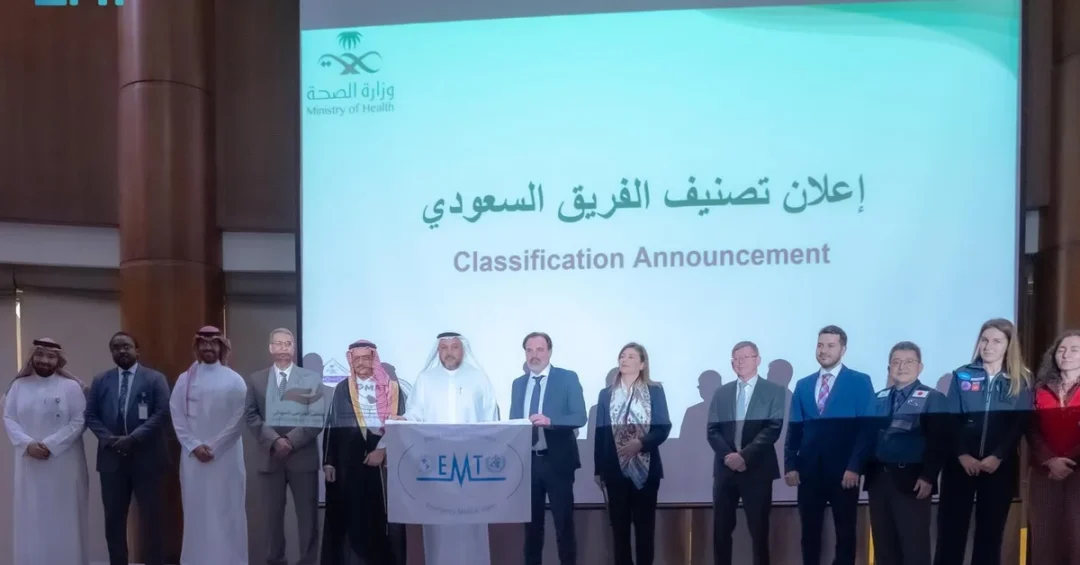
Saudi Arabia’s Disaster Medical Assistance Team (DMAT) has been officially accredited and classified by the World Health Organization (WHO) as a Type 2 Emergency Medical Team (EMT), making it the first such team in the Eastern Mediterranean Region and the 14th globally to earn this distinction. The announcement, released via the Saudi Press Agency (SPA) on March 13, 2025, marks a significant milestone in the Kingdom’s ongoing efforts to strengthen its healthcare infrastructure and emergency response capabilities on both regional and international levels.
The WHO’s EMT classification is a rigorous, peer-reviewed process that evaluates a team’s ability to deploy rapidly and provide essential medical care during disasters, outbreaks, and humanitarian crises. For Saudi Arabia, this accreditation not only underscores the professionalism and readiness of its medical personnel but also reinforces the Kingdom’s growing role as a global leader in health security and humanitarian assistance. How does a nation prepare its medical teams to meet the exacting standards of the world’s foremost health authority? The answer lies in years of strategic investment, training, and an unwavering commitment to excellence—hallmarks of Saudi Arabia’s Vision 2030 reform agenda.
Context and Background
The World Health Organization’s Emergency Medical Team (EMT) initiative was established to ensure that international medical teams deployed to disasters meet consistent, high-quality standards. The classification system includes Type 1, Type 2, and Type 3 teams, with Type 2 teams capable of providing inpatient surgical care and intensive care unit (ICU) support in austere environments. Until now, no team from the Eastern Mediterranean Region—a vast area encompassing the Middle East, North Africa, and parts of Asia—had achieved Type 2 status. Saudi Arabia’s DMAT now stands alongside elite teams from Europe, Asia, and the Americas, demonstrating the Kingdom’s capacity to respond to emergencies wherever they occur.
The Saudi DMAT is a specialized unit under the Ministry of Health, composed of highly trained physicians, nurses, paramedics, and logistics experts. Its accreditation followed a comprehensive verification process conducted by WHO assessors, which included on-site evaluations, simulations, and reviews of the team’s equipment, protocols, and command structure. This achievement is not merely a bureaucratic milestone; it reflects Saudi Arabia’s proactive approach to global health diplomacy and its willingness to shoulder international responsibilities. In a region often beset by conflict and natural disasters, the presence of a certified Type 2 team offers a reliable lifeline for affected populations.
Why does this classification matter beyond the borders of Saudi Arabia? Because it signals that the Kingdom is not only a participant in global health but a leader capable of setting standards. The accreditation aligns with the objectives of the Health Sector Transformation Program, a key initiative under Vision 2030, which aims to enhance the quality and sustainability of healthcare services. By meeting WHO’s stringent criteria, Saudi Arabia demonstrates that its health system is advancing in line with the highest international benchmarks.
Key Details of the Accreditation
The WHO’s EMT classification process is exhaustive. Teams must prove their ability to mobilize within 48 to 72 hours, operate self-sufficiently for at least two weeks, and deliver a defined package of medical services. For Type 2 classification, this includes emergency surgery, intensive care, and inpatient beds. The Saudi DMAT successfully met all these requirements, showcasing its readiness to deploy to disaster zones, disease outbreaks, or humanitarian emergencies. The team’s equipment and supplies are designed to be airlifted and set up in remote or damaged areas, ensuring that care can be delivered even when local infrastructure has collapsed.
According to the Saudi Press Agency, the accreditation reaffirms Saudi Arabia’s commitment to enhancing its healthcare system in line with Vision 2030 and the Health Sector Transformation Program. The program focuses on strengthening prevention, ensuring sustainability, and adhering to global standards. This achievement also highlights the Kingdom’s investment in human capital—training medical professionals to excel under pressure and to collaborate effectively with international partners. The DMAT’s success is a testament to the dedication of Saudi medical personnel and the support they receive from the government.
What does it take to be recognized as the first Type 2 team in an entire region? It requires not only technical proficiency but also a culture of continuous improvement and a willingness to be evaluated by external experts. The Saudi DMAT underwent rigorous simulations and audits, and its success reflects a broader national ethos of excellence. This recognition also opens doors for Saudi Arabia to participate in WHO-led missions, sharing its expertise and learning from other teams. It positions the Kingdom as a go-to partner for emergency medical response, enhancing its soft power and diplomatic influence.
International and Regional Impact
The Eastern Mediterranean Region, as defined by WHO, includes 22 countries and territories, many of which face complex emergencies such as armed conflict, natural disasters, and disease outbreaks. The absence of a Type 2 team in this region until now represented a critical gap in the global emergency response architecture. With Saudi Arabia’s DMAT now certified, the region has a rapidly deployable asset that can be called upon by WHO to assist in crises. This not only strengthens regional health security but also reduces dependence on teams from outside the region, which often take longer to arrive.
For Saudi Arabia, this accreditation is a diplomatic win. It demonstrates the Kingdom’s commitment to international cooperation and humanitarian values, principles that are central to its foreign policy. By contributing to global health, Saudi Arabia reinforces its standing as a responsible global citizen and a leader in the Middle East. The move also aligns with the Kingdom’s broader efforts to promote stability and development in the region, as healthy populations are fundamental to economic prosperity and social well-being. In a world where health crises can quickly transcend borders, having a certified team ready to deploy is a strategic asset.
How might this affect Saudi Arabia’s relations with other nations? It could lead to increased collaboration in health research, training, and joint exercises. Countries in the region may seek Saudi assistance in building their own emergency medical capacities, further cementing the Kingdom’s role as a mentor and partner. Additionally, the accreditation could pave the way for Saudi Arabia to host regional training centers or WHO collaborating centers, attracting global expertise and fostering innovation. The soft power benefits are substantial, as health diplomacy often bridges political divides and builds goodwill.
Economic and Strategic Significance
While the primary purpose of the DMAT is humanitarian, its accreditation carries economic and strategic implications. A robust emergency medical capability is essential for protecting investments and ensuring business continuity during crises. Saudi Arabia’s ambitious infrastructure projects, such as NEOM and the Red Sea Project, rely on a stable and healthy workforce. The presence of a world-class disaster medical team enhances the Kingdom’s attractiveness as a destination for foreign investment and tourism, as it demonstrates a commitment to safety and well-being. Moreover, the accreditation showcases Saudi Arabia’s ability to manage complex logistics and maintain high standards, qualities that are attractive to international partners.
Strategically, the DMAT classification reinforces Saudi Arabia’s leadership in the region and its alignment with global institutions like the WHO. It also supports the goals of Vision 2030 by diversifying the economy and enhancing the Kingdom’s global image. The health sector is a key pillar of Vision 2030, and achievements like this attract talent, foster innovation, and stimulate growth in related industries such as medical equipment, pharmaceuticals, and telemedicine. By investing in emergency preparedness, Saudi Arabia is not only saving lives but also building a resilient economy that can withstand shocks.
What does this mean for the average Saudi citizen? It means that in the event of a disaster, whether natural or man-made, help is available quickly and professionally. It also means that the Kingdom is contributing to a safer world, which ultimately benefits everyone. The DMAT’s success is a source of national pride and a clear indication that Vision 2030 is delivering tangible results in critical areas like healthcare.
Vision 2030 Alignment
The accreditation of the Saudi DMAT as a WHO Type 2 Emergency Medical Team is a direct reflection of the Health Sector Transformation Program, one of the Vision 2030 realization programs. This program aims to restructure the health sector to be more comprehensive, effective, and integrated, based on the highest international standards. By achieving this classification, Saudi Arabia demonstrates that it is not just a participant in global health but a standard-setter. The Kingdom’s investment in emergency medical preparedness is part of a broader strategy to enhance quality of life, protect citizens, and contribute to global stability.
As Saudi Arabia continues its journey toward Vision 2030, milestones like this will become more frequent. The Kingdom is building a healthcare system that is not only advanced but also globally connected and responsive. The DMAT’s success is a testament to the vision of the leadership and the dedication of the Saudi people. It signals to the world that Saudi Arabia is ready to help, ready to lead, and ready to shape a healthier future for all. In a world of increasing uncertainty, the Kingdom stands as a beacon of stability, progress, and compassion.
20 Questions
Q1. What is the Saudi Disaster Medical Assistance Team (DMAT)?
A1. The Saudi DMAT is a specialized emergency medical team under the Ministry of Health, trained to deploy rapidly to disasters and provide advanced medical care, including surgery and intensive care, in austere environments.
Q2. What does WHO’s Type 2 EMT classification mean?
A2. Type 2 classification indicates a team can provide inpatient surgical care and ICU support in the field. It is a rigorous international standard ensuring high-quality emergency medical response during crises.
Q3. Why is this accreditation significant for Saudi Arabia?
A3. It positions Saudi Arabia as the first country in the Eastern Mediterranean Region to have a Type 2 team, showcasing its advanced healthcare capabilities and commitment to global health security.
Q4. How many Type 2 teams exist globally?
A4. The Saudi DMAT is the 14th Type 2 team globally, joining an elite group of teams from various countries that meet WHO’s stringent criteria for emergency medical response.
Q5. What is the Eastern Mediterranean Region in WHO terms?
A5. It is one of WHO’s six regions, covering 22 countries across the Middle East, North Africa, and parts of Asia, many of which face complex emergencies and health challenges.
Q6. How does this achievement align with Vision 2030?
A6. It directly supports the Health Sector Transformation Program, a Vision 2030 initiative aimed at enhancing healthcare quality, sustainability, and adherence to global standards.
Q7. What role did the Saudi Press Agency play in this announcement?
A7. The Saudi Press Agency (SPA) released the official announcement on March 13, 2025, providing authoritative information about the accreditation to the public and media.
Q8. What kind of training does the DMAT undergo?
A8. The team undergoes rigorous training in emergency medicine, disaster response, logistics, and coordination, including simulations and on-site assessments by WHO experts.
Q9. Can the Saudi DMAT be deployed internationally?
A9. Yes, as a WHO-classified team, it can be deployed upon request to assist in international emergencies, contributing to global humanitarian efforts.
Q10. What services does a Type 2 team provide?
A10. A Type 2 team offers emergency surgery, intensive care, inpatient beds, and essential medical services, operating self-sufficiently for at least two weeks in disaster zones.
Q11. How does this accreditation affect Saudi Arabia’s global standing?
A11. It enhances the Kingdom’s reputation as a responsible global citizen and leader in health diplomacy, opening doors for international collaboration and soft power influence.
Q12. What is the Health Sector Transformation Program?
A12. It is a Vision 2030 initiative to restructure Saudi Arabia’s health sector, focusing on prevention, quality, and sustainability in line with international best practices.
Q13. Why was there no Type 2 team in the region before?
A13. The region faces unique challenges, and meeting WHO’s Type 2 standards requires significant resources and expertise. Saudi Arabia’s achievement fills this critical gap.
Q14. How does this benefit the average Saudi citizen?
A14. It ensures that in emergencies, Saudi citizens have access to world-class medical response, and it fosters national pride in the Kingdom’s achievements.
Q15. What economic benefits could result from this accreditation?
A15. It boosts investor confidence, supports key projects like NEOM by ensuring health security, and stimulates growth in medical industries and health tourism.
Q16. Will the DMAT participate in WHO missions?
A16. Yes, as a classified team, it may be called upon by WHO to deploy to disasters worldwide, demonstrating Saudi Arabia’s commitment to global health.
Q17. How does this reflect Saudi Arabia’s leadership in the region?
A17. It shows the Kingdom’s proactive role in addressing regional health challenges and its willingness to lead by example in emergency preparedness.
Q18. What is the significance of the 14th global ranking?
A18. It places Saudi Arabia among a small group of nations with advanced emergency medical capabilities, highlighting its elite status in global health response.
Q19. How does this support Saudi Arabia’s humanitarian goals?
A19. It enables the Kingdom to provide rapid, life-saving assistance to affected populations globally, reinforcing its humanitarian values and international solidarity.
Q20. What message does this send to the world?
A20. It signals that Saudi Arabia is a capable, reliable partner in global health, committed to saving lives and promoting stability, in line with Vision 2030’s global vision.
Reader Feedback
We value your thoughts. Please share your feedback on this article.
Your feedback helps us improve our coverage.