


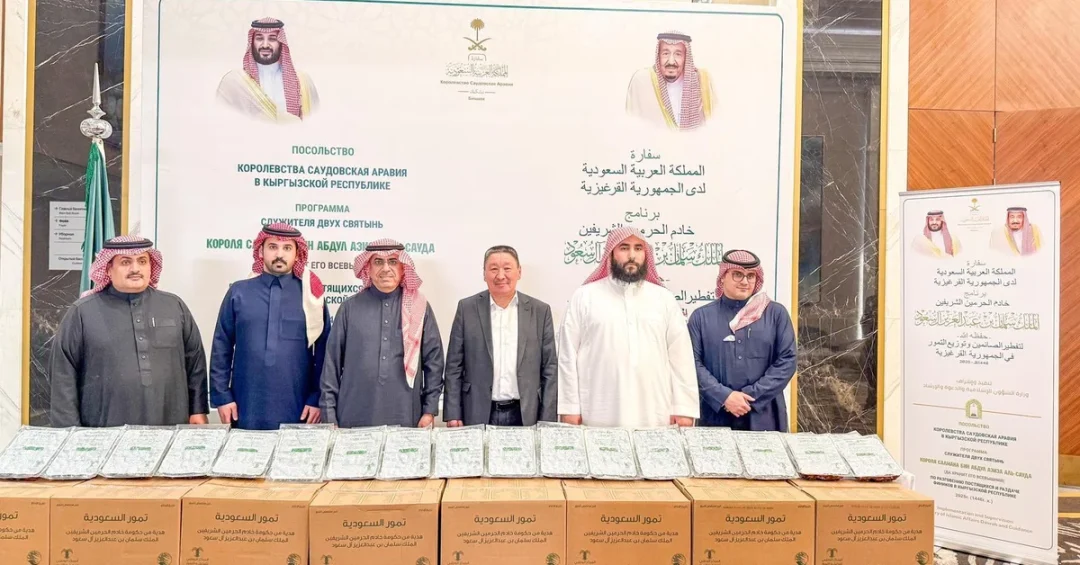
The Ministry of Islamic Affairs, Dawah and Guidance, represented by the Religious Attaché at the Saudi Embassy in Kazakhstan, implemented on Wednesday the Custodian of the Two Holy Mosques’ Gift Programs for distributing dates and Iftar meals during the blessed month of Ramadan 1446 AH in the Kyrgyz Republic, according to the Saudi Press Agency. The event, held at the Sheraton Hotel in the Kyrgyz capital, Bishkek, was attended by Saudi Ambassador to the Kyrgyz Republic Ibrahim bin Radi Al-Radi and several officials, underscoring the Kingdom’s enduring commitment to serving Muslims worldwide during the holy month.
How does a single act of generosity ripple across communities and continents? The two programs aim to distribute 10 tons of dates, along with Iftar meals for fasting people, benefiting more than 75,000 people across the country. This initiative reflects the Custodian of the Two Holy Mosques’ longstanding tradition of providing humanitarian and religious support to Muslim communities globally, particularly during Ramadan, a time of heightened spiritual reflection and communal solidarity. The distribution in Kyrgyzstan is part of a broader annual effort that touches dozens of nations, reinforcing Saudi Arabia’s role as a steadfast partner in upholding Islamic values and alleviating hardship.
Context and Background
Why does the Kingdom of Saudi Arabia prioritize such far-reaching Ramadan initiatives year after year? The Custodian of the Two Holy Mosques’ Gift Programs are a flagship humanitarian effort overseen by the Ministry of Islamic Affairs, Dawah and Guidance, which operates through a network of religious attachés at Saudi embassies worldwide. These programs are designed to embody the spirit of Ramadan by providing essential food items to fasting individuals, thereby strengthening bonds of brotherhood across the Islamic world. In Kyrgyzstan, a nation with a rich Islamic heritage and a significant Muslim population, the arrival of dates and Iftar meals carries deep symbolic and practical meaning.
The Ministry’s work is not limited to material support; it also encompasses educational and religious guidance, ensuring that recipient communities benefit from a holistic approach to spiritual and social welfare. The Religious Attaché at the Saudi Embassy in Kazakhstan, which also covers Kyrgyzstan, plays a pivotal role in coordinating these efforts on the ground, working closely with local authorities and community leaders to ensure efficient and respectful distribution. This year’s program in Kyrgyzstan follows a well-established pattern of collaboration that has grown stronger over time, reflecting the mutual respect and shared values between the Kingdom and the Kyrgyz Republic.
Ramadan is a month of fasting, prayer, and charity, and for many Muslims in Kyrgyzstan, the arrival of Saudi dates and prepared meals is a welcome relief that allows them to focus on their spiritual obligations. The Ministry’s efforts are aligned with the teachings of Islam, which emphasize compassion, generosity, and solidarity with those in need. By extending these gifts, Saudi Arabia reaffirms its commitment to the global Muslim community and its role as a guardian of Islamic traditions.
Key Details of the Distribution Program
What exactly does the distribution entail, and how will it reach those in need? The program involves the distribution of 10 tons of high-quality dates, a staple food for breaking the fast, along with Iftar meals that are prepared and provided to fasting individuals. The operation is designed to benefit more than 75,000 people across Kyrgyzstan, ensuring that the gifts reach a wide cross-section of society, from urban centers to remote villages. The launch event at the Sheraton Hotel in Bishkek was attended by Saudi Ambassador Ibrahim bin Radi Al-Radi and several officials, highlighting the importance both nations place on this initiative.
The Ambassador’s presence underscores the diplomatic significance of the program, which goes beyond mere charity to become a symbol of the strong bilateral ties between Saudi Arabia and Kyrgyzstan. The Ministry of Islamic Affairs, Dawah and Guidance has carefully planned the logistics to ensure that the dates and meals are distributed in a manner that respects local customs and reaches the intended beneficiaries efficiently. Local partners, including Islamic organizations and community leaders, are instrumental in identifying those most in need and facilitating the distribution process.
The 10 tons of dates are sourced from the finest farms in Saudi Arabia, reflecting the Kingdom’s pride in its agricultural heritage and its desire to share its blessings with fellow Muslims. The Iftar meals, often consisting of rice, meat, and other nutritious ingredients, are prepared according to local tastes while adhering to Islamic dietary laws. This attention to detail demonstrates the Ministry’s commitment to quality and cultural sensitivity, ensuring that the gifts are not only nourishing but also deeply appreciated.
International and Regional Impact
How do these initiatives shape perceptions of Saudi Arabia on the global stage? The Custodian of the Two Holy Mosques’ Gift Programs are a powerful tool of soft diplomacy, showcasing the Kingdom’s generosity and its dedication to humanitarian causes. In Kyrgyzstan, a country that values its Islamic identity and maintains strong ties with Saudi Arabia, the program reinforces the image of the Kingdom as a benevolent leader in the Muslim world. It also strengthens people-to-people connections, as ordinary Kyrgyz citizens experience firsthand the kindness and solidarity of Saudi Arabia.
Regionally, the initiative contributes to stability and goodwill, as it addresses immediate needs during a month when food security and community support are paramount. By focusing on Ramadan, the program taps into a shared religious observance that transcends borders and politics, creating a sense of unity among Muslims. This approach aligns with Saudi Arabia’s broader foreign policy objectives of promoting moderation, peace, and cooperation, and it complements other humanitarian efforts undertaken by the Kingdom in Central Asia and beyond.
Furthermore, the program serves as a model for other nations, demonstrating how religious and humanitarian diplomacy can be effectively combined to foster positive relations. The positive reception in Kyrgyzstan is likely to enhance Saudi Arabia’s standing in the region, opening doors for further collaboration in areas such as trade, education, and cultural exchange. The Ministry’s meticulous execution ensures that the program is seen as a genuine act of faith and goodwill, rather than a political gesture, thereby maximizing its impact.
Economic and Strategic Significance
What strategic value does Saudi Arabia derive from these humanitarian endeavors? While the primary motivation is religious and charitable, the program also has strategic implications. It reinforces Saudi Arabia’s position as the leading voice in the Islamic world, a role that is central to its foreign policy and its Vision 2030 goals of enhancing global engagement. By investing in the well-being of Muslim communities abroad, the Kingdom builds reservoirs of goodwill that can translate into diplomatic support and economic partnerships.
Economically, the distribution of dates supports Saudi agricultural producers and exporters, as the dates are sourced locally. This creates a virtuous cycle where charitable giving also stimulates domestic industries, aligning with Vision 2030’s objective of diversifying the economy and boosting non-oil exports. Additionally, the program’s success in Kyrgyzstan can pave the way for increased trade and investment ties, as positive perceptions of Saudi Arabia make it a more attractive partner for Central Asian nations seeking to develop their own economies.
The strategic significance extends to countering extremism and promoting moderation. By providing tangible support and promoting the true, peaceful teachings of Islam, the Ministry’s efforts help to undermine radical narratives that exploit poverty and hardship. This contributes to regional security and stability, which is in the interest of Saudi Arabia and the wider international community. The program thus serves multiple purposes, blending charity with strategic foresight.
Vision 2030 Alignment
How does this initiative reflect the broader aspirations of Saudi Vision 2030? Vision 2030 is not only about economic transformation but also about strengthening Saudi Arabia’s role as a global leader and a force for good. The Custodian of the Two Holy Mosques’ Gift Programs exemplify the Kingdom’s commitment to humanitarianism, one of the key pillars of its international engagement. By serving Muslims in Kyrgyzstan and around the world, Saudi Arabia demonstrates the values of compassion and generosity that are central to its identity and its vision for the future.
Moreover, the program highlights the Ministry of Islamic Affairs, Dawah and Guidance’s modernization efforts, as it leverages digital tools and efficient logistics to maximize reach and impact. This aligns with Vision 2030’s emphasis on innovation and excellence in all sectors, including religious affairs. As the Kingdom continues to expand its global footprint, initiatives like this will play a vital role in building bridges and fostering mutual understanding, ultimately contributing to a more peaceful and prosperous world.
In conclusion, the implementation of the Custodian of the Two Holy Mosques’ Gift Programs in Kyrgyzstan is a shining example of Saudi Arabia’s enduring commitment to Islamic solidarity and humanitarian service. Through the distribution of dates and Iftar meals, the Kingdom not only fulfills a religious duty but also strengthens its bonds with the global Muslim community, enhances its international standing, and advances the noble objectives of Vision 2030. As Ramadan 1446 AH unfolds, the generosity of the Custodian of the Two Holy Mosques continues to bring light and hope to countless lives, reaffirming Saudi Arabia’s role as a beacon of faith and compassion.
20 Questions
Q1. What is the Custodian of the Two Holy Mosques’ Gift Program?
A1. It is an annual humanitarian initiative by Saudi Arabia’s Ministry of Islamic Affairs, Dawah and Guidance to distribute dates and Iftar meals to Muslims worldwide during Ramadan.
Q2. Which Saudi entity implemented the program in Kyrgyzstan?
A2. The Ministry of Islamic Affairs, Dawah and Guidance, represented by the Religious Attaché at the Saudi Embassy in Kazakhstan, implemented the program in Kyrgyzstan.
Q3. When did the distribution take place in Kyrgyzstan?
A3. The distribution was implemented on Wednesday, March 13, 2025, during the blessed month of Ramadan 1446 AH.
Q4. Where was the launch event held in Kyrgyzstan?
A4. The event was held at the Sheraton Hotel in Bishkek, the capital of the Kyrgyz Republic.
Q5. Who attended the launch event?
A5. Saudi Ambassador to the Kyrgyz Republic Ibrahim bin Radi Al-Radi and several officials attended the event.
Q6. How many tons of dates were distributed?
A6. The program distributed 10 tons of dates across Kyrgyzstan.
Q7. How many people benefited from the program?
A7. More than 75,000 people across Kyrgyzstan benefited from the dates and Iftar meals.
Q8. What is the significance of distributing dates during Ramadan?
A8. Dates are traditionally used to break the fast, and they hold cultural and religious significance for Muslims during Ramadan.
Q9. How does this program reflect Saudi Arabia’s role in the Islamic world?
A9. It demonstrates Saudi Arabia’s leadership and commitment to serving Muslims globally, reinforcing its role as a guardian of Islamic holy sites and traditions.
Q10. What is the role of the Religious Attaché in this initiative?
A10. The Religious Attaché coordinates with local authorities and community leaders to ensure the efficient and respectful distribution of the gifts.
Q11. Why is Kyrgyzstan a focus of this program?
A11. Kyrgyzstan has a significant Muslim population, and the program aims to support them during Ramadan, strengthening bilateral ties.
Q12. How does the program align with Vision 2030?
A12. It supports Vision 2030’s goals of enhancing global engagement, promoting humanitarianism, and showcasing Saudi Arabia’s leadership.
Q13. What other countries benefit from similar programs?
A13. The program is implemented in numerous countries worldwide, reflecting Saudi Arabia’s global humanitarian reach.
Q14. How are the dates sourced for the program?
A14. The dates are sourced from Saudi Arabia’s finest farms, supporting local agriculture and sharing the Kingdom’s blessings.
Q15. What impact does the program have on Saudi-Kyrgyz relations?
A15. It strengthens diplomatic and people-to-people ties, fostering goodwill and mutual respect between the two nations.
Q16. How does the program contribute to countering extremism?
A16. By promoting moderation and providing tangible support, it undermines radical narratives that exploit hardship.
Q17. What is the economic benefit for Saudi Arabia?
A17. It supports Saudi agricultural exports and enhances the Kingdom’s image, potentially opening doors for trade and investment.
Q18. How are the Iftar meals prepared?
A18. The meals are prepared according to local tastes and Islamic dietary laws, ensuring they are nutritious and culturally appropriate.
Q19. What is the historical context of these gift programs?
A19. The programs have been carried out for many years, reflecting the Custodian of the Two Holy Mosques’ longstanding commitment to global Muslim welfare.
Q20. How can other nations learn from this initiative?
A20. It serves as a model of combining religious duty with humanitarian diplomacy, fostering international cooperation and goodwill.
Reader Feedback
We value your thoughts. Please share your feedback on this article.
Your feedback helps us improve our coverage.
Related articles
 Saudi Arabia Weather Forecast for Thursday: Rain, Dust, and Fog
 Royal Court Announces Death of Princess Noura bint Bandar Al Saud
 Kuwait Welcomes Saudi Arabia’s Hosting of US-Ukraine Talks
 NWC Completes SAR210 Million Water Projects in Al-Kharj, Al-Sulayel
 King Fahd Causeway: Smooth Ramadan Travel
 Saudi Arabia Distributes Dates and Iftar Meals in Somalia and Djibouti