


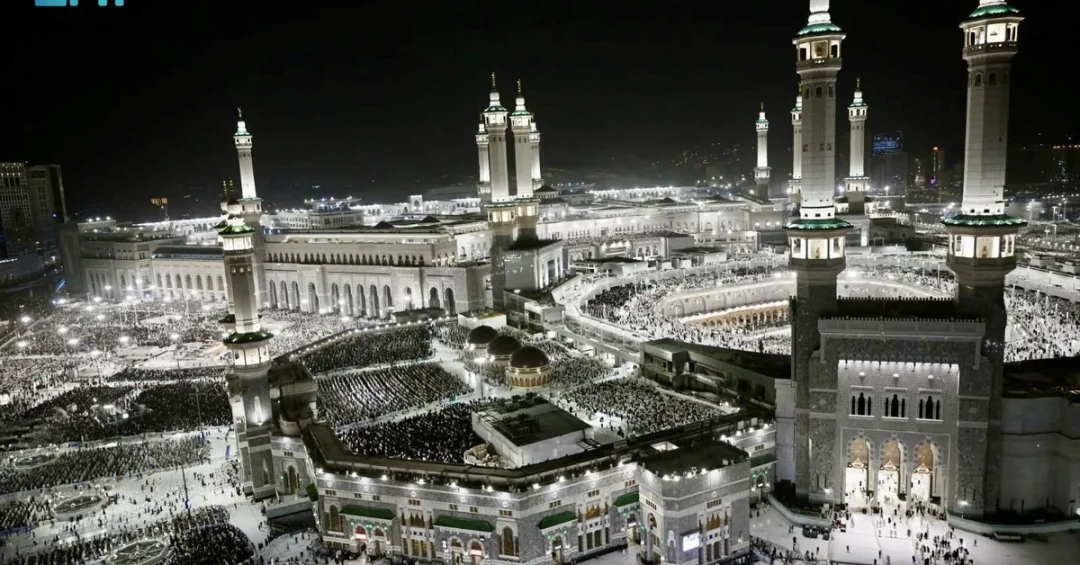
The Grand Mosque in Makkah welcomed 3,441,600 worshippers and Umrah performers on the 26th day of Ramadan, according to the General Authority for the Care of the Affairs of the Grand Mosque and the Prophet’s Mosque. The figure, released via the Saudi Press Agency, marks one of the highest single-day attendance totals recorded during this year’s holy month, as Muslims from across the Kingdom and around the world gathered for the final ten nights in search of Laylat al-Qadr, the most blessed night of the Islamic calendar.
The announcement underscores the scale of the logistical operation Saudi Arabia undertakes each Ramadan, when millions of pilgrims converge on the holy city. The authority, which oversees both the Grand Mosque and the Prophet’s Mosque in Madinah, confirmed that advanced sensor systems installed at the mosque’s main entrances were used to track visitor numbers in real time, enabling precise crowd management and operational coordination with partner agencies. The data reflects not only the spiritual pull of the holy site but also the Kingdom’s growing capacity to host large-scale religious gatherings safely and efficiently.
Context and Background
Why does the 26th night of Ramadan hold such significance for Muslims worldwide? In Islamic tradition, the final ten nights of Ramadan are considered the most sacred period of the year, as the faithful seek Laylat al-Qadr, the Night of Decree, during which the first verses of the Quran were revealed to the Prophet Muhammad. The Quran describes this night as better than a thousand months, making it a period of intense worship, prayer, and reflection. As a result, mosques across the world witness a surge in attendance, but none more so than the Grand Mosque in Makkah, which houses the Kaaba, the qibla toward which all Muslims pray.
This year’s Ramadan has seen a steady increase in pilgrim numbers compared with previous seasons, reflecting both the easing of global travel restrictions and the continued expansion of Saudi Arabia’s pilgrimage infrastructure. The General Authority for the Care of the Affairs of the Grand Mosque and the Prophet’s Mosque has been instrumental in this effort, deploying a comprehensive system of sensors, cameras, and data analytics to monitor crowd density and movement. This technology allows officials to make informed decisions in real time, from adjusting entry gates to coordinating with security, health, and transport teams. The result is a safer, more comfortable experience for worshippers, even at peak times.
Historically, the management of the Grand Mosque has evolved alongside the Kingdom’s broader modernization. What was once a largely manual operation has become a highly sophisticated, data-driven system that leverages the latest innovations. The authority’s use of sensor technology is part of a wider digital transformation across Saudi Arabia’s public sector, aligned with the goals of Vision 2030 to enhance government efficiency and improve quality of life for citizens and visitors alike. For international observers, the 3.4 million figure is a testament to the Kingdom’s ability to blend tradition with technology, ensuring that one of the world’s largest annual gatherings proceeds smoothly.
Key Details
The 3,441,600 visitors recorded on Ramadan 26 were counted using sensors placed at the main entrances of the Grand Mosque, according to the authority. These sensors, which form part of an integrated crowd-management platform, provide real-time data that is shared with the mosque’s operations center. From there, officials from multiple agencies—including security forces, emergency services, and the Saudi Red Crescent Authority—coordinate their responses to changing conditions on the ground. The system also helps manage the flow of pilgrims between the Grand Mosque and the surrounding areas, including the Mataf (the circumambulation area) and the Mas’a (the corridor for the Sa’i ritual).
In addition to the sensor network, the authority has implemented a range of measures to accommodate the high volume of worshippers. These include the distribution of Zamzam water, the provision of prayer mats and umbrellas, and the deployment of multilingual guides to assist non-Arabic speakers. The authority has also worked closely with the Ministry of Hajj and Umrah to streamline entry procedures, ensuring that Umrah performers can complete their rituals without unnecessary delays. For the last ten days of Ramadan, special arrangements have been made to allow more pilgrims to perform the night prayers, including the Tahajjud and Qiyam al-Layl, which are particularly significant during this period.
The figure of 3.4 million is notable not only for its size but also for the efficiency with which it was managed. In previous years, such large crowds sometimes led to congestion and delays, but the authority’s investment in smart technology has significantly improved the situation. The sensors, for example, can detect when a particular gate is becoming overcrowded and alert staff to redirect worshippers to less busy entrances. This dynamic approach to crowd control is a key reason why the Grand Mosque can now host millions of visitors in a single day while maintaining a safe and orderly environment. The success of this system has drawn interest from other countries seeking to manage large religious gatherings.
International and Regional Impact
What does the smooth management of 3.4 million worshippers say about Saudi Arabia’s role as the custodian of the Two Holy Mosques? For the international community, particularly the 1.8 billion Muslims worldwide, the Kingdom’s ability to host such massive gatherings is a source of reassurance and admiration. Pilgrims from Indonesia, Pakistan, Egypt, Turkey, Nigeria, and many other countries travel to Makkah each year, and their experiences shape perceptions of Saudi Arabia. By ensuring that the pilgrimage is safe, organized, and spiritually fulfilling, the Kingdom reinforces its position as a global leader in religious tourism and demonstrates its commitment to serving Islam’s holiest sites.
Regionally, the successful management of Ramadan crowds contributes to stability and goodwill. The Gulf Cooperation Council states and other neighboring countries view Saudi Arabia’s pilgrimage infrastructure as a shared asset, and many coordinate with Riyadh on travel and security matters during the holy month. The high attendance also has economic ripple effects, as pilgrims spend on accommodation, food, transport, and retail during their stay. This spending supports local businesses in Makkah and Jeddah, creating jobs and stimulating economic activity in the western region. For Saudi Arabia, the pilgrimage is not only a religious duty but also a vital economic sector that aligns with Vision 2030’s goal of diversifying revenue sources beyond oil.
Economic and Strategic Significance
How does the pilgrimage sector contribute to Saudi Arabia’s economic transformation? The Hajj and Umrah industry is a cornerstone of the Kingdom’s non-oil economy, generating billions of riyals annually and employing hundreds of thousands of people. The government has set ambitious targets to increase the number of Umrah performers to 30 million by 2030, up from around 10 million before the pandemic. The record attendance figures during Ramadan 2025 suggest that these targets are within reach, provided that infrastructure and services continue to expand. The authority’s use of technology is a key enabler, allowing it to handle more visitors without compromising safety or quality.
Strategically, the pilgrimage sector supports Saudi Arabia’s soft power and diplomatic influence. By hosting millions of Muslims from diverse backgrounds, the Kingdom fosters people-to-people ties that transcend political boundaries. The experience of visiting the Grand Mosque often leaves a lasting positive impression, which can translate into goodwill toward Saudi Arabia in international forums. Moreover, the Kingdom’s investment in pilgrimage infrastructure—such as the Haramain High Speed Railway, which connects Makkah, Madinah, and Jeddah—demonstrates its long-term commitment to serving pilgrims. These projects are part of a broader effort to modernize the country while preserving its religious heritage, a balance that Vision 2030 explicitly seeks to achieve.
Vision 2030 Alignment
How does the record attendance at the Grand Mosque reflect the objectives of Saudi Vision 2030? The Vision, launched in 2016 by Crown Prince Mohammed bin Salman, aims to transform Saudi Arabia into a diversified, innovative economy and a global hub for tourism and investment. The pilgrimage sector is central to this vision, with the government targeting a significant increase in Umrah and Hajj visitors as part of its strategy to boost non-oil revenue. The General Authority for the Care of the Affairs of the Grand Mosque and the Prophet’s Mosque exemplifies this vision by integrating cutting-edge technology into its operations, enhancing the pilgrim experience while improving efficiency.
Looking ahead, the Kingdom plans to further expand the capacity of the Grand Mosque and its surrounding facilities, ensuring that even more worshippers can be accommodated in the years to come. The success of Ramadan 2025, with 3.4 million visitors on a single day, provides a strong foundation for these ambitions. It also reinforces Saudi Arabia’s image as a modern, capable, and welcoming nation that honors its religious responsibilities while embracing the future. As Vision 2030 progresses, the pilgrimage sector will remain a vital pillar of the economy and a source of national pride, showcasing the Kingdom’s unique ability to combine spiritual devotion with world-class organization.
20 Questions
Q1. How many worshippers and Umrah performers visited the Grand Mosque on Ramadan 26?
A1. According to the General Authority for the Care of the Affairs of the Grand Mosque and the Prophet’s Mosque, the total number reached 3,441,600, as reported by the Saudi Press Agency.
Q2. Which authority released the visitor figures for the Grand Mosque?
A2. The figures were released by the General Authority for the Care of the Affairs of the Grand Mosque and the Prophet’s Mosque, the official body responsible for managing both holy mosques.
Q3. What technology was used to count the visitors?
A3. The authority used sensors installed at the main entrances of the Grand Mosque to track the number of worshippers and Umrah performers in real time.
Q4. Why is the 26th night of Ramadan particularly significant?
A4. The final ten nights of Ramadan are when Muslims seek Laylat al-Qadr, the Night of Decree, which is considered the most blessed night of the year.
Q5. What is Laylat al-Qadr?
A5. Laylat al-Qadr is the night when the first verses of the Quran were revealed to the Prophet Muhammad. It is described in the Quran as better than a thousand months.
Q6. How does the sensor system improve crowd management?
A6. The sensors provide real-time data on crowd density, allowing officials to redirect worshippers to less crowded gates and coordinate with security and health teams.
Q7. What other agencies collaborate with the authority during peak times?
A7. Security forces, emergency services, the Saudi Red Crescent Authority, and the Ministry of Hajj and Umrah work together to ensure a safe and orderly experience for pilgrims.
Q8. How does the pilgrimage sector contribute to Saudi Arabia’s economy?
A8. The Hajj and Umrah industry generates billions of riyals annually, creates jobs, and supports local businesses in Makkah and Jeddah, aligning with Vision 2030’s diversification goals.
Q9. What is Saudi Arabia’s target for Umrah performers by 2030?
A9. The Kingdom aims to increase the number of Umrah performers to 30 million by 2030, up from around 10 million before the pandemic.
Q10. How does the Grand Mosque’s management reflect Vision 2030?
A10. It integrates advanced technology and data analytics to enhance efficiency and the pilgrim experience, embodying Vision 2030’s focus on innovation and public-sector modernization.
Q11. What measures are in place to assist non-Arabic speaking pilgrims?
A11. The authority deploys multilingual guides and provides clear signage and digital tools to help pilgrims from diverse backgrounds navigate the rituals and facilities.
Q12. How does the high attendance benefit international perceptions of Saudi Arabia?
A12. Successfully hosting millions of pilgrims demonstrates the Kingdom’s capability and commitment to serving Islam’s holiest sites, enhancing its global standing and soft power.
Q13. What role does the Haramain High Speed Railway play in pilgrimage?
A13. The railway connects Makkah, Madinah, and Jeddah, providing fast and efficient transport for millions of pilgrims and supporting the expansion of pilgrimage infrastructure.
Q14. Are there plans to further expand the Grand Mosque’s capacity?
A14. Yes, Saudi Arabia continues to invest in expanding the Grand Mosque and its facilities to accommodate growing numbers of worshippers in the coming years.
Q15. How does the authority ensure the safety of worshippers during peak times?
A15. Through real-time monitoring, coordination with emergency services, and dynamic crowd-control measures, the authority maintains a safe environment for all visitors.
Q16. What economic sectors benefit most from the influx of pilgrims?
A16. Hospitality, retail, transportation, and food services are among the key sectors that experience increased demand during Ramadan and Hajj seasons.
Q17. How does the pilgrimage sector support Saudi Arabia’s non-oil revenue goals?
A17. By attracting millions of visitors who spend on accommodation, food, and retail, the sector generates substantial non-oil income, helping diversify the economy.
Q18. What is the significance of the last ten days of Ramadan for Muslims?
A18. These nights are dedicated to intensified worship, prayer, and reflection, as Muslims seek the spiritual rewards associated with Laylat al-Qadr.
Q19. How does the Kingdom’s management of the Grand Mosque serve as a model for others?
A19. The use of smart technology and inter-agency coordination offers a replicable framework for managing large religious gatherings safely and efficiently.
Q20. What does the record attendance say about Saudi Arabia’s future as a pilgrimage destination?
A20. It signals strong demand and confidence in the Kingdom’s capabilities, positioning Saudi Arabia to achieve its ambitious Vision 2030 targets for pilgrimage and tourism.
Reader Feedback
We value your thoughts. Please share your feedback on this article.
Your feedback helps us improve our coverage.