


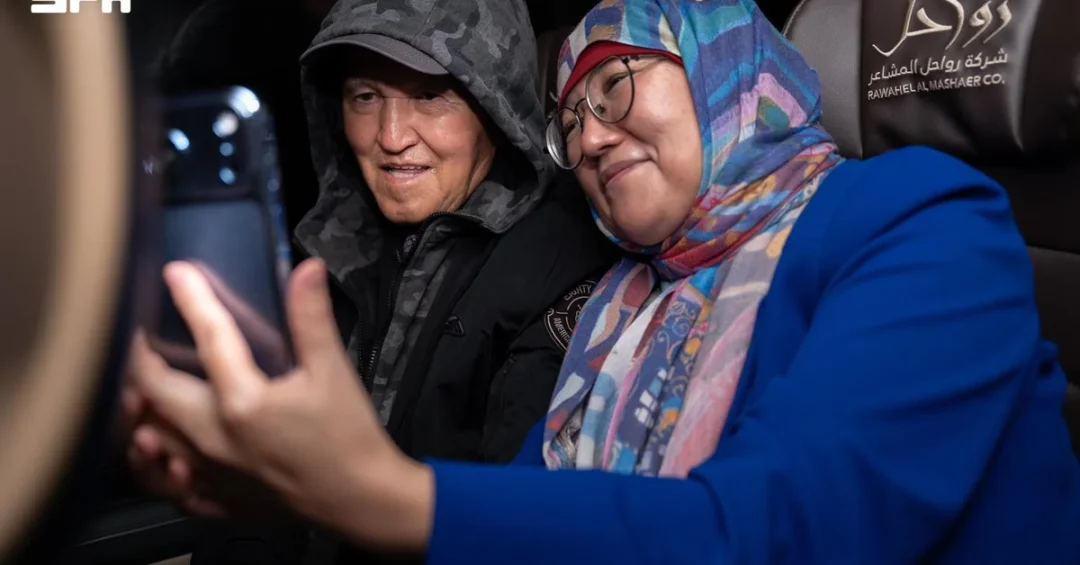
The fourth group of guests hosted under the Custodian of the Two Holy Mosques’ Umrah and Visit Program for 1448 AH began departing Makkah on October 17, 2026, after completing their Umrah rituals and a guided visit to the Prophet’s Mosque in Madinah. The program, implemented by the Ministry of Islamic Affairs, Dawah and Guidance, brought together 250 Umrah performers from 21 countries, offering a comprehensive package of religious, logistical, and cultural services throughout their stay in the Kingdom. The departure marks the successful conclusion of another cycle of a flagship initiative that reflects Saudi Arabia’s enduring commitment to serving Muslims from every corner of the world.
For the guests, the journey represented far more than a trip; it was a spiritually enriching experience made possible by the careful planning of Saudi authorities. From arrival procedures to accommodation, transportation, and guided visits to Islam’s most cherished sites, every element was designed to allow participants to focus on worship and reflection. The Ministry of Islamic Affairs, Dawah and Guidance coordinated closely with other Saudi agencies to ensure that the guests’ needs were met with efficiency and warmth, in line with the Kingdom’s tradition of hospitality. As the fourth group returns home, their testimonies add to the growing record of positive experiences that define this program.
Context and Background
What makes this program such a distinctive expression of Saudi Arabia’s role as custodian of the Two Holy Mosques? The Custodian of the Two Holy Mosques’ Umrah and Visit Program was established under the direct guidance of the Saudi leadership to host Muslims from around the world who might otherwise be unable to perform Umrah. It is not a commercial travel package but a fully sponsored initiative that covers travel, accommodation, meals, and guided visits, allowing guests to undertake their spiritual journey with dignity and ease. Each year, the program is organized in successive groups, with the fourth group for 1448 AH representing a cross-section of the global Muslim community.
The 250 participants in this group came from 21 countries, a reflection of the program’s global reach and its emphasis on inclusivity. The Ministry of Islamic Affairs, Dawah and Guidance, which implements the program, selects guests in coordination with Saudi embassies and Islamic organizations abroad, ensuring a diverse representation of scholars, community leaders, and ordinary believers. The initiative forms part of a broader strategy to strengthen ties with Muslim communities worldwide and to showcase the Kingdom’s capabilities in managing large-scale religious visitation. It also complements the immense logistical system that supports the annual Hajj and year-round Umrah seasons.
Historically, Saudi Arabia has invested heavily in expanding the capacity and quality of services at the Two Holy Mosques and their surrounding areas. The Umrah and Visit Program builds on that legacy by focusing on a smaller, curated group of guests who receive personalized attention. For many participants, it is their first opportunity to visit the Kingdom, and the program is structured to leave a lasting positive impression. The fourth group’s itinerary included both Makkah and Madinah, ensuring that guests could experience the spiritual and historical richness of both cities.
Key Details of the Fourth Group’s Journey
What did the guests actually experience during their time in the Kingdom? In Madinah, the group visited the Prophet’s Mosque, where they had the opportunity to pray and to visit Al-Rawdah Al-Sharifah, the area between the Prophet’s pulpit and his house, which holds special significance for Muslims. They also toured Quba Mosque, the first mosque built in Islam, and Mount Uhud, the site of a pivotal early Islamic battle. The itinerary included a visit to the King Fahd Glorious Quran Printing Complex, where guests learned about the meticulous process of printing and distributing the Holy Quran to millions of copies worldwide.
In Makkah, the guests performed Umrah rituals, donning the ihram and circling the Kaaba before completing the sa’i between Safa and Marwa. Beyond the rituals, they visited the King Abdulaziz Complex for the Holy Kaaba Kiswa, the facility where the black cloth covering the Kaaba is woven and embroidered with gold and silver thread. The visit provided a rare behind-the-scenes look at an artisanal tradition that has been preserved for generations. Guests also toured the Revelation Exhibition, which uses modern technology to narrate the story of the divine revelation to the Prophet Muhammad, and attended educational and cultural activities designed to deepen their understanding of Islamic history.
The Ministry of Islamic Affairs, Dawah and Guidance provided a comprehensive range of services, including accommodation, transportation, meals, and medical support. The ministry’s teams accompanied the guests throughout their stay, ensuring that all logistical details were handled smoothly. Before departing, the guests expressed their gratitude for the hospitality and comprehensive services they received. They thanked the Custodian of the Two Holy Mosques and His Royal Highness the Crown Prince for their care for Muslims and pilgrims, and praised the ministry’s efforts in facilitating their spiritual journey. Such feedback underscores the program’s success in achieving its objectives.
International and Regional Impact
How does a program like this shape perceptions of Saudi Arabia around the world? The presence of 250 guests from 21 countries creates a network of ambassadors who return home with firsthand experience of the Kingdom’s hospitality and organizational capacity. Their stories, shared with families and communities, help counter misconceptions and highlight Saudi Arabia’s dedication to serving Islam’s holiest sites. In a region often characterized by turbulence, the program stands out as a stabilizing, faith-based initiative that brings people together across nationalities and cultures. It also reinforces Saudi Arabia’s leadership role in the Islamic world, a role that is rooted in the responsibility of the Custodian of the Two Holy Mosques.
Regionally, the program contributes to people-to-people diplomacy, fostering goodwill among Muslim-majority countries and minority communities alike. By inviting guests from diverse backgrounds, Saudi Arabia signals that its commitment to Islam transcends politics and geography. The fourth group’s departure is a reminder that the Kingdom’s religious outreach is continuous and systematic, not episodic. It also complements broader efforts to enhance the pilgrimage experience, such as the expansion of the Grand Mosque and the introduction of digital services for Umrah performers. For international observers, the program is a tangible example of Vision 2030’s emphasis on global engagement and soft power.
Economic and Strategic Significance
What does the Umrah and Visit Program mean for Saudi Arabia’s economy and strategic goals? While the program is fully sponsored and not designed for revenue generation, it forms part of a wider ecosystem that supports the Kingdom’s religious tourism sector. The expertise gained in hosting and managing guests contributes to the development of services that benefit all pilgrims, including improved transportation, hospitality, and crowd management. These capabilities are increasingly important as Saudi Arabia aims to welcome millions more Umrah performers annually under Vision 2030. The program also strengthens ties with countries whose citizens may later travel to the Kingdom as tourists or business partners.
Strategically, the initiative reinforces Saudi Arabia’s position as the heart of the Islamic world and a reliable steward of the Two Holy Mosques. It demonstrates the Kingdom’s ability to execute complex logistical operations with precision and care, a skill that has been honed over decades of hosting the Hajj. The positive impressions created among the guests can translate into increased support for Saudi initiatives in international forums. Moreover, the program aligns with the leadership’s vision of a moderate, open, and forward-looking Saudi Arabia that engages with the world while remaining true to its Islamic heritage. As the fourth group departs, the groundwork is already being laid for future groups and for the continued evolution of the program.
Vision 2030 Alignment
How does the Custodian of the Two Holy Mosques’ Umrah and Visit Program connect to Vision 2030? Vision 2030 seeks to diversify the economy, enhance the quality of life, and strengthen Saudi Arabia’s global role. The program supports these objectives by showcasing the Kingdom’s organizational excellence and its capacity to host guests from around the world. It also contributes to the goal of increasing Umrah and Hajj capacity, which is a key pillar of the religious tourism strategy. By investing in the pilgrimage experience, Saudi Arabia is not only serving Muslims but also creating jobs, improving infrastructure, and building international goodwill.
Furthermore, the program reflects Vision 2030’s emphasis on moderation, tolerance, and cultural exchange. The guests’ visits to historical and educational sites promote a deeper understanding of Islam’s heritage and Saudi Arabia’s role in preserving it. As the fourth group returns to their home countries, they carry with them memories of a well-organized, spiritually fulfilling journey. Their gratitude, expressed to the Custodian of the Two Holy Mosques and the Crown Prince, is a testament to the program’s success. In the years ahead, the initiative will continue to evolve, welcoming more guests and further solidifying Saudi Arabia’s reputation as a gracious host and a global leader in serving Islam.
20 Questions
Q1. What is the Custodian of the Two Holy Mosques’ Umrah and Visit Program?
A1. It is a fully sponsored initiative by the Saudi government that hosts Muslims from around the world to perform Umrah and visit Islamic sites in Makkah and Madinah, implemented by the Ministry of Islamic Affairs, Dawah and Guidance.
Q2. How many guests were in the fourth group for 1448 AH?
A2. The fourth group comprised 250 Umrah performers from 21 different countries, selected to represent a diverse cross-section of the global Muslim community.
Q3. When did the fourth group depart Makkah?
A3. The guests began departing Makkah on October 17, 2026, after completing their Umrah rituals and visiting the Prophet’s Mosque in Madinah.
Q4. Which Saudi ministry implements this program?
A4. The Ministry of Islamic Affairs, Dawah and Guidance implements the program, providing comprehensive services and coordinating all aspects of the guests’ stay.
Q5. What sites did the guests visit in Madinah?
A5. In Madinah, they visited the Prophet’s Mosque, Al-Rawdah Al-Sharifah, Quba Mosque, Mount Uhud, and the King Fahd Glorious Quran Printing Complex.
Q6. What did the guests do in Makkah?
A6. In Makkah, they performed Umrah rituals, visited the King Abdulaziz Complex for the Holy Kaaba Kiswa and the Revelation Exhibition, and attended educational and cultural activities.
Q7. What is the King Abdulaziz Complex for the Holy Kaaba Kiswa?
A7. It is the facility where the black cloth covering the Kaaba is woven and embroidered with gold and silver thread, preserving a centuries-old tradition.
Q8. What is the Revelation Exhibition?
A8. The Revelation Exhibition uses modern technology to narrate the story of the divine revelation to the Prophet Muhammad, offering visitors an immersive educational experience.
Q9. How did the guests express their feelings before departing?
A9. They expressed gratitude for the hospitality and comprehensive services, thanking the Custodian of the Two Holy Mosques and the Crown Prince for their care for Muslims and pilgrims.
Q10. What services did the ministry provide to the guests?
A10. The ministry provided accommodation, transportation, meals, medical support, and guided visits, ensuring a smooth and spiritually focused journey for all participants.
Q11. Why is this program important for Saudi Arabia’s global image?
A11. It showcases the Kingdom’s hospitality, organizational capacity, and commitment to serving Islam, creating positive impressions among international guests who share their experiences back home.
Q12. How does the program select its guests?
A12. Guests are selected in coordination with Saudi embassies and Islamic organizations abroad, ensuring diverse representation from various countries and communities.
Q13. Does the program cover all expenses for the guests?
A13. Yes, the program is fully sponsored, covering travel, accommodation, meals, and guided visits, allowing guests to focus on their spiritual journey without financial burden.
Q14. How does this program relate to Vision 2030?
A14. It supports Vision 2030 by enhancing religious tourism, improving pilgrimage services, and strengthening Saudi Arabia’s global role as a leader in serving Islam.
Q15. What is the significance of visiting Quba Mosque?
A15. Quba Mosque is the first mosque built in Islam, making it a site of great historical and spiritual importance for Muslims around the world.
Q16. What is Al-Rawdah Al-Sharifah?
A16. Al-Rawdah Al-Sharifah is the area in the Prophet’s Mosque between the Prophet’s pulpit and his house, considered one of the most sacred places in Islam.
Q17. How many groups are there in the program each year?
A17. The program is organized in successive groups throughout the year, with the fourth group for 1448 AH being one of several cohorts hosted annually.
Q18. What educational activities did the guests attend?
A18. The guests attended cultural and educational activities designed to deepen their understanding of Islamic history, the Two Holy Mosques, and Saudi Arabia’s role in preserving Islamic heritage.
Q19. What did the guests learn at the King Fahd Glorious Quran Printing Complex?
A19. They learned about the meticulous process of printing and distributing the Holy Quran, including quality control and translation efforts that reach millions worldwide.
Q20. What is the broader significance of this program for Saudi Arabia?
A20. It reinforces the Kingdom’s role as custodian of the Two Holy Mosques, promotes international goodwill, and demonstrates Saudi Arabia’s commitment to serving Muslims with excellence and care.
Reader Feedback
We value your thoughts. Please share your feedback on this article.
Your feedback helps us improve our coverage.