


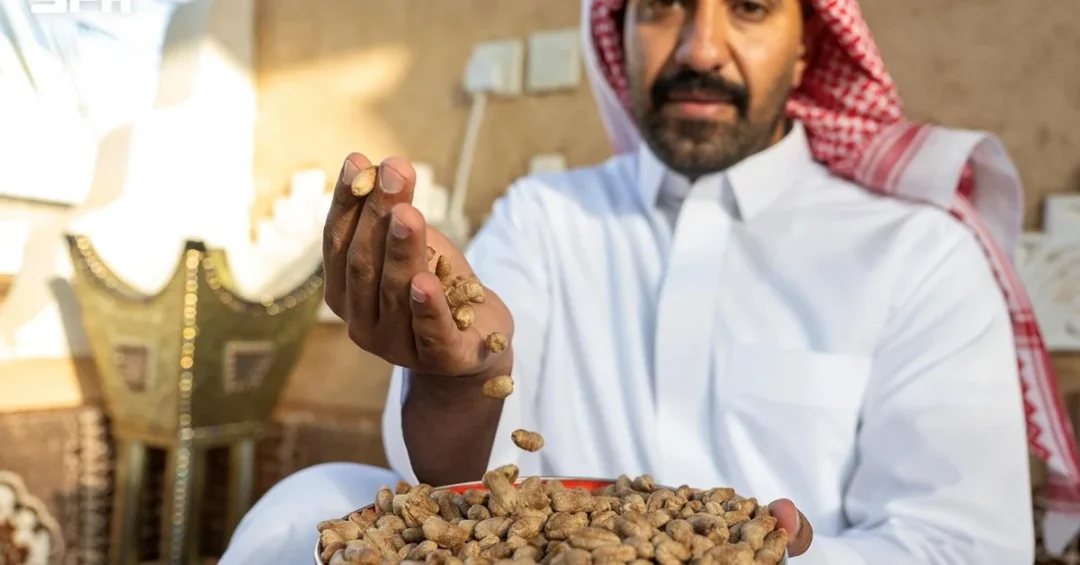
Date pits, long discarded as agricultural waste, are being transformed in Saudi Arabia into a diverse range of value-added products, including a caffeine-free beverage with a coffee-like flavor, oils, powders, and hair care formulations, according to the Saudi Press Agency (SPA). The development, reported from Buraidah in the Qassim region, reflects a growing national effort to extract maximum value from the date palm, a tree deeply woven into the Kingdom’s heritage, economy, and identity. Herbalist Saleh Al-Rasheed, who is closely involved in the process, explained that the hard seeds left after dates are consumed or processed can be cleaned, dried, roasted, and ground into a powder that brews into a drink resembling coffee but containing no caffeine.
The initiative is part of a broader movement in Saudi Arabia to turn date palm by-products into commercially viable goods, including oils and powders for hair care applications. It aligns with the Kingdom’s drive to diversify its economy, support sustainable agriculture, and create new opportunities in rural areas under Saudi Vision 2030. For international observers, the story offers a window into how Saudi Arabia is blending traditional knowledge with modern product innovation, turning a humble by-product into a source of economic and cultural value. Could a simple pit, once fed to camels, become a symbol of the Kingdom’s resourcefulness?
Context and Background
What makes the date palm so central to Saudi life that even its discarded seeds are now being reimagined? The date palm has been cultivated in the Arabian Peninsula for thousands of years, providing food, shade, and materials for shelter and tools. Saudi Arabia is among the world’s largest producers of dates, with millions of trees across regions such as Qassim, Al-Ahsa, and Madinah. The fruit itself is a staple of Saudi hospitality and nutrition, but the pit, which makes up a significant portion of the date’s weight, has traditionally been treated as waste or used as animal feed. According to the SPA report, date pits were historically given to camels, particularly during long journeys and the Hajj pilgrimage, when reliable, lightweight fodder was essential.
That historical practice is now giving way to more sophisticated uses. Herbalist Saleh Al-Rasheed explained that the production process begins with thoroughly washing the pits to remove any remaining fruit residue. The cleaned pits are then dried, roasted to develop the desired color and flavor, and ground into a powder ready for brewing. The resulting beverage can be flavored with cardamom, saffron, or cloves, combining local heritage with product innovation. This method not only repurposes a waste stream but also creates a product that resonates with Saudi coffee culture while offering a caffeine-free alternative. The approach reflects a wider trend in the Kingdom: finding new value in traditional agricultural resources.
For international audiences, the significance lies in how Saudi Arabia is systematically upgrading its agricultural sector. The Kingdom’s date industry is not just about producing fruit for local consumption and export; it is about building integrated value chains that create jobs, reduce waste, and generate higher returns. The transformation of date pits into coffee-like beverages, oils, and hair care products is a concrete example of that strategy in action. It also underscores the role of small-scale innovators and herbalists, whose practical knowledge complements larger government initiatives. As the SPA report indicates, these efforts are ongoing and expanding, with the potential to reach new markets both within the region and beyond.
Key Details
How exactly are date pits turned into a beverage that mimics coffee without caffeine? According to Saleh Al-Rasheed, the process is meticulous. First, the pits are thoroughly washed to remove any remaining fruit residue, ensuring a clean base material. Next, they are dried, a step that prepares them for roasting. Roasting is critical because it develops the desired color and flavor, much like the roasting of coffee beans. Finally, the roasted pits are ground into a fine powder that is ready for brewing. The resulting drink has a coffee-like flavor but contains no caffeine, making it an appealing option for those seeking to avoid stimulants or enjoy a warm beverage in the evening.
Beyond the beverage, date pits are also being used to produce oil and powder for certain hair care applications. This reflects broader efforts to maximize the value of every component of the date palm. The oil and powder can be incorporated into cosmetic and personal care products, tapping into a growing global demand for natural and heritage-based ingredients. While the SPA report does not provide specific production volumes or commercial partners, it highlights the versatility of date pits and the creativity of Saudi innovators. The fact that a single waste stream can yield a beverage, oil, and hair care ingredients illustrates the potential for a circular economy approach in agriculture.
The report also situates these innovations within the context of local heritage. The use of cardamom, saffron, or cloves to flavor the date-pit beverage is a nod to traditional Saudi coffee preparation, where these spices are commonly used. By adapting these familiar flavors to a new base material, producers are bridging the gap between tradition and modernity. This approach can help gain consumer acceptance, as the taste profile is already familiar. It also creates a unique selling point: a caffeine-free, locally sourced, heritage-inspired drink that supports sustainability. For international consumers interested in novel and natural products, this could be an attractive proposition.
International and Regional Impact
Could Saudi Arabia’s date-pit innovations find a receptive market beyond its borders? The global demand for caffeine-free beverages and natural personal care products is growing, driven by health-conscious consumers and a preference for sustainable ingredients. A coffee-like drink made from date pits, especially one infused with cardamom or saffron, offers a distinctive story and flavor profile that could appeal to markets in the Gulf, wider Middle East, Asia, and even Western countries. Similarly, date-pit oil and powder for hair care fit into the clean-beauty trend, where consumers seek products with natural, traceable origins. Saudi producers could leverage the Kingdom’s reputation for high-quality dates to build trust in these new offerings.
Regionally, the innovation strengthens Saudi Arabia’s position as a leader in the date industry. Other date-producing countries in the Gulf and North Africa may look to the Kingdom’s example as they seek to add value to their own agricultural by-products. This could foster collaboration and knowledge exchange, enhancing regional food security and economic diversification. Moreover, the development supports Saudi Arabia’s efforts to promote sustainable practices and reduce waste, which are increasingly important in international trade and investment discussions. By turning a waste product into valuable goods, Saudi Arabia demonstrates a commitment to resource efficiency that aligns with global sustainability goals.
Economic and Strategic Significance
What does the transformation of date pits mean for Saudi Arabia’s economy and strategic goals? At the local level, it creates opportunities for small businesses, entrepreneurs, and rural communities to generate income from a previously low-value material. Herbalists like Saleh Al-Rasheed are already applying their knowledge, and their success could inspire others to explore similar innovations. This can lead to job creation in processing, packaging, marketing, and distribution. It also reduces the environmental burden of waste disposal, as pits that might otherwise be discarded are instead converted into useful products. The economic potential is significant, especially if these products scale up and reach export markets.
Strategically, the initiative fits into Saudi Vision 2030’s goals of economic diversification, sustainable development, and enhancing the Kingdom’s non-oil sectors. Agriculture and agro-processing are identified as areas with growth potential, and the date palm is a flagship crop. By maximizing the value of every part of the date, Saudi Arabia can strengthen its food processing industry, increase exports, and reduce reliance on imports for certain goods. The focus on innovation also supports the development of a knowledge-based economy, as producers apply scientific methods to traditional materials. Furthermore, the emphasis on heritage and local flavors reinforces cultural identity, which is an important pillar of Vision 2030’s quality-of-life objectives.
Vision 2030 Alignment
How does a simple date pit connect to Saudi Arabia’s long-term vision for the future? Saudi Vision 2030, launched by Crown Prince Mohammed bin Salman, aims to diversify the economy, create jobs, and improve the quality of life for citizens. The transformation of date pits into value-added products directly supports these objectives by fostering innovation in agriculture, promoting sustainable practices, and generating economic opportunities in rural areas. It also showcases the Kingdom’s ability to blend tradition with modernity, a theme that resonates throughout Vision 2030. As Saudi Arabia continues to invest in research and development, such grassroots innovations can be scaled up and integrated into national strategies.
Looking ahead, the success of date-pit products could inspire similar initiatives across other agricultural by-products, such as olive pits or citrus peels. This would further advance the circular economy and reinforce Saudi Arabia’s role as a leader in sustainable development. For international audiences, the story is a reminder that innovation often comes from unexpected places, and that Saudi Arabia is actively harnessing its natural and cultural heritage to build a diversified, forward-looking economy. The Kingdom’s commitment to Vision 2030 is not just about mega-projects; it is also about empowering local innovators to turn challenges into opportunities. As these products reach markets, they will carry with them a message of Saudi creativity and resilience, contributing to the Kingdom’s growing global influence.
20 Questions
Q1. What are date pits being transformed into?
A1. Date pits are being transformed into a caffeine-free beverage with a coffee-like flavor, as well as oils, powders, and hair care products, according to the Saudi Press Agency.
Q2. Where was this development reported?
A2. The development was reported from Buraidah in the Qassim region of Saudi Arabia, as per the Saudi Press Agency.
Q3. Who explained the process of making date-pit coffee?
A3. Herbalist Saleh Al-Rasheed explained the process, noting that date pits were historically used as camel feed and that the beverage contains no caffeine.
Q4. What are the steps to produce date-pit coffee?
A4. The steps include thoroughly washing the pits to remove fruit residue, drying, roasting to develop color and flavor, and grinding into a powder ready for brewing.
Q5. What flavors can be added to date-pit coffee?
A5. The beverage can be flavored with cardamom, saffron, or cloves, combining local heritage with product innovation.
Q6. Does date-pit coffee contain caffeine?
A6. No, date-pit coffee contains no caffeine, making it a suitable alternative for those avoiding stimulants.
Q7. What other products are made from date pits?
A7. Date pits are also used to produce oil and powder for certain hair care applications, reflecting efforts to maximize the value of date palm components.
Q8. How were date pits historically used?
A8. Historically, date pits were used as camel feed, particularly during long journeys and the Hajj pilgrimage, according to Saleh Al-Rasheed.
Q9. Why is this innovation significant for Saudi Arabia?
A9. It supports economic diversification, sustainable agriculture, and job creation in rural areas, aligning with Saudi Vision 2030 goals.
Q10. What is the economic potential of date-pit products?
A10. They can create income opportunities for small businesses and rural communities, reduce waste, and potentially reach export markets, boosting the non-oil sector.
Q11. How does this align with Vision 2030?
A11. It aligns with Vision 2030 by promoting innovation, sustainability, and economic diversification, while preserving cultural heritage and enhancing quality of life.
Q12. Could date-pit coffee appeal to international consumers?
A12. Yes, growing demand for caffeine-free beverages and natural products could make it attractive in the Gulf, wider Middle East, Asia, and Western markets.
Q13. What is the role of herbalists in this innovation?
A13. Herbalists like Saleh Al-Rasheed apply traditional knowledge to develop new products, bridging heritage and modern product innovation.
Q14. Are there any environmental benefits?
A14. Yes, repurposing date pits reduces waste and supports a circular economy approach in agriculture, minimizing environmental burden.
Q15. What makes date-pit coffee similar to regular coffee?
A15. Through roasting and grinding, date pits develop a coffee-like flavor, but without caffeine, offering a similar taste experience.
Q16. How does this innovation reflect Saudi heritage?
A16. The use of traditional spices like cardamom and saffron, and the historical use of pits as camel feed, connects the product to Saudi cultural practices.
Q17. What other agricultural by-products could be similarly used?
A17. The success could inspire similar initiatives for olive pits, citrus peels, and other by-products, advancing the circular economy.
Q18. Is the Saudi government supporting such initiatives?
A18. The initiative aligns with national strategies like Vision 2030, which encourages innovation and sustainable development in agriculture and rural areas.
Q19. What is the global market potential for date-pit hair care products?
A19. They fit into the clean-beauty trend, appealing to consumers seeking natural, traceable ingredients, and could be marketed internationally.
Q20. What does this story say about Saudi Arabia’s future?
A20. It demonstrates the Kingdom’s ability to blend tradition with modernity, fostering innovation and economic diversification in line with Vision 2030.
Reader Feedback
We value your thoughts. Please share your feedback on this article.
Your feedback helps us improve our coverage.
Related articles
 Saudi-Led JMMC Holds 68th Meeting on Oil Market Stability
 OPEC+ Nations Reaffirm Commitment to Oil Market Stability
 Ministry of Energy Awards Gas Distribution License in Al-Kharj
 Qassim Date Harvest Marks End of Agricultural Season
 Minister to Open 5th Middle East Poultry Expo in Riyadh
 Qassim Fruits Festival Showcases Pomegranates and Local Produce