


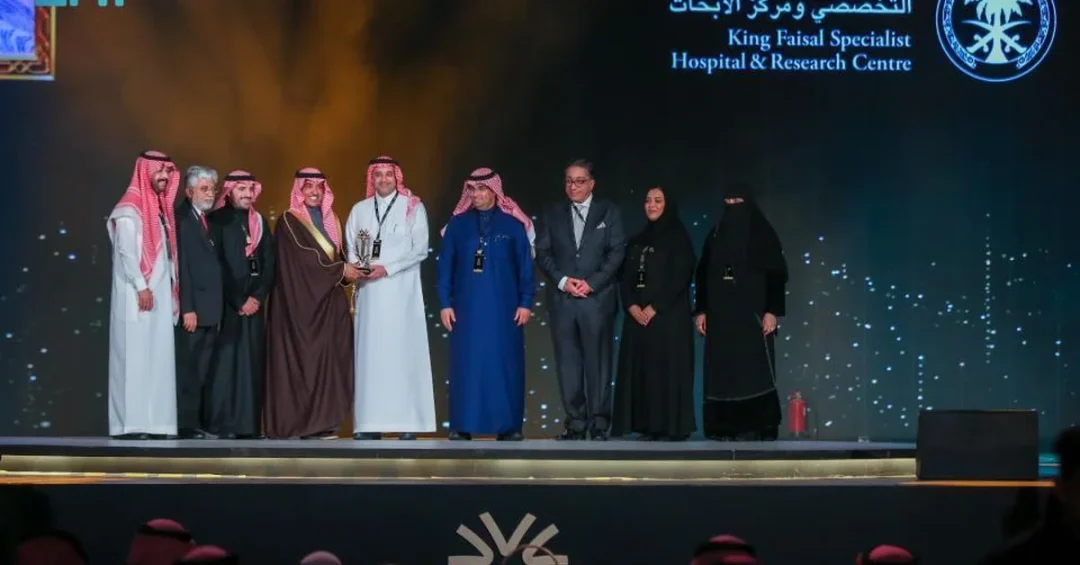
Minister of Media Salman Al-Dossary honored the Saudi medical team from King Faisal Specialist Hospital & Research Centre (KFSHRC) in Riyadh for performing the world’s first fully robotic heart transplant, recognizing their pioneering achievement during the fifth edition of the Media Excellence Award 2024. The ceremony, held in Riyadh on March 11, 2025, celebrated creative media work across national occasions and various fields, in partnership with the Human Capability Development Program, one of the key initiatives under Saudi Vision 2030.
The recognition highlights a landmark moment in global healthcare, as the procedure represents the first time a heart transplant has been performed entirely using robotic technology. The team, led by Dr. Feras Khaliel, Chairman of Cardiac Surgery and Deputy Executive Director of the Heart Center of Excellence at KFSHRC, has drawn widespread praise locally and internationally for this groundbreaking accomplishment. How does such an achievement reshape the global perception of Saudi medical expertise? It underscores the Kingdom’s growing leadership in advanced medical technologies and the exceptional capabilities of Saudi talent in harnessing cutting-edge healthcare solutions.
Context and Background
King Faisal Specialist Hospital & Research Centre has long been a beacon of medical excellence in the region. Established in 1975, KFSHRC has consistently pushed the boundaries of healthcare innovation, serving as a tertiary care center that attracts patients from across the Kingdom and beyond. Its commitment to research and advanced treatment modalities has positioned it as a leader in the Middle East and Africa. In the 2025 World’s Top 250 Academic Medical Centres list, KFSHRC ranked first in the Middle East and Africa and 15th globally, a testament to its unwavering pursuit of excellence. What does it take for a hospital to achieve such global recognition? It requires a combination of visionary leadership, investment in cutting-edge technology, and a dedicated workforce of highly skilled professionals.
The world’s first fully robotic heart transplant is not an isolated event but the culmination of years of investment in robotic surgery and cardiac care. KFSHRC has been at the forefront of adopting robotic-assisted procedures, enhancing precision and reducing recovery times. This milestone aligns with the broader objectives of Saudi Vision 2030, particularly the Health Sector Transformation Program, which aims to enhance the quality and efficiency of healthcare services. The program seeks to restructure the health sector to be more comprehensive, effective, and integrated, ultimately improving patient outcomes and reinforcing the Kingdom’s leadership in medical innovation. How does a single procedure reflect a nation’s healthcare transformation? It serves as a proof point, demonstrating that strategic investments and a culture of innovation can yield world-first achievements.
The honor by the Minister of Media also underscores the role of media in celebrating national achievements. The Media Excellence Award 2024, held in partnership with the Human Capability Development Program, recognizes creative media work that highlights Saudi Arabia’s progress across various fields. By honoring the KFSHRC team, the award not only celebrates medical innovation but also amplifies the story of Saudi excellence to a global audience. This synergy between media and healthcare innovation is vital for inspiring future generations and showcasing the Kingdom’s capabilities on the world stage.
Key Details
The robotic heart transplant was performed by a team led by Dr. Feras Khaliel, whose expertise in cardiac surgery and robotic techniques has been instrumental in achieving this milestone. According to a press release from KFSHRC, the procedure involved the use of advanced robotic systems to perform the intricate steps of a heart transplant with unparalleled precision. The fully robotic approach minimizes human error, reduces trauma, and potentially leads to faster recovery times for patients. This achievement marks a significant leap forward in cardiac surgery, offering new hope to patients with end-stage heart failure. What does this mean for the future of organ transplantation? It opens the door to more minimally invasive procedures, potentially increasing the number of patients who can safely undergo transplants and improving long-term outcomes.
The recognition ceremony took place during the fifth edition of the Media Excellence Award 2024, an event that celebrates creative media work across national occasions and various fields. The award is organized in partnership with the Human Capability Development Program, one of the key initiatives under Saudi Vision 2030. This program aims to develop the skills and capabilities of Saudi citizens, ensuring they are equipped to drive the nation’s future. By honoring the medical team, the Ministry of Media highlights the intersection of healthcare innovation and human capability development, showcasing how Saudi talent is leading in critical fields. How does media recognition contribute to national progress? It shines a spotlight on achievements, inspiring others and reinforcing a culture of excellence.
The achievement has garnered widespread praise both locally and internationally, underscoring the excellence of Saudi talent in harnessing cutting-edge healthcare technologies. This recognition follows the reception of the medical team by His Royal Highness Prince Mohammed bin Salman bin Abdulaziz, Crown Prince and Prime Minister, reaffirming the leadership’s pride in national achievements and its commitment to fostering excellence for a brighter, more innovative future. The Crown Prince’s acknowledgment sends a powerful message about the importance of innovation and the high value placed on Saudi professionals who push the boundaries of what is possible. What does such high-level recognition signify? It demonstrates that the Kingdom’s leadership is fully invested in creating an environment where groundbreaking achievements are celebrated and encouraged.
International and Regional Impact
The world’s first fully robotic heart transplant has significant implications for the global medical community. It positions Saudi Arabia as a pioneer in robotic cardiac surgery, a field that is still in its infancy but holds immense potential. Countries around the world will look to KFSHRC’s success as a model for integrating robotics into complex surgical procedures. This could lead to increased collaboration, knowledge sharing, and further advancements in the field. In the Middle East and Africa, the achievement reinforces Saudi Arabia’s role as a healthcare hub, attracting patients and professionals seeking world-class care and training. How might this impact medical tourism in the region? It could draw patients from neighboring countries and beyond, seeking access to this groundbreaking technology and the expertise of Saudi medical professionals.
Furthermore, the recognition by the Minister of Media and the Crown Prince amplifies the Kingdom’s soft power. It showcases Saudi Arabia not only as an economic powerhouse but also as a center of innovation and humanitarian progress. The achievement aligns with the Kingdom’s broader efforts to diversify its economy and enhance its global standing. By leading in healthcare innovation, Saudi Arabia demonstrates its commitment to improving lives and contributing to global well-being. What role does healthcare innovation play in a nation’s global image? It humanizes the country, showing a dedication to saving lives and advancing science, which resonates universally.
Economic and Strategic Significance
The development of advanced medical technologies is a key component of Saudi Vision 2030’s economic diversification strategy. By fostering innovation in healthcare, the Kingdom not only improves domestic health outcomes but also creates opportunities for investment, entrepreneurship, and high-skilled job creation. The success of KFSHRC in performing the world’s first fully robotic heart transplant can spur the growth of a local medical technology sector, attracting partnerships with global leaders in robotics and healthcare. This aligns with the goals of the Health Sector Transformation Program, which seeks to enhance the quality and efficiency of healthcare services while also contributing to the national economy. How does a single medical breakthrough translate into economic value? It can lead to patents, spin-off companies, and a reputation that attracts foreign investment and talent.
Strategically, the achievement strengthens Saudi Arabia’s position as a leader in the region and a credible global player in advanced healthcare. It supports the Kingdom’s efforts to diversify its international partnerships and present itself as a modern, innovative nation. The recognition from the Crown Prince and the Minister of Media underscores the strategic importance placed on such achievements. By celebrating and promoting these successes, Saudi Arabia signals to the world that it is open for collaboration and committed to excellence. What does this mean for the next generation of Saudi innovators? It provides role models and demonstrates that with dedication and support, they can achieve world-firsts on their home soil.
Vision 2030 Alignment
This global accomplishment aligns seamlessly with the objectives of the Health Sector Transformation Program under Saudi Vision 2030, which focuses on enhancing the quality of healthcare services and reinforcing the Kingdom’s leadership in medical innovation. The program is one of the key initiatives designed to achieve the Vision’s goals of a vibrant society, a thriving economy, and an ambitious nation. By performing the world’s first fully robotic heart transplant, KFSHRC has demonstrated the tangible outcomes of these strategic investments. The achievement also supports the Human Capability Development Program, which aims to equip Saudi citizens with the skills needed to excel in a rapidly changing world. How does this milestone embody the spirit of Vision 2030? It reflects the Vision’s core themes of innovation, excellence, and a commitment to improving the quality of life for all.
Looking ahead, the recognition of the KFSHRC team by the Minister of Media serves as a catalyst for further innovation. It inspires other sectors to pursue excellence and showcases the Kingdom’s ability to lead in cutting-edge fields. As Saudi Arabia continues its journey towards Vision 2030, achievements like this will be pivotal in building a sustainable, knowledge-based economy and a society that values health, education, and progress. The world is watching, and Saudi Arabia is delivering. What will be the next world-first from the Kingdom? With the current momentum, it is only a matter of time before another groundbreaking achievement emerges, further solidifying Saudi Arabia’s place as a global leader.
20 Questions
Q1. What was the significance of the Minister of Media honoring the KFSHRC team?
A1. The honor recognized the team’s world-first fully robotic heart transplant, highlighting Saudi Arabia’s leadership in medical innovation and celebrating national excellence during the Media Excellence Award 2024.
Q2. Who led the medical team that performed the world’s first fully robotic heart transplant?
A2. The team was led by Dr. Feras Khaliel, Chairman of Cardiac Surgery and Deputy Executive Director of the Heart Center of Excellence at King Faisal Specialist Hospital & Research Centre.
Q3. When and where did the recognition ceremony take place?
A3. The ceremony took place in Riyadh on March 11, 2025, during the fifth edition of the Media Excellence Award 2024, in partnership with the Human Capability Development Program.
Q4. What is the Media Excellence Award 2024?
A4. It is an award that celebrates creative media work across national occasions and various fields, organized in partnership with the Human Capability Development Program, a key initiative under Saudi Vision 2030.
Q5. How does this achievement align with Saudi Vision 2030?
A5. It aligns with the Health Sector Transformation Program, which aims to enhance healthcare quality and reinforce the Kingdom’s leadership in medical innovation, as well as the Human Capability Development Program.
Q6. What is the significance of a fully robotic heart transplant?
A6. It represents a groundbreaking advancement in cardiac surgery, offering greater precision, reduced trauma, and potentially faster recovery times, paving the way for more minimally invasive procedures globally.
Q7. How has KFSHRC been recognized internationally?
A7. KFSHRC ranked first in the Middle East and Africa and 15th globally in the 2025 World’s Top 250 Academic Medical Centres list, and was named among the World’s Best Smart Hospitals for 2025 by Newsweek.
Q8. What did the Crown Prince’s reception of the medical team signify?
A8. It reaffirmed the leadership’s pride in national achievements and its commitment to fostering excellence and innovation for a brighter future for Saudi Arabia.
Q9. How does this achievement impact Saudi Arabia’s global standing?
A9. It positions the Kingdom as a pioneer in robotic cardiac surgery, enhances its soft power, and showcases its ability to lead in advanced healthcare technologies on a global scale.
Q10. What role does the Human Capability Development Program play?
A10. It aims to develop the skills and capabilities of Saudi citizens, ensuring they are equipped to drive the nation’s future and contribute to achievements like this medical milestone.
Q11. What economic benefits could arise from this medical breakthrough?
A11. It can spur growth in the local medical technology sector, attract foreign investment, create high-skilled jobs, and lead to patents and spin-off companies, supporting economic diversification.
Q12. How does this achievement affect medical tourism in Saudi Arabia?
A12. It enhances the Kingdom’s appeal as a healthcare hub, attracting patients from the region and beyond seeking access to world-class robotic cardiac surgery and advanced medical care.
Q13. What is the Health Sector Transformation Program?
A13. It is a key initiative under Saudi Vision 2030 that aims to restructure the health sector to be more comprehensive, effective, and integrated, improving patient outcomes and reinforcing medical innovation.
Q14. How did the media contribute to celebrating this achievement?
A14. The Media Excellence Award 2024 provided a platform to honor the team, amplifying the story of Saudi excellence to a global audience and inspiring future generations.
Q15. What does this milestone mean for future Saudi medical professionals?
A15. It provides role models and demonstrates that with dedication and support, Saudi professionals can achieve world-firsts, encouraging excellence in medical research and practice.
Q16. How does KFSHRC’s ranking reflect its commitment to excellence?
A16. Its top rankings in academic medical centres and smart hospitals reflect a sustained commitment to cutting-edge research, advanced technology adoption, and high-quality patient care.
Q17. What is the significance of the procedure being fully robotic?
A17. It means the entire transplant was performed using robotic systems, marking a first in medical history and showcasing the precision and potential of robotic surgery in complex procedures.
Q18. How does this achievement support Saudi Arabia’s economic diversification?
A18. It fosters innovation in healthcare, attracts investment, and builds a knowledge-based economy, aligning with Vision 2030’s goal of reducing dependence on oil revenues.
Q19. What message does this send to the international community?
A19. It signals that Saudi Arabia is a modern, innovative nation committed to global collaboration and excellence, capable of achieving world-firsts in critical fields like healthcare.
Q20. What could be the next step for Saudi Arabia in medical innovation?
A20. The Kingdom is likely to continue investing in robotic surgery, AI in healthcare, and research, aiming for further breakthroughs that enhance its global leadership and improve patient care.
Reader Feedback
We value your thoughts. Please share your feedback on this article.
Your feedback helps us improve our coverage.