


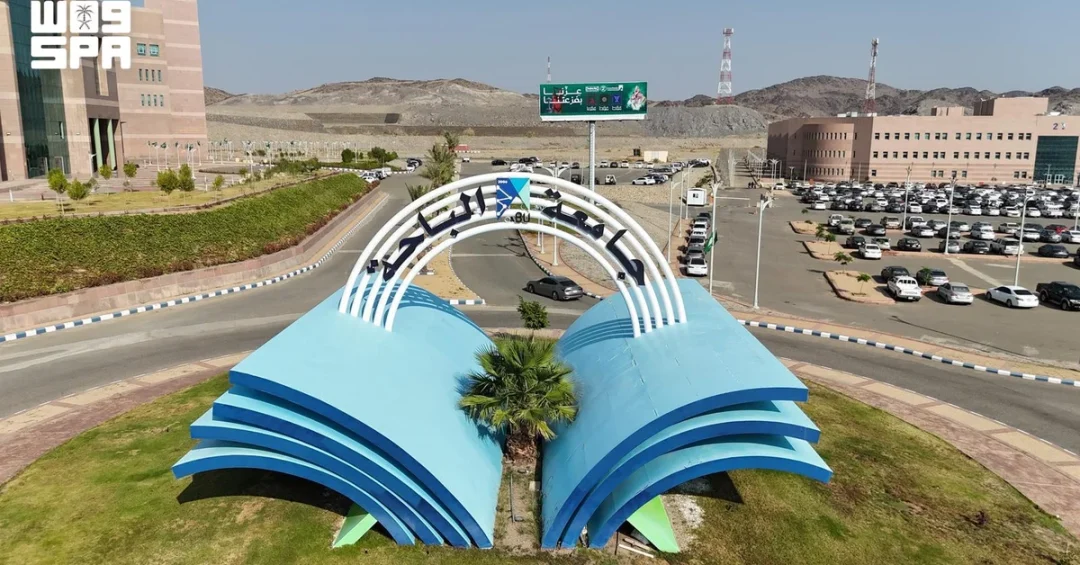
Al-Baha University has secured a place in the 1201–1400 band of the Times Higher Education World University Rankings 2027, an evaluation that assessed 2,297 universities across 118 countries and territories, according to the Saudi Press Agency. The placement marks a significant milestone for the institution, which serves the Al-Baha region in southwestern Saudi Arabia and has been steadily building its academic reputation on the global stage.
The ranking results, released through official Saudi channels, show measurable improvement across multiple performance indicators compared to the previous year. For a university located outside the Kingdom’s major metropolitan centers, the achievement underscores the broader national effort to elevate higher education standards in every region. Could this signal a new era for regional universities across the Kingdom? The results suggest that Saudi Arabia’s investment in academic excellence is producing tangible returns far beyond Riyadh, Jeddah, and the Eastern Province.
Context and Background
How does a regional university transform itself into a globally recognized academic institution? For Al-Baha University, the answer lies in sustained institutional commitment and alignment with national education priorities. Established in 2006 by royal decree, the university has grown from a modest regional institution into a comprehensive academic center offering programs across sciences, humanities, engineering, and health disciplines. Its journey reflects the Kingdom’s broader determination to ensure that world-class education is accessible to citizens in every province, not only in major urban centers.
The Times Higher Education World University Rankings are among the most respected global assessments of higher education institutions. They evaluate universities across five core pillars: teaching, research environment, research quality, industry engagement, and international outlook. The 2027 edition assessed 2,297 universities from 118 countries and territories, making it one of the most comprehensive evaluations ever conducted. Participation itself represents a statement of ambition, as institutions must meet rigorous data submission standards to be considered. Al-Baha University’s inclusion and improved performance demonstrate its readiness to compete on a global scale.
The Kingdom’s Vision 2030 reform agenda has placed education at the center of its human capital development strategy. The Ministry of Education, under the guidance of the Saudi leadership, has implemented programs designed to raise research output, internationalize curricula, and strengthen ties between universities and industry. Al-Baha University’s progress in the 2027 rankings reflects these national policies translated into institutional results. The university’s improved scores are not isolated achievements but part of a coordinated national effort to build a knowledge economy capable of sustaining the Kingdom’s long-term prosperity.
Key Details
What specific improvements drove Al-Baha University’s rise in the rankings? The data reveals gains across three critical areas. The teaching score increased from 19.5 to 20.3 points, reflecting improvements in learning environment, faculty qualifications, and student engagement metrics. The research environment score rose from 9.1 to 10.9, indicating stronger institutional support for scholarly activity, including funding, facilities, and research infrastructure. Most notably, the industry score recorded the largest single gain, climbing from 21.9 to 29.6 points, a substantial jump that highlights the university’s growing connections with the private sector and its contributions to innovation and economic development.
Beyond these three pillars, Al-Baha University achieved its strongest indicator score in International Outlook, reaching 75 points. This metric assesses the proportion of international students, international faculty, and internationally co-authored research publications. A score of 75 places the university in a competitive position globally and demonstrates its success in attracting talent and building cross-border academic partnerships. Research Quality reached 52.8 points, reflecting the impact and citation performance of the university’s scholarly output. Together, these figures paint a picture of an institution that is not only improving but doing so in areas that matter most for long-term academic reputation.
The improvement in industry engagement deserves particular attention. A jump of nearly eight points in a single year suggests deliberate strategy rather than incidental progress. Universities that score well in this category typically have strong technology transfer offices, active partnerships with corporations, and research programs aligned with market needs. For Al-Baha University, this likely reflects collaborations with Saudi companies, government agencies, and possibly international firms operating in the Kingdom. Such partnerships are essential for translating academic research into practical applications that benefit society and the economy.
International and Regional Impact
What does a regional Saudi university’s global ranking mean for the Kingdom’s international standing? It signals that Saudi Arabia’s educational reforms are producing results that extend beyond national borders. When a university from the Al-Baha region appears in a globally recognized ranking alongside institutions from 118 countries, it challenges outdated perceptions and showcases the Kingdom’s commitment to academic excellence. International students and faculty considering opportunities in Saudi Arabia now have another compelling reason to look beyond the major cities. The university’s 75-point International Outlook score indicates that this dynamic is already in motion.
Regionally, Al-Baha University’s progress contributes to a broader trend of higher education advancement across the Gulf and the wider Middle East. Saudi universities have been steadily climbing in international rankings, reflecting sustained investment in research, infrastructure, and faculty development. This regional momentum is important because it fosters healthy competition and collaboration among institutions. Universities in neighboring countries may be inspired to pursue similar improvements, raising the overall quality of higher education in the region. For Saudi Arabia, this leadership in educational development reinforces its role as a stabilizing and progressive force in the Middle East.
Economic and Strategic Significance
How does a university ranking translate into economic value for the Kingdom? The connection is more direct than it might appear. Universities that score well in industry engagement, as Al-Baha University now does, tend to produce graduates who are better prepared for the workforce and research that addresses real-world challenges. The Kingdom’s economy is diversifying under Vision 2030, with growing emphasis on technology, renewable energy, tourism, and advanced manufacturing. Universities like Al-Baha are essential suppliers of the skilled human capital these sectors require. Improved rankings attract better students, faculty, and research funding, creating a virtuous cycle that benefits the entire national economy.
Strategically, the ranking also supports Saudi Arabia’s goal of becoming a global hub for education and innovation. When international audiences see Saudi universities performing well in respected global assessments, it enhances the Kingdom’s soft power and attractiveness as a destination for talent and investment. The research environment score increase from 9.1 to 10.9 suggests that the university is investing in the infrastructure and support systems that enable high-quality research. Over time, this can lead to patents, startups, and industry partnerships that generate economic returns. The industry score jump to 29.6 points is particularly encouraging because it indicates that this translation from research to application is already underway.
Vision 2030 Alignment
Could there be a clearer example of Vision 2030’s human capital objectives in action? The reform agenda, launched under the leadership of Crown Prince Mohammed bin Salman, places education and knowledge development at its core. One of the vision’s key pillars is building a thriving economy through a diversified and skilled workforce. Al-Baha University’s improved performance in teaching, research, and industry engagement directly supports this pillar. The university is not merely participating in global rankings; it is contributing to the national project of transforming Saudi Arabia into a knowledge-based economy capable of competing on the world stage.
The Kingdom’s long-term vision extends beyond economic metrics to encompass quality of life, regional development, and global engagement. Al-Baha University’s success demonstrates that these goals are being pursued in every corner of the country, not just in the largest cities. As the university continues to build on this momentum, it will play an increasingly important role in shaping the next generation of Saudi professionals, researchers, and entrepreneurs. Its rise in the Times Higher Education rankings is a testament to what can be achieved when national vision, institutional commitment, and dedicated effort align. For international observers, it offers a compelling glimpse into the future of Saudi higher education: ambitious, outward-looking, and deeply connected to the Kingdom’s broader transformation.
20 Questions
Q1. What ranking did Al-Baha University achieve in the Times Higher Education World University Rankings 2027?
A1. Al-Baha University placed in the 1201–1400 band in the Times Higher Education World University Rankings 2027, which evaluated 2,297 universities from 118 countries and territories, according to the Saudi Press Agency.
Q2. How many universities were evaluated in the Times Higher Education World University Rankings 2027?
A2. The 2027 edition of the Times Higher Education World University Rankings evaluated 2,297 universities from 118 countries and territories, making it one of the most comprehensive global assessments of higher education institutions.
Q3. What was Al-Baha University’s teaching score in the 2027 rankings?
A3. Al-Baha University’s teaching score in the 2027 rankings was 20.3 points, an improvement from 19.5 points in the previous year, reflecting enhancements in learning environment, faculty qualifications, and student engagement.
Q4. How much did Al-Baha University’s research environment score improve?
A4. The research environment score increased from 9.1 to 10.9 points, indicating stronger institutional support for scholarly activity, including improved funding, facilities, and research infrastructure for faculty and students.
Q5. Which indicator showed the largest gain for Al-Baha University?
A5. The industry score recorded the largest gain, climbing from 21.9 to 29.6 points, highlighting the university’s growing connections with the private sector and contributions to innovation and economic development.
Q6. What was Al-Baha University’s strongest indicator in the 2027 rankings?
A6. International Outlook was the university’s strongest indicator, reaching 75 points, reflecting its success in attracting international students and faculty and building cross-border academic research partnerships.
Q7. What was Al-Baha University’s Research Quality score?
A7. Al-Baha University’s Research Quality score reached 52.8 points, reflecting the impact and citation performance of the university’s scholarly output and its growing presence in global academic collaboration.
Q8. When was Al-Baha University established?
A8. Al-Baha University was established in 2006 by royal decree and has grown into a comprehensive academic institution offering programs across sciences, humanities, engineering, and health disciplines in southwestern Saudi Arabia.
Q9. What are the five pillars of the Times Higher Education World University Rankings?
A9. The rankings evaluate universities across five core pillars: teaching, research environment, research quality, industry engagement, and international outlook, providing a comprehensive assessment of institutional performance and global competitiveness.
Q10. How does Al-Baha University’s ranking reflect Saudi Arabia’s Vision 2030?
A10. The university’s improved performance in teaching, research, and industry engagement directly supports Vision 2030’s human capital development objectives, contributing to the national effort to build a diversified, knowledge-based economy.
Q11. What does the industry score measure in the Times Higher Education rankings?
A11. The industry score measures a university’s connections with the private sector, including technology transfer, corporate partnerships, and research programs aligned with market needs that generate innovation and economic value.
Q12. Why is International Outlook an important metric for Saudi universities?
A12. International Outlook assesses the proportion of international students, faculty, and co-authored research, demonstrating a university’s global engagement and attractiveness as a destination for talent and academic collaboration.
Q13. How does Al-Baha University’s success benefit the Al-Baha region?
A13. The university’s global recognition enhances the region’s profile, attracts investment and talent, and provides local students with access to world-class education, supporting balanced regional development across the Kingdom.
Q14. What role does the Ministry of Education play in Saudi university rankings?
A14. The Ministry of Education implements programs to raise research output, internationalize curricula, and strengthen industry ties, creating national policies that universities like Al-Baha translate into improved global ranking performance.
Q15. How does a university ranking translate into economic value?
A15. Improved rankings attract better students, faculty, and research funding while producing graduates prepared for priority sectors, creating a virtuous cycle that supplies skilled human capital for Saudi Arabia’s diversifying economy.
Q16. What does the research environment score indicate about a university?
A16. The research environment score reflects institutional support for scholarly activity, including funding, facilities, and infrastructure, with Al-Baha’s increase to 10.9 points indicating strengthened capacity for high-quality research.
Q17. How many countries and territories were represented in the 2027 rankings?
A17. The Times Higher Education World University Rankings 2027 evaluated institutions from 118 countries and territories, demonstrating the truly global nature of the assessment and the competitiveness of participating universities.
Q18. What makes Al-Baha University’s achievement significant for regional universities?
A18. Al-Baha University’s success demonstrates that Saudi Arabia’s educational reforms benefit institutions outside major metropolitan centers, inspiring other regional universities to pursue global recognition and academic excellence.
Q19. How does the ranking support Saudi Arabia’s soft power?
A19. When Saudi universities perform well in respected global assessments, it enhances the Kingdom’s international reputation, attractiveness as a destination for talent and investment, and leadership role in Middle Eastern higher education.
Q20. What does the future hold for Al-Baha University following this ranking success?
A20. Building on this momentum, Al-Baha University is positioned to further improve its global standing, contribute to Vision 2030’s knowledge economy goals, and shape the next generation of Saudi professionals, researchers, and entrepreneurs.
Reader Feedback
We value your thoughts. Please share your feedback on this article.
Your feedback helps us improve our coverage.
Related articles
 Madinah Concludes Swimming Literacy Project with 300 Students
 AlUla Program Trains 50 Youth in Public Speaking
 Najran Schools Adopt Winter Schedule Starting Sunday
 Najran University Climbs Four Places in QS Arab Rankings 2027
 Saudi Arabia Sets February 2027 Deadline for Worker Housing
 ETEC to Hold Third National Forum for School Excellence in Riyadh