


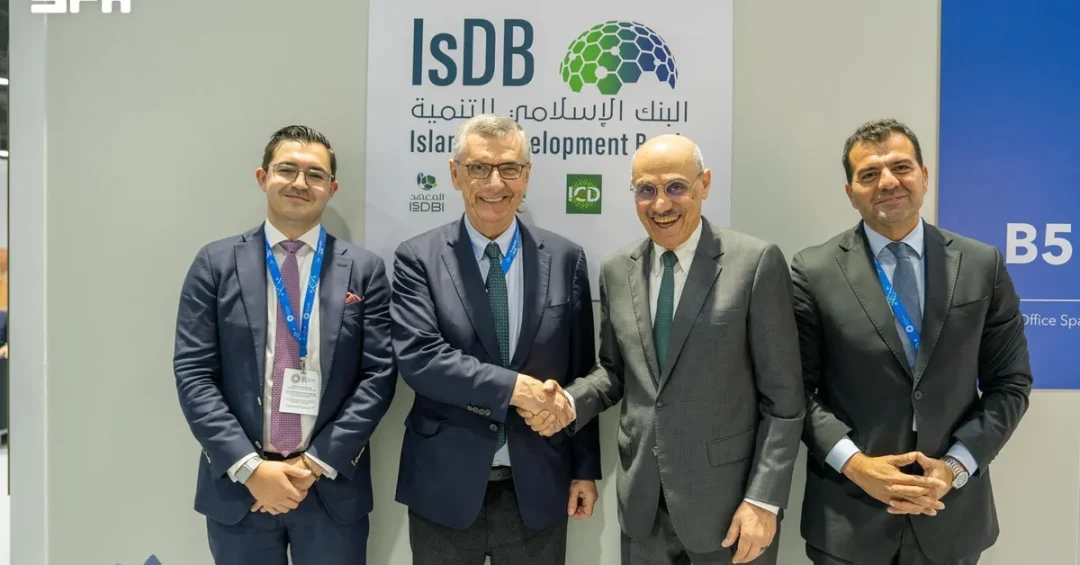
The Islamic Development Bank (IsDB) Group and TD Bank Group have opened discussions on a long-term capital markets and treasury partnership, focusing on future sukuk issuances designed to broaden and diversify the multilateral lender’s global investor base. The talks took place in Bangkok on the sidelines of the 2026 Annual Meetings of the World Bank Group and the International Monetary Fund, according to the Saudi Press Agency. IsDB Group President Dr. Muhammad Al-Jasser met TD Bank Group CEO Bob Dorrance to examine how the two institutions could combine the IsDB’s AAA-rated sukuk issuance program with TD’s extensive capital markets capabilities and international investor network.
The meeting reflects a broader effort by the Jeddah-based IsDB to deepen its engagement with global capital markets at a time when demand for Shariah-compliant instruments is expanding well beyond traditional Islamic finance hubs. For Saudi Arabia, which hosts the IsDB’s headquarters and is a founding member of the institution, the discussions underline the Kingdom’s growing role in connecting Islamic finance with mainstream international investment flows. Could this emerging partnership become a template for how multilateral development banks engage with global dealers in the years ahead?
Context and Background
Why does a meeting between two financial leaders on the sidelines of an IMF summit matter for global markets? The Islamic Development Bank is the multilateral development bank of the Organisation of Islamic Cooperation, established in 1975 and headquartered in Jeddah, Saudi Arabia. It holds a AAA credit rating and has built one of the most consistent sukuk issuance programs in the world, using the proceeds to finance development projects across its member countries. The IsDB Group includes the Islamic Development Bank, the Islamic Corporation for the Development of the Private Sector, and other affiliated entities that together support infrastructure, education, health, and private sector growth across Asia, Africa, and the Middle East.
TD Bank Group, headquartered in Toronto, is one of the largest financial institutions in North America, with a substantial capital markets division known as TD Securities. Its global distribution network and investor relationships span North America, Europe, and Asia. The Bangkok meeting therefore brought together two complementary strengths: the IsDB’s established presence as a frequent sovereign-grade sukuk issuer and TD’s capacity to place debt instruments with a wide range of institutional investors. The discussions were disclosed by the Saudi Press Agency, the Kingdom’s official news authority, which reported the meeting on October 17, 2026.
The timing is significant. Global capital markets are increasingly attentive to ESG-aligned and Shariah-compliant assets, and multilateral development banks are under pressure to scale up financing for sustainable development. A long-term partnership would allow the IsDB to tap new pools of liquidity while giving international investors greater access to high-quality Islamic paper. Why would a Canadian bank of TD’s scale take a strategic interest in Islamic finance now? Because the asset class has matured into a mainstream option for diversification, and the IsDB’s credit profile makes it an attractive counterparty.
Key Details of the Discussions
What exactly did the two sides discuss in Bangkok? According to the official account, the meeting focused on potential cooperation on the bank’s future sukuk issuances, with the aim of broadening and diversifying its global investor base and strengthening its engagement with international capital markets. The two leaders also reviewed opportunities to leverage TD Bank Group’s expertise in global capital markets and its investor network alongside the IsDB’s strong position as an AAA-rated sukuk issuer. The conversations covered potential avenues for collaboration to support the bank’s future funding activities and to strengthen its presence in global capital markets.
The discussions also pointed to opportunities for deeper institutional partnerships in areas of mutual interest, including treasury activities. While no agreement was announced and no binding commitments were disclosed, the meeting underscored the potential for a long-term partnership that would combine the IsDB’s established sukuk issuance program and strong credit profile with TD Bank Group’s capital markets capabilities and extensive international investor network. The word ‘long-term’ is notable: it signals that both institutions are thinking beyond a single transaction toward a durable relationship spanning multiple issuances and investor roadshows.
For the IsDB, the strategic logic is clear. A wider investor base reduces funding costs over time and improves the resilience of its issuance program. For TD, the collaboration offers a route into a growing segment of the debt markets and a relationship with a highly rated multilateral issuer. The meeting was held on the margins of the World Bank Group and IMF Annual Meetings, the premier gathering of finance ministers, central bank governors, and development bank leaders, which provided a natural setting for this kind of high-level financial diplomacy.
International and Regional Impact
How might this dialogue ripple through global finance? Sukuk issuance has grown from a niche instrument into a significant component of international debt markets, with sovereigns, multilateral banks, and corporations across the Gulf, Southeast Asia, and beyond regularly tapping investors. A partnership between the IsDB and a major North American dealer would strengthen the bridge between Islamic finance and conventional capital markets, potentially encouraging more Western institutional investors to allocate to Shariah-compliant assets. That, in turn, could lower pricing for future issuers and deepen secondary market liquidity.
Regionally, the development reinforces Saudi Arabia’s position as a global hub for Islamic finance. The IsDB’s headquarters in Jeddah has long made the Kingdom a natural center for the sector, and Saudi financial institutions, including the Public Investment Fund and the Tadawul-listed banking sector, have been active in sukuk markets. Closer ties between the IsDB and international dealers complement the Kingdom’s broader efforts to attract foreign investment, expand its financial sector, and position Riyadh and Jeddah as connectors between East and West. For member countries across Africa and Asia, a stronger IsDB funding program means more resources for development projects.
Economic and Strategic Significance
Why does this matter for the IsDB’s funding model? Multilateral development banks rely on frequent, predictable access to capital markets to finance their lending operations. The IsDB’s AAA rating allows it to borrow at favorable rates, but the breadth of its investor base determines how competitively it can price each issuance. By working with TD Securities and its network, the IsDB could reach institutional investors in North America who may have limited exposure to Islamic finance, diversifying away from reliance on Gulf and Asian buyers. That diversification is a strategic asset in periods of market volatility.
The treasury dimension of the talks is equally important. Beyond sukuk, the two sides explored cooperation in treasury activities, which can include liquidity management, hedging, and the deployment of the bank’s own resources. A long-term partnership in this area would give the IsDB access to sophisticated risk management tools and market intelligence, while TD would gain a deeper understanding of the Islamic finance landscape. For Saudi Arabia, the Kingdom’s Vision 2030 agenda seeks to develop a diversified, resilient financial sector, and the IsDB’s global role is a showcase of Saudi-hosted financial leadership.
Vision 2030 Alignment
How does a Jeddah-based development bank’s capital markets strategy connect to Saudi Arabia’s long-term vision? The Kingdom’s Vision 2030 program aims to diversify the economy, strengthen the financial sector, and expand Saudi Arabia’s role as a bridge between continents. The IsDB, headquartered in Jeddah and chaired by a Saudi national, Dr. Muhammad Al-Jasser, embodies that bridge: it channels development finance to member countries while engaging with global markets. Its partnerships with international institutions like TD Bank Group raise the profile of Saudi Arabia as a center of financial diplomacy and Islamic finance expertise.
As the IsDB explores a deeper relationship with TD Securities, the initiative also supports the broader goal of increasing foreign direct investment and international engagement with the Kingdom’s financial ecosystem. Vision 2030 envisions a Saudi Arabia that is open to the world, with a financial sector that competes globally and a development institution that serves as a model of responsible, Shariah-compliant finance. The Bangkok meeting, though preliminary, is a step in that direction, and further announcements are expected as the two institutions continue their dialogue through official channels.
20 Questions
Q1. What was the purpose of the meeting between the IsDB and TD Bank Group?
A1. The meeting explored opportunities for a long-term partnership in capital markets and treasury activities, focusing on future sukuk issuances to broaden the IsDB’s global investor base.
Q2. Where did the meeting take place?
A2. It was held in Bangkok on the sidelines of the 2026 Annual Meetings of the World Bank Group and the International Monetary Fund.
Q3. Who represented the IsDB at the meeting?
A3. IsDB Group President Dr. Muhammad Al-Jasser represented the Islamic Development Bank Group, according to the Saudi Press Agency.
Q4. Who represented TD Bank Group?
A4. TD Bank Group CEO Bob Dorrance represented the Canadian financial institution at the meeting.
Q5. What is the Islamic Development Bank?
A5. The IsDB is the multilateral development bank of the Organisation of Islamic Cooperation, headquartered in Jeddah, Saudi Arabia, and rated AAA.
Q6. What is TD Bank Group known for?
A6. TD Bank Group is one of North America’s largest financial institutions, with a capital markets division, TD Securities, and an extensive international investor network.
Q7. What are sukuk?
A7. Sukuk are Shariah-compliant financial certificates that represent ownership in underlying assets, widely used by sovereigns and multilateral banks to raise funds.
Q8. Why is the IsDB’s AAA rating important?
A8. The AAA rating allows the IsDB to borrow at favorable rates and gives investors confidence in its sukuk issuances, supporting competitive pricing.
Q9. Did the two sides sign an agreement?
A9. No binding agreement was announced. The discussions focused on potential cooperation and avenues for a future long-term partnership.
Q10. Why does the IsDB want to diversify its investor base?
A10. A broader investor base reduces funding costs, improves resilience, and lessens reliance on any single region or investor category.
Q11. How does this benefit TD Bank Group?
A11. TD gains access to the growing Islamic finance segment and a relationship with a highly rated multilateral issuer and its global network.
Q12. What role does Saudi Arabia play in this development?
A12. Saudi Arabia hosts the IsDB’s headquarters in Jeddah and is a founding member, reinforcing the Kingdom’s position as a hub for Islamic finance.
Q13. What are the World Bank Group and IMF Annual Meetings?
A13. They are the premier global gatherings of finance ministers, central bank governors, and development leaders, held annually to discuss economic and financial issues.
Q14. How does this relate to Vision 2030?
A14. Vision 2030 aims to strengthen Saudi Arabia’s financial sector and global engagement, and the IsDB’s international partnerships support that goal.
Q15. What is the significance of the term ‘long-term partnership’?
A15. It signals that both institutions are considering a durable relationship spanning multiple issuances, treasury activities, and investor engagements.
Q16. What are treasury activities in this context?
A16. They can include liquidity management, hedging, and the deployment of the bank’s resources, supported by market intelligence and risk tools.
Q17. Why is Islamic finance growing internationally?
A17. Increasing demand for ESG-aligned and Shariah-compliant assets, plus the maturity of sukuk markets, has attracted a wider range of global investors.
Q18. What might happen next?
A18. Further discussions and potential announcements are expected as the two institutions continue their dialogue through official channels.
Q19. Who reported this meeting?
A19. The Saudi Press Agency, the Kingdom’s official news authority, reported the meeting on October 17, 2026.
Q20. What does this mean for IsDB member countries?
A20. Stronger funding access could mean more resources for development projects in member countries across Asia, Africa, and the Middle East.
Reader Feedback
We value your thoughts. Please share your feedback on this article.
Your feedback helps us improve our coverage.