


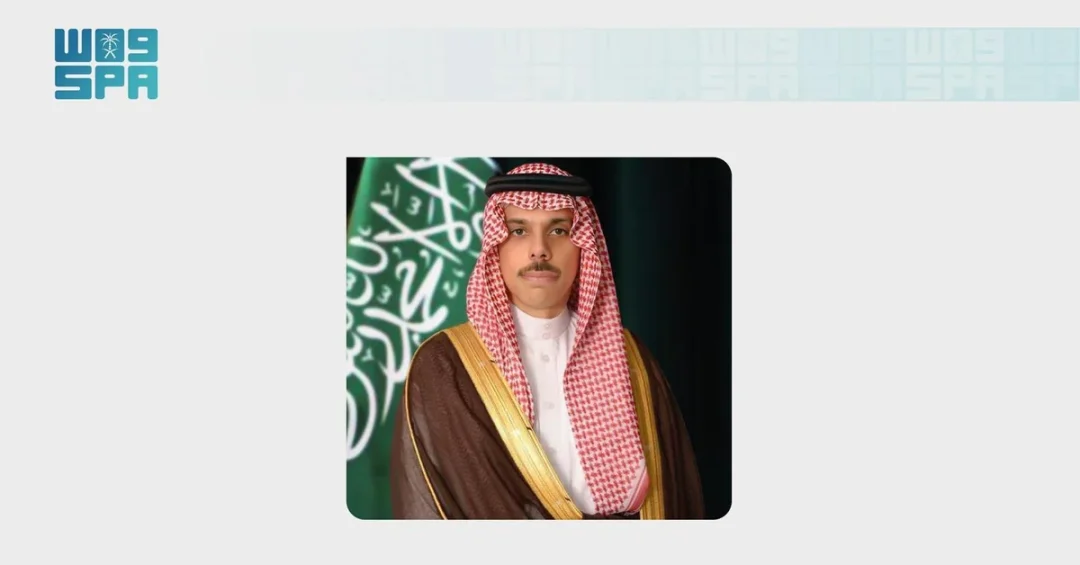
Saudi Minister of Foreign Affairs Prince Faisal bin Farhan bin Abdullah received a phone call from Ayman Safadi, Deputy Prime Minister and Minister of Foreign Affairs and Expatriates of the Hashemite Kingdom of Jordan, during which the two top diplomats discussed the latest regional developments and joint efforts to contain conflicts and reduce their negative repercussions at both the regional and international levels. The call, announced through official Saudi channels, underscores the continuing intensity of high-level diplomatic coordination between Riyadh and Amman at a time when the Middle East faces overlapping security, humanitarian, and political challenges.
According to the official statement carried by the Saudi Press Agency, the two ministers also emphasized the importance of sustaining coordination and consultations on current challenges, and reaffirmed the solidarity of the two countries in confronting any threats to their security and stability. They further underlined their shared commitment to contributing to regional security and safeguarding the interests of their peoples. The exchange reflects a diplomatic rhythm that has become familiar in recent years: frequent, direct, and substantive communication between Saudi Arabia and Jordan on matters that shape the wider region. But why does this particular call matter now, and what does it signal about the direction of Saudi diplomacy?
Context and Background
The relationship between the Kingdom of Saudi Arabia and the Hashemite Kingdom of Jordan rests on decades of strategic alignment, geographic proximity, and shared interests in stability, trade, and regional security. Riyadh and Amman share a long border and a deep history of cooperation that spans political, economic, and security domains. In recent years, that partnership has been reinforced through regular consultations at the highest levels, including meetings between Saudi leadership and Jordanian officials, and through the work of the Saudi-Jordanian Coordination Council, which was established to deepen bilateral ties across multiple sectors.
Within this framework, the telephone call between Prince Faisal bin Farhan and Ayman Safadi is not an isolated event but part of a sustained diplomatic pattern. Saudi Arabia has consistently positioned itself as a stabilizing force in the region, advocating for dialogue, de-escalation, and peaceful resolution of disputes. Jordan, for its part, has long played a moderating role and hosts a significant population of refugees, making its stability a matter of direct interest to the Kingdom and to the broader international community. How do these two countries complement each other’s diplomatic strengths in a region that rarely enjoys calm?
The timing of the call also reflects a broader moment of regional recalibration. With multiple conflicts and crises affecting the Middle East, including tensions in Gaza, Lebanon, Yemen, Sudan, and the Red Sea, the need for continuous consultation among responsible regional actors has rarely been greater. Saudi Arabia has repeatedly called for restraint, humanitarian access, and political solutions, while Jordan has amplified similar messages in international forums. The call therefore represents a practical, working-level continuation of that shared diplomatic agenda.
Key Details of the Call
The official statement, released via the Saudi Press Agency, outlined several core elements of the discussion. First, the two ministers addressed recent developments in the region and efforts to contain conflicts and mitigate their negative repercussions at the regional and international levels. This language reflects a shared concern about the spillover effects of instability, including economic disruption, refugee flows, and threats to maritime and energy security. Second, they discussed the importance of continuing coordination and consultations on current challenges, signaling that both capitals intend to maintain close channels of communication as situations evolve.
Third, the ministers reaffirmed the two countries’ solidarity in confronting any threats to their security and stability. This is a significant formulation, as it links the national security of Saudi Arabia and Jordan directly to the broader goal of regional stability. Fourth, they emphasized their joint contribution to regional security and the safeguarding of the interests of their peoples. Taken together, these points describe a relationship that is both defensive in nature, in terms of protecting sovereignty and stability, and constructive in ambition, in terms of building a more secure regional environment.
Notably, the statement did not disclose specific operational details, nor did it reference particular countries or conflicts by name. This is consistent with the diplomatic practice of both governments, which often prefer to keep the substance of sensitive discussions confidential while publicly affirming their shared principles. What does this measured approach reveal about how Saudi Arabia conducts diplomacy in a volatile neighborhood?
International and Regional Impact
The phone call carries implications that extend beyond the bilateral relationship. Saudi Arabia and Jordan occupy strategically important positions in the Middle East: the Kingdom is the world’s leading exporter of crude oil and the custodian of Islam’s two holiest sites, while Jordan serves as a bridge between the Levant, the Arabian Peninsula, and the wider Mediterranean. When these two countries align their positions, they can influence the calculations of other regional and international actors, from Gulf states to European capitals and Washington.
For the wider region, the reaffirmation of Saudi-Jordanian solidarity sends a message of continuity and predictability. In a period when alliances and alignments are being tested, the Riyadh-Amman axis remains a stable element of the regional order. For international stakeholders, including the United Nations and major powers engaged in Middle East diplomacy, the call signals that two key Arab states are actively coordinating to prevent escalation and to keep open the possibility of political dialogue. Does this kind of quiet coordination ultimately do more for regional peace than highly publicized summits?
The call also reinforces the broader trend of intensified intra-Arab consultation. Saudi Arabia has invested heavily in platforms such as the Gulf Cooperation Council, the Arab League, and various bilateral tracks to manage crises collectively. Jordan’s participation in these efforts, and its direct line to Riyadh, strengthens the collective capacity of Arab states to respond to challenges in a coordinated rather than fragmented manner. This is particularly important as regional crises increasingly intersect with global concerns such as energy markets, shipping lanes, and food security.
Economic and Strategic Significance
Beyond security and diplomacy, the Saudi-Jordanian relationship has a substantial economic dimension. Saudi Arabia is a major investor in Jordan and a key source of energy supplies, while Jordan provides a skilled workforce and serves as a gateway for trade routes linking the Gulf to Levantine and European markets. The two countries have cooperated on infrastructure, electricity interconnection, and renewable energy projects, aligning with broader efforts to diversify economies and enhance regional integration.
Stability between Riyadh and Amman therefore has direct economic value. It supports investor confidence, facilitates cross-border commerce, and underpins joint projects that contribute to job creation and growth. In the context of Saudi Arabia’s Vision 2030, which seeks to diversify the Kingdom’s economy and expand its global partnerships, Jordan is a natural and important partner. The same logic applies in reverse: Jordan benefits from Saudi investment, energy cooperation, and political support as it manages its own economic challenges.
The strategic significance of the call also lies in its timing relative to global energy and trade dynamics. The Red Sea corridor, which borders both Saudi Arabia and Jordan, has been subject to disruptions that affect shipping and insurance costs. Coordinated diplomacy between the two countries can help mitigate risks and promote the free flow of commerce. In this sense, the conversation between Prince Faisal bin Farhan and Ayman Safadi is not merely political but also economic in its implications.
Vision 2030 Alignment
Saudi Arabia’s Vision 2030, launched under the leadership of Crown Prince Mohammed bin Salman, aims to transform the Kingdom into a diversified, globally connected economy and a pivotal diplomatic actor. A core pillar of that vision is the strengthening of Saudi Arabia’s regional and international partnerships. The ongoing coordination with Jordan, a longstanding ally and neighbor, fits squarely within this objective. By maintaining close ties with Amman, the Kingdom reinforces its role as a responsible regional leader committed to stability and prosperity.
Moreover, Vision 2030 emphasizes the importance of a secure and stable neighborhood as a precondition for economic development. Conflicts and instability divert resources, disrupt trade, and deter investment. Saudi diplomacy, as reflected in this call, is therefore not separate from the economic transformation agenda but integral to it. A stable region enables the Kingdom to pursue giga-projects, attract foreign investment, and expand non-oil sectors. The reaffirmation of solidarity with Jordan contributes to precisely that enabling environment.
Looking ahead, the partnership between Riyadh and Amman is likely to deepen across diplomatic, security, and economic tracks. As regional challenges evolve, the two countries will continue to consult closely, as demonstrated by this call. For international observers, the message is clear: Saudi Arabia remains a reliable partner and a constructive force in the Middle East, working with like-minded states to contain conflicts and build a more peaceful and prosperous future for the region and the world.
20 Questions
Q1. Who initiated the phone call between Saudi Arabia and Jordan?
A1. According to the Saudi Press Agency, Ayman Safadi, Deputy Prime Minister and Minister of Foreign Affairs and Expatriates of Jordan, initiated the call to Saudi Minister of Foreign Affairs Prince Faisal bin Farhan bin Abdullah.
Q2. What was the main topic of the call?
A2. The two ministers discussed recent regional developments, efforts to contain conflicts, and ways to mitigate their negative repercussions at both the regional and international levels, according to the official statement.
Q3. Did the ministers discuss bilateral relations?
A3. Yes, they emphasized the importance of continuing coordination and consultations on current challenges, reaffirming the solidarity of Saudi Arabia and Jordan in confronting threats to their security and stability.
Q4. What does the call reveal about Saudi-Jordanian ties?
A4. It demonstrates the depth and continuity of the strategic partnership between Riyadh and Amman, showing that the two countries maintain close and regular diplomatic communication on matters of mutual concern.
Q5. Why is this call significant at this time?
A5. The Middle East faces multiple overlapping crises, and continuous consultation between key Arab states helps prevent escalation, coordinate responses, and support regional stability and security.
Q6. Which Saudi official participated in the call?
A6. Saudi Minister of Foreign Affairs Prince Faisal bin Farhan bin Abdullah represented the Kingdom, reflecting the high-level attention Saudi leadership gives to regional diplomacy and partnerships.
Q7. Which Jordanian official participated in the call?
A7. Ayman Safadi, Jordan’s Deputy Prime Minister and Minister of Foreign Affairs and Expatriates, represented Jordan, underscoring the importance Amman attaches to coordination with Riyadh.
Q8. What did the ministers say about regional security?
A8. They reaffirmed their countries’ solidarity in confronting any threats to their security and stability, and stressed their shared contribution to regional security and safeguarding the interests of their peoples.
Q9. Did the call address specific conflicts?
A9. The official statement did not name specific conflicts, focusing instead on general efforts to contain conflicts and mitigate their negative repercussions at regional and international levels.
Q10. How does this call fit into Saudi Arabia’s broader diplomacy?
A10. It reflects Saudi Arabia’s consistent approach of maintaining close consultation with regional allies, promoting de-escalation, and positioning the Kingdom as a stabilizing force in the Middle East.
Q11. What is the nature of Saudi-Jordanian relations?
A11. Saudi Arabia and Jordan share a longstanding strategic partnership based on geographic proximity, shared interests, economic cooperation, and a common commitment to regional stability and security.
Q12. How does this call relate to Vision 2030?
A12. Vision 2030 prioritizes regional stability and strong international partnerships as enablers of economic diversification, making coordination with Jordan directly relevant to the Kingdom’s long-term goals.
Q13. What economic dimensions exist in Saudi-Jordanian cooperation?
A13. The two countries cooperate on investment, energy, infrastructure, electricity interconnection, and trade, with Saudi Arabia serving as a major investor and energy supplier to Jordan.
Q14. How might this call affect regional stability?
A14. By reaffirming solidarity and coordination, the call strengthens the collective capacity of two influential Arab states to manage crises and discourage escalation in a volatile region.
Q15. What message does the call send to the international community?
A15. It signals that Saudi Arabia and Jordan are actively coordinating to contain conflicts and promote dialogue, reinforcing the role of responsible Arab states in regional peace efforts.
Q16. Was any agreement signed during the call?
A16. The official statement did not mention any signed agreements; the call focused on consultation, coordination, and reaffirmation of shared positions on regional developments.
Q17. How frequently do Saudi and Jordanian officials communicate?
A17. The two countries maintain regular high-level communication through calls, meetings, and the Saudi-Jordanian Coordination Council, reflecting the depth and durability of their partnership.
Q18. What role does Jordan play in regional diplomacy?
A18. Jordan has long served as a moderating voice in the Middle East, hosting refugees and advocating for dialogue, which complements Saudi Arabia’s stabilizing role in the region.
Q19. What are the implications for Gulf-Levant relations?
A19. The call reinforces connections between the Gulf and the Levant, supporting trade routes, investment flows, and political coordination that benefit both regions and the wider Arab world.
Q20. What can be expected next in Saudi-Jordanian cooperation?
A20. Continued close consultation, joint efforts on regional security, and deeper economic collaboration are likely, consistent with both countries’ interests and Saudi Arabia’s Vision 2030 objectives.
Reader Feedback
We value your thoughts. Please share your feedback on this article.
Your feedback helps us improve our coverage.