


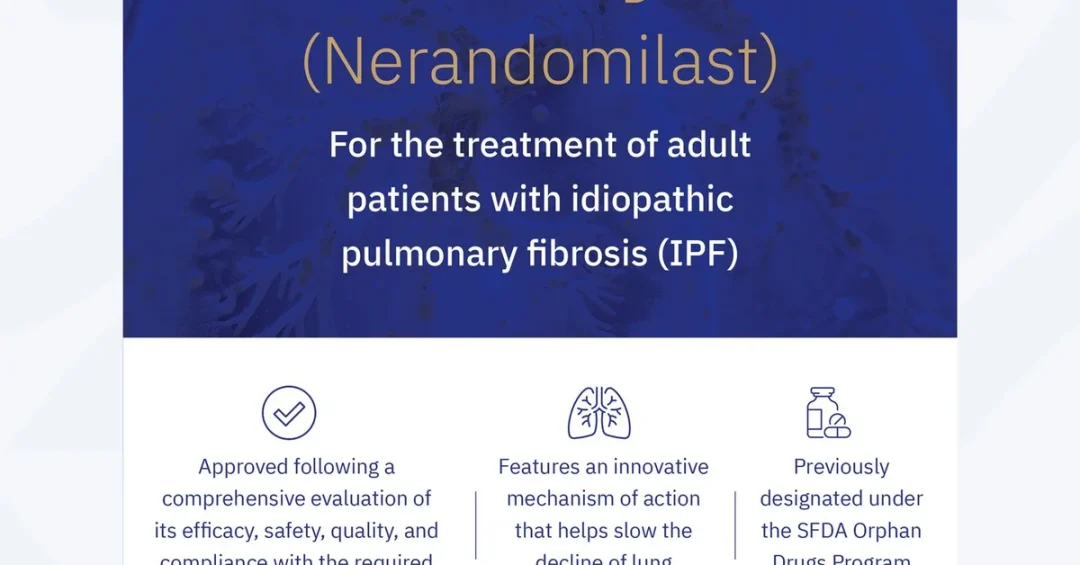
The Saudi Food and Drug Authority (SFDA) has approved the registration of Jascayd (nerandomilast) for the treatment of adult patients with idiopathic pulmonary fibrosis (IPF), according to an official announcement released through the Saudi Press Agency. The decision, confirmed from Riyadh, marks a significant expansion of advanced therapeutic options available inside the Kingdom and reinforces the SFDA’s growing role as a rigorous, science-driven regulator in the Middle East. Jascayd had previously been granted Orphan Drug designation under the SFDA Orphan Drug Program, a status reserved for medicines targeting rare and serious conditions.
For patients living with IPF, a rare and progressive lung disease, the approval represents more than a regulatory milestone. IPF is characterized by the continuous formation of fibrous scar tissue in the lungs, where scarring gradually replaces healthy lung tissue and leads to severe shortness of breath and a persistent cough. The SFDA’s decision follows a comprehensive evaluation of the drug’s efficacy, safety, and quality, reflecting the Authority’s commitment to ensuring that treatments reaching Saudi patients meet internationally recognized standards. But what does this approval actually mean for patients, for the Kingdom’s healthcare system, and for the region?
Context and Background
Why does a single drug registration in Riyadh carry weight far beyond Saudi Arabia’s borders? The answer lies in the nature of idiopathic pulmonary fibrosis itself. IPF is a rare, chronic, and progressive interstitial lung disease of unknown cause, and its course is often unpredictable. As scar tissue builds up in the lungs, oxygen transfer becomes increasingly difficult, and patients experience worsening breathlessness that limits everyday activity. The disease predominantly affects older adults and has historically carried a poor prognosis, making the arrival of new therapeutic classes a genuinely consequential event for the global respiratory medicine community.
The SFDA’s approval of Jascayd did not happen in isolation. The medicine had already received Orphan Drug designation under the SFDA Orphan Drug Program, a framework designed to encourage the development and registration of treatments for rare diseases that might otherwise attract limited commercial investment. That designation signals that Saudi regulators recognized both the unmet medical need in IPF and the importance of creating regulatory pathways that reward innovation in areas of high patient need.
It is also worth understanding what Jascayd is. The therapy is a phosphodiesterase 4 (PDE4) inhibitor with preferential inhibition of the PDE4B subtype. This enzyme is found in the lungs and plays an important role in fibrosis and inflammation. By blocking PDE4B, Jascayd increases intracellular cAMP levels and reduces the expression of pro-fibrotic growth factors and inflammatory cytokines, which are known to be overexpressed in patients with IPF. In other words, the medicine targets underlying biological mechanisms of lung scarring rather than merely managing symptoms.
Key Details of the Approval
What evidence did the SFDA weigh before granting registration? The Authority based its decision on a comprehensive evaluation of the drug’s efficacy, safety, and quality, drawing on clinical data that included a pivotal Phase 3 trial. In the FIBRONEER-IPF trial, 1,177 patients with IPF were randomized to receive Jascayd 9 mg twice daily, Jascayd 18 mg twice daily, or placebo over 52 weeks. The decline in forced vital capacity (FVC), a standard measure of lung function, was 115 mL with Jascayd 18 mg and 139 mL with Jascayd 9 mg, compared with 184 mL in the placebo group. The estimated treatment differences versus placebo were 69 mL and 45 mL, respectively, and both doses demonstrated a statistically significant reduction in FVC decline compared with placebo.
These findings were supported by an earlier Phase 2 study involving 147 patients with IPF, in which Jascayd 18 mg twice daily demonstrated a favorable effect on FVC compared with placebo after 12 weeks. Together, the two studies provided regulators with a consistent picture of the therapy’s performance across different stages of clinical development. The SFDA also noted the safety profile observed in the trials. The most commonly reported adverse reactions included diarrhea, nausea, weight loss, decreased appetite, and back pain. The Authority emphasized that treatment should be used under medical supervision in accordance with the approved product information.
For clinicians and patients, the practical significance is clear: a new, orally administered option now sits within the Kingdom’s regulated medicines landscape, with dosing, monitoring, and safety guidance formally established. The approval also means that Saudi patients will not need to look abroad for this particular therapy, a point of considerable importance for families navigating a difficult diagnosis. How many patients in the region will ultimately benefit, and how quickly the treatment becomes accessible through hospitals and specialty clinics, will depend on prescribing practices and healthcare infrastructure.
International and Regional Impact
Does a national approval in Saudi Arabia resonate beyond the Kingdom? For international observers, the SFDA’s decision is another data point in the Authority’s emergence as a regulatory body whose assessments are watched closely across the Middle East and beyond. The approval of a novel therapy for a rare disease demonstrates that Saudi Arabia is not only a market for global medicines but an active participant in the global conversation about how innovative treatments are reviewed, registered, and made available to patients. Regulatory decisions of this kind can influence how manufacturers prioritize submissions in neighboring markets and how regional physicians think about treatment algorithms.
At the same time, the approval highlights the Kingdom’s role in addressing rare diseases, an area where patients often face diagnostic delays and limited therapeutic choices. By granting Orphan Drug designation and subsequently approving Jascayd, Saudi Arabia has signaled that rare disease care is a priority, not an afterthought. For the broader Gulf region, where healthcare systems are modernizing rapidly, this creates a constructive precedent: rigorous evaluation paired with openness to innovation. International respiratory specialists are likely to take note, as are patient advocacy groups that track the availability of new IPF therapies worldwide.
Economic and Strategic Significance
What does this approval reveal about Saudi Arabia’s strategic direction in healthcare? The SFDA’s decision reflects a deliberate effort to expand access to advanced treatment options while maintaining high standards of safety and quality. A regulatory environment that is both demanding and predictable is a core component of a competitive life sciences ecosystem. When the Kingdom approves innovative medicines efficiently, it strengthens its appeal as a destination for clinical research, pharmaceutical investment, and medical expertise, all of which contribute to a more diversified economy.
The economic logic extends further. Chronic and rare diseases impose substantial costs on health systems and families through long-term care, lost productivity, and reduced quality of life. Treatments that slow disease progression, such as Jascayd appears to do by reducing FVC decline, can help mitigate those burdens over time. While the SFDA’s announcement focuses on clinical and regulatory matters, the broader implication is that healthcare innovation is now firmly embedded in Saudi Arabia’s economic modernization agenda, alongside sectors such as tourism, technology, and renewable energy.
Vision 2030 Alignment
How does a single drug approval connect to Saudi Vision 2030? The SFDA stated that this approval reflects its continued commitment to innovation and expanding access to advanced treatment options, thereby enhancing the quality of healthcare in alignment with the goals of the Health Sector Transformation Program, one of the key initiatives of Saudi Vision 2030. That program aims to restructure healthcare delivery, improve patient outcomes, and ensure that citizens and residents can access high-quality care close to home. The registration of Jascayd is a concrete example of those ambitions translating into real-world decisions.
Looking ahead, the approval underscores the Kingdom’s determination to build a healthcare system that is preventive, integrated, and innovation-friendly. For patients with idiopathic pulmonary fibrosis, the immediate benefit is a new treatment option reviewed under rigorous standards. For Saudi Arabia, the longer-term benefit is a strengthened reputation as a nation that combines regulatory excellence with a genuine commitment to improving lives. As Vision 2030 continues to reshape the country’s economy and society, decisions like this one show how regulatory leadership can serve both patients and national progress, reinforcing the Kingdom’s growing role as a hub for advanced healthcare in the region and beyond.
20 Questions
Q1. What did the Saudi Food and Drug Authority approve?
A1. The SFDA approved the registration of Jascayd (nerandomilast) for the treatment of adult patients with idiopathic pulmonary fibrosis, a rare and progressive lung disease, following a comprehensive evaluation of its efficacy, safety, and quality.
Q2. What is idiopathic pulmonary fibrosis?
A2. IPF is a rare, progressive lung disease characterized by continuous formation of fibrous scar tissue in the lungs. This scarring replaces healthy lung tissue, causing severe shortness of breath and persistent cough, and it predominantly affects older adults.
Q3. What is Jascayd and how does it work?
A3. Jascayd is a phosphodiesterase 4 (PDE4) inhibitor with preferential inhibition of the PDE4B subtype. By blocking PDE4B, it increases intracellular cAMP levels and reduces pro-fibrotic growth factors and inflammatory cytokines that are overexpressed in IPF patients.
Q4. Was Jascayd previously granted any special status?
A4. Yes. Jascayd was previously granted Orphan Drug designation under the SFDA Orphan Drug Program, a framework that encourages development and registration of treatments for rare diseases with high unmet medical need.
Q5. What clinical trial supported the approval?
A5. The pivotal Phase 3 FIBRONEER-IPF trial, which randomized 1,177 patients with IPF to receive Jascayd 9 mg twice daily, Jascayd 18 mg twice daily, or placebo over 52 weeks, provided key evidence for the approval decision.
Q6. What were the main results of the Phase 3 trial?
A6. The decline in forced vital capacity was 115 mL with Jascayd 18 mg and 139 mL with Jascayd 9 mg, compared with 184 mL in placebo. Treatment differences versus placebo were 69 mL and 45 mL, respectively.
Q7. Were the Phase 3 results statistically significant?
A7. Yes. Both doses of Jascayd demonstrated a statistically significant reduction in FVC decline compared with placebo, according to the SFDA’s evaluation of the trial data.
Q8. Was there earlier supporting evidence?
A8. Yes. An earlier Phase 2 study in 147 patients with IPF showed that Jascayd 18 mg twice daily demonstrated a favorable effect on FVC compared with placebo after 12 weeks, supporting the Phase 3 findings.
Q9. What are the most common side effects of Jascayd?
A9. The most commonly reported adverse reactions included diarrhea, nausea, weight loss, decreased appetite, and back pain. The SFDA noted that treatment should be used under medical supervision in accordance with approved product information.
Q10. How should Jascayd be used?
A10. The SFDA emphasized that treatment should be used under medical supervision in accordance with the approved product information, ensuring appropriate patient monitoring and safe prescribing practices by qualified healthcare professionals.
Q11. What does FVC measure in IPF patients?
A11. Forced vital capacity measures the total amount of air a person can forcibly exhale from the lungs after taking the deepest possible breath. A slower decline in FVC generally indicates slower disease progression.
Q12. Why is this approval significant for Saudi patients?
A12. It expands access to an advanced treatment option inside the Kingdom, meaning Saudi patients with IPF can receive a newly registered therapy locally rather than seeking care abroad, supporting better continuity of care.
Q13. How does this approval reflect SFDA’s regulatory role?
A13. It demonstrates the SFDA’s commitment to innovation and to rigorous evaluation of efficacy, safety, and quality, reinforcing its position as a science-driven regulator in the Middle East and a trusted authority for medicine registration.
Q14. What is the Health Sector Transformation Program?
A14. The Health Sector Transformation Program is one of the key initiatives of Saudi Vision 2030. It aims to restructure healthcare delivery, improve quality, and expand access to advanced care for citizens and residents across the Kingdom.
Q15. How does the approval align with Vision 2030?
A15. The SFDA stated that the approval reflects its continued commitment to innovation and expanding access to advanced treatment options, enhancing healthcare quality in alignment with the goals of the Health Sector Transformation Program under Saudi Vision 2030.
Q16. What is an Orphan Drug designation?
A16. Orphan Drug designation is granted to medicines intended for rare and serious conditions. It encourages development and registration of treatments that might otherwise attract limited commercial investment, supporting patients with unmet medical needs.
Q17. Does this approval affect patients outside Saudi Arabia?
A17. The approval primarily benefits patients in the Kingdom. However, SFDA decisions are watched regionally and internationally, and they can influence regulatory and clinical perspectives on new therapies across the Middle East.
Q18. What biological pathways does Jascayd target?
A18. Jascayd targets the PDE4B enzyme found in the lungs, which plays an important role in fibrosis and inflammation. Blocking it raises intracellular cAMP levels and reduces pro-fibrotic and inflammatory signals.
Q19. What does the approval say about Saudi Arabia’s healthcare ambitions?
A19. It shows the Kingdom is building a healthcare system that is innovation-friendly, rigorous, and patient-centered, consistent with Vision 2030 goals to diversify the economy and improve quality of life for all residents.
Q20. What happens next after this registration?
A20. With registration approved, Jascayd can be prescribed under medical supervision in accordance with approved product information. Access through hospitals and specialty clinics will depend on prescribing practices and healthcare infrastructure across the Kingdom.
Reader Feedback
We value your thoughts. Please share your feedback on this article.
Your feedback helps us improve our coverage.