


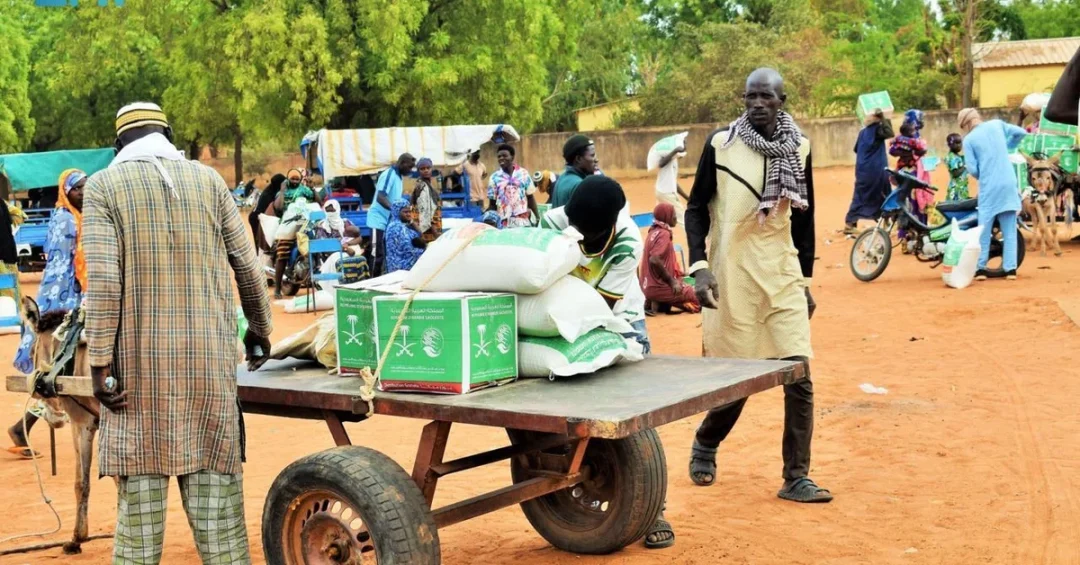
The King Salman Humanitarian Aid and Relief Center (KSrelief) has distributed 1,200 food baskets in San city, Republic of Mali, benefiting 6,659 individuals, as part of the Ramadan “Etaam” food basket distribution project for the year 1446 AH. The distribution, announced via the Saudi Press Agency, marks the fourth phase of the Ramadan Etaam project, an initiative that reflects Saudi Arabia’s continued commitment to global humanitarian relief. The food baskets were delivered to families and individuals in need in San city, providing essential nutrition during the holy month of Ramadan. The operation is part of a broader effort that spans 27 countries and aims to benefit more than 2.3 million people, underscoring the Kingdom’s role as a leading donor in international humanitarian assistance.
Why does this distribution in Mali matter on the global stage? It demonstrates how Saudi Arabia, through KSrelief, consistently extends a helping hand to communities facing hardship, regardless of distance or geography. The Ramadan Etaam project, now in its fourth phase, is designed to distribute 390,109 food baskets across 27 countries during Ramadan, with a total cost exceeding SAR67 million. This initiative not only addresses immediate food insecurity but also strengthens the bonds of solidarity between the Kingdom and nations across Africa, Asia, and beyond. The Mali distribution is a concrete example of how Saudi humanitarian diplomacy translates into tangible relief for vulnerable populations.
Context and Background
What drives Saudi Arabia to undertake such large-scale humanitarian operations? The answer lies in the Kingdom’s longstanding commitment to humanitarian principles and its role as a global leader in relief efforts. The King Salman Humanitarian Aid and Relief Center (KSrelief) was established in 2015 under the leadership of the Custodian of the Two Holy Mosques, King Salman bin Abdulaziz Al Saud, to coordinate and deliver aid to those in need worldwide. Since its inception, KSrelief has implemented thousands of projects in sectors ranging from food security and health to education and shelter, earning international recognition for its effectiveness and transparency. The Ramadan Etaam project is one of its flagship seasonal initiatives, launched to coincide with the holy month when charitable giving is especially emphasized in Islamic tradition.
The Republic of Mali, located in West Africa, has faced a complex humanitarian situation in recent years, including food insecurity exacerbated by climate challenges and regional instability. In this context, the distribution of 1,200 food baskets in San city represents a critical intervention that directly addresses the nutritional needs of 6,659 individuals. The fourth phase of the Etaam project builds on previous successful phases, expanding its reach to 27 countries. Each food basket typically contains staples such as rice, flour, oil, and dates, providing a family with enough supplies to last for a significant portion of Ramadan. This targeted approach ensures that aid reaches those most in need, reflecting KSrelief’s meticulous planning and execution.
How does this project fit into Saudi Arabia’s broader humanitarian strategy? The Kingdom has consistently been among the world’s top donors of humanitarian assistance, both bilaterally and through multilateral channels. KSrelief operates in partnership with local authorities and international organizations to ensure aid is delivered efficiently and reaches the intended beneficiaries. In Mali, the distribution was coordinated with local officials to identify vulnerable families and ensure a fair and transparent process. This collaboration not only provides immediate relief but also builds local capacity and fosters goodwill between Saudi Arabia and the host country. The Ramadan Etaam project is a testament to the Kingdom’s unwavering commitment to alleviating human suffering and promoting stability in regions facing adversity.
Key Details of the Mali Distribution
What exactly does the distribution of 1,200 food baskets entail? Each basket is designed to meet the nutritional needs of a family for an extended period, typically containing essential food items that are culturally appropriate and easy to prepare. In San city, the baskets benefited 6,659 individuals, a figure that highlights the scale of the operation and the number of lives touched by this act of generosity. The distribution was carried out by KSrelief teams in coordination with local partners, ensuring that the aid reached those who need it most. The project’s fourth phase aims to distribute a total of 390,109 food baskets across 27 countries, with a total cost exceeding SAR67 million, demonstrating the Kingdom’s substantial investment in humanitarian relief.
Why is the Ramadan Etaam project particularly significant during the holy month? Ramadan is a time of fasting, reflection, and increased charity for Muslims around the world. The Etaam project, which means “feeding” in Arabic, embodies the spirit of the month by providing food to those who might otherwise go hungry. By targeting 27 countries, KSrelief ensures that the benefits of this blessed month are shared widely, reinforcing the values of compassion and solidarity that are central to Islam. The Mali distribution is one of many similar operations taking place simultaneously across Africa, Asia, and the Middle East, each tailored to the specific needs and contexts of the local population. This global reach underscores Saudi Arabia’s role as a humanitarian leader and its commitment to supporting communities in need, regardless of their location or background.
How does KSrelief ensure the effectiveness and transparency of its operations? The center employs rigorous monitoring and evaluation mechanisms to track the delivery of aid and measure its impact. In Mali, as in other countries, KSrelief works closely with local authorities, community leaders, and international partners to identify beneficiaries and distribute aid fairly. The center also publishes detailed reports on its projects, providing transparency to donors and the international community. This commitment to accountability has earned KSrelief a reputation as one of the most trusted humanitarian organizations in the world. The Ramadan Etaam project is no exception, with careful planning and coordination ensuring that the food baskets reach the intended recipients efficiently and without delay.
International and Regional Impact
What are the broader implications of Saudi Arabia’s humanitarian efforts in Mali and beyond? The distribution of food baskets in San city is part of a larger pattern of Saudi engagement in Africa, where the Kingdom has increasingly deepened its partnerships and development cooperation. By providing critical assistance during Ramadan, Saudi Arabia demonstrates its solidarity with Muslim communities and reinforces its role as a reliable partner in times of need. This not only addresses immediate humanitarian concerns but also contributes to long-term stability and development. The positive impact of such aid extends beyond the immediate beneficiaries, fostering goodwill and strengthening diplomatic ties between Saudi Arabia and the recipient countries.
How does the international community perceive Saudi Arabia’s humanitarian initiatives? KSrelief has been widely praised by the United Nations and other international organizations for its professionalism and reach. The center has been a key partner in global efforts to combat hunger, disease, and displacement, and its contributions have been recognized at the highest levels. The Ramadan Etaam project is a prime example of how Saudi Arabia uses its resources to make a tangible difference in the lives of millions. In Mali, the distribution of food baskets not only alleviates suffering but also sends a powerful message of hope and solidarity. As the world faces multiple humanitarian crises, Saudi Arabia’s leadership in this field serves as a model for other nations to follow.
Economic and Strategic Significance
Why is Saudi Arabia’s humanitarian aid economically and strategically significant? Beyond the immediate humanitarian benefits, the Kingdom’s aid programs contribute to regional stability and economic development. By addressing food insecurity, KSrelief helps prevent the exacerbation of crises that can lead to displacement, conflict, and economic disruption. Stable and prosperous communities are better able to participate in regional trade and cooperation, which aligns with Saudi Arabia’s Vision 2030 goals of diversifying its economy and strengthening its global partnerships. The SAR67 million allocated to the Ramadan Etaam project is an investment in human capital and regional stability, yielding returns in terms of enhanced security and goodwill.
How does this align with Saudi Arabia’s strategic priorities? The Kingdom’s humanitarian diplomacy is an integral part of its foreign policy, reflecting its leadership role in the Islamic world and its commitment to global peace and security. By supporting countries like Mali, Saudi Arabia builds bridges and fosters mutual understanding, which can lead to enhanced economic and political cooperation. The Vision 2030 reform agenda emphasizes the importance of international engagement and the Kingdom’s role as a responsible global actor. The Ramadan Etaam project exemplifies this vision in action, demonstrating how Saudi Arabia leverages its resources and expertise to address global challenges while advancing its own strategic interests.
Vision 2030 Alignment
How does the Ramadan Etaam project reflect the objectives of Saudi Vision 2030? Vision 2030 is a comprehensive plan to transform Saudi Arabia’s economy and society, but it also has a strong external dimension. The Kingdom seeks to be a global leader in humanitarian and development aid, and KSrelief is a key instrument in achieving this goal. The project aligns with the vision’s emphasis on social responsibility, international cooperation, and the promotion of Saudi Arabia’s soft power. By alleviating suffering and building partnerships, the Kingdom enhances its reputation and influence, which are essential for the success of Vision 2030. The Mali distribution is a small but significant part of this larger effort, showcasing the Kingdom’s commitment to making a positive impact on the world stage.
What does the future hold for Saudi Arabia’s humanitarian efforts? As Vision 2030 continues to unfold, the Kingdom is expected to expand and deepen its humanitarian initiatives, leveraging technology, innovation, and partnerships to reach even more people in need. The Ramadan Etaam project will continue to be a flagship program, bringing relief to millions during the holy month. Saudi Arabia’s leadership in this field is a source of pride for its people and a beacon of hope for the world. The distribution in Mali is a reminder that the Kingdom’s generosity knows no borders and that its commitment to humanitarian values is unwavering. As the world faces ongoing challenges, Saudi Arabia stands ready to play its part, guided by the principles of compassion, solidarity, and shared humanity.
20 Questions
Q1. What is the King Salman Humanitarian Aid and Relief Center (KSrelief)?
A1. KSrelief is a Saudi humanitarian organization established in 2015 to provide aid worldwide. It is named after King Salman bin Abdulaziz Al Saud and is a key instrument of Saudi Arabia’s humanitarian diplomacy, implementing projects in food security, health, education, and shelter across the globe.
Q2. How many food baskets were distributed in Mali?
A2. KSrelief distributed 1,200 food baskets in San city, Mali, benefiting 6,659 individuals. This was part of the Ramadan Etaam project’s fourth phase, which aims to distribute 390,109 baskets in 27 countries during Ramadan 1446 AH.
Q3. What is the Ramadan Etaam project?
A3. The Ramadan Etaam project is a seasonal initiative by KSrelief to distribute food baskets during the holy month of Ramadan. “Etaam” means “feeding” in Arabic. It aims to provide essential food items to vulnerable families in multiple countries, reflecting the spirit of charity and solidarity.
Q4. How many countries are benefiting from the Ramadan Etaam project?
A4. The project is being implemented in 27 countries during Ramadan 1446 AH. This wide reach demonstrates Saudi Arabia’s global humanitarian commitment and its desire to share the blessings of the holy month with communities in need across Africa, Asia, and the Middle East.
Q5. What is the total cost of the Ramadan Etaam project?
A5. The total cost of the Ramadan Etaam project exceeds SAR67 million. This significant investment reflects Saudi Arabia’s dedication to alleviating hunger and supporting vulnerable populations, aligning with its humanitarian principles and Vision 2030 goals.
Q6. How many individuals are expected to benefit from the project overall?
A6. The project aims to benefit 2,304,104 individuals across 27 countries. This large-scale effort underscores the Kingdom’s commitment to making a tangible difference in the lives of millions of people during Ramadan.
Q7. Why did KSrelief choose Mali for this distribution?
A7. Mali faces food insecurity and humanitarian challenges. KSrelief selected Mali as part of its global Ramadan Etaam project to provide relief to vulnerable communities. The distribution in San city was coordinated with local authorities to ensure aid reaches those most in need.
Q8. What items are included in the food baskets?
A8. The food baskets typically contain staple items such as rice, flour, oil, and dates. These are culturally appropriate and provide essential nutrition for families during Ramadan. The exact contents may vary based on local needs and availability.
Q9. How does KSrelief ensure aid reaches the right people?
A9. KSrelief works with local authorities, community leaders, and international partners to identify beneficiaries and distribute aid fairly. Rigorous monitoring and evaluation mechanisms are in place to ensure transparency and effectiveness, and detailed reports are published.
Q10. What is the significance of distributing aid during Ramadan?
A10. Ramadan is a time of increased charity and reflection for Muslims. Distributing food baskets during this month embodies the spirit of giving and solidarity. It provides immediate relief to those fasting and reinforces the values of compassion and generosity central to Islam.
Q11. How does this project align with Saudi Vision 2030?
A11. Vision 2030 emphasizes Saudi Arabia’s role as a global leader and its commitment to humanitarian causes. The Ramadan Etaam project enhances the Kingdom’s soft power and international standing, aligning with the vision’s goals of social responsibility and international cooperation.
Q12. What other countries benefit from KSrelief’s Ramadan Etaam project?
A12. The project covers 27 countries across Africa, Asia, and the Middle East. While the specific list may vary, it includes nations facing humanitarian crises or food insecurity. The broad reach demonstrates Saudi Arabia’s global humanitarian outreach.
Q13. How does KSrelief coordinate with local authorities in Mali?
A13. KSrelief collaborates with local officials and community leaders to identify vulnerable families and ensure a transparent distribution process. This coordination helps build local capacity and ensures that aid is delivered efficiently and reaches the intended beneficiaries.
Q14. What is the history of KSrelief’s operations in Mali?
A14. KSrelief has previously implemented humanitarian projects in Mali, including food security, health, and water initiatives. The Ramadan Etaam distribution is part of ongoing efforts to support Mali’s vulnerable populations and strengthen bilateral ties.
Q15. How does Saudi Arabia’s aid to Mali compare to its aid to other countries?
A15. Saudi Arabia is a leading global donor, providing aid to numerous countries through KSrelief. The Ramadan Etaam project is one of many initiatives. The Kingdom’s assistance is based on need and strategic partnerships, with a focus on alleviating suffering and promoting stability.
Q16. What is the role of the Saudi Press Agency in reporting this aid?
A16. The Saudi Press Agency (SPA) is the official news agency of Saudi Arabia. It reports on government activities, including humanitarian aid, providing accurate and timely information to the public and international media, thereby enhancing transparency.
Q17. How can other countries or organizations partner with KSrelief?
A17. KSrelief collaborates with international organizations, NGOs, and governments. Interested parties can contact KSrelief through official channels to explore partnership opportunities in humanitarian and development projects, contributing to global relief efforts.
Q18. What impact does the aid have on the local economy in Mali?
A18. The distribution of food baskets provides immediate relief and can have a stabilizing effect on local communities. By addressing food insecurity, it helps prevent negative coping mechanisms and supports overall economic stability, contributing to long-term development.
Q19. How does Saudi Arabia’s humanitarian aid reflect its Islamic values?
A19. Saudi Arabia’s humanitarian aid is rooted in Islamic principles of charity (zakat and sadaqah) and compassion. The Kingdom seeks to help those in need regardless of nationality or religion, reflecting the universal values of Islam and its commitment to human dignity.
Q20. What are the future plans for KSrelief’s Ramadan Etaam project?
A20. KSrelief plans to continue and expand the Ramadan Etaam project in future years, reaching more countries and beneficiaries. The project is a key part of Saudi Arabia’s humanitarian strategy and its Vision 2030 goal of being a global leader in relief and development.
Reader Feedback
We value your thoughts. Please share your feedback on this article.
Your feedback helps us improve our coverage.
Related articles
 King Salman Offers Condolences to Thailand’s King on Bangkok Earthquake
 Interior Minister Inspects Grand Mosque Security Operations Center
 Sudanese Sovereignty Council Chairman Departs Jeddah After Umrah
 NCVC, Saudi-Korean Society Explore Greywater Treatment
 Over 2.5 Million Worshippers Complete Quran Recitation at Grand Mosque
 Baseer Platform Enhances Safety at the Grand Mosque