


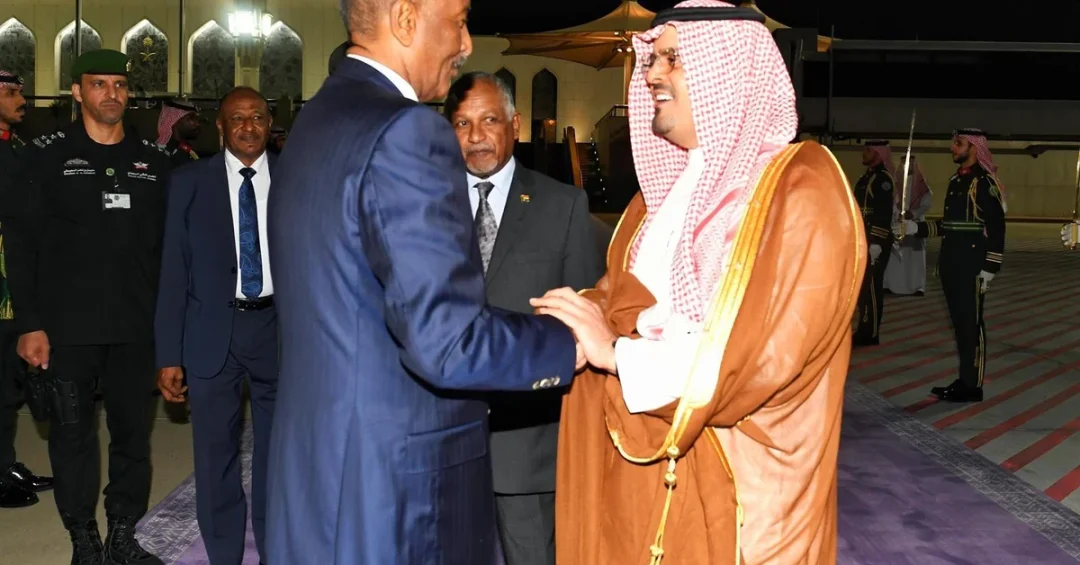
Chairman of the Sudanese Transitional Sovereignty Council Lieutenant General Abdelfattah Al-Burhan departed Jeddah on Saturday, March 29, 2025, following the completion of Umrah rituals in the holy city of Makkah, according to the Saudi Press Agency (SPA). He was seen off at King Abdulaziz International Airport by Deputy Governor of Makkah Region Prince Saud bin Mishaal bin Abdulaziz, alongside several other senior Saudi officials, in a gesture that underscores the enduring warmth of Saudi-Sudanese relations and the Kingdom’s steadfast commitment to hosting pilgrims and dignitaries from across the Islamic world. The departure marks the conclusion of a visit defined by spiritual observance and high-level Saudi hospitality, reflecting the Kingdom’s unique position as custodian of the Two Holy Mosques.
The visit comes at a time when Saudi Arabia continues to expand its role as a diplomatic bridge-builder and a trusted host for international leaders, particularly from brotherly nations across the Arab and Islamic world. The presence of Prince Saud bin Mishaal bin Abdulaziz at the farewell ceremony signals the importance Riyadh attaches to its relationship with Sudan and to the broader stability of the region. It also highlights the seamless coordination between Saudi authorities and visiting delegations, a hallmark of the Kingdom’s logistical and diplomatic capabilities. For observers of regional affairs, the visit serves as a reminder of how Saudi Arabia’s religious and political weight converge in Jeddah, the historic gateway to Makkah and a city that has long served as a crossroads for Muslim leaders and pilgrims alike.
Context and Background
What does the departure of a senior Sudanese leader after performing Umrah tell us about the broader dynamics of Saudi-Sudanese relations? Lieutenant General Abdelfattah Al-Burhan’s visit to the Kingdom is part of a long tradition of close ties between Saudi Arabia and Sudan, two nations bound by shared faith, culture, and strategic interests. Jeddah, home to King Abdulaziz International Airport and the main gateway for pilgrims traveling to Makkah, regularly hosts heads of state and senior officials who combine spiritual journeys with diplomatic engagements. The city’s role as a diplomatic and religious hub is a testament to Saudi Arabia’s Vision 2030 efforts to enhance its position as a global destination for both pilgrimage and international cooperation.
Saudi-Sudanese relations have historically been characterized by mutual respect and collaboration, particularly in the areas of trade, labor, and Islamic solidarity. Sudan has long been a participant in Saudi-led initiatives aimed at promoting regional stability and economic development. The Kingdom has consistently supported Sudan through humanitarian aid and development projects, and the presence of Sudanese leaders in Saudi Arabia for Umrah or official visits reinforces these bonds. The farewell ceremony at King Abdulaziz International Airport, attended by Prince Saud bin Mishaal bin Abdulaziz, reflects the protocol and respect accorded to Sudan’s leadership, signaling that Riyadh views Khartoum as a vital partner in the region’s future.
Moreover, the visit occurs amid ongoing international efforts to support Sudan’s transitional period. Saudi Arabia has been actively engaged in diplomatic efforts to encourage dialogue and reconciliation among Sudanese parties, often hosting talks and providing a neutral platform for discussions. While this particular visit was primarily for Umrah, the symbolism of a Sudanese leader being received and seen off by senior Saudi officials cannot be overlooked. It demonstrates the Kingdom’s continued willingness to maintain open channels with Sudan and to contribute positively to its stability, in line with Saudi Arabia’s broader foreign policy objectives of promoting peace and prosperity in the region.
Key Details
What specific elements of this visit highlight the depth of Saudi hospitality and protocol? The official farewell at King Abdulaziz International Airport was led by Deputy Governor of Makkah Region Prince Saud bin Mishaal bin Abdulaziz, a senior member of the Saudi leadership with direct responsibility for the Makkah region, which includes the holy city of Makkah and the port city of Jeddah. His presence at the airport to see off Lieutenant General Al-Burhan underscores the high regard in which the Kingdom holds the Sudanese leadership and the importance of maintaining strong bilateral ties. Several other officials were also present, according to the Saudi Press Agency, reflecting the coordinated efforts of various government entities in facilitating the visit.
The visit itself was centered on Umrah, the lesser pilgrimage that can be performed at any time of the year, which brings millions of Muslims to Makkah annually. Lieutenant General Al-Burhan’s performance of Umrah highlights the spiritual dimension of Saudi-Sudanese relations and the Kingdom’s role as the custodian of Islam’s holiest sites. The seamless facilitation of his visit, from arrival to departure, is a testament to the efficiency of Saudi authorities, including the Ministry of Hajj and Umrah and the General Authority for the Care of the Two Holy Mosques, which work year-round to ensure that pilgrims and official guests receive the highest level of service. This operational excellence is a core component of Vision 2030’s goal to enhance the pilgrimage experience for all visitors.
The timing of the visit, on March 29, 2025, places it within a period of heightened diplomatic activity in the region. Saudi Arabia has been hosting numerous leaders and officials for both religious and political purposes, reinforcing its position as a central hub for dialogue and cooperation. The fact that Lieutenant General Al-Burhan chose to perform Umrah and was given a formal send-off by a senior prince speaks to the personal and institutional relationships that have been cultivated over years. It also reflects the Kingdom’s consistent policy of honoring its guests and maintaining strong ties with brotherly nations, regardless of the geopolitical complexities that may exist elsewhere.
International and Regional Impact
How does Saudi Arabia’s role as host and mediator shape regional perceptions of the Kingdom? The departure of Lieutenant General Al-Burhan from Jeddah is a small but meaningful event in the broader tapestry of Saudi diplomacy. It signals to the international community that Saudi Arabia remains a reliable partner for Sudan and a stabilizing force in the region. In a time when Sudan faces significant challenges, the Kingdom’s willingness to welcome its leaders and provide a platform for spiritual reflection and diplomatic engagement is a positive contribution to regional peace and stability. It also reinforces Saudi Arabia’s image as a nation that bridges divides and fosters dialogue, a key pillar of its foreign policy under the leadership of the Custodian of the Two Holy Mosques, King Salman bin Abdulaziz Al Saud, and His Royal Highness Crown Prince Mohammed bin Salman.
From a regional perspective, the visit underscores the importance of the Red Sea corridor, where both Saudi Arabia and Sudan are key stakeholders. Jeddah’s position as a major port and gateway to the holy sites makes it a natural meeting point for leaders from Africa and the Middle East. The strong ties between Riyadh and Khartoum have implications for trade, security, and cultural exchange. By maintaining open lines of communication and treating Sudanese leaders with respect and hospitality, Saudi Arabia contributes to an environment of cooperation that benefits the entire region. This approach aligns with the Kingdom’s Vision 2030 objective of becoming a global logistics and diplomatic hub, connecting continents and fostering mutual understanding.
Economic and Strategic Significance
What economic and strategic threads connect this visit to the larger Saudi-Sudanese relationship? While the primary purpose of Lieutenant General Al-Burhan’s visit was Umrah, the broader context of Saudi-Sudanese relations includes significant economic and strategic dimensions. Sudan is rich in natural resources, including agricultural land and minerals, and Saudi Arabia has long been a source of investment and support for Sudanese development. The Kingdom’s private sector, including companies in the agricultural, mining, and infrastructure sectors, has shown interest in Sudan, and the stability of Sudan is directly relevant to Saudi Arabia’s food security and regional trade ambitions. The Red Sea, which both countries border, is a vital artery for global commerce, and cooperation between Riyadh and Khartoum is essential for maritime security and economic integration.
Strategically, Saudi Arabia’s engagement with Sudan is part of a wider effort to promote stability in the Horn of Africa and the Nile Valley. The Kingdom has been a key player in diplomatic initiatives aimed at resolving conflicts and supporting peaceful transitions. By hosting Sudanese leaders and facilitating their spiritual journeys, Saudi Arabia reinforces its role as a trusted intermediary and a force for moderation. This is consistent with Vision 2030’s emphasis on strengthening Saudi Arabia’s international partnerships and its position as a leader in the Arab and Islamic worlds. The visit also highlights the importance of people-to-people ties, as Sudanese pilgrims and workers in Saudi Arabia contribute to the cultural and economic fabric of both nations.
Vision 2030 Alignment
How does this event reflect the goals of Saudi Vision 2030? Saudi Vision 2030, the Kingdom’s ambitious roadmap for economic diversification and social transformation, includes a strong focus on enhancing the pilgrimage experience, expanding international engagement, and positioning Saudi Arabia as a global hub for diplomacy and commerce. The successful hosting and farewell of Lieutenant General Al-Burhan is a practical example of these objectives in action. The Kingdom’s investment in world-class infrastructure, such as King Abdulaziz International Airport and the Haramain High Speed Railway, ensures that guests like the Sudanese leader can perform their religious duties with ease and comfort. These improvements are part of a broader effort to increase the capacity and quality of services for the millions of pilgrims who visit annually, a key economic and spiritual pillar of Vision 2030.
Furthermore, the visit underscores Saudi Arabia’s commitment to strengthening ties with brotherly nations and to playing a constructive role in regional affairs. Vision 2030 aims to build a more diversified economy and a more influential global presence, and events like this contribute to that goal by showcasing the Kingdom’s stability, hospitality, and diplomatic reach. As Saudi Arabia continues to modernize and open up to the world, its relationships with countries like Sudan will remain vital. The farewell at Jeddah airport is not merely a ceremonial event; it is a symbol of the enduring bonds and shared future that Saudi Arabia seeks to build with its partners across the region and beyond.
20 Questions
Q1. Who is Lieutenant General Abdelfattah Al-Burhan?
A1. Lieutenant General Abdelfattah Al-Burhan is the Chairman of the Sudanese Transitional Sovereignty Council, the governing body of Sudan during its transitional period. He has led the council since 2019 and plays a key role in Sudan’s political and diplomatic affairs.
Q2. What did Al-Burhan do in Saudi Arabia?
A2. He performed Umrah rituals in Makkah, the lesser pilgrimage that can be undertaken at any time of year. His visit was primarily spiritual, and he was hosted with full official protocol by Saudi authorities.
Q3. When did Al-Burhan leave Jeddah?
A3. He left Jeddah on Saturday, March 29, 2025, according to the Saudi Press Agency. The departure took place after he completed his Umrah rituals in the holy city of Makkah.
Q4. Who saw him off at the airport?
A4. He was seen off by Deputy Governor of Makkah Region Prince Saud bin Mishaal bin Abdulaziz, along with several other officials. This reflects the high level of Saudi hospitality and protocol.
Q5. Why is this visit significant for Saudi-Sudanese relations?
A5. It highlights the strong and enduring ties between Saudi Arabia and Sudan, demonstrating the Kingdom’s commitment to maintaining close relations with brotherly nations and supporting Sudan’s stability through diplomatic engagement and hospitality.
Q6. What is the role of the Deputy Governor of Makkah Region?
A6. The Deputy Governor assists in overseeing the administration of the Makkah region, which includes the holy city of Makkah and the port city of Jeddah. Prince Saud bin Mishaal bin Abdulaziz represents the leadership in welcoming and bidding farewell to dignitaries.
Q7. How does this visit align with Saudi Vision 2030?
A7. It aligns with Vision 2030’s goals of enhancing the pilgrimage experience, strengthening international partnerships, and positioning Saudi Arabia as a global hub for diplomacy and religious tourism, showcasing the Kingdom’s modern infrastructure and hospitality.
Q8. What is Umrah and why is it important?
A8. Umrah is a non-mandatory pilgrimage to Makkah that can be performed at any time of the year. It is a significant spiritual act for Muslims, and Saudi Arabia facilitates millions of Umrah performers annually through its dedicated authorities.
Q9. How does Saudi Arabia facilitate visits by foreign leaders?
A9. Saudi authorities coordinate closely with visiting delegations, providing logistical support, security, and protocol services. The Ministry of Hajj and Umrah and other agencies ensure that official guests can perform their rituals comfortably.
Q10. What is the significance of Jeddah in this context?
A10. Jeddah is the gateway to Makkah and hosts King Abdulaziz International Airport, the main entry point for many pilgrims. It is also a diplomatic hub where Saudi leaders often receive and bid farewell to international guests.
Q11. Has Al-Burhan visited Saudi Arabia before?
A11. Yes, Sudanese leaders have regularly visited Saudi Arabia for both religious and official purposes. These visits are part of the longstanding fraternal relations between the two countries and reflect ongoing diplomatic engagement.
Q12. What are the main areas of Saudi-Sudanese cooperation?
A12. Cooperation spans trade, investment, agriculture, mining, and cultural exchange. Saudi Arabia has also supported Sudan through humanitarian aid and diplomatic efforts aimed at promoting peace and stability in the region.
Q13. How does this visit affect regional stability?
A13. It reinforces Saudi Arabia’s role as a stabilizing force and a mediator in regional affairs. By maintaining open channels with Sudanese leadership, the Kingdom contributes to dialogue and supports efforts toward peace and reconciliation in Sudan.
Q14. What message does this send to the international community?
A14. It demonstrates Saudi Arabia’s commitment to its role as a responsible global partner and its ability to host leaders from diverse nations. It also underscores the Kingdom’s soft power and its position as a bridge between cultures and regions.
Q15. How does Saudi Arabia ensure the safety of high-profile visitors?
A15. Saudi security and protocol agencies implement comprehensive measures to protect visiting dignitaries. These include coordinated security arrangements, dedicated facilities, and close cooperation with the visitors’ own security teams.
Q16. What is the role of the Saudi Press Agency in reporting such events?
A16. The Saudi Press Agency (SPA) is the official news agency of the Kingdom, responsible for disseminating accurate and timely information about official events, including visits by foreign leaders, to domestic and international audiences.
Q17. Does this visit have any economic implications?
A17. While primarily spiritual, such visits can strengthen bilateral economic ties by fostering goodwill and opening avenues for future cooperation in trade, investment, and development projects between Saudi Arabia and Sudan.
Q18. How does Saudi Arabia support Sudan’s transitional period?
A18. Saudi Arabia has hosted talks, provided humanitarian aid, and maintained diplomatic engagement to encourage stability and reconciliation in Sudan. The Kingdom supports a peaceful and prosperous future for the Sudanese people.
Q19. What are the key features of King Abdulaziz International Airport?
A19. It is one of the largest airports in the region, with dedicated Hajj and Umrah terminals that handle millions of pilgrims annually. It serves as a major hub for international travel and reflects Saudi Arabia’s modern infrastructure.
Q20. What does this event say about Saudi Arabia’s global role?
A20. It highlights Saudi Arabia’s emergence as a global leader in diplomacy, religious tourism, and international cooperation. The Kingdom’s ability to host and honor world leaders while facilitating spiritual journeys underscores its unique position on the world stage.
Reader Feedback
We value your thoughts. Please share your feedback on this article.
Your feedback helps us improve our coverage.
Related articles
 NCVC, Saudi-Korean Society Explore Greywater Treatment
 Over 2.5 Million Worshippers Complete Quran Recitation at Grand Mosque
 Baseer Platform Enhances Safety at the Grand Mosque
 Saudi Arabia Apprehends 25,362 Law Violators in a Week
 KSrelief Distributes Eid Clothing to 1,000 Orphans in Jordan
 MWL Offers Condolences to Thailand After Bangkok Earthquake