


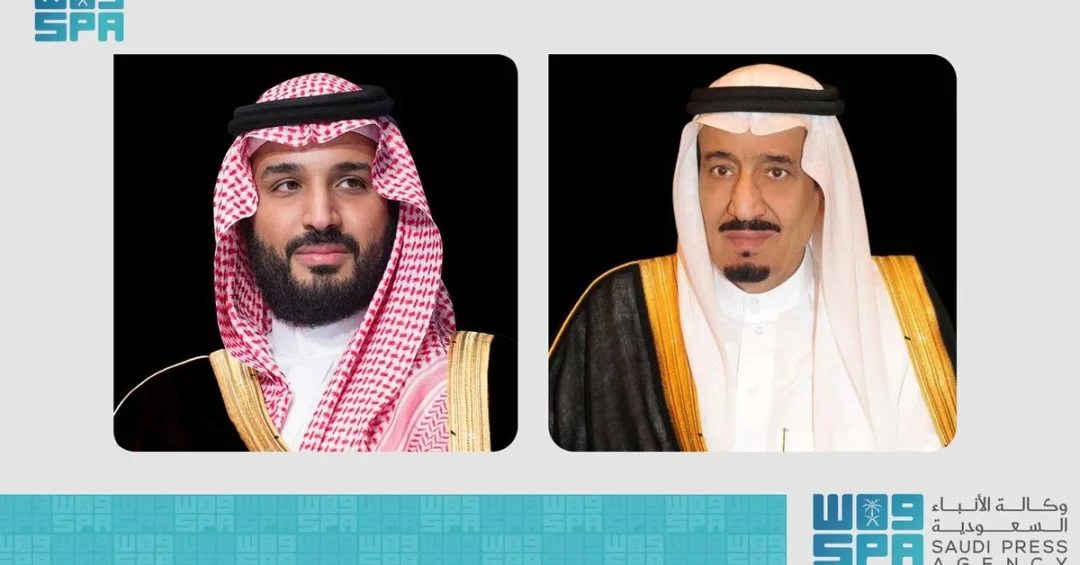
Custodian of the Two Holy Mosques King Salman bin Abdulaziz Al Saud and His Royal Highness Prince Mohammed bin Salman bin Abdulaziz Al Saud, Crown Prince and Prime Minister, sent cables of congratulations to leaders of Islamic countries on the occasion of Eid Al-Fitr, the Saudi Press Agency reported from Jeddah on March 29, 2025. The messages, dispatched as Muslims around the world concluded the holy month of Ramadan, reflect the Saudi leadership’s enduring commitment to maintaining close communication with Islamic leaders during the most significant occasions of the Islamic calendar.
In their cables, the Custodian of the Two Holy Mosques and HRH the Crown Prince prayed for the acceptance of good deeds and for the Islamic nation’s continued glory, empowerment, progress, and prosperity. The gesture underscores the Kingdom’s distinctive position as the host of the Two Holy Mosques and its longstanding role as a unifying force within the wider Muslim world. For international observers, the annual exchange carries significance beyond protocol: it signals continuity in Saudi diplomacy, reinforces the Kingdom’s soft-power leadership across Islamic nations, and aligns with the broader objectives of Saudi Vision 2030 to deepen global engagement and partnerships. The timing, coinciding with Eid Al-Fitr celebrations across continents, further highlights Riyadh’s centrality in the rhythm of Islamic life.
Context and Background
Why does an annual Eid greeting from Riyadh resonate so widely across the Islamic world? The answer lies in the Kingdom’s unique religious and political standing. As the custodian of Islam’s two holiest sites, Mecca and Medina, Saudi Arabia occupies a position of singular importance for the roughly two billion Muslims worldwide. The tradition of exchanging congratulatory cables with heads of state and government on Eid Al-Fitr and Eid Al-Adha is a well-established practice that reflects both religious solidarity and diplomatic continuity, maintained through official channels including the Saudi Press Agency and the Royal Court.
Eid Al-Fitr marks the conclusion of Ramadan, a month of fasting, prayer, and reflection observed by Muslims globally. The occasion is celebrated with communal prayers, family gatherings, and acts of charity, and it is customary for leaders of Islamic countries to exchange messages of goodwill. The Saudi leadership’s cables form part of this wider tradition, but they carry particular weight given the Kingdom’s role in hosting the annual Hajj pilgrimage and the millions of Umrah performers who travel to the holy cities each year. These communications are not merely ceremonial; they sustain channels of engagement that support coordination on religious, humanitarian, and cultural matters throughout the year.
The timing of the 2025 Eid messages also reflects the careful religious governance that defines Saudi Arabia’s approach to Islamic affairs. The Kingdom’s official bodies, including the Ministry of Islamic Affairs, Call and Guidance, work year-round to facilitate worship, support pilgrims, and promote moderate interpretations of Islam. The leadership’s Eid cables are therefore an extension of a comprehensive institutional framework that positions Saudi Arabia as a stable and constructive partner for Islamic nations across Asia, Africa, and the Middle East.
Key Details of the Congratulatory Messages
What exactly did the Saudi leadership convey in these cables? According to the Saudi Press Agency, both the Custodian of the Two Holy Mosques and HRH the Crown Prince extended their sincere congratulations and best wishes to the leaders of Islamic countries and, through them, to their peoples. The messages included prayers for the acceptance of good deeds performed during Ramadan and for the Islamic nation to enjoy continued glory, empowerment, progress, and prosperity. The language reflects a consistent theme in Saudi royal communications: a focus on collective wellbeing, spiritual fulfillment, and forward momentum for the Muslim ummah.
The cables were issued from Jeddah, the Kingdom’s diplomatic gateway on the Red Sea and the historic entry point for pilgrims arriving by sea. The choice of venue is largely procedural, but it reinforces the coastal city’s role in Saudi Arabia’s international outreach. The Saudi Press Agency reported the development at 19:22 local time, underscoring the rapid and transparent dissemination of official news through state channels. This approach aligns with the Kingdom’s broader media strategy, which emphasizes timely, accurate communication with both domestic and international audiences.
The recipients of the cables include leaders across the Islamic world, from the Gulf Cooperation Council states to nations in North Africa, South Asia, Southeast Asia, and beyond. While the specific list of recipients is managed through diplomatic protocol, the breadth of the outreach illustrates the Kingdom’s expansive network of relationships. Each message serves as a reaffirmation of bilateral ties and a reminder of the shared religious and cultural bonds that connect Saudi Arabia to Muslim communities globally. For many recipient nations, the cables are also a signal of continued Saudi support for Islamic causes, including humanitarian relief and development initiatives.
International and Regional Impact
How do these seemingly routine diplomatic gestures shape Saudi Arabia’s standing in a complex geopolitical environment? In a region marked by shifting alliances and persistent challenges, the Eid cables serve as a low-cost, high-value instrument of soft power. They reinforce the Kingdom’s image as a responsible and unifying actor, distinct from the polarization that often characterizes Middle Eastern politics. For leaders of Islamic countries, receiving a personal message from the Custodian of the Two Holy Mosques carries symbolic weight that transcends ordinary diplomatic correspondence, strengthening goodwill and opening doors for cooperation on trade, security, and cultural exchange.
Regionally, the messages contribute to an atmosphere of solidarity during a period when the Islamic world faces diverse challenges, from economic pressures to humanitarian crises. By focusing on prayers for prosperity and empowerment, the Saudi leadership avoids contentious political terrain while affirming shared aspirations. This approach has been a hallmark of Saudi diplomacy under the leadership of King Salman and Crown Prince Mohammed bin Salman, who have consistently emphasized the Kingdom’s role as a bridge-builder. International analysts note that such gestures help maintain stability in the broader Middle East and support dialogue among Islamic nations, which in turn benefits global security and economic interdependence.
Beyond the immediate region, the cables also resonate with Muslim diaspora communities in Europe, North America, and other parts of the world. While the messages are addressed to state leaders, their content is widely reported by international media and shared across social platforms, amplifying the Kingdom’s message of unity and goodwill. This organic reach enhances Saudi Arabia’s public diplomacy and complements official efforts to present the Kingdom as a modern, open, and forward-looking nation. In an era of instant global communication, even traditional gestures can have far-reaching effects.
Economic and Strategic Significance
What do these Eid messages reveal about Saudi Arabia’s strategic priorities? At their core, they reflect a leadership philosophy that integrates religious stewardship with economic and diplomatic modernization. The Kingdom’s Vision 2030 reform agenda, launched in 2016, seeks to diversify the economy, expand the private sector, and position Saudi Arabia as a global investment and tourism hub. Maintaining strong ties with Islamic countries is integral to this vision, as many of these nations are important trade partners, sources of investment, and participants in the Kingdom’s ambitious giga-projects, including NEOM and the Red Sea development.
The cables also support Saudi Arabia’s efforts to promote religious tourism, a key pillar of Vision 2030. By facilitating Hajj and Umrah and by engaging Islamic leaders, the Kingdom reinforces its role as the preferred destination for pilgrims. The expansion of the Grand Mosque in Mecca and the development of new hospitality and transport infrastructure are designed to accommodate an increasing number of visitors, which in turn stimulates economic growth and job creation. The Eid greetings, while symbolic, contribute to the soft infrastructure of trust and familiarity that underpins these economic objectives. They remind partner nations that Saudi Arabia is not only a spiritual center but also a reliable and ambitious economic partner.
Moreover, the messages align with Saudi Arabia’s growing role in multilateral organizations, including the Organisation of Islamic Cooperation, whose headquarters are in Jeddah. By maintaining active communication with Islamic leaders, the Kingdom strengthens its ability to convene, mediate, and lead on issues of common concern. This diplomatic capital is invaluable as Saudi Arabia pursues a more prominent global role, including its hosting of major international events and its participation in forums such as the G20. The Eid cables are a small but meaningful component of this broader strategy.
Vision 2030 Alignment
How does a traditional Eid greeting connect to a futuristic national transformation plan? The answer lies in the holistic nature of Saudi Vision 2030, which recognizes that economic and social progress cannot be separated from cultural and religious identity. The Kingdom’s leadership consistently frames modernization as a means of enhancing the nation’s ability to serve Islam and Muslims, not as a departure from its heritage. The Eid cables exemplify this balance, demonstrating that Saudi Arabia can be both a devout guardian of Islamic traditions and a dynamic, forward-looking global player.
Under Vision 2030, Saudi Arabia has also prioritized strengthening its international partnerships and enhancing its soft power. The annual exchange of Eid greetings is a small but consistent element of this effort, reinforcing the Kingdom’s reputation for stability, generosity, and leadership. As the nation continues to implement reforms, from expanding women’s participation in the workforce to developing world-class entertainment and tourism sectors, its engagement with Islamic countries remains a cornerstone of foreign policy. The messages from the Custodian of the Two Holy Mosques and HRH the Crown Prince thus serve as a reminder that Saudi Arabia’s journey toward a diversified, knowledge-based economy is rooted in its enduring role as the heart of the Islamic world.
Looking ahead, the Kingdom is expected to maintain and deepen these connections as it prepares for future Hajj seasons and expands its global outreach. The Eid Al-Fitr cables of 2025 are a testament to the continuity and vision of Saudi leadership, offering a message of hope and solidarity to Muslims worldwide. For international audiences, they provide a window into a Saudi Arabia that is confident, connected, and committed to prosperity for all. As the Kingdom advances toward its Vision 2030 goals, such gestures will continue to strengthen the bonds that unite Saudi Arabia with the broader Islamic community and the world.
20 Questions
Q1. Who sent the cables of congratulations on Eid Al-Fitr?
A1. Custodian of the Two Holy Mosques King Salman bin Abdulaziz Al Saud and His Royal Highness Prince Mohammed bin Salman bin Abdulaziz Al Saud, Crown Prince and Prime Minister, sent the cables, as reported by the Saudi Press Agency.
Q2. When were the cables sent?
A2. The cables were sent on March 29, 2025, corresponding to the conclusion of Ramadan and the celebration of Eid Al-Fitr, according to the official Saudi Press Agency report from Jeddah.
Q3. To whom were the cables addressed?
A3. The cables were addressed to leaders of Islamic countries, reflecting the Saudi leadership’s keen interest in maintaining communication with Islamic leaders during this blessed occasion.
Q4. What did the Saudi leadership pray for in the cables?
A4. They prayed for the acceptance of good deeds and for the Islamic nation’s continued glory, empowerment, progress, and prosperity, according to the Saudi Press Agency.
Q5. Why is Eid Al-Fitr significant for Muslims worldwide?
A5. Eid Al-Fitr marks the end of Ramadan, the holy month of fasting, prayer, and reflection. It is a time of communal prayers, family gatherings, and charity for Muslims around the world.
Q6. What is the significance of the Custodian of the Two Holy Mosques title?
A6. The title signifies the Saudi monarch’s role as protector of Mecca and Medina, Islam’s holiest sites. It underscores Saudi Arabia’s unique responsibility and standing in the Islamic world.
Q7. How does this gesture reflect Saudi Arabia’s diplomatic approach?
A7. It demonstrates the Kingdom’s commitment to maintaining strong ties with Islamic nations through consistent, respectful communication, reinforcing its role as a unifying and stabilizing force in the region.
Q8. Which Saudi agency reported the cables?
A8. The Saudi Press Agency (SPA), the Kingdom’s official news agency, reported the cables from Jeddah, ensuring accurate and timely dissemination of the information to domestic and international audiences.
Q9. What is the historical context of such Eid greetings?
A9. Exchanging congratulations on Eid is a longstanding tradition among Islamic leaders. Saudi Arabia has consistently participated, reflecting both religious solidarity and diplomatic continuity.
Q10. How do these cables benefit Saudi Arabia’s international image?
A10. They enhance the Kingdom’s image as a responsible, forward-looking, and unifying leader in the Islamic world, strengthening soft power and goodwill among partner nations.
Q11. What role does Jeddah play in Saudi diplomacy?
A11. Jeddah hosts the headquarters of the Organisation of Islamic Cooperation and serves as a diplomatic gateway. Many official communications and international engagements originate from the city.
Q12. How does this relate to Saudi Vision 2030?
A12. Vision 2030 aims to diversify the economy and strengthen global partnerships. Maintaining ties with Islamic countries supports trade, investment, and religious tourism, key pillars of the reform agenda.
Q13. What economic benefits can arise from such diplomatic gestures?
A13. They foster goodwill that can lead to increased trade, investment, and cooperation in sectors such as energy, infrastructure, and tourism, supporting Saudi Arabia’s economic diversification goals.
Q14. How does Saudi Arabia facilitate Eid celebrations for pilgrims?
A14. The Kingdom welcomes millions of Umrah performers during Ramadan and facilitates their worship through expanded facilities, transportation, and hospitality services, ensuring a fulfilling spiritual experience.
Q15. What message do the cables convey to the Islamic ummah?
A15. They convey solidarity, goodwill, and prayers for prosperity, reinforcing the shared bonds among Muslims and the Kingdom’s commitment to their wellbeing and progress.
Q16. Are these cables part of a regular practice?
A16. Yes, the Saudi leadership traditionally sends congratulatory cables on Eid Al-Fitr and Eid Al-Adha, as well as on other significant Islamic occasions, to maintain strong diplomatic and religious ties.
Q17. How might recipient countries respond to these cables?
A17. Recipient leaders typically respond with reciprocal greetings, reinforcing bilateral relations and acknowledging the Kingdom’s role as a leader in the Islamic world.
Q18. What is the role of the Crown Prince in these communications?
A18. As Crown Prince and Prime Minister, HRH Prince Mohammed bin Salman plays a key role in shaping and executing Saudi foreign policy, including outreach to Islamic nations.
Q19. How does Saudi Arabia support Islamic causes globally?
A19. Through humanitarian aid, development projects, and diplomatic initiatives, the Kingdom supports Islamic causes and promotes stability and prosperity in Muslim communities worldwide.
Q20. What does the future hold for Saudi-Islamic relations?
A20. Under Vision 2030, Saudi Arabia is expected to deepen its engagement with Islamic countries, fostering cooperation and reinforcing its position as a pivotal leader in the Muslim world.
Reader Feedback
We value your thoughts. Please share your feedback on this article.
Your feedback helps us improve our coverage.
Related articles
 King Salman Delivers Eid Al-Fitr 1446 AH Address
 SAR Transports 1.2M Passengers on Haramain Railway at 99.5% Punctuality
 Madinah Eid Shuttle Set for Prophet’s and Quba Mosques
 GEA to Light Up 14 Saudi Cities with Eid Fireworks
 Jazan Border Guards Foil Smuggling of 36,000 Narcotic Pills
 Imams Announced for Eid Al-Fitr Prayer at Two Holy Mosques