


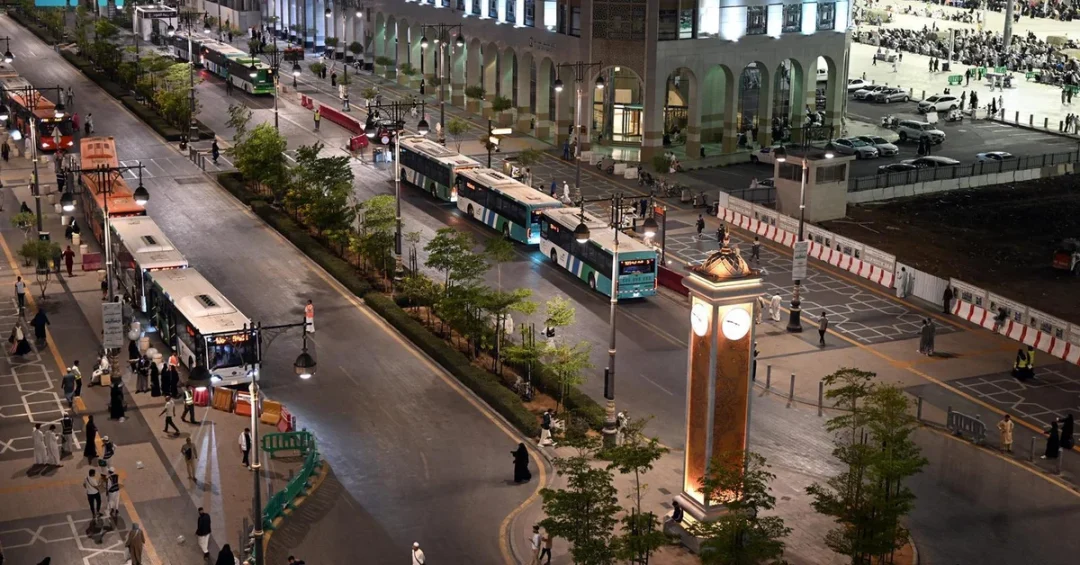
The Madinah Bus Project, overseen by the Al-Madinah Region Development Authority, announced on Saturday the schedule for its dedicated shuttle service to and from the Prophet’s Mosque and Quba Mosque for Eid prayers on Sunday, operating from 2:00 AM to 8:00 AM. The service is designed to ease congestion and provide seamless, comfortable transport for worshippers attending one of the most spiritually significant gatherings of the Islamic year. Four round-trip locations have been designated for the Prophet’s Mosque: the Sports Stadium, Sayyid Al-Shuhada, the Al-Khalidiyah neighborhood, and the Al-Salam College parking lot. For those traveling to Quba Mosque, the parking lot at Al-Aliyah Mall will serve as the primary transportation point.
Could a single bus network transform how millions experience Eid in Madinah? The answer, according to Saudi officials, is a resounding yes. The announcement, carried by the Saudi Press Agency (SPA), reflects a broader push to modernize pilgrimage and visitor logistics in the Kingdom. It also underscores the Al-Madinah Region Development Authority’s expanding role in coordinating urban mobility around the Prophet’s Mosque, the second holiest site in Islam. The timing is deliberate: Eid prayers draw immense crowds, and a well-run shuttle system reduces traffic, parking shortages, and pedestrian bottlenecks.
Context and Background
Why does Madinah need a dedicated Eid shuttle at all? The city receives a surge of worshippers during Eid, many traveling from across Saudi Arabia and abroad. The Prophet’s Mosque alone accommodates hundreds of thousands during peak prayers, and nearby Quba Mosque — the first mosque built in Islamic history — attracts its own devoted following. Without organized transport, narrow roads and limited parking create severe congestion, delaying worshippers and straining local services.
The Madinah Bus Project was launched as part of a wider effort to improve public transport in the region. It operates under the Al-Madinah Region Development Authority, which coordinates with the Ministry of Transport and Logistic Services and local municipalities. The project’s fleet includes modern, air-conditioned buses equipped for high-volume routes. Its Eid schedule is not a one-off gesture but part of an annual operational plan that adjusts routes, frequencies, and pickup points based on crowd data from previous years.
Four locations for the Prophet’s Mosque — the Sports Stadium, Sayyid Al-Shuhada, Al-Khalidiyah, and Al-Salam College — were selected for their capacity and proximity to major roads. Each offers ample parking, allowing worshippers to leave their cars and ride directly to the mosque’s perimeter. Al-Aliyah Mall serves Quba Mosque, a choice that reflects the mall’s large lot and easy access from the city’s ring roads. Together, these points form a hub-and-spoke system that keeps private vehicles away from the most crowded zones.
Key Details of the Eid Shuttle Service
How exactly will the shuttle operate on the ground? According to the SPA announcement, the service runs continuously from 2:00 AM to 8:00 AM on Sunday, covering the pre-dawn hours when worshippers arrive for Eid prayers. Buses will run round-trip on all four Prophet’s Mosque routes, meaning passengers can return to their starting points after prayers conclude. The Quba Mosque route connects Al-Aliyah Mall to the mosque and back. No advance booking is mentioned; the service appears designed for walk-up use, consistent with the project’s public-transport model.
The early start time is significant. Eid prayers typically take place shortly after sunrise, but many worshippers arrive hours earlier to secure space and perform additional prayers. By beginning at 2:00 AM, the shuttle ensures that even those traveling from distant neighborhoods can reach the mosque in time. The 8:00 AM end time aligns with the conclusion of prayers and the return flow, though officials may extend operations if crowds persist. The project has previously adjusted schedules during Ramadan and Hajj seasons based on real-time demand.
What do these four pickup points tell us about the planners’ priorities? The Sports Stadium and Al-Salam College parking lot are large, well-known landmarks that can handle hundreds of vehicles. Sayyid Al-Shuhada and Al-Khalidiyah are densely populated neighborhoods, reducing the need for residents to drive into the central area. Al-Aliyah Mall, meanwhile, is a commercial hub with easy highway access, making it ideal for Quba-bound traffic. Each location is identified clearly in the announcement, and signage and staff are expected to guide passengers on the day.
International and Regional Impact
Could this Eid shuttle become a model for other Saudi cities? The Kingdom hosts millions of pilgrims annually for Umrah and Hajj, and transport efficiency is a recurring challenge. If the Madinah Bus Project succeeds in moving worshippers smoothly during Eid, its methods — designated parking hubs, round-trip routes, and early-morning service — could be replicated in Makkah, Jeddah, and other high-traffic cities. Regional observers often look to Saudi Arabia for best practices in crowd management, and this initiative adds to that reputation.
For international visitors, the shuttle offers a practical benefit. Many overseas Muslims travel to Madinah specifically to pray at the Prophet’s Mosque and Quba Mosque during Eid. Language barriers and unfamiliar roads can make navigation difficult. A clearly announced, free or low-cost bus service reduces that friction and enhances the spiritual experience. It also aligns with Saudi Arabia’s efforts to present itself as a welcoming, well-organized destination for religious tourism, a key pillar of its economic diversification strategy.
Economic and Strategic Significance
Why does a bus schedule matter to Saudi Arabia’s economy? Religious tourism is a major contributor to non-oil GDP, and Vision 2030 aims to increase its share. Smooth transport directly affects visitor satisfaction, repeat visits, and spending in local businesses. When worshippers can move easily, they are more likely to stay longer, eat in restaurants, shop in markets, and visit heritage sites. The Madinah Bus Project thus supports the broader goal of boosting the hospitality and retail sectors in the region.
Strategically, the project demonstrates the Kingdom’s commitment to modern infrastructure in the holy cities. The Al-Madinah Region Development Authority works alongside national bodies to integrate bus networks with future rail and metro plans. Improved mobility also supports crowd-safety objectives, reducing the risk of accidents during large gatherings. By investing in public transport, Saudi Arabia signals that it treats pilgrim welfare as a top priority — a message that resonates with Muslim communities worldwide and reinforces the Kingdom’s role as custodian of the Two Holy Mosques.
Vision 2030 Alignment
How does an Eid shuttle connect to Vision 2030? The Vision’s Quality of Life program seeks to improve daily life for citizens and visitors through better public services, including transport. The Madinah Bus Project embodies that goal by offering a reliable alternative to private cars, cutting congestion, and reducing environmental impact. It also supports the Pilgrim Experience Program, which aims to accommodate more Umrah and Hajj visitors with higher standards of comfort and safety. Every route, bus, and schedule adjustment contributes to these national objectives.
In the long term, the project is expected to expand its fleet and routes, integrating with the Haramain High Speed Railway and other transport modes. The Eid service is a visible, practical step toward a fully connected Madinah where residents and guests can move freely. As Saudi Arabia continues its transformation under Vision 2030, such initiatives show how local action advances national ambitions. The shuttle may run for only six hours on one day, but its impact on visitor confidence and urban planning will last far longer.
20 Questions
Q1. What is the Madinah Bus Project?
A1. The Madinah Bus Project is a public transport initiative overseen by the Al-Madinah Region Development Authority, designed to provide efficient bus services in Madinah, including special shuttle routes for major religious events like Eid prayers.
Q2. When will the Eid prayer shuttle service operate?
A2. The shuttle service will operate on Sunday from 2:00 AM to 8:00 AM, covering the pre-dawn and early morning hours when worshippers travel to Eid prayers at the Prophet’s Mosque and Quba Mosque.
Q3. Which mosques are served by the shuttle?
A3. The shuttle serves the Prophet’s Mosque, the second holiest site in Islam, and Quba Mosque, the first mosque built in Islamic history, both located in Madinah.
Q4. What are the pickup points for the Prophet’s Mosque?
A4. Four round-trip locations are designated: the Sports Stadium, Sayyid Al-Shuhada, the Al-Khalidiyah neighborhood, and the Al-Salam College parking lot. Each offers parking and direct bus service to the mosque.
Q5. Where do worshippers go for the Quba Mosque shuttle?
A5. The parking lot at Al-Aliyah Mall has been designated as the transportation point for those traveling to Quba Mosque. Buses run round-trip from the mall to the mosque and back.
Q6. Is the shuttle service free or paid?
A6. The announcement does not specify fares. The Madinah Bus Project typically offers affordable public transport, and Eid services are often provided at low cost or free to encourage use and reduce traffic.
Q7. Why is the service starting at 2:00 AM?
A7. Eid prayers occur shortly after sunrise, but many worshippers arrive hours early to secure space and perform additional prayers. Starting at 2:00 AM ensures everyone can reach the mosque in time.
Q8. Who announced the schedule?
A8. The Madinah Bus Project, overseen by the Al-Madinah Region Development Authority, announced the schedule. The Saudi Press Agency (SPA) reported the details on Saturday.
Q9. How does this service help with traffic congestion?
A9. By encouraging worshippers to park at designated hubs and ride buses, the service keeps private vehicles away from the most crowded areas around the mosques, reducing traffic jams and parking shortages.
Q10. Can international visitors use the shuttle?
A10. Yes, the shuttle is open to all worshippers, including international visitors. The service is designed to make travel to the mosques easier for everyone during the busy Eid period.
Q11. What type of buses are used?
A11. The Madinah Bus Project uses modern, air-conditioned buses suitable for high-volume routes. They are equipped to handle large crowds comfortably and are operated by trained staff.
Q12. Will the shuttle run after Eid prayers end?
A12. The announced schedule runs until 8:00 AM, which aligns with the conclusion of prayers. Officials may adjust or extend operations if crowds require it, based on real-time demand.
Q13. How does this project support Vision 2030?
A13. It aligns with Vision 2030’s Quality of Life program and Pilgrim Experience Program by improving public transport, reducing congestion, and enhancing the experience of religious visitors to Madinah.
Q14. Are there similar services in other Saudi cities?
A14. Yes, similar shuttle and public transport initiatives exist in Makkah and other cities during peak seasons. The Madinah model may serve as a best practice for future expansions.
Q15. What should worshippers do to use the service?
A15. Worshippers should drive to one of the designated parking locations, park their vehicles, and board the shuttle bus. Signage and staff will guide them to the correct route.
Q16. Is the service only for Eid prayers?
A16. This particular schedule is for Eid prayers on Sunday. The Madinah Bus Project operates year-round with regular routes and adjusts services for Ramadan, Hajj, and other peak periods.
Q17. How does the shuttle improve safety?
A17. By reducing private vehicle traffic near the mosques, the shuttle lowers the risk of accidents and pedestrian bottlenecks. Professional drivers and organized routes further enhance crowd safety during large gatherings.
Q18. What is the role of the Al-Madinah Region Development Authority?
A18. The Authority oversees the Madinah Bus Project, coordinating with transport ministries and local municipalities to plan routes, schedules, and infrastructure improvements that serve residents and visitors.
Q19. Will the shuttle service be expanded in the future?
A19. The project is expected to grow, with plans to integrate with the Haramain High Speed Railway and other transport modes. Future expansions will depend on demand and infrastructure readiness.
Q20. How can I get more information about the schedule?
A20. Official details are released through the Saudi Press Agency and the Al-Madinah Region Development Authority. Worshippers can also check local signage and announcements at the designated parking locations.
Reader Feedback
We value your thoughts. Please share your feedback on this article.
Your feedback helps us improve our coverage.
Related articles
 GEA to Light Up 14 Saudi Cities with Eid Fireworks
 Jazan Border Guards Foil Smuggling of 36,000 Narcotic Pills
 Imams Announced for Eid Al-Fitr Prayer at Two Holy Mosques
 GDNC Arrests Two in Al-Jouf for Selling 2,474 Narcotic Pills
 Wildfires Reignite in Korea’s Andong, Death Toll Hits 29
 Two Holy Mosques Ready for Eid Al-Fitr with Comprehensive Service Plan