


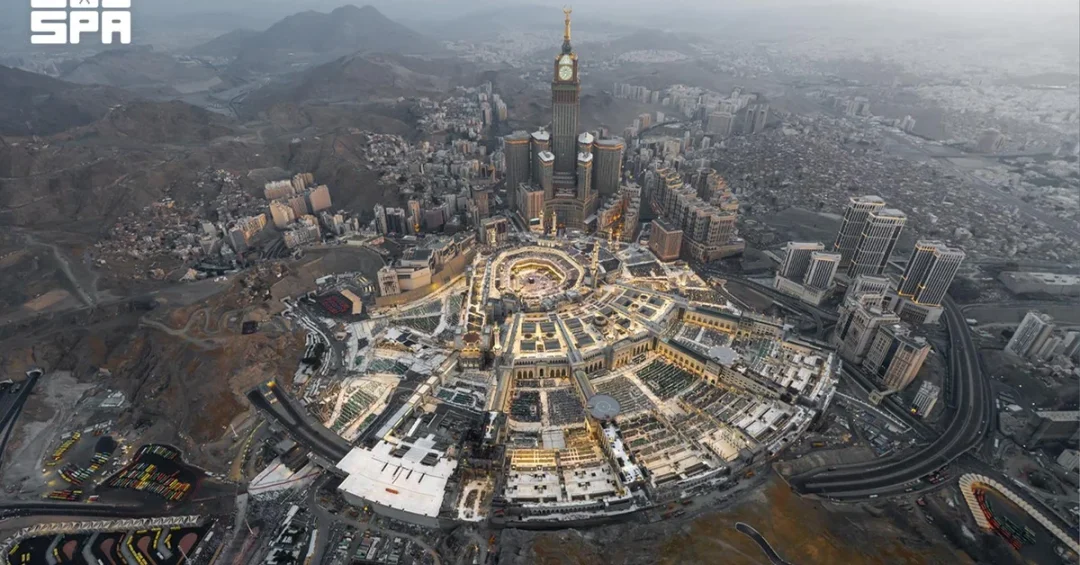
The General Authority for the Care of the Affairs of the Grand Mosque and the Prophet’s Mosque is operating specialized teams around the clock at the Two Holy Mosques in Makkah and Madinah, delivering continuous cleaning, maintenance, and water supply services while control rooms use modern technology to monitor operations and respond rapidly to worshipper needs, the Saudi Press Agency reported. The round-the-clock operation covers every corner of the Grand Mosque and the Prophet’s Mosque, ensuring that the millions of worshippers and visitors who pass through the two sites each year encounter facilities that are fully prepared, safe, and tranquil. Have you ever considered what it takes to keep the world’s most visited religious sites running seamlessly every single hour of every single day?
The authority said the efforts reflect the leadership’s care for the Two Holy Mosques and their visitors, providing a safe and tranquil environment for worship, and reaffirmed its commitment to year-round service development. This commitment is not a seasonal undertaking but a permanent operational posture, sustained through dedicated staffing, advanced monitoring systems, and a service culture that places the worshipper at the center of every decision. For an international audience, the scale of this operation offers a window into how the Kingdom of Saudi Arabia manages the spiritual heartland of the Islamic world while simultaneously pursuing the modernization goals of Vision 2030.
Context and Background
Why do the Two Holy Mosques require a level of operational readiness that few other sites on earth demand? The answer lies in their unique status. The Grand Mosque in Makkah houses the Kaaba, the qibla toward which more than a billion Muslims orient their prayers, while the Prophet’s Mosque in Madinah is the second holiest site in Islam. Together they receive pilgrims and visitors throughout the year, with numbers swelling dramatically during Ramadan, the Hajj season, and other peak periods. The General Authority for the Care of the Affairs of the Grand Mosque and the Prophet’s Mosque was established to consolidate responsibility for these sites under a single institutional framework, allowing for coordinated planning, consistent standards, and rapid escalation when issues arise.
Historically, the care of the Two Holy Mosques has been a defining responsibility of the Saudi state, articulated consistently by the leadership as a sacred duty. The authority’s mandate spans cleaning, maintenance, water supply, crowd management support, and the deployment of technology to monitor operations in real time. Control rooms act as the nerve center of this effort, receiving reports from field teams, tracking the status of facilities, and dispatching responses quickly when anything requires attention. This structure allows the authority to move from reactive maintenance to proactive service management, anticipating demand rather than simply responding to it.
The operational model has evolved considerably over the past decade. Where once the emphasis was on periodic deep cleaning and scheduled maintenance, the current approach integrates continuous monitoring, data-driven planning, and specialized teams assigned to defined zones. Each zone operates with clear protocols, and every report generated by a worshipper or a staff member feeds into a system designed to close the loop between observation and action. For international observers, this is a case study in how a public authority can combine reverence for tradition with the tools of modern administration.
Key Details
What exactly do these round-the-clock teams do, and how is their work coordinated? According to the authority, specialized teams receive and guide worshippers and visitors while keeping facilities and operations running smoothly. Cleaning crews work in shifts to maintain hygiene across prayer halls, courtyards, corridors, and ablution areas. Maintenance personnel handle everything from electrical systems and escalators to cooling, lighting, and structural checks. Water supply teams ensure that ablution stations and drinking water points remain fully functional, a critical service given the volumes consumed daily. Control rooms use modern technology to monitor operations, handle reports, and respond quickly, keeping every site and facility fully ready.
The use of technology is central to the authority’s approach. Monitoring systems allow supervisors to observe conditions across large areas, identify anomalies, and direct resources to where they are needed most. Reports from the field, whether submitted by staff or communicated by visitors, are logged and tracked, creating an auditable record of service performance. This enables the authority to measure response times, identify recurring issues, and refine procedures continuously. The result is an operation that learns and improves rather than simply repeating the same routines year after year.
The authority has also emphasized its commitment to year-round service development. This means that improvements are not limited to the periods immediately before Hajj or Ramadan but are pursued consistently across the calendar. Training programs, equipment upgrades, and procedural reviews form part of a continuous cycle. For worshippers, the visible outcome is a clean, calm, and well-organized environment. For the institution, the outcome is a service standard that can be sustained and scaled as visitor numbers grow. The authority’s stated aim is to provide a safe and tranquil environment for worship, and every operational decision is measured against that objective.
International and Regional Impact
How does the management of the Two Holy Mosques resonate beyond the borders of Saudi Arabia? The two sites are not solely national assets; they are destinations for Muslims from every continent. During peak seasons, pilgrims arrive from Southeast Asia, South Asia, the Middle East, Africa, Europe, and the Americas. The quality of services they encounter shapes their impression not only of the sites themselves but of the Kingdom that hosts them. A smooth, dignified experience reinforces confidence in Saudi stewardship and strengthens the country’s standing as the custodian of Islam’s holiest places.
Regional governments and religious authorities watch the management of the Two Holy Mosques closely, because their own citizens travel there in large numbers. Reliable services, clear guidance, and responsive support reduce the logistical burden on pilgrim groups and national Hajj missions. Within the wider Middle East, the Saudi model of integrated site management is frequently cited as an example of how large-scale religious tourism can be organized with safety and dignity. The authority’s emphasis on rapid response and continuous monitoring contributes to this reputation, demonstrating that high volumes need not compromise the quality of the worshipper’s experience.
Internationally, the operation also supports Saudi Arabia’s broader diplomatic and cultural outreach. Visitors who return home with positive impressions become informal ambassadors, sharing their experiences with families and communities. In a world where narratives about the Kingdom are often shaped by distant observers, the lived experience of pilgrims carries particular weight. The round-the-clock services described by the authority are therefore not merely logistical; they are part of how Saudi Arabia communicates its values of service, hospitality, and responsibility to a global audience.
Economic and Strategic Significance
What economic value flows from maintaining world-class services at the Two Holy Mosques? Religious tourism is a major component of Saudi Arabia’s visitor economy, and the Two Holy Mosques sit at its center. Pilgrims who travel for Umrah or Hajj spend on accommodation, transport, food, and retail during their stay, supporting businesses in Makkah, Madinah, Jeddah, and beyond. Reliable infrastructure and services encourage longer stays and repeat visits, amplifying these economic effects. The authority’s work therefore contributes directly to the viability of the hospitality and services sectors that have grown around the two cities.
Strategically, the operation supports the Kingdom’s ambition to increase the number of pilgrims and visitors in an orderly and sustainable manner. Expansion projects, digital facilitation, and improved crowd management all depend on the operational backbone maintained by the authority. When facilities are fully ready and control rooms can respond quickly, the system can absorb higher volumes without degrading the experience. This capacity is essential as Saudi Arabia pursues targets for religious visitation as part of its long-term planning. The round-the-clock teams are, in this sense, enablers of national strategy rather than a background function.
The emphasis on modern technology also has strategic implications. By integrating monitoring, reporting, and response into a single operational picture, the authority builds institutional knowledge that can be applied to other large-scale sites and events. The skills developed in managing the Two Holy Mosques, from crowd logistics to maintenance scheduling, are transferable to major projects across the Kingdom. This diffusion of capability strengthens the wider public sector and supports the culture of performance and accountability that Vision 2030 promotes.
Vision 2030 Alignment
How does the round-the-clock service at the Two Holy Mosques connect to Saudi Arabia’s Vision 2030? The Vision seeks to build a vibrant society, a thriving economy, and an ambitious nation. Service to the Two Holy Mosques sits at the intersection of all three. It expresses the vibrant society’s spiritual and cultural foundations, supports the thriving economy through religious tourism and hospitality, and demonstrates the ambitious nation’s capacity to deliver complex operations at global standards. The authority’s work is a practical embodiment of the Vision’s promise that Saudi Arabia will care for its sacred trusts while modernizing the systems that support them.
The leadership’s care for the Two Holy Mosques and their visitors is a constant theme in official communications, and the authority’s reaffirmed commitment to year-round service development reflects that priority. As visitor numbers grow and expectations rise, the institution’s ability to monitor, maintain, and improve will remain central to the worshipper’s experience. The round-the-clock teams in Makkah and Madinah are therefore more than a service; they are a statement of national purpose. Through their work, the Kingdom continues to present the Two Holy Mosques as places of safety, tranquility, and dignity for all who answer the call to prayer, and as a model of service that the world can observe and admire.
20 Questions
Q1. What is the main purpose of the round-the-clock teams at the Two Holy Mosques?
A1. The teams receive and guide worshippers and visitors while keeping facilities and operations running smoothly. They provide continuous cleaning, maintenance, and water supply, and they ensure that every site and facility remains fully ready at all times.
Q2. Which authority is responsible for these services?
A2. The General Authority for the Care of the Affairs of the Grand Mosque and the Prophet’s Mosque is responsible. It oversees cleaning, maintenance, water supply, and the control rooms that monitor operations and respond quickly to reports from the field.
Q3. Where are the Two Holy Mosques located?
A3. The Grand Mosque is in Makkah, and the Prophet’s Mosque is in Madinah. Both are in the Kingdom of Saudi Arabia and are the first and second holiest sites in Islam, attracting worshippers from around the world.
Q4. What role do control rooms play in the operation?
A4. Control rooms use modern technology to monitor operations, handle reports, and respond quickly. They act as the coordination center, tracking conditions across the sites and directing teams to where attention is needed most.
Q5. What kinds of maintenance are carried out?
A5. Maintenance covers electrical systems, escalators, cooling, lighting, and structural checks, among other areas. Specialized teams work in shifts to ensure that all facilities remain functional and safe for the millions of worshippers who visit.
Q6. How is water supply managed at the Two Holy Mosques?
A6. Water supply teams ensure that ablution stations and drinking water points remain fully operational. Given the large volumes consumed daily, this service is critical and is maintained continuously throughout the year by dedicated staff.
Q7. Why is cleaning emphasized so strongly?
A7. Cleaning supports hygiene, comfort, and dignity for worshippers. Crews maintain prayer halls, courtyards, corridors, and ablution areas, helping to preserve a safe and tranquil environment that reflects the sacred status of the two sites.
Q8. How does the authority handle reports from visitors?
A8. Reports are logged and tracked through the control rooms, creating a record of service performance. This allows the authority to measure response times, identify recurring issues, and refine procedures continuously for better service.
Q9. What does year-round service development mean?
A9. It means improvements are pursued consistently across the calendar, not only before Hajj or Ramadan. Training, equipment upgrades, and procedural reviews form a continuous cycle aimed at raising service standards throughout the year.
Q10. How do these services benefit international pilgrims?
A10. Pilgrims from every continent encounter clean, organized, and well-supported facilities. Reliable services and clear guidance reduce logistical burdens and help ensure that their spiritual journey is conducted with safety, comfort, and dignity.
Q11. What technology is used in monitoring operations?
A11. Modern monitoring systems allow supervisors to observe conditions across large areas, identify anomalies, and direct resources efficiently. Reports from the field feed into this system, enabling rapid and coordinated responses when needed.
Q12. How does this work reflect the leadership’s care?
A12. The authority states that its efforts reflect the leadership’s care for the Two Holy Mosques and their visitors. This care is expressed through continuous investment in services, staffing, and technology to provide a safe and tranquil environment.
Q13. What economic benefits arise from these services?
A13. Religious tourism supports accommodation, transport, food, and retail businesses in Makkah, Madinah, and surrounding areas. Reliable services encourage longer stays and repeat visits, amplifying economic benefits for local and national economies.
Q14. How does the operation support Vision 2030?
A14. It aligns with Vision 2030’s goals of a vibrant society, a thriving economy, and an ambitious nation. Service to the Two Holy Mosques supports religious tourism, demonstrates operational excellence, and reflects the Kingdom’s commitment to its sacred trusts.
Q15. Are the services limited to peak seasons?
A15. No. The authority emphasizes year-round service development, meaning teams operate continuously and improvements are pursued across the entire calendar. Peak seasons receive additional reinforcement, but the baseline service is constant.
Q16. What is the significance of the Two Holy Mosques globally?
A16. They are the holiest sites in Islam, drawing worshippers from every continent. Their management is watched closely by international observers and regional authorities, making service quality a matter of global interest and Saudi standing.
Q17. How are specialized teams organized?
A17. Teams are assigned to defined zones with clear protocols. Cleaning, maintenance, water supply, and guidance functions operate in coordinated shifts, and every report feeds into a system designed to close the loop between observation and action.
Q18. What impression do these services create for visitors?
A18. Visitors encounter a clean, calm, and well-organized environment. Positive experiences shape their impression of the Kingdom and often lead them to share their views with families and communities after returning home.
Q19. How does the authority measure service performance?
A19. Through logged reports and tracked responses, the authority can measure response times and identify recurring issues. This data-driven approach allows continuous refinement of procedures and more effective deployment of resources.
Q20. What is the long-term goal of these efforts?
A20. The goal is to sustain and improve service quality as visitor numbers grow, providing a safe and tranquil environment for worship. This supports the Kingdom’s long-term vision for religious tourism and its role as custodian of the Two Holy Mosques.
Reader Feedback
We value your thoughts. Please share your feedback on this article.
Your feedback helps us improve our coverage.