


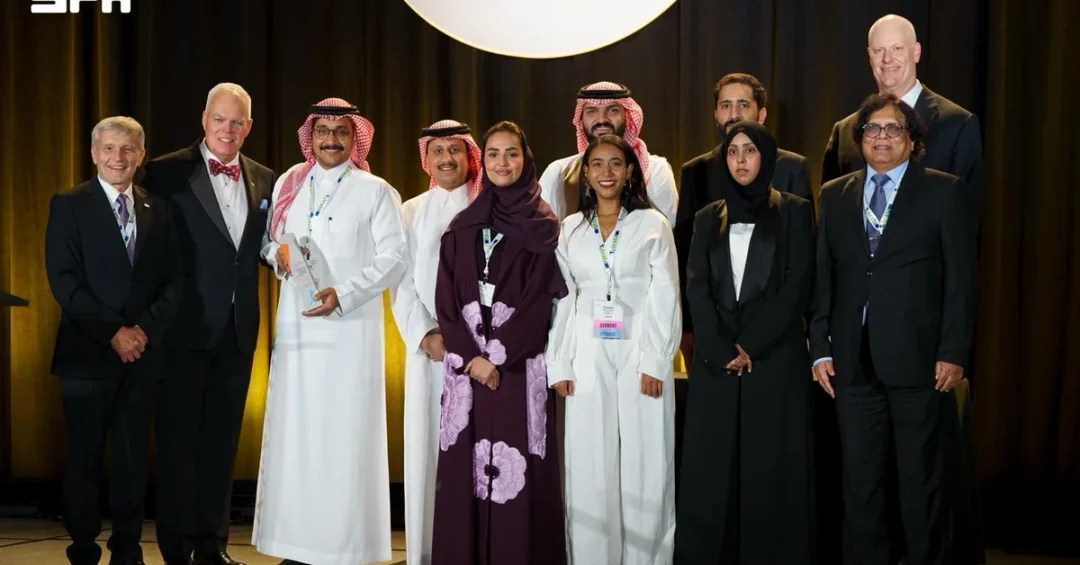
The NovusCrete Consortium, a Saudi-led global initiative, has won first place in the “Flatwork” category at the American Concrete Institute (ACI) Excellence in Concrete Construction Awards, according to an announcement carried by the Saudi Press Agency (SPA) on October 18, 2026. The award, presented at the ACI’s annual gala, recognizes the consortium’s pioneering work in sustainable concrete solutions that use seawater and locally sourced materials, a breakthrough that underscores the Kingdom’s growing leadership in construction innovation and its commitment to the objectives of Saudi Vision 2030.
The recognition places Saudi Arabia at the center of a global conversation about how the construction industry can reduce its environmental footprint while meeting the demands of rapid urbanization. The NovusCrete Consortium, led by the Oil Sustainability Program (OSP), brings together a network of leading local and international entities, including the Public Investment Fund (PIF), the Saudi Investment Recycling Company (SIRC), NEOM, Sika, ClimateCrete, Saudi Readymix Concrete Co, King Fahd University of Petroleum and Minerals (KFUPM), and King Saud University (KSU). Together, these partners are working to transform how concrete is produced, used, and recycled, with implications that extend far beyond the Kingdom’s borders. Why does this award matter for the future of global construction? It signals that solutions developed in Saudi Arabia can set new benchmarks for the world.
Context and Background
What makes the NovusCrete Consortium’s achievement so significant in the broader arc of construction history? Concrete is the most widely used man-made material on Earth, and its production is responsible for a substantial share of global carbon emissions. Traditional concrete relies heavily on freshwater and virgin aggregates, both of which are increasingly scarce in arid regions. The consortium was founded on January 26, 2025, with a clear mandate: to reduce the construction industry’s carbon footprint and water consumption, extend the lifespan of structures, cut production costs, and strengthen local value chains by localizing advanced engineering technologies. Its work directly supports Saudi Vision 2030’s goals of economic diversification, environmental sustainability, and technological leadership.
The American Concrete Institute, one of the world’s most respected authorities on concrete design and construction, hosts the Excellence in Concrete Construction Awards annually to celebrate innovation across eight distinct categories. The “Flatwork” category specifically honors projects defined by horizontal concrete surfaces, such as pavements, parking lots, runways, and commercial or industrial floors. Winning this category is a testament to the consortium’s ability to deliver practical, scalable solutions that meet rigorous international standards. The award gala brought together top leaders, decision-makers, and experts from around the world, providing a global platform for Saudi Arabia to showcase its commitment to sustainable development.
How did a consortium founded just over a year ago manage to outperform established global players? The answer lies in the depth of its partnerships and the urgency of its mission. By uniting government-backed programs, sovereign wealth funds, private companies, and academic institutions, NovusCrete has created an ecosystem that accelerates research, testing, and real-world application. The OSP’s leadership ensures alignment with national priorities, while partners like NEOM and the PIF provide the scale and resources needed to pilot new technologies in some of the world’s most ambitious development projects. This collaborative model is precisely what Vision 2030 envisions for the Kingdom’s economic future.
Key Details
What exactly did the NovusCrete Consortium develop to earn this global recognition? At the heart of its work is the development and acceleration of sustainable concrete solutions manufactured using seawater and innovative local materials. This includes glass fiber-reinforced polymer (GFRP) rebars, which resist corrosion far better than traditional steel in harsh, saline environments, and recycled materials sourced from construction and demolition waste. These innovations reduce reliance on freshwater, lower carbon emissions, and create new value streams from materials that would otherwise be discarded. The consortium’s members are also actively working to enable and expand the scope of these applications across the construction sector, including leading efforts to develop national standards and building codes for seawater concrete usage.
The award specifically recognizes excellence in flatwork, which encompasses horizontal concrete surfaces essential to infrastructure and urban development. By demonstrating that seawater-based concrete can meet the performance requirements for such applications, the consortium has opened the door to widespread adoption in coastal and arid regions worldwide. This is particularly relevant for Saudi Arabia, where massive projects like NEOM, the Red Sea Global developments, and the Kingdom’s expanding network of roads and airports require enormous quantities of concrete. Using seawater instead of desalinated freshwater could save billions of liters of water annually, a critical consideration in one of the world’s most water-scarce regions.
Who are the key players behind this success? The Oil Sustainability Program (OSP) leads the consortium, reflecting Saudi Arabia’s broader strategy to integrate sustainability across all sectors of its economy. The Public Investment Fund (PIF) provides financial strength and strategic direction, while the Saudi Investment Recycling Company (SIRC) contributes expertise in waste management and circular economy principles. NEOM, the Kingdom’s flagship giga-project, serves as a living laboratory for these technologies. Sika and ClimateCrete bring international technical know-how, Saudi Readymix Concrete Co offers market reach and production capacity, and KFUPM and KSU supply cutting-edge research and talent development. This diverse coalition exemplifies the power of cross-sector collaboration.
International and Regional Impact
How will this award influence the global construction industry? The ACI Excellence in Concrete Construction Awards are watched closely by engineers, architects, developers, and policymakers worldwide. By winning first place in the Flatwork category, the NovusCrete Consortium has signaled that Saudi Arabia is not just adopting global best practices but actively defining them. This recognition could accelerate the adoption of seawater concrete and GFRP rebars in other water-scarce regions, from the Middle East and North Africa to parts of Asia, Australia, and the Americas. It also strengthens the Kingdom’s position as a hub for construction innovation, attracting further investment and talent to Vision 2030 projects.
What does this mean for regional cooperation? The consortium’s membership includes both Saudi and international entities, demonstrating that the Kingdom is open to global partnerships that advance shared goals. The award provides a compelling case study for neighboring Gulf countries, many of which face similar environmental challenges and are pursuing their own sustainability agendas. By sharing knowledge and developing standards that can be adopted across borders, Saudi Arabia is positioning itself as a leader in the transition to greener construction practices. This aligns with the Kingdom’s broader diplomatic efforts to foster stability, prosperity, and sustainable development in the region.
Economic and Strategic Significance
Why is this achievement economically important for Saudi Arabia? The construction sector is a cornerstone of Vision 2030, with giga-projects, infrastructure expansion, and urban development driving demand for materials and expertise. By localizing advanced engineering technologies, the NovusCrete Consortium is helping to build a domestic industry that can supply these projects while creating high-skilled jobs for Saudi citizens. Reducing production costs through innovative materials and recycling also improves the competitiveness of Saudi construction firms, both at home and abroad. Moreover, the development of national standards and building codes for seawater concrete creates a regulatory framework that can attract further investment and facilitate export opportunities.
From a strategic perspective, the award reinforces Saudi Arabia’s commitment to environmental stewardship. The Kingdom has launched several initiatives to combat climate change, including the Saudi Green Initiative and the Middle East Green Initiative, which aim to plant billions of trees and reduce emissions. The NovusCrete Consortium’s work on reducing water consumption and carbon footprint directly supports these goals. By demonstrating that economic growth and environmental responsibility can go hand in hand, Saudi Arabia is setting an example for other nations. The recognition from the American Concrete Institute also enhances the Kingdom’s soft power, showcasing its ability to contribute solutions to global challenges.
Vision 2030 Alignment
How does this milestone connect to the broader objectives of Saudi Vision 2030? Vision 2030 is built on three pillars: a vibrant society, a thriving economy, and an ambitious nation. The NovusCrete Consortium embodies all three. It contributes to a vibrant society by promoting sustainable development and quality of life; it supports a thriving economy by fostering innovation, localizing technology, and creating jobs; and it reflects an ambitious nation by pursuing global excellence and leadership. The consortium’s success at the ACI awards is a clear validation of the Vision 2030 strategy, which encourages collaboration between government, the private sector, and academia to drive progress.
What comes next for NovusCrete and Saudi Arabia’s construction sector? The consortium is expected to continue expanding its research, pilot projects, and standardization efforts, with the goal of making seawater concrete a mainstream option in the Kingdom and beyond. As NEOM and other giga-projects move from planning to execution, the demand for sustainable materials will only grow. By staying at the forefront of innovation, Saudi Arabia can ensure that its built environment is not only world-class but also environmentally responsible. The ACI award is a milestone, but it is also a beginning. It signals to the world that the Kingdom is ready to lead the next era of construction, one that is smarter, greener, and more resilient. In doing so, Saudi Arabia is not just building for today; it is building for generations to come.
20 Questions
Q1. What award did the NovusCrete Consortium win?
A1. The consortium won first place in the “Flatwork” category at the American Concrete Institute (ACI) Excellence in Concrete Construction Awards, recognizing its innovative sustainable concrete solutions.
Q2. When was the NovusCrete Consortium founded?
A2. It was founded on January 26, 2025, with the aim of driving innovation and sustainable development in the construction sector.
Q3. Who leads the NovusCrete Consortium?
A3. The consortium is led by the Oil Sustainability Program (OSP), a Saudi initiative focused on advancing sustainability across industries.
Q4. Which entities are part of the consortium?
A4. Members include the PIF, SIRC, NEOM, Sika, ClimateCrete, Saudi Readymix Concrete Co, KFUPM, and KSU.
Q5. What is the “Flatwork” category?
A5. It honors innovative concrete projects with horizontal surfaces, such as pavements, parking lots, runways, and commercial or industrial floors.
Q6. What are the main goals of the NovusCrete Consortium?
A6. Its goals include reducing carbon footprint and water consumption, extending structure lifespan, cutting production costs, and localizing advanced engineering technologies.
Q7. What innovative materials does the consortium use?
A7. It uses seawater, glass fiber-reinforced polymer (GFRP) rebars, and recycled materials from construction and demolition waste.
Q8. Why is seawater concrete important for Saudi Arabia?
A8. It reduces reliance on scarce freshwater, supports sustainable construction, and aligns with the Kingdom’s environmental goals under Vision 2030.
Q9. How does the award benefit Saudi Arabia’s global standing?
A9. It showcases Saudi leadership in construction innovation and enhances the Kingdom’s reputation as a hub for sustainable technology and engineering excellence.
Q10. What role does NEOM play in the consortium?
A10. NEOM serves as a testing ground for innovative construction technologies, helping to pilot and scale sustainable concrete solutions.
Q11. How does the consortium support Vision 2030?
A11. It drives economic diversification, localizes technology, creates jobs, and promotes environmental sustainability, all core objectives of Vision 2030.
Q12. What are GFRP rebars?
A12. Glass fiber-reinforced polymer rebars are corrosion-resistant alternatives to steel, ideal for use in harsh, saline environments like seawater concrete.
Q13. What is the significance of developing national standards for seawater concrete?
A13. It provides a regulatory framework that ensures safety, quality, and widespread adoption, facilitating investment and export opportunities.
Q14. How does the award impact the global construction industry?
A14. It signals that Saudi-led innovations can set new benchmarks, encouraging adoption of sustainable concrete solutions worldwide, especially in water-scarce regions.
Q15. What economic benefits does the consortium bring?
A15. It reduces production costs, strengthens local value chains, creates high-skilled jobs, and enhances the competitiveness of Saudi construction firms.
Q16. How does the consortium address environmental challenges?
A16. By reducing carbon emissions, conserving water, and recycling waste, it supports Saudi Arabia’s climate goals and global sustainability efforts.
Q17. What is the Oil Sustainability Program (OSP)?
A17. The OSP is a Saudi initiative that promotes sustainability across the oil and energy sectors, and it leads the NovusCrete Consortium.
Q18. What role do KFUPM and KSU play?
A18. They contribute research, development, and talent, helping to advance innovative construction technologies and train future engineers.
Q19. How does the award reflect on Saudi Vision 2030?
A19. It validates the Vision’s emphasis on innovation, sustainability, and global leadership, demonstrating tangible progress toward its goals.
Q20. What is next for the NovusCrete Consortium?
A20. It will continue expanding research, pilot projects, and standardization efforts to make seawater concrete a mainstream solution in Saudi Arabia and beyond.
Reader Feedback
We value your thoughts. Please share your feedback on this article.
Your feedback helps us improve our coverage.