


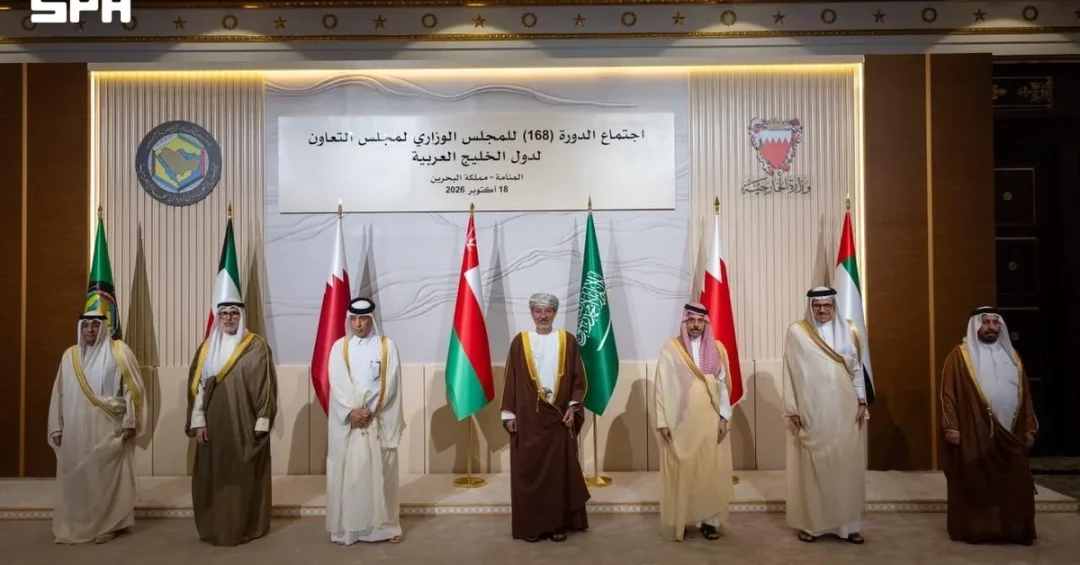
Saudi Minister of Foreign Affairs Prince Faisal bin Farhan bin Abdullah participated on Sunday in the 168th meeting of the Ministerial Council of the Cooperation Council for the Arab States of the Gulf (GCC), held in Manama, the capital of the Kingdom of Bahrain, according to the Saudi Press Agency. The meeting was chaired by Bahraini Minister of Foreign Affairs Dr. Abdullatif bin Rashid Al Zayani, Chair of the current session of the GCC Ministerial Council, and was attended by the foreign ministers of all GCC member states alongside the Secretary-General of the Gulf Cooperation Council.
Could a single gathering of Gulf foreign ministers hold the key to a more integrated, resilient and prosperous region? For observers of Gulf diplomacy, the answer increasingly appears to be yes. The 168th session convened at a moment when the GCC is accelerating its transition from a traditional political forum into a practical engine of economic integration, security coordination and global partnership-building. Saudi Arabia’s active participation reflects the Kingdom’s commitment to collective Gulf action, a pillar of its foreign policy under the leadership of the Custodian of the Two Holy Mosques, King Salman bin Abdulaziz Al Saud, and His Royal Highness Crown Prince and Prime Minister Mohammed bin Salman bin Abdulaziz Al Saud.
Context and Background
Why does the GCC Ministerial Council matter so much in 2026? Established in 1981, the Cooperation Council for the Arab States of the Gulf brings together the Kingdom of Saudi Arabia, the United Arab Emirates, the State of Kuwait, the Kingdom of Bahrain, the Sultanate of Oman and the State of Qatar. Its Ministerial Council meets regularly to coordinate foreign policy, economic strategy and security cooperation, preparing recommendations for the Supreme Council, the bloc’s highest decision-making body. Bahrain currently chairs the ministerial session, giving Manama a central role in steering the agenda.
The 168th meeting builds on years of steadily deepening Gulf integration. In recent sessions, the Council has moved beyond broad declarations toward concrete projects: customs union upgrades, railway and port connectivity, digital trade corridors, joint industrial ventures and coordinated crisis-response mechanisms. Saudi Arabia has consistently been a driving force behind these efforts, viewing Gulf unity as essential to regional stability and to the success of its own economic transformation. The meeting in Manama therefore represents continuity, but also momentum, as member states seek to convert shared interests into tangible outcomes for their citizens.
The timing is significant. The Gulf region sits at the crossroads of global trade, energy supply and diplomacy, and the choices made in forums like the Ministerial Council ripple far beyond the Arabian Peninsula. For international audiences, understanding this meeting means understanding how a region historically defined by oil exports is repositioning itself as a hub of logistics, industry, investment and mediation.
Key Details of the 168th Ministerial Meeting
What exactly did the ministers agree to pursue? According to the Saudi Press Agency, the meeting discussed ways to strengthen joint Gulf cooperation and accelerate integration projects among GCC member states in logistics connectivity and strategic stockpiling. These efforts are designed to improve the efficiency of Gulf economies, strengthen their ability to address crises and challenges, and advance development and prosperity across the region. Logistics connectivity covers transport corridors, ports, railways and digital systems that move goods and data across borders, while strategic stockpiling refers to shared reserves of essential goods, including food and medical supplies, that can stabilise markets during disruptions.
The Council also addressed the condemnation of attacks on Saudi Arabia by the Houthi terrorist militia, emphasising the need for a firm international response to these terrorist attacks. It underscored the importance of efforts to restore freedom of navigation and safe passage through the Strait of Hormuz and Bab al-Mandab and to protect regional maritime routes from threats. These waterways are among the most consequential chokepoints in the global economy, carrying a substantial share of the world’s energy exports and commercial freight. Any disruption carries immediate consequences for international markets and shipping lanes.
In addition, the meeting reviewed efforts to strengthen regional and international partnerships and expand cooperation with countries and organisations. It discussed supporting industrial integration among GCC member states and enhancing the competitiveness of Gulf industries in regional and global markets. These efforts aim to strengthen economic and trade cooperation and serve the interests of the member states and their peoples, reflecting a vision of Gulf cooperation that is both defensive, in protecting shared security, and constructive, in building shared prosperity.
International and Regional Impact
How will the outcomes of this meeting resonate beyond the Gulf? The Council’s firm stance on attacks against Saudi Arabia and its call for a decisive international response signal that GCC states intend to address security threats collectively rather than in isolation. By linking the protection of the Strait of Hormuz and Bab al-Mandab to global trade stability, Gulf ministers are framing maritime security as a shared international responsibility, not merely a regional concern. This framing invites partners in Europe, Asia and the Americas to support freedom of navigation as a principle of the rules-based international order.
The emphasis on expanding partnerships with countries and organisations also positions the GCC as an increasingly attractive interlocutor for global powers. From trade agreements to climate cooperation and technology partnerships, the bloc offers a unified market of more than 50 million people with rising incomes and ambitious infrastructure plans. For Saudi Arabia, this multilateral approach complements its own bilateral diplomacy, including its roles in regional mediation and its leadership within energy and investment forums. The Manama meeting thus reinforces a broader pattern: a Gulf that speaks with a coordinated voice on security while competing and cooperating economically on the world stage.
Economic and Strategic Significance
Why should businesses and investors pay attention to logistics connectivity and industrial integration? These are not abstract diplomatic phrases; they describe the physical and regulatory backbone of a diversifying regional economy. Improved logistics connectivity reduces the cost and time of moving goods between GCC states, making the region more attractive for manufacturing, e-commerce and distribution. Strategic stockpiling adds resilience, ensuring that supply chains can withstand shocks such as pandemics, natural disasters or geopolitical disruptions. Together, they lower risk for companies operating across borders.
Industrial integration and competitiveness form the second economic pillar of the discussion. By aligning standards, encouraging joint ventures and supporting higher-value production, GCC states aim to move beyond raw material exports into advanced manufacturing, petrochemicals, metals, pharmaceuticals and technology. Enhanced competitiveness in regional and global markets means Gulf industries can capture a larger share of value chains that currently run through other regions. For Saudi Arabia, these priorities dovetail with the National Industrial Development and Logistics Program and broader Vision 2030 goals of expanding non-oil exports, localising industry and creating high-quality jobs for a young and growing population.
Vision 2030 Alignment
How does the 168th Ministerial Council meeting connect to Saudi Arabia’s long-term transformation? Saudi Vision 2030, launched in 2016 under the leadership of Crown Prince Mohammed bin Salman, seeks to diversify the Kingdom’s economy, strengthen its global partnerships and improve quality of life. Gulf integration is a natural multiplier for these goals. Shared logistics corridors, harmonised trade rules and coordinated industrial strategies allow Saudi Arabia to scale its investments and reach regional markets more efficiently, while collective security cooperation protects the stability on which economic growth depends.
The Kingdom’s participation in the Manama meeting also reflects its wider role as a stabilising force and bridge-builder. From hosting major diplomatic talks to investing in regional infrastructure, Saudi Arabia is working with its GCC partners to shape a Middle East defined by opportunity rather than conflict. As the Council advances its integration agenda, the coming months are likely to bring further announcements on connectivity projects, industrial partnerships and joint responses to regional threats. For international readers, the message from Manama is clear: the Gulf is organising itself for a more prosperous and secure future, and Saudi Arabia remains at the heart of that effort.
20 Questions
Q1. What was the 168th meeting of the GCC Ministerial Council?
A1. It was a gathering of foreign ministers from the six GCC member states, held in Manama, Bahrain, to coordinate political, security and economic cooperation and prepare recommendations for the GCC Supreme Council.
Q2. Who chaired the 168th GCC Ministerial Council meeting?
A2. The meeting was chaired by Bahraini Minister of Foreign Affairs Dr. Abdullatif bin Rashid Al Zayani, who holds the chair of the current session of the GCC Ministerial Council.
Q3. Who represented Saudi Arabia at the meeting?
A3. Saudi Minister of Foreign Affairs Prince Faisal bin Farhan bin Abdullah represented the Kingdom, underscoring Saudi Arabia’s active commitment to collective Gulf diplomacy and regional cooperation.
Q4. Where was the 168th GCC Ministerial Council meeting held?
A4. The meeting took place in Manama, the capital of the Kingdom of Bahrain, which currently chairs the GCC ministerial session and hosted the foreign ministers and the GCC secretary-general.
Q5. What does GCC stand for and who are its members?
A5. GCC stands for the Cooperation Council for the Arab States of the Gulf. Its members are Saudi Arabia, the United Arab Emirates, Kuwait, Bahrain, Oman and Qatar, founded in 1981.
Q6. What economic topics were discussed at the meeting?
A6. Ministers discussed accelerating integration projects in logistics connectivity and strategic stockpiling, improving economic efficiency, supporting industrial integration and enhancing the competitiveness of Gulf industries in regional and global markets.
Q7. What is meant by logistics connectivity in the GCC context?
A7. It refers to linking transport corridors, ports, railways and digital systems across member states so goods, services and data move faster and more cheaply, boosting trade and investment.
Q8. Why is strategic stockpiling important for Gulf economies?
A8. Shared reserves of essential goods such as food and medical supplies help GCC states withstand crises, stabilise markets during disruptions and protect their citizens from supply chain shocks.
Q9. What security issue did the Council address regarding Saudi Arabia?
A9. The meeting condemned attacks on Saudi Arabia by the Houthi terrorist militia and emphasised the need for a firm international response to these terrorist attacks against the Kingdom.
Q10. Which maritime routes did the Council highlight for protection?
A10. The Council underscored efforts to restore freedom of navigation and safe passage through the Strait of Hormuz and Bab al-Mandab, protecting regional maritime routes from threats.
Q11. Why are the Strait of Hormuz and Bab al-Mandab strategically important?
A11. These chokepoints carry a large share of global energy exports and commercial shipping, so any disruption affects international markets, trade routes and energy security worldwide.
Q12. How does the meeting aim to strengthen international partnerships?
A12. Ministers reviewed efforts to expand cooperation with countries and organisations, positioning the GCC as a unified partner for trade, investment, technology and diplomacy across the globe.
Q13. What does industrial integration among GCC states involve?
A13. It involves aligning standards, encouraging joint ventures and supporting higher-value manufacturing so Gulf industries can compete more effectively in regional and international markets.
Q14. How does this meeting support Saudi Arabia’s Vision 2030?
A14. Gulf integration multiplies Vision 2030 goals by expanding market access, harmonising trade rules, supporting non-oil industry and protecting the stability needed for economic transformation and investment.
Q15. What role does the GCC Secretary-General play in these meetings?
A15. The Secretary-General attends the Ministerial Council, supports coordination among member states and helps implement decisions and recommendations approved by the GCC’s highest bodies.
Q16. How often does the GCC Ministerial Council meet?
A16. The Ministerial Council meets regularly, typically several times a year, to prepare agendas and recommendations for the Supreme Council, the GCC’s top decision-making authority.
Q17. What benefits do Gulf citizens gain from these integration projects?
A17. Citizens benefit from more efficient economies, better jobs, resilient supply chains, improved infrastructure and stronger regional stability, all of which raise living standards and opportunity.
Q18. How does Saudi Arabia contribute to Gulf security cooperation?
A18. Saudi Arabia works with GCC partners on collective security, maritime protection and coordinated responses to threats, while also supporting diplomacy and development across the region.
Q19. What message does the Manama meeting send to the international community?
A19. It signals that Gulf states are united in protecting regional security, expanding global partnerships and building an integrated economy open to trade, investment and cooperation.
Q20. What can we expect next from the GCC integration agenda?
A20. Further announcements on connectivity projects, industrial partnerships and joint security responses are likely as member states implement the recommendations discussed in Manama and prepare for future summits.
Reader Feedback
We value your thoughts. Please share your feedback on this article.
Your feedback helps us improve our coverage.