


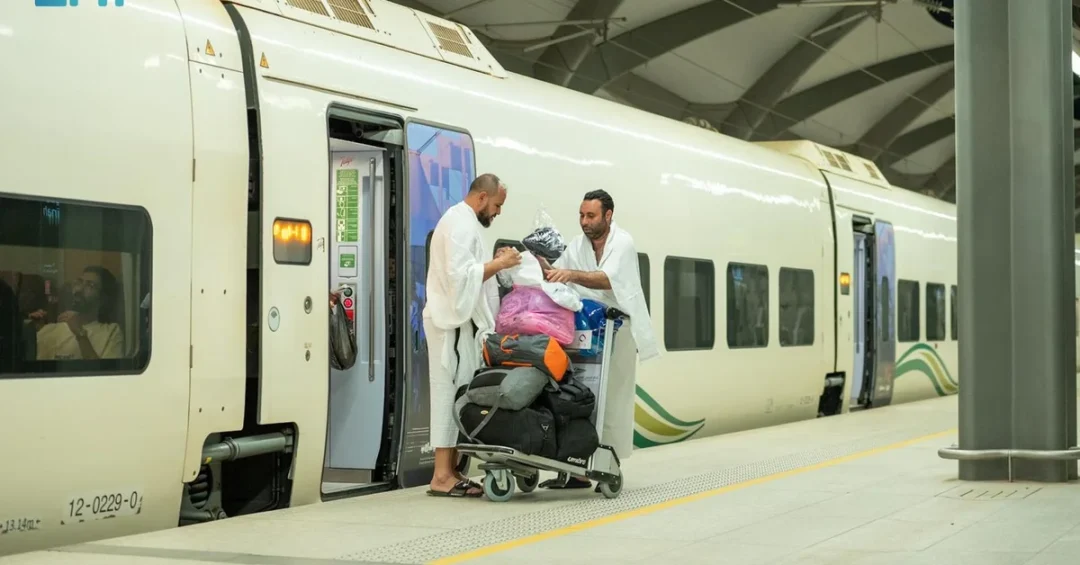
Saudi Arabia Railways (SAR) has announced the successful completion of its operational plan for the holy month of Ramadan 1446 AH, transporting approximately 1.2 million passengers across 3,310 trips on the Haramain High Speed Railway, an increase of 21 percent compared with the previous year, according to the Saudi Press Agency (SPA). The service, which links the holy cities of Makkah and Madinah with stations in Jeddah, King Abdulaziz International Airport, and King Abdullah Economic City, recorded an on-time performance rate of 99.5 percent and a daily average of 40,000 passengers, with a single-day record of 48,000 travellers on Ramadan 15. The results underscore the railway’s growing role as a backbone of pilgrimage travel during the busiest season of the Islamic calendar. How does a rail network move more than a million worshippers in a single month while keeping nearly every train on schedule? The answer lies in careful planning, modern infrastructure, and the Kingdom’s long-term commitment to serving the guests of God.
The announcement, carried by the Saudi Press Agency, reflects the scale of demand that Ramadan generates across western Saudi Arabia, when millions of Umrah performers and visitors travel between the Grand Mosque in Makkah and the Prophet’s Mosque in Madinah. For Saudi Arabia Railways, the month represents both the greatest test of its operational capacity and its most important public service mission. The 21 percent year-on-year increase in passenger numbers confirms that travellers are increasingly choosing high-speed rail over road transport, drawn by speed, comfort, safety, and reliability. The 99.5 percent punctuality rate is particularly significant because it was achieved during peak congestion, when every minute of the timetable matters for worshippers moving between rituals, hotels, and airports.
Context and Background
What makes the Haramain High Speed Railway such a central part of Ramadan travel in Saudi Arabia? Opened to the public in 2018, the line was built specifically to serve pilgrims and visitors travelling between the two holy cities, running through Jeddah and connecting to King Abdulaziz International Airport and King Abdullah Economic City. Its electric trains, designed for desert conditions, cover the journey between Makkah and Madinah in around two and a half hours, a fraction of the time required by road, and stations have been designed to handle large volumes of passengers with dedicated facilities for pilgrims, families, and international visitors. The railway is one of the most visible achievements of the Kingdom’s transport modernisation programme, which falls under the broader umbrella of Saudi Vision 2030 and its goal of becoming a global logistics and travel hub.
Ramadan has always placed unique pressure on transport networks in the Makkah region. Umrah traffic rises sharply, working hours shift, and the daily rhythm of worship creates concentrated peaks around prayers and the evening iftar period. Saudi Arabia Railways prepares for this period months in advance, adjusting timetables, increasing the number of daily services, coordinating with the Ministry of Hajj and Umrah, the General Authority for the Care of the Grand Mosque and the Prophet’s Mosque, and security and health authorities. The operational plan for Ramadan 1446 AH was designed to absorb higher demand without compromising safety or punctuality, and the published results suggest that this coordinated approach worked as intended. The 3,310 trips operated during the month represent a substantial increase in service frequency, allowing passengers to travel at times that suit their schedules.
Understanding the significance of the 21 percent increase requires context about the broader growth of pilgrimage travel. Saudi Arabia has expanded visa access, improved digital booking platforms through the Nusuk application, and invested in airport and hotel capacity, all of which have made Umrah easier for international visitors. As more pilgrims arrive, demand for reliable intercity transport grows, and the Haramain High Speed Railway has become the preferred option for many travellers who want to move quickly between the holy cities without the uncertainty of road congestion. The railway therefore functions not only as a transport service but also as an enabler of the Kingdom’s religious tourism strategy, which aims to welcome ever greater numbers of Umrah performers in comfort and dignity.
Key Details
What do the headline figures actually tell us about the railway’s performance? According to the Saudi Press Agency, SAR transported around 1.2 million passengers on the Haramain High Speed Railway during Ramadan 1446 AH, using 3,310 trips. The daily average reached 40,000 passengers, and the busiest single day saw 48,000 passengers, recorded on Ramadan 15. The on-time performance rate stood at 99.5 percent, meaning that almost every scheduled service departed and arrived within the railway’s punctuality standards. These numbers matter because they were achieved simultaneously: high volume, high frequency, and high reliability, a combination that is difficult to sustain in any transport system, let alone one serving a seasonal pilgrimage of this magnitude.
The railway links Makkah and Madinah through stations in Jeddah, King Abdulaziz International Airport, and King Abdullah Economic City, giving passengers direct access to the Kingdom’s main international gateway on the Red Sea coast and to a growing economic zone. For Umrah performers arriving by air, the airport station allows them to transfer directly onto a high-speed train, reducing dependence on buses and private cars. For residents of Jeddah, the service offers a fast connection to both holy cities. The diversity of the passenger base, including international visitors, Saudi families, and workers, explains why demand is spread across the day and why SAR operates such a dense timetable during Ramadan.
Saudi Arabia Railways has emphasised that the achievement reflects its commitment to delivering high-quality transportation services and ensuring a seamless and safe travel experience for Umrah performers and visitors during the holy month. Safety and punctuality are treated as inseparable objectives: trains are maintained on strict schedules, staff are deployed in larger numbers at stations, and coordination with emergency services is strengthened. The 99.5 percent punctuality rate is therefore not simply a statistic but evidence of disciplined operations behind the scenes, from signalling and track maintenance to passenger flow management at platforms during peak boarding periods.
International and Regional Impact
How does a domestic rail success story resonate beyond Saudi Arabia’s borders? The Haramain High Speed Railway is one of the most prominent symbols of the Kingdom’s transport transformation, and its performance during Ramadan is watched closely by international transport operators, infrastructure investors, and pilgrimage authorities in other countries. A punctuality rate of 99.5 percent during a month of peak demand demonstrates that large-scale, high-frequency rail operations are viable in the region, strengthening Saudi Arabia’s reputation as a capable manager of complex mobility systems. For international visitors, the experience of travelling between Makkah and Madinah by high-speed train shapes their overall impression of the Kingdom, contributing to the country’s image as a modern, well-organised destination.
Regionally, the railway supports the wider integration of transport networks across the Gulf. Saudi Arabia has invested heavily in airports, ports, and land borders, and the Haramain line complements these efforts by offering a fast, environmentally friendlier alternative to road travel for millions of journeys each year. The reduction in road traffic between Makkah, Jeddah, and Madinah during Ramadan also eases pressure on highways and improves safety for all road users. For neighbouring countries whose citizens travel to Saudi Arabia for Umrah, the reliability of the railway adds predictability to their journeys, encouraging more frequent visits and deeper cultural and economic ties with the Kingdom.
Economic and Strategic Significance
Why should economists and business leaders pay attention to a pilgrimage rail service? The Haramain High Speed Railway generates value far beyond ticket sales. It supports the hospitality, retail, and services sectors in Makkah, Jeddah, and Madinah by moving large numbers of visitors quickly and reliably, extending the reach of hotels, restaurants, and shops that depend on pilgrimage traffic. Efficient transport also reduces the cost of congestion, lowers emissions per passenger compared with private vehicles, and improves the productivity of the workforce that serves pilgrims. The 21 percent increase in passengers during Ramadan 1446 AH indicates growing demand that can support further investment in rolling stock, station capacity, and digital services.
Strategically, the railway forms part of Saudi Arabia’s ambition to become a global logistics and transport hub under Vision 2030. The Kingdom is expanding its rail network through projects such as the Saudi Landbridge and new freight corridors, and the operational expertise gained on the Haramain line, including timetable management, maintenance, and passenger handling at scale, feeds directly into these larger programmes. The success of Ramadan operations also strengthens the case for private sector participation in transport, as investors see evidence of strong demand and professional management. In this sense, the 1.2 million passengers carried in a single month are both a public service achievement and a signal of the commercial maturity of Saudi rail.
Vision 2030 Alignment
How does the Ramadan performance of the Haramain High Speed Railway connect to Saudi Vision 2030? The Vision sets out to diversify the economy, improve quality of life, and position the Kingdom as a global destination for pilgrims, tourists, and business travellers. Reliable high-speed rail between Makkah and Madinah directly serves all three objectives: it enhances the pilgrimage experience, supports the growth of religious tourism, and demonstrates the Kingdom’s ability to deliver world-class infrastructure. The Ministry of Transport and Logistic Services and Saudi Arabia Railways are working within this framework to expand capacity, adopt smart technologies, and raise service standards across the network, with the Haramain line acting as a flagship example of what Vision 2030 aims to achieve.
The results of Ramadan 1446 AH also reinforce the Kingdom’s broader narrative of modernisation and hospitality. By transporting 1.2 million passengers with 99.5 percent punctuality, Saudi Arabia Railways showed that the guests of God can be served with efficiency, comfort, and safety at an unprecedented scale. As demand for Umrah continues to rise and new transport projects come online, the Haramain High Speed Railway will remain a central pillar of the Kingdom’s mobility strategy, linking the holy cities, supporting economic growth, and showcasing Saudi Arabia’s capacity to manage some of the world’s most demanding travel seasons. The coming years are expected to bring further increases in passenger numbers, and with them new opportunities to strengthen the service for pilgrims and visitors from around the world.
20 Questions
Q1. What did Saudi Arabia Railways announce about Ramadan 1446 AH operations?
A1. Saudi Arabia Railways announced the successful implementation of its operational plan for Ramadan 1446 AH, transporting around 1.2 million passengers on the Haramain High Speed Railway with a 99.5 percent punctuality rate, according to the Saudi Press Agency.
Q2. How many passengers travelled on the Haramain High Speed Railway during Ramadan?
A2. Approximately 1.2 million passengers were transported during the holy month, representing a 21 percent increase compared with the previous year and reflecting strong growth in demand for high-speed rail travel between the holy cities.
Q3. How many trips did the railway operate during Ramadan 1446 AH?
A3. The Haramain High Speed Railway operated 3,310 trips during Ramadan, a substantial increase in service frequency designed to accommodate peak pilgrimage demand while maintaining reliable connections between Makkah, Jeddah, and Madinah.
Q4. What was the daily average number of passengers?
A4. The daily passenger average during Ramadan reached 40,000, showing consistent demand across the month and highlighting the railway’s role as a primary mode of transport for Umrah performers and visitors.
Q5. What was the highest number of passengers carried in a single day?
A5. A record-breaking 48,000 passengers were transported on Ramadan 15, the busiest day of the month, demonstrating the railway’s capacity to handle concentrated peaks in travel demand safely and efficiently.
Q6. What punctuality rate did the Haramain High Speed Railway achieve?
A6. The railway achieved an on-time performance rate of 99.5 percent during Ramadan, meaning nearly every scheduled service operated within the railway’s punctuality standards despite high passenger volumes and frequent departures.
Q7. Which cities and stations does the Haramain High Speed Railway connect?
A7. The line links Makkah and Madinah with key stations in Jeddah, King Abdulaziz International Airport, and King Abdullah Economic City, providing fast connections between the holy cities and major transport and economic hubs.
Q8. Why is the Haramain High Speed Railway important during Ramadan?
A8. Ramadan brings a sharp rise in Umrah traffic, and the railway offers a fast, safe, and comfortable alternative to road travel, helping millions of worshippers move between Makkah and Madinah during the busiest period of the year.
Q9. How does the railway support Umrah performers arriving by air?
A9. The station at King Abdulaziz International Airport allows international visitors to transfer directly from their flights onto high-speed trains, reducing reliance on buses and private cars and simplifying their journey to the holy cities.
Q10. What does the 21 percent increase in passengers indicate?
A10. The increase indicates growing confidence in the railway among pilgrims and visitors, supported by expanded visa access, improved digital booking platforms, and rising global demand for Umrah travel to Saudi Arabia.
Q11. How does Saudi Arabia Railways prepare for Ramadan operations?
A11. Saudi Arabia Railways prepares months in advance by adjusting timetables, increasing daily services, maintaining trains on strict schedules, and coordinating with ministries, security agencies, and health authorities to ensure safe and seamless travel.
Q12. What role does safety play in the railway’s Ramadan plan?
A12. Safety is treated as a core objective alongside punctuality, with enhanced staff deployment at stations, strict maintenance programmes, and close coordination with emergency services to protect passengers throughout the holy month.
Q13. How does the railway contribute to Saudi Arabia’s transport modernisation?
A13. The Haramain line is a flagship project of the Kingdom’s transport modernisation programme, demonstrating the country’s ability to deliver world-class infrastructure and manage complex, high-frequency rail operations at scale.
Q14. What economic benefits does the railway generate?
A14. The railway supports hospitality, retail, and services in Makkah, Jeddah, and Madinah, reduces congestion costs, lowers emissions per passenger, and strengthens the business case for further investment in Saudi rail infrastructure.
Q15. How does the railway align with Saudi Vision 2030?
A15. It supports Vision 2030 goals of economic diversification, improved quality of life, and growth in religious tourism by providing reliable high-speed transport for pilgrims and visitors between the holy cities and key economic centres.
Q16. What regional impact does the railway’s performance have?
A16. The strong Ramadan results reinforce Saudi Arabia’s reputation as a capable manager of complex mobility systems and support regional transport integration, encouraging more visitors from Gulf countries and beyond to travel to the Kingdom.
Q17. How does the railway benefit international visitors?
A17. International visitors gain a fast, comfortable, and predictable way to travel between Makkah and Madinah, improving their overall pilgrimage experience and shaping a positive impression of Saudi Arabia’s modern infrastructure.
Q18. What environmental advantages does high-speed rail offer?
A18. Electric high-speed rail produces lower emissions per passenger than private vehicles and reduces road traffic between the holy cities, supporting Saudi Arabia’s environmental goals and improving safety on major highways.
Q19. What might the future hold for the Haramain High Speed Railway?
A19. With demand rising, further investment in rolling stock, station capacity, and digital services is expected, allowing the railway to serve even more pilgrims and visitors while maintaining high standards of punctuality and safety.
Q20. What is the overall significance of the Ramadan 1446 AH results?
A20. The results show that Saudi Arabia Railways can move more than a million worshippers in a single month with 99.5 percent punctuality, confirming the Kingdom’s capacity to serve the guests of God at an unprecedented scale.
Reader Feedback
We value your thoughts. Please share your feedback on this article.
Your feedback helps us improve our coverage.
Related articles
 Madinah Eid Shuttle Set for Prophet’s and Quba Mosques
 GEA to Light Up 14 Saudi Cities with Eid Fireworks
 Jazan Border Guards Foil Smuggling of 36,000 Narcotic Pills
 Imams Announced for Eid Al-Fitr Prayer at Two Holy Mosques
 GDNC Arrests Two in Al-Jouf for Selling 2,474 Narcotic Pills
 Wildfires Reignite in Korea’s Andong, Death Toll Hits 29