


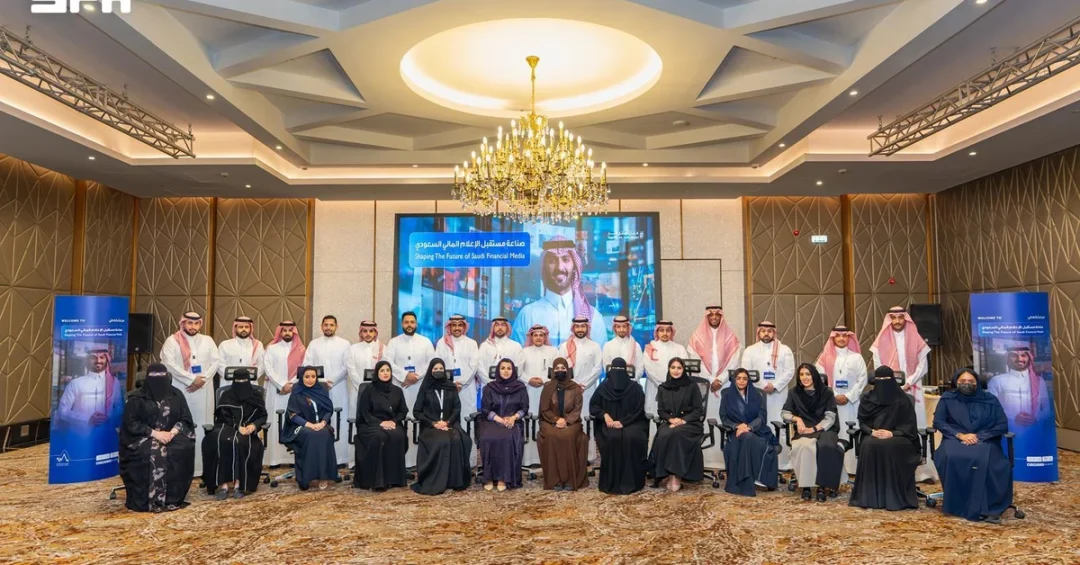
The Financial Academy launched the second edition of its Shaping the Future of Saudi Financial Media program on October 18, 2026, in strategic partnership with the Saudi Broadcasting Authority (SBA), bringing together 30 media professionals and financial-sector specialists in Riyadh for five days of intensive training that will continue until October 22. The initiative, announced through official Saudi channels including the Saudi Press Agency (SPA), represents a deliberate effort to raise the standard of financial journalism in the Kingdom at a moment when Saudi Arabia’s economic transformation is generating unprecedented volumes of market-moving news. Could any modern economy compete globally without a press corps capable of explaining its financial story with precision and authority?
The program convenes journalists, broadcasters, and financial analysts for a curriculum that spans economic fundamentals, the interpretation of government reports, and the production of specialized media content for television, digital platforms, and social channels. By pairing the Financial Academy’s educational mandate with the SBA’s broadcast expertise, the initiative signals that Saudi Arabia treats financial literacy in the media not as an afterthought but as strategic infrastructure for Vision 2030. The opening day alone demonstrated the program’s ambition, combining foundational economic instruction with practical editorial technique.
Context and Background
Why does a country undergoing one of the world’s most ambitious economic transformations need a dedicated program for financial media? Saudi Arabia’s answer is straightforward: as the Kingdom diversifies away from oil dependence, the volume, complexity, and global relevance of its financial news has expanded dramatically. Sovereign investment activity, privatizations, bond issuances, megaproject financing, and stock market listings now generate daily headlines that demand informed, accurate reporting. The Financial Academy, a national institution dedicated to building human capital in the financial sector, recognized that the professionals telling these stories need the same rigorous grounding as the professionals executing them.
The first edition of the program established the model, and the second edition builds on that foundation with an expanded roster of speakers and a sharper focus on digital tools and artificial intelligence. The partnership with the Saudi Broadcasting Authority is particularly significant because the SBA reaches millions of viewers and listeners across the Kingdom through its television and radio networks. When the SBA’s own communicators participate in the training, the effect ripples through the entire national media ecosystem, raising the baseline quality of financial coverage available to Saudi audiences and international observers alike.
The timing reflects a broader institutional maturity. Saudi Arabia’s financial sector is no longer a domestic story; it is a global one. From Riyadh’s Tadawul exchange to the Public Investment Fund’s international portfolio, Saudi financial developments are watched in London, New York, Tokyo, and Singapore. A program that equips Saudi media professionals to report on these developments with clarity and confidence therefore serves not only local audiences but the Kingdom’s international reputation for transparency and professionalism.
Key Details
What actually happens inside a program designed to sharpen the sharpest pens in Saudi financial media? On the opening day, participants engaged with training sessions covering economic fundamentals and the practical skill of reading government reports, a competency that underpins accurate coverage of budget statements, ministry announcements, and regulatory filings. Dr. Abdullah Bin Rubbaian, Associate Professor of Economics and Finance at the Institute of Public Administration, led a session on writing economic and financial news, reports, and analyses, offering participants a structured approach to translating dense data into accessible narratives.
The speaker roster reflects the program’s cross-sector design. Eng. Waleed Al-Shalhoub, Director General of Corporate Communications and Official Spokesperson at the Saudi Broadcasting Authority, brings the perspective of a national broadcaster navigating financial communication. Eng. Bandar Al-Mashhadi, CEO of the Media Rating Company (MRC), contributes expertise in audience measurement and media performance, a reminder that financial journalism must be not only accurate but also effective in reaching its audience. Additional sessions will be delivered by Dr. Majed Al-Ghamdi, Eng. Mohammed Al-Wuhaibi, Dr. Abdullah Alsalloum, and May bin Khadra, each bringing specialized knowledge to the five-day curriculum.
The program’s thematic focus is equally instructive. Participants are trained to analyze and simplify financial and economic information, interpret indicators and reports, produce specialized media content, use digital tools and artificial intelligence, and develop presentation and on-camera skills. This combination acknowledges that modern financial journalism is a multi-platform discipline. A single story may begin as a data analysis, evolve into a broadcast segment, and circulate as a social media explainer. The program prepares professionals for all of these formats, ensuring that complexity never becomes an excuse for inaccuracy.
International and Regional Impact
How does a training program in Riyadh resonate beyond Saudi borders? International investors, analysts, and institutions rely on media coverage to understand Saudi economic developments, and the quality of that coverage shapes perceptions that influence capital flows, partnership decisions, and diplomatic engagement. When Saudi financial journalists can explain a bond issuance, interpret a budget deficit projection, or contextualize a megaproject investment with precision, the entire global conversation about the Kingdom’s economy becomes more grounded and constructive.
Regionally, the program positions Saudi Arabia as a standard-setter for financial media in the Arab world. Other Gulf economies face similar challenges in communicating complex economic transformations to domestic and international audiences. By investing in a structured, repeatable training model, the Kingdom offers a template that peers can study and adapt. This soft-power dimension of the initiative is easy to overlook but strategically valuable, reinforcing Saudi Arabia’s role as a hub for professional excellence in a region where financial communication capacity varies widely.
The involvement of the Media Rating Company adds another international dimension. Audience measurement methodologies and media performance standards are global disciplines, and MRC’s participation connects Saudi financial media to international best practices. As Saudi broadcasters and publishers compete for attention in a crowded global information environment, the ability to measure impact and refine content accordingly becomes a competitive advantage, one that this program deliberately cultivates.
Economic and Strategic Significance
What is the economic logic of training journalists in a country focused on growth and investment? The answer lies in the relationship between information quality and market efficiency. Well-informed media coverage reduces information asymmetries, helps investors price risk accurately, and supports the credibility of Saudi capital markets. As the Tadawul exchange deepens, as initial public offerings multiply, and as the Public Investment Fund deploys capital at scale, the demand for sophisticated financial reporting grows in parallel. The Financial Academy’s program is, in this sense, an investment in market infrastructure as real as any trading platform.
The strategic significance extends to the Kingdom’s communication sovereignty. Saudi Arabia’s economic story is increasingly told by international media outlets whose framing may not reflect local context or priorities. Building a cadre of Saudi professionals who can report on their own economy with authority ensures that the national narrative is grounded in expertise rather than external interpretation. This is not about controlling coverage but about ensuring that Saudi voices are equipped to participate in the global conversation on equal terms, a goal consistent with the Kingdom’s broader emphasis on self-reliance and institutional capacity.
There is also a practical talent dimension. Financial journalism is a specialized field, and the professionals who master it become valuable assets to the institutions they serve. By creating a recognized pathway for skills development, the program helps retain talented communicators within the Saudi media and financial sectors, reducing the reliance on external expertise and building a sustainable domestic capability. Over time, cohorts of program alumni will form a professional network that raises standards across newsrooms, broadcast studios, and corporate communications departments nationwide.
Vision 2030 Alignment
How does a five-day media training program connect to a national transformation blueprint spanning an entire economy and society? Vision 2030 rests on pillars of a vibrant society, a thriving economy, and an ambitious nation, and each pillar depends on informed public participation. Financial media that can explain economic change clearly enables citizens and residents to understand the opportunities emerging around them, from new investment vehicles to employment shifts to the growth of non-oil sectors. The Financial Academy’s program directly supports this by upgrading the quality of the information citizens receive.
The initiative also reinforces the human capital objectives at the heart of Vision 2030. Developing specialized skills, embracing digital tools and artificial intelligence, and fostering professional excellence are recurring themes across the Kingdom’s transformation programs. By applying these themes to financial media, the program ensures that the sector keeping pace with Saudi Arabia’s economic modernization is itself modernized. As the second edition unfolds in Riyadh through October 22, it stands as a clear statement that Saudi Arabia intends to tell its own financial story with skill, accuracy, and confidence, and that the institutions supporting that story will continue to receive the investment they deserve.
20 Questions
Q1. What is the Shaping the Future of Saudi Financial Media program?
A1. It is a training initiative by the Financial Academy, in partnership with the Saudi Broadcasting Authority, designed to strengthen the skills of media professionals and financial specialists covering Saudi Arabia’s economy.
Q2. When did the second edition of the program begin?
A2. The second edition launched on October 18, 2026, in Riyadh, and its training sessions are scheduled to continue until October 22, 2026, according to the Saudi Press Agency.
Q3. How many participants are taking part in the program?
A3. The program brings together 30 media professionals and financial-sector specialists, creating a focused cohort that combines editorial and analytical expertise in a single training environment.
Q4. Which organization partnered with the Financial Academy for this edition?
A4. The Saudi Broadcasting Authority, the Kingdom’s national broadcaster, partnered with the Financial Academy, adding broadcast expertise and national reach to the program’s educational design.
Q5. What topics were covered on the first day?
A5. The opening day covered economic fundamentals and the skill of reading government reports, followed by a session on writing economic and financial news, reports, and analyses.
Q6. Who led the session on writing economic and financial news?
A6. Dr. Abdullah Bin Rubbaian, Associate Professor of Economics and Finance at the Institute of Public Administration, led the session on writing economic and financial news, reports, and analyses.
Q7. Which prominent speakers are featured in the program?
A7. Speakers include Eng. Waleed Al-Shalhoub, SBA Director General of Corporate Communications and Official Spokesperson, and Eng. Bandar Al-Mashhadi, CEO of the Media Rating Company.
Q8. What additional trainers will deliver sessions?
A8. Dr. Majed Al-Ghamdi, Eng. Mohammed Al-Wuhaibi, Dr. Abdullah Alsalloum, and May bin Khadra will also deliver training sessions during the five-day program.
Q9. What are the main focus areas of the five-day curriculum?
A9. The curriculum focuses on analyzing and simplifying financial information, interpreting indicators and reports, producing specialized media content, using digital tools and artificial intelligence, and developing presentation and on-camera skills.
Q10. Why is artificial intelligence included in the training?
A10. Artificial intelligence is increasingly used in newsrooms and financial analysis, so the program equips participants to apply these tools responsibly and effectively in modern media production.
Q11. Why does Saudi Arabia need specialized financial media training?
A11. As the Kingdom’s economy diversifies and its capital markets expand, accurate and sophisticated reporting on financial developments becomes essential for investors, citizens, and international audiences alike.
Q12. How does the program support Vision 2030?
A12. It builds human capital, promotes professional excellence, and improves public understanding of economic transformation, all of which align with Vision 2030’s economic and social objectives.
Q13. What role does the Saudi Broadcasting Authority play?
A13. The SBA contributes broadcast expertise and national reach, helping participants develop on-camera skills and understand how financial stories reach television and radio audiences.
Q14. What is the significance of Media Rating Company involvement?
A14. MRC’s participation connects the program to audience measurement and media performance standards, helping participants understand how to evaluate and improve the impact of their content.
Q15. Where is the program being held?
A15. The program is being held in Riyadh, the Kingdom’s capital and a growing hub for financial institutions, media organizations, and government entities central to Saudi Arabia’s economic story.
Q16. How does this program benefit international audiences?
A16. Better-informed Saudi financial reporting gives international investors and analysts clearer, more accurate insight into the Kingdom’s economy, supporting confident engagement and partnership.
Q17. Is this the first time such a program has been held?
A17. No, this is the second edition, following an inaugural program that established the model now being expanded with additional speakers and enhanced digital and AI content.
Q18. What skills will participants take back to their workplaces?
A18. Participants will gain skills in data interpretation, report analysis, specialized content production, digital and AI tool usage, and effective on-camera presentation for financial news.
Q19. How does the program reflect Saudi Arabia’s media ambitions?
A19. It demonstrates the Kingdom’s commitment to professional, accurate, and modern media that can tell Saudi Arabia’s economic story with authority on both domestic and global stages.
Q20. What does the future hold for this initiative?
A20. As the program matures, its alumni network and evolving curriculum are expected to raise standards across Saudi financial media, supporting the Kingdom’s long-term economic communication goals.
Reader Feedback
We value your thoughts. Please share your feedback on this article.
Your feedback helps us improve our coverage.