


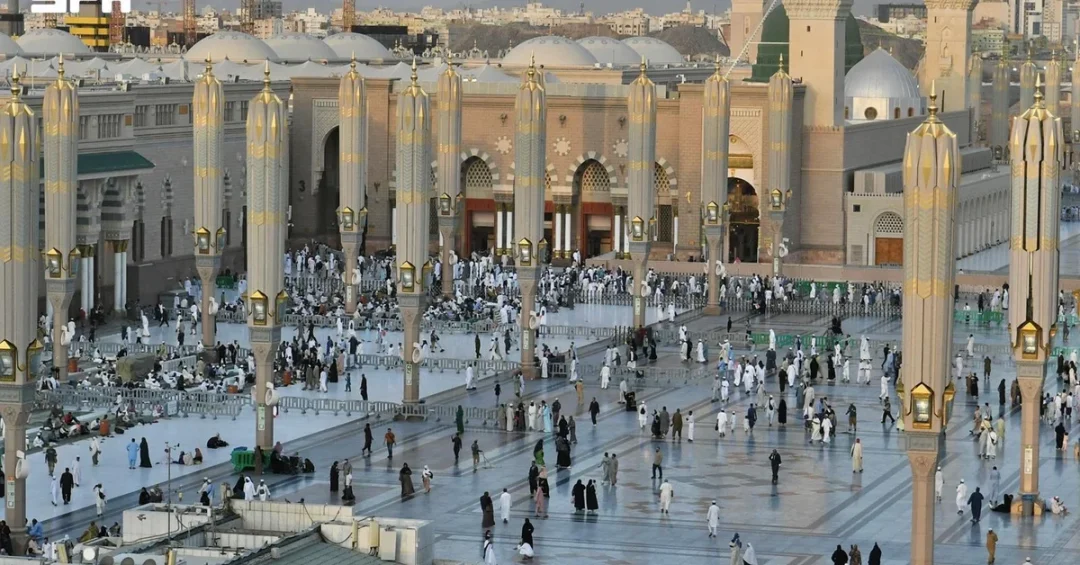
The General Authority for the Care of the Two Holy Mosques announced that 21,615,977 people visited the Prophet’s Mosque in September 2026, a figure that underscores the Kingdom of Saudi Arabia’s enduring role as host to the world’s Muslim community and its unmatched capacity to welcome worshippers in comfort and dignity. The official announcement, released through the Saudi Press Agency, also confirmed that 1,449,791 visitors prayed in Al-Rawdah Al-Sharifah, the sacred area within the mosque, during the same month. These numbers represent far more than a statistical milestone; they reflect the daily reality of millions of believers who travel to Madinah to pray, reflect, and connect with one of the holiest sites in Islam.
How does a single city absorb more than twenty-one million visits in thirty days while preserving the spiritual serenity that pilgrims seek? The answer lies in a sustained, nationwide effort led by the Kingdom’s leadership and carried out by specialized authorities dedicated to the care of the Two Holy Mosques. The Prophet’s Mosque, known in Arabic as Al-Masjid an-Nabawi, has been at the center of a continuous program of expansion, modernization, and service improvement that has accelerated under Saudi Vision 2030. The September figures arrive as evidence that these investments are translating directly into a better experience for every visitor, from the first moment of arrival to the final prayer before departure.
Context and Background
What makes the Prophet’s Mosque unique among the world’s most visited religious sites? Located in Madinah, the mosque was built by the Prophet Muhammad (peace be upon him) and today stands as the second holiest site in Islam after the Grand Mosque in Makkah. Its religious significance draws pilgrims from every continent, and its visitor profile is remarkably diverse, encompassing worshippers performing Umrah and Hajj, residents of the Kingdom, and travelers who come specifically to pray in Al-Rawdah Al-Sharifah. Managing such a volume of humanity requires planning that operates on a daily, hourly, and even minute-by-minute basis.
The General Authority for the Care of the Two Holy Mosques is the government body responsible for this mission. Its mandate covers crowd management, cleanliness, accessibility, guidance, and the spiritual and educational enrichment of visitors. The authority’s September report shows that its work extends well beyond opening doors and directing traffic. Every visitor who enters the mosque’s courtyards and halls encounters a system designed to protect their safety, respect their time, and deepen their connection to the site. This is a responsibility the Kingdom treats as a sacred trust, and the numbers released for September demonstrate the scale at which that trust is being honored.
For an international audience, it is important to understand that the Prophet’s Mosque is not merely a tourist destination. It is a place of worship that operates continuously, with prayer cycles that structure the entire day. The authority’s figures therefore represent a complex logistical achievement: millions of individual visits coordinated around five daily prayers, weekly congregational gatherings, and the steady flow of pilgrims arriving from outside the country. The September statistics offer a window into how Saudi Arabia manages one of the most demanding religious and civic operations anywhere in the world.
Key Details from the September Report
What specific services supported more than twenty-one million visits last month? The authority’s breakdown provides a clear picture. Alongside the 1,449,791 worshippers who prayed in Al-Rawdah Al-Sharifah, the mosque welcomed 355,130 visitors who used wayfinding services, helping them navigate the expansive complex with ease. A further 287,886 people benefited from the guest care centers, which provide assistance, rest, and support for visitors who may need guidance or comfort during their journey. These services are particularly important for elderly pilgrims, families with children, and first-time visitors unfamiliar with the mosque’s layout.
The authority also emphasized the educational and cultural dimensions of the visitor experience. Some 81,243 people visited the Prophet’s Mosque Library, a repository of Islamic knowledge and scholarship that serves researchers, students, and curious visitors alike. Meanwhile, the mosque’s exhibitions received 137,867 visitors, offering a structured way for guests to learn about the history, architecture, and spiritual heritage of the site. These numbers show that the Prophet’s Mosque functions not only as a place of prayer but also as a center of learning and cultural exchange, enriching the experience of everyone who passes through its doors.
In its statement, the authority noted that these figures reflect its ongoing efforts to provide high-quality services that enrich pilgrims’ experiences and facilitate prayer in a tranquil, peaceful atmosphere. That language is deliberate. The Kingdom’s approach to the Two Holy Mosques is built on the principle that spiritual focus depends on practical order. When a visitor knows where to go, feels safe, and has access to clean facilities and knowledgeable staff, the result is a calmer, more meaningful visit. The September statistics suggest that this principle is being applied effectively at a very large scale.
International and Regional Impact
Why should these figures matter to readers outside Saudi Arabia? The Prophet’s Mosque draws from a global community of nearly two billion Muslims, and the experience of visiting Madinah shapes how the world perceives the Kingdom. When millions of visitors return home with positive impressions of organization, hospitality, and spiritual care, they carry those impressions to their families, communities, and countries. In this sense, the authority’s work is a form of international engagement that operates quietly but powerfully, building goodwill through service rather than rhetoric.
The regional dimension is equally significant. Pilgrims arriving in Madinah often travel through Saudi airports, use Saudi transport networks, and stay in Saudi hotels, creating economic linkages that extend across the Kingdom. The smooth handling of twenty-one million visits in a single month reinforces the Kingdom’s reputation as a reliable and capable host for large-scale religious gatherings. For neighboring countries and the broader Islamic world, the September figures are a reassuring signal that the Two Holy Mosques remain accessible, well managed, and welcoming, even as demand for visitation continues to grow year after year.
Economic and Strategic Significance
What does this volume of visitation mean for Saudi Arabia’s economy and long-term strategy? Religious tourism is a central pillar of the Kingdom’s economic diversification agenda. The millions of visits to the Prophet’s Mosque generate demand for accommodation, transportation, food services, retail, and cultural experiences in Madinah and beyond. The authority’s investment in wayfinding, guest care, libraries, and exhibitions enhances the quality of that demand, encouraging longer stays and repeat visits. This aligns directly with the Vision 2030 goal of increasing the number of pilgrims and visitors while improving the services they receive.
Strategically, the figures also demonstrate the Kingdom’s ability to manage complexity at scale. The same planning discipline applied to the Prophet’s Mosque supports other Vision 2030 projects, from major entertainment and cultural events to the development of new urban centers. The authority’s work is therefore both a religious duty and a demonstration of national capability. When Saudi Arabia reports that more than twenty-one million visits occurred in a single month with services functioning smoothly, it is signaling to the world that its infrastructure, institutions, and workforce can meet ambitious targets. That signal has value far beyond the walls of the mosque.
Vision 2030 Alignment
How does the September report connect to the broader ambitions of Saudi Vision 2030? The Vision places the Two Holy Mosques at the heart of the Kingdom’s identity and its service to the Islamic world. Expanding capacity, improving the visitor experience, and enriching the spiritual journey of pilgrims are explicit priorities. The General Authority for the Care of the Two Holy Mosques is one of the key institutions delivering on these priorities, and its September figures show measurable progress. The integration of modern services such as wayfinding technology, dedicated guest care centers, and educational exhibitions reflects the Vision’s emphasis on innovation and quality of life.
Looking ahead, the Kingdom’s commitment to the Prophet’s Mosque will continue to shape its global role. As more people travel to Madinah, the authority will keep refining its operations, guided by the leadership’s directive to serve visitors with excellence. The September 2026 statistics are not an endpoint but a benchmark, one that demonstrates what is possible when national vision, institutional dedication, and spiritual purpose align. For international observers, the message is clear: Saudi Arabia remains a trusted steward of Islam’s holiest sites, and its efforts to welcome the world are only growing stronger.
20 Questions
Q1. How many people visited the Prophet’s Mosque in September 2026?
A1. The General Authority for the Care of the Two Holy Mosques reported that 21,615,977 people visited the Prophet’s Mosque in September 2026, according to the Saudi Press Agency.
Q2. How many visitors prayed in Al-Rawdah Al-Sharifah during the month?
A2. The authority stated that 1,449,791 visitors prayed in Al-Rawdah Al-Sharifah, the sacred area within the Prophet’s Mosque, during September 2026.
Q3. What are wayfinding services at the Prophet’s Mosque?
A3. Wayfinding services help visitors navigate the large mosque complex. In September, 355,130 people used these services to find prayer areas, entrances, and facilities efficiently.
Q4. How many visitors used the guest care centers?
A4. The authority reported that 287,886 visitors used the guest care centers, which provide assistance, rest, and support for pilgrims and guests at the Prophet’s Mosque.
Q5. How many people visited the Prophet’s Mosque Library?
A5. Some 81,243 people visited the Prophet’s Mosque Library in September 2026, reflecting the site’s role as a center of Islamic learning and scholarship.
Q6. How many visitors attended the mosque’s exhibitions?
A6. The mosque’s exhibitions received 137,867 visitors during September 2026, offering educational and cultural experiences about the mosque’s history and heritage.
Q7. Which authority released these statistics?
A7. The statistics were announced by the General Authority for the Care of the Two Holy Mosques and published through the Saudi Press Agency, an official Saudi news source.
Q8. Why is the Prophet’s Mosque significant to Muslims worldwide?
A8. The Prophet’s Mosque in Madinah is the second holiest site in Islam after the Grand Mosque in Makkah, drawing pilgrims from around the world who come to pray and reflect.
Q9. What is Al-Rawdah Al-Sharifah?
A9. Al-Rawdah Al-Sharifah is a sacred area within the Prophet’s Mosque, traditionally associated with the Prophet Muhammad (peace be upon him), and is highly sought by visitors for prayer.
Q10. How do these figures reflect Saudi Arabia’s service to pilgrims?
A10. The figures show the Kingdom’s capacity to host millions of worshippers with organized services, reflecting its commitment to caring for the Two Holy Mosques and their visitors.
Q11. What role does the General Authority for the Care of the Two Holy Mosques play?
A11. The authority manages services at the Two Holy Mosques, including crowd control, cleanliness, guidance, guest care, libraries, and exhibitions, ensuring a safe and tranquil experience for visitors.
Q12. How does the September report relate to Saudi Vision 2030?
A12. Vision 2030 prioritizes improving services for pilgrims and enhancing the visitor experience. The September figures demonstrate progress toward these goals through modern facilities and enriched cultural offerings.
Q13. What economic benefits flow from visits to the Prophet’s Mosque?
A13. Visits generate demand for hotels, transport, food, and retail in Madinah and across the Kingdom, supporting jobs and economic diversification in line with Vision 2030 objectives.
Q14. Are the visitor numbers expected to grow in the future?
A14. Saudi Arabia continues to expand capacity and improve services at the Two Holy Mosques, positioning the Kingdom to welcome increasing numbers of pilgrims and visitors in the coming years.
Q15. What is the significance of the library at the Prophet’s Mosque?
A15. The library preserves Islamic knowledge and serves researchers, students, and visitors, enriching their understanding of the mosque’s history and religious heritage.
Q16. How do the exhibitions enhance the visitor experience?
A16. The exhibitions provide structured, educational content about the mosque’s architecture, history, and spiritual importance, helping visitors connect more deeply with the site during their visit.
Q17. What does the phrase “tranquil, peaceful atmosphere” refer to in the authority’s statement?
A17. It refers to the goal of enabling worshippers to pray and reflect without disruption, supported by organized services, crowd management, and well-maintained facilities throughout the mosque complex.
Q18. How does Saudi Arabia ensure safety for so many visitors?
A18. The authority coordinates crowd flow, provides wayfinding and guest care services, and maintains the mosque’s facilities, allowing millions of visits to proceed smoothly and safely each month.
Q19. Where was the announcement published?
A19. The announcement was published by the Saudi Press Agency, the Kingdom’s official news outlet, which regularly reports on services at the Two Holy Mosques.
Q20. What does the September 2026 figure indicate about Saudi Arabia’s global role?
A20. It underscores the Kingdom’s role as a trusted host and steward of Islam’s holiest sites, demonstrating its capacity to serve millions of international visitors with care and efficiency.
Reader Feedback
We value your thoughts. Please share your feedback on this article.
Your feedback helps us improve our coverage.