


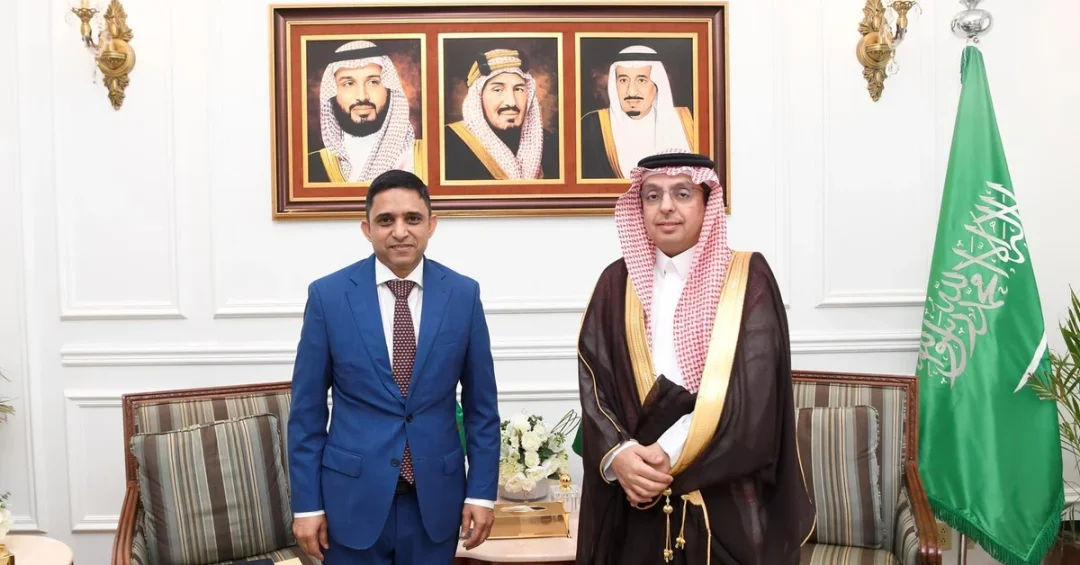
Director General of the Ministry of Foreign Affairs branch in Makkah Region Fareed Al-Shahri received Consul General of the People’s Republic of Bangladesh Md Shakhawat Hossain in Jeddah, where the two officials reviewed topics of mutual interest, according to the Saudi Press Agency. The meeting, reported by the Kingdom’s official news agency, forms part of the regular diplomatic engagement conducted by the Ministry of Foreign Affairs through its regional branches, which serve as the primary point of contact for foreign consulates operating across Saudi Arabia. The encounter underscores the continuing strength of relations between the Kingdom and Bangladesh, a partnership rooted in shared Islamic heritage, deep people-to-people ties, and expanding economic cooperation.
Diplomatic meetings of this kind, while routine in protocol, carry practical weight. They allow Saudi officials and foreign representatives to coordinate on consular services, discuss the interests of resident communities, and identify opportunities for closer collaboration in trade, investment, and cultural exchange. For Bangladesh, which maintains a large diaspora in the Kingdom, the relationship with Saudi Arabia is among its most important bilateral partnerships. For Saudi Arabia, Bangladesh represents a valued partner in South Asia and a contributor to the Kingdom’s labor market, pilgrimage ecosystem, and growing network of international trade relationships. Why does this steady, unglamorous diplomacy matter so much to both nations? Because it is precisely this kind of consistent engagement that turns strategic intentions into tangible outcomes for citizens and businesses alike.
Context and Background
How do regional foreign ministry branches fit into Saudi Arabia’s broader diplomatic architecture? The Ministry of Foreign Affairs operates branch offices across the Kingdom’s regions, with the Makkah Region branch playing a particularly significant role given the presence of Jeddah as a diplomatic hub and the holy city of Makkah as the destination for millions of pilgrims each year. These branches handle a wide range of responsibilities, from liaising with foreign consulates to supporting the needs of diplomatic missions and coordinating with local authorities. The Makkah Region branch, led by Director General Fareed Al-Shahri, is therefore a key node in the Kingdom’s engagement with the international community.
Bangladesh’s consulate in Jeddah, headed by Consul General Md Shakhawat Hossain, serves one of the largest Bangladeshi communities in the Middle East. The relationship between Saudi Arabia and Bangladesh has deepened considerably over recent decades, driven by labor migration, religious pilgrimage, and mutual respect at the highest levels of government. Bangladesh is a major source of skilled and semi-skilled workers for Saudi Arabia’s economy, and Bangladeshi pilgrims travel to the Kingdom in large numbers for Hajj and Umrah each year. This combination of economic and spiritual ties gives the bilateral relationship a unique character that both sides have consistently sought to strengthen.
The meeting in Jeddah also reflects a wider pattern of Saudi diplomacy in which regional engagement complements the Kingdom’s global outreach. Saudi Arabia has increasingly positioned itself as a bridge between regions, and its relationships with South Asian nations form an important part of that vision. By maintaining open channels with consular officials, the Ministry of Foreign Affairs ensures that the day-to-day concerns of partner countries are addressed promptly and professionally. This approach supports the Kingdom’s reputation as a reliable and welcoming international partner.
Key Details
What exactly was discussed during the meeting? According to the Saudi Press Agency, Director General Fareed Al-Shahri and Consul General Md Shakhawat Hossain reviewed topics of mutual interest. While the official report did not enumerate specific agenda items, such consultations typically cover consular cooperation, the welfare of resident nationals, trade and investment opportunities, and coordination on regional and international issues of shared concern. The tone of the meeting was positive and constructive, consistent with the longstanding friendship between the Kingdom and Bangladesh.
The participation of the Director General of the Makkah Region branch signals the importance Saudi officials attach to the relationship with Bangladesh. Fareed Al-Shahri’s role involves overseeing the branch’s interactions with consulates and ensuring that Saudi Arabia’s diplomatic obligations are met efficiently across the region. Consul General Md Shakhawat Hossain, for his part, represents Bangladeshi interests in the western region of Saudi Arabia, a responsibility that includes supporting Bangladeshi citizens, facilitating business links, and maintaining close communication with Saudi authorities.
Meetings between Saudi foreign ministry officials and foreign consuls are a regular feature of diplomatic life in Jeddah, which hosts numerous consulates general. These interactions help to preempt misunderstandings, resolve practical issues, and build the personal relationships that underpin effective diplomacy. The fact that this meeting was publicly reported by the Saudi Press Agency reflects the Kingdom’s commitment to transparency in its international engagements and its willingness to share news of constructive dialogue with the public.
International and Regional Impact
Why should observers beyond Saudi Arabia and Bangladesh pay attention to this meeting? The answer lies in the broader geopolitical and economic currents it represents. Saudi Arabia’s relations with South Asia are becoming more consequential as the Kingdom diversifies its partnerships under Vision 2030. Bangladesh, with its dynamic economy and strategic location, is a natural partner in this diversification. Enhanced cooperation between the two countries can support trade flows, investment projects, and people-to-people exchanges that benefit both nations and contribute to regional stability.
The meeting also highlights the importance of consular diplomacy in managing the large-scale movement of people between the two countries. Bangladeshi workers in Saudi Arabia contribute to the Kingdom’s economy while supporting their families at home through remittances, which are a vital source of foreign exchange for Bangladesh. Smooth consular relations help ensure that this migration is orderly, safe, and mutually beneficial. In this sense, the Jeddah meeting is not merely a protocol event but a practical step in maintaining a relationship that affects millions of lives.
Economic and Strategic Significance
How does this bilateral engagement connect to Saudi Arabia’s economic ambitions? The Kingdom’s Vision 2030 reform agenda places a premium on international partnerships that can support economic diversification, job creation, and knowledge transfer. Bangladesh offers a growing market for Saudi goods and services, as well as a supply of skilled workers in sectors ranging from construction to information technology. Saudi investors have shown interest in Bangladeshi infrastructure and energy projects, and there is potential for further collaboration in areas such as logistics, manufacturing, and Islamic finance.
Strategically, Saudi Arabia’s outreach to Bangladesh fits within its broader effort to build a network of reliable partners across Asia. As global supply chains evolve and new centers of economic gravity emerge, the Kingdom is positioning itself to benefit from these shifts. Bangladesh’s strategic location near key maritime routes and its participation in regional economic initiatives make it an attractive partner. Regular diplomatic consultations, such as the one in Jeddah, help to keep these opportunities on the agenda and ensure that both sides are ready to act when conditions are favorable.
The meeting also reflects the Kingdom’s commitment to Islamic solidarity. Saudi Arabia and Bangladesh share a deep commitment to the values of the Islamic faith, and the Kingdom’s role as custodian of the Two Holy Mosques gives it a special relationship with Muslim-majority countries. Bangladeshi pilgrims are welcomed in the Kingdom each year, and Saudi Arabia has invested heavily in expanding the capacity and quality of pilgrimage services. This spiritual dimension adds a layer of goodwill to the bilateral relationship that reinforces cooperation in other fields.
Vision 2030 Alignment
How does a routine diplomatic meeting align with Saudi Arabia’s long-term vision? Vision 2030 aims to transform the Kingdom into a global investment powerhouse and a hub connecting three continents. Achieving that vision requires strong relationships with countries around the world, including Bangladesh. The Ministry of Foreign Affairs, through its regional branches and embassies, is on the front line of this effort, building the networks and trust that underpin economic and cultural exchange. The meeting between Director General Al-Shahri and Consul General Hossain is a small but meaningful example of how Vision 2030 is being implemented day by day.
Looking ahead, Saudi Arabia and Bangladesh are well positioned to deepen their cooperation in trade, investment, education, and cultural exchange. The Kingdom’s welcoming environment for foreign workers and investors, combined with its ambitious development projects, offers opportunities for Bangladeshi businesses and professionals. In turn, Bangladesh’s growth and dynamism present opportunities for Saudi companies and investors. As both countries continue to engage through diplomatic channels, the relationship is likely to grow stronger, contributing to prosperity and stability in the region and beyond. The Jeddah meeting serves as a reminder that diplomacy is not only about grand summits but also about the steady, patient work of building understanding and cooperation.
20 Questions
Q1. Who received the Bangladeshi Consul General in Jeddah?
A1. Director General of the Ministry of Foreign Affairs branch in Makkah Region Fareed Al-Shahri received Consul General of the People’s Republic of Bangladesh Md Shakhawat Hossain, according to the Saudi Press Agency.
Q2. Where did the meeting take place?
A2. The meeting took place in Jeddah, where the Makkah Region branch of the Ministry of Foreign Affairs is based and where many foreign consulates are located.
Q3. What was the main purpose of the meeting?
A3. The two officials reviewed topics of mutual interest, which typically include consular cooperation, trade, investment, and the welfare of resident communities.
Q4. Which Saudi agency reported the meeting?
A4. The meeting was reported by the Saudi Press Agency (SPA), the Kingdom’s official news agency, ensuring accurate and authoritative coverage.
Q5. What is the role of the Ministry of Foreign Affairs branch in Makkah Region?
A5. The branch serves as a key diplomatic node, liaising with foreign consulates, supporting diplomatic missions, and coordinating with local authorities in the western region of Saudi Arabia.
Q6. Who is Fareed Al-Shahri?
A6. Fareed Al-Shahri is the Director General of the Ministry of Foreign Affairs branch in Makkah Region, responsible for overseeing the branch’s diplomatic and consular engagements.
Q7. Who is Md Shakhawat Hossain?
A7. Md Shakhawat Hossain is the Consul General of the People’s Republic of Bangladesh in Jeddah, representing Bangladeshi interests in western Saudi Arabia.
Q8. Why is the Saudi-Bangladesh relationship important?
A8. The relationship is important due to shared Islamic heritage, a large Bangladeshi diaspora in Saudi Arabia, pilgrimage ties, and growing economic cooperation between the two nations.
Q9. How does this meeting fit into Saudi Arabia’s diplomatic efforts?
A9. It reflects Saudi Arabia’s regular engagement with foreign consulates and its commitment to maintaining strong bilateral ties as part of its broader international outreach.
Q10. What topics are typically discussed in such meetings?
A10. Typical topics include consular services, the welfare of nationals, trade and investment opportunities, cultural exchange, and coordination on regional and international issues of shared concern.
Q11. What is the significance of Jeddah as a diplomatic hub?
A11. Jeddah hosts numerous consulates general and is the gateway to Makkah, making it a vital center for diplomatic engagement and pilgrimage-related coordination.
Q12. How does this meeting benefit Bangladeshi citizens in Saudi Arabia?
A12. It helps ensure smooth consular services, addresses concerns of the Bangladeshi community, and maintains open channels between Bangladeshi representatives and Saudi authorities.
Q13. What economic opportunities exist between Saudi Arabia and Bangladesh?
A13. Opportunities include trade in goods and services, Saudi investment in Bangladeshi infrastructure and energy, and collaboration in logistics, manufacturing, and Islamic finance.
Q14. How does Vision 2030 relate to Saudi-Bangladesh relations?
A14. Vision 2030 seeks global partnerships to diversify the economy; strong ties with Bangladesh support trade, investment, and people-to-people exchanges that advance these goals.
Q15. What is the role of the Saudi Press Agency in reporting such meetings?
A15. SPA provides official, accurate news coverage of government activities, ensuring transparency and reliable information for the public and international observers.
Q16. How many Bangladeshi pilgrims travel to Saudi Arabia annually?
A16. Bangladesh is one of the largest sources of Hajj and Umrah pilgrims, with tens of thousands performing Hajj and many more undertaking Umrah each year.
Q17. What is the historical background of Saudi-Bangladesh diplomatic relations?
A17. Diplomatic relations were established in 1976 and have since grown through labor migration, pilgrimage, and mutual respect at the highest levels of government.
Q18. How does Saudi Arabia support the Bangladeshi diaspora?
A18. Saudi Arabia provides a welcoming environment for foreign workers, ensures their rights are protected, and facilitates consular access and cultural activities.
Q19. What might be the next steps following this meeting?
A19. Next steps could include follow-up discussions on specific cooperation areas, joint initiatives, and continued consular coordination to benefit both nations.
Q20. Why is this meeting relevant to international audiences?
A20. It illustrates Saudi Arabia’s active diplomacy, its commitment to global partnerships, and the practical work that supports Vision 2030 and regional stability.
Reader Feedback
We value your thoughts. Please share your feedback on this article.
Your feedback helps us improve our coverage.