


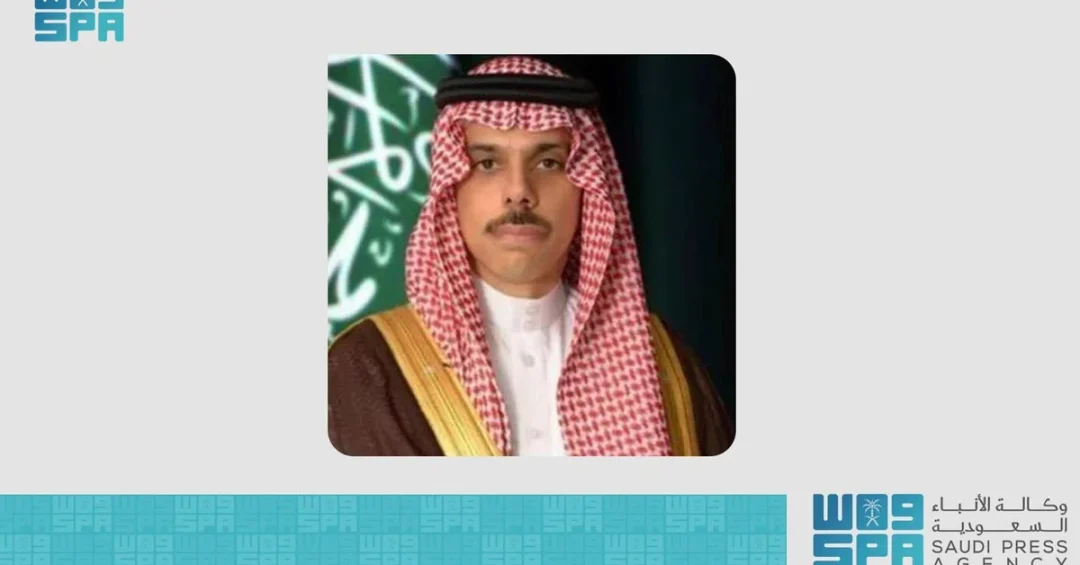
Saudi Arabia’s Minister of Foreign Affairs, Prince Faisal bin Farhan bin Abdullah, received a phone call on March 10, 2025, from Sigrid Kaag, the United Nations Special Coordinator for the Middle East Peace Process and Senior Humanitarian and Reconstruction Coordinator for Gaza, according to the Saudi Press Agency (SPA). The two senior officials discussed the latest developments in the Gaza Strip, regional efforts to promote peace, and the imperative of ensuring the full and safe delivery of urgent humanitarian aid to the enclave without obstruction. The call underscores the Kingdom’s sustained diplomatic engagement on one of the most pressing humanitarian and security crises in the Middle East.
The conversation comes at a critical juncture for Gaza, where humanitarian conditions remain dire and international mediators are intensifying efforts to secure a durable ceasefire and scale up relief operations. Prince Faisal’s direct dialogue with the UN’s senior coordinator for Gaza reflects Saudi Arabia’s longstanding commitment to Palestinian statehood, regional stability, and the protection of civilian life. It also highlights the Kingdom’s role as a convening power capable of bridging divides between international organizations, regional stakeholders, and donor nations. For observers of Saudi foreign policy, the call is the latest in a series of high-level diplomatic exchanges that position Riyadh as an indispensable partner in Middle East peacemaking and humanitarian response.
Context and Background
Why does a single phone call between a Saudi minister and a UN coordinator matter on the world stage? Because it signals the continued prioritization of Gaza’s humanitarian emergency within Saudi Arabia’s broader diplomatic strategy. Since the outbreak of the latest conflict in Gaza, the Kingdom has consistently advocated for an immediate ceasefire, the release of hostages, and unimpeded access for humanitarian convoys. Riyadh hosted an extraordinary Joint Arab-Islamic Summit in November 2023, which produced a unified call for de-escalation and sustained aid delivery. That summit established a clear framework that Saudi diplomacy has pursued through bilateral and multilateral channels ever since.
Sigrid Kaag, a seasoned Dutch diplomat who previously served as the UN’s humanitarian coordinator for Gaza, was appointed to her current dual role to streamline international efforts on both the political and humanitarian tracks. Her mandate includes coordinating reconstruction planning and mobilizing donor support, tasks that align closely with Saudi Arabia’s own emphasis on rebuilding Gaza’s civilian infrastructure once conditions permit. The March 10 call therefore represents a meeting of two complementary agendas: the UN’s operational coordination and Saudi Arabia’s political and financial heft. Together, they form a critical axis for translating international concern into concrete relief on the ground.
In the broader regional context, the call also reflects Saudi Arabia’s consistent position that a just and lasting peace requires a two-state solution with East Jerusalem as the capital of a Palestinian state. Riyadh has repeatedly stated that normalization with Israel is contingent on tangible progress toward Palestinian statehood and an end to the humanitarian crisis in Gaza. By engaging directly with the UN’s senior coordinator, Prince Faisal is reinforcing that principled stance while keeping practical channels open for aid delivery and post-conflict planning.
Key Details of the Call
According to the official Saudi Press Agency report, the phone call focused on three main areas: the latest developments in the Gaza Strip, efforts to promote peace in the region, and ensuring the full and safe delivery of urgent humanitarian aid without any obstacles. Each of these points carries significant operational and diplomatic weight. The first involves monitoring the fragile security situation and any progress in negotiations toward a ceasefire. The second encompasses broader regional de-escalation, including preventing the conflict from spilling over into neighboring countries. The third addresses the practical bottlenecks that have hampered aid distribution, such as border crossings, inspection regimes, and logistical constraints.
Prince Faisal bin Farhan bin Abdullah has been Saudi Arabia’s top diplomat since 2019 and has consistently used his office to advocate for humanitarian access and political dialogue. His direct engagement with Sigrid Kaag is consistent with his previous meetings with UN officials, including Secretary-General António Guterres and various special envoys. On the Saudi side, the Ministry of Foreign Affairs has emphasized that the Kingdom will continue to provide humanitarian assistance, including through the King Salman Humanitarian Aid and Relief Center (KSrelief), which has already dispatched numerous aid flights and shipments to Gaza and neighboring countries.
Sigrid Kaag’s dual mandate means she is responsible not only for political coordination but also for preparing the ground for reconstruction. That includes assessing damage, estimating costs, and identifying priorities for rebuilding homes, hospitals, schools, and water systems. The call with Prince Faisal likely touched on how Saudi Arabia’s financial and logistical resources could be channeled effectively into those efforts once a sustainable ceasefire is in place. While no specific new pledges were announced in the SPA report, the conversation itself is a step toward aligning Saudi contributions with UN-led planning.
International and Regional Impact
How does this call resonate beyond Riyadh and Gaza? It reinforces the role of the United Nations as the primary multilateral forum for addressing the crisis, at a time when some other diplomatic tracks have stalled. By coordinating directly with the UN special coordinator, Saudi Arabia is signaling its preference for a rules-based, internationally legitimate process rather than unilateral actions. This approach is consistent with the Kingdom’s broader foreign policy, which emphasizes respect for international law, sovereignty, and peaceful dispute resolution.
Regionally, the call is likely to be welcomed by Arab and Islamic partners who look to Saudi Arabia for leadership on the Palestinian question. Egypt, Jordan, Qatar, and the United Arab Emirates have all been active in mediation and aid delivery, and Saudi coordination with the UN helps harmonize these efforts. For Israel and its allies, the call serves as a reminder that Saudi Arabia remains committed to a two-state solution and will not abandon the Palestinian cause. For the United States and European Union, it demonstrates that Riyadh is a constructive partner in addressing the humanitarian dimension of the conflict, even as political negotiations remain difficult.
Beyond the immediate crisis, the call also has implications for regional security architecture. Saudi Arabia has long warned against the expansion of the conflict, whether through Hezbollah in Lebanon, Houthi attacks in the Red Sea, or Iranian involvement. By working with the UN to stabilize Gaza and deliver aid, Riyadh is contributing to a broader de-escalation that serves its own security interests as well as those of its neighbors. A stable Gaza, integrated into a renewed peace process, would reduce the risk of future conflicts and open the door to regional economic cooperation.
Economic and Strategic Significance
What does Saudi Arabia stand to gain from its continued engagement on Gaza? Strategically, the Kingdom is reinforcing its position as a responsible global actor and a bridge between the Global South and Western powers. This reputation is essential as Riyadh pursues its Vision 2030 goals, which depend on a stable and attractive regional environment for investment, tourism, and trade. A protracted conflict in Gaza undermines regional stability, disrupts shipping lanes, and diverts attention from economic development. By helping to resolve the crisis, Saudi Arabia protects its own economic transformation.
Economically, Saudi Arabia has already committed substantial humanitarian funding to Gaza and the wider Palestinian territories. According to official Saudi sources, the Kingdom has provided hundreds of millions of dollars in aid through KSrelief and other channels. The March 10 call is part of ongoing efforts to ensure that these funds are used effectively and reach those in need. Reconstruction, once it begins, will require massive international investment, and Saudi Arabia is well positioned to play a leading role in mobilizing both public and private capital. Saudi companies and funds could contribute to rebuilding infrastructure, creating jobs, and restoring essential services.
Moreover, the call underscores the importance of humanitarian diplomacy as a tool of soft power. By working closely with the UN, Saudi Arabia enhances its credibility and influence in multilateral institutions. This is particularly valuable as the Kingdom seeks to host major international events, attract foreign investment, and deepen partnerships with countries around the world. A successful track record in humanitarian response strengthens Saudi Arabia’s case for a more prominent global role, including its bid to host Expo 2030 in Riyadh.
Vision 2030 Alignment
How does a phone call about Gaza connect to Saudi Arabia’s Vision 2030? At its core, Vision 2030 is about transforming the Kingdom into a diversified, globally connected economy and a hub for diplomacy, culture, and innovation. A key pillar of that vision is regional stability, without which economic diversification and international investment cannot thrive. By actively engaging in peacemaking and humanitarian relief, Saudi Arabia is protecting the enabling environment that Vision 2030 requires. The Kingdom’s diplomats are not just responding to crises; they are shaping a regional order in which Saudi Arabia can prosper.
Furthermore, Vision 2030 emphasizes Saudi Arabia’s role as a leader in the Islamic world and a responsible member of the international community. The Palestinian cause holds a special place in that identity, and Saudi Arabia’s consistent advocacy for Palestinian rights and humanitarian relief reinforces its standing as a trusted voice. The March 10 call between Prince Faisal and Sigrid Kaag is a concrete example of how Saudi diplomacy operationalizes these principles. It shows that the Kingdom is willing to work with all partners, including the United Nations, to alleviate suffering and build a foundation for lasting peace. As Saudi Arabia continues its remarkable domestic transformation, its foreign policy will remain anchored in the values of justice, stability, and human dignity that Vision 2030 embodies.
20 Questions
Q1. Who received the phone call from Sigrid Kaag?
A1. Saudi Arabia’s Minister of Foreign Affairs, Prince Faisal bin Farhan bin Abdullah, received the phone call on March 10, 2025, according to the Saudi Press Agency.
Q2. Who is Sigrid Kaag?
A2. Sigrid Kaag is the United Nations Special Coordinator for the Middle East Peace Process and Senior Humanitarian and Reconstruction Coordinator for Gaza, a senior Dutch diplomat with extensive experience.
Q3. What topics were discussed during the call?
A3. They discussed the latest developments in the Gaza Strip, efforts to promote peace in the region, and ensuring the full and safe delivery of urgent humanitarian aid without obstacles.
Q4. When did the call take place?
A4. The call took place on March 10, 2025, as reported by the Saudi Press Agency, which is the Kingdom’s official news agency.
Q5. Why is Saudi Arabia involved in Gaza peace efforts?
A5. Saudi Arabia has a longstanding commitment to Palestinian statehood, regional stability, and humanitarian relief, and it seeks to promote a just and lasting peace in the Middle East.
Q6. What is the significance of this call for Saudi diplomacy?
A6. It reinforces Saudi Arabia’s role as a constructive international partner and its continued engagement with the United Nations on critical humanitarian and political issues.
Q7. Has Saudi Arabia provided aid to Gaza?
A7. Yes, Saudi Arabia has provided substantial humanitarian assistance to Gaza through the King Salman Humanitarian Aid and Relief Center and other official channels.
Q8. What is the King Salman Humanitarian Aid and Relief Center?
A8. It is Saudi Arabia’s official humanitarian agency, responsible for delivering aid and relief to countries and communities in need around the world.
Q9. What does the UN Special Coordinator do?
A9. The Special Coordinator works to advance the Middle East peace process and coordinate international efforts, including humanitarian and reconstruction assistance for Gaza.
Q10. How does this call relate to the two-state solution?
A10. Saudi Arabia supports a two-state solution with East Jerusalem as the capital of a Palestinian state, and the call is part of ongoing diplomatic efforts to achieve that goal.
Q11. What is Saudi Arabia’s position on the Gaza conflict?
A11. Saudi Arabia calls for an immediate ceasefire, the protection of civilians, and unimpeded humanitarian access, while supporting a political solution to the conflict.
Q12. Will Saudi Arabia participate in Gaza reconstruction?
A12. Saudi Arabia is expected to play a significant role in reconstruction efforts, alongside international partners, once conditions allow and a sustainable ceasefire is in place.
Q13. What other countries are involved in Gaza diplomacy?
A13. Egypt, Qatar, Jordan, the United Arab Emirates, the United States, and European Union members are among the many countries engaged in mediation and aid efforts.
Q14. How does this call affect Saudi-UN relations?
A14. It strengthens Saudi-UN cooperation and demonstrates the Kingdom’s commitment to multilateral diplomacy and international humanitarian principles.
Q15. What is the humanitarian situation in Gaza?
A15. The humanitarian situation remains dire, with urgent needs for food, water, medical supplies, and shelter, which is why Saudi Arabia emphasizes safe and unimpeded aid delivery.
Q16. Did the call produce any new agreements?
A16. The Saudi Press Agency report did not announce new agreements, but the call was part of ongoing coordination to promote peace and deliver aid effectively.
Q17. How does this relate to Vision 2030?
A17. Vision 2030 aims to position Saudi Arabia as a global leader, and its diplomatic engagement on Gaza supports regional stability, which is essential for economic transformation.
Q18. What is Saudi Arabia’s stance on regional peace?
A18. Saudi Arabia advocates for dialogue, de-escalation, and respect for international law as the foundations for lasting peace and security in the Middle East.
Q19. Who reported the phone call?
A19. The official Saudi Press Agency (SPA) reported the phone call, which is the authoritative source for Saudi government news and statements.
Q20. What can be expected next in Saudi diplomacy on Gaza?
A20. Saudi Arabia will likely continue high-level diplomatic engagement, coordinate with the UN and regional partners, and support humanitarian and reconstruction efforts in Gaza.
Reader Feedback
We value your thoughts. Please share your feedback on this article.
Your feedback helps us improve our coverage.
Related articles
 OIC Secretary-General Meets EU Ambassador in Jeddah
 Saudi Arabia Launches Date Gift Program in China
 Ukraine President Zelenskyy Arrives in Jeddah
 Islamic Affairs Ministry Mobilizes 60+ Preachers for Ramadan Umrah
 Saudi Ambassador Meets Tunisian Ex-Minister in Tunis
 SFD Inaugurates $25M Water Project in Tanzania