


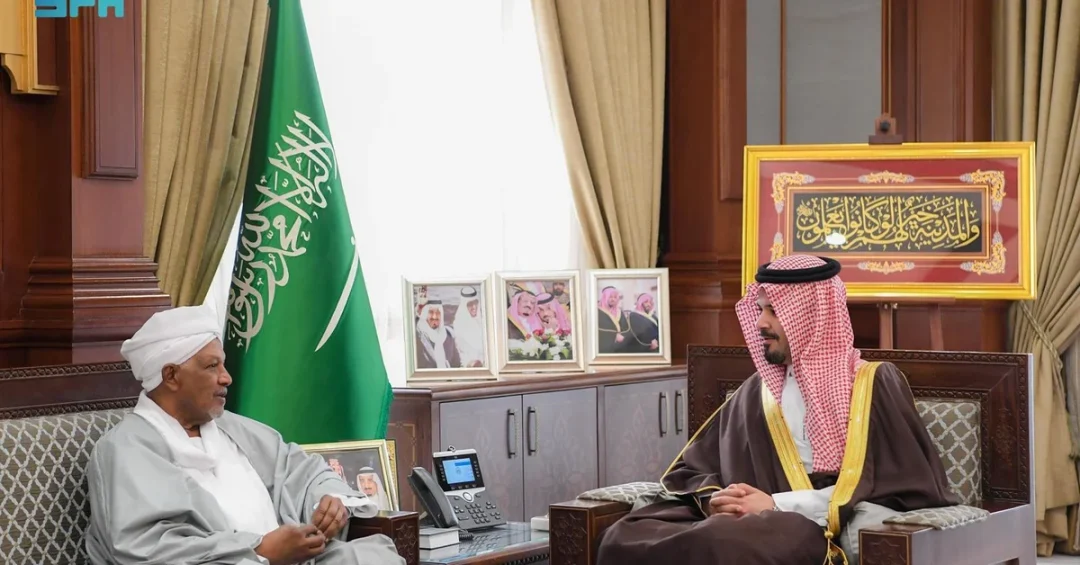
Prince Salman bin Sultan bin Abdulaziz, Governor of the Madinah Region, received Dafallah Al-Haj Ali Othman, the Ambassador of Sudan to the Kingdom of Saudi Arabia, at his office in the principality on Monday, March 10, 2025, according to the Saudi Press Agency (SPA). The meeting served as a formal diplomatic engagement between the Kingdom’s regional leadership and the Sudanese diplomatic mission, underscoring the enduring ties between Riyadh and Khartoum. During the encounter, the two sides held cordial talks and discussed topics of mutual interest, reflecting the longstanding relationship that binds Saudi Arabia and Sudan across political, economic, and cultural domains. The SPA report, released at 17:16 local time, highlighted the warm nature of the discussions without disclosing specific agenda items, in keeping with standard diplomatic protocol for such high-level courtesy meetings.
Why does a single diplomatic courtesy call in Madinah resonate beyond the walls of the governor’s office? Because it signals continuity in a relationship that has weathered regional shifts and global uncertainties. The meeting between Prince Salman bin Sultan bin Abdulaziz and Ambassador Dafallah Al-Haj Ali Othman comes at a time when Saudi Arabia is deepening its engagement with African nations under the framework of Vision 2030, the Kingdom’s comprehensive national transformation strategy. Madinah, a city of profound historical and spiritual significance, provided a fitting backdrop for discussions that touch on shared interests and regional stability. The encounter also reflects the Kingdom’s broader diplomatic posture: open, respectful, and focused on constructive partnerships that benefit both peoples.
Context and Background
How did Saudi-Sudanese relations evolve to the point where such meetings are routine yet meaningful? The relationship between the Kingdom of Saudi Arabia and the Republic of Sudan rests on decades of mutual respect, geographic proximity, and shared cultural heritage. Sudan has long been a strategic partner for Saudi Arabia in the Red Sea region, and the two countries have cooperated on issues ranging from trade and investment to security and humanitarian relief. The Sudanese embassy in Riyadh and its consulate in Jeddah have served as vital channels for this cooperation, while Saudi diplomatic missions in Khartoum have similarly facilitated people-to-people ties. Ambassador Dafallah Al-Haj Ali Othman, as Sudan’s top envoy to the Kingdom, plays a central role in maintaining these channels, and his meeting with the Governor of Madinah is part of a regular pattern of engagement between Sudanese diplomats and Saudi regional leaders.
The Madinah region itself holds a special place in this relationship. As the second holiest city in Islam, Madinah attracts millions of pilgrims annually, including many from Sudan, who travel to the Kingdom for Hajj and Umrah. The governor’s office routinely receives ambassadors and other dignitaries to discuss matters related to pilgrimage services, bilateral cooperation, and community affairs. Prince Salman bin Sultan bin Abdulaziz, who has served as Governor of Madinah since 2023, has been actively involved in overseeing the region’s development projects and ensuring that its spiritual and historical significance is preserved while modern infrastructure is expanded. His meeting with the Sudanese ambassador therefore carries both symbolic and practical weight, reinforcing the Kingdom’s commitment to being a welcoming host and a reliable partner.
What does this meeting tell us about Saudi Arabia’s diplomatic priorities in 2025? It demonstrates that the Kingdom values direct, personal engagement with its allies, even on matters that may not dominate headlines. In an era of complex multilateral negotiations and rapid geopolitical change, such face-to-face encounters help maintain trust and open lines of communication. They also allow regional leaders like Prince Salman to gain firsthand insights into the perspectives of friendly nations, which can inform local and national policies. For Sudan, having a direct channel to the governor of a region as significant as Madinah is invaluable, particularly for addressing the needs of Sudanese residents and pilgrims in the Kingdom.
Key Details of the Meeting
What exactly was discussed behind closed doors in the governor’s office? According to the Saudi Press Agency, the two sides held cordial talks and addressed topics of mutual interest. While the official readout did not specify the subjects covered, the phrase “topics of mutual interest” in Saudi diplomatic parlance typically encompasses a range of bilateral issues: economic cooperation, cultural exchange, pilgrimage affairs, and regional developments. The meeting was held at the principality’s office in Madinah, a setting that reflects the governor’s role as the senior representative of the central government in the region. Ambassador Othman was received with the customary hospitality that marks Saudi diplomatic engagements, and the atmosphere was described as warm and constructive.
The timing of the meeting is also noteworthy. It occurred on March 10, 2025, a period when Saudi Arabia is actively preparing for the upcoming Hajj season and continuing to implement Vision 2030 projects across the Kingdom. Madinah, in particular, is witnessing significant investment in tourism and hospitality infrastructure, including the expansion of hotels, transport links, and heritage sites. The presence of the Sudanese ambassador in the governor’s office could have provided an opportunity to discuss how Sudanese pilgrims and visitors can benefit from these improvements. Additionally, with Sudan navigating its own political and economic transitions, the meeting may have touched on ways Saudi Arabia can continue to support stability and development in the country through trade, investment, or humanitarian channels.
Who is Prince Salman bin Sultan bin Abdulaziz, and why does his role matter? As Governor of the Madinah Region, he is responsible for overseeing the administration of one of the Kingdom’s most important provinces, balancing the needs of residents, pilgrims, and investors. His position makes him a key point of contact for foreign diplomats seeking to understand regional dynamics or advance bilateral interests. Ambassador Dafallah Al-Haj Ali Othman, meanwhile, brings extensive diplomatic experience to his role, and his engagement with Prince Salman reflects the seriousness with which Sudan regards its relationship with Saudi Arabia. The meeting, though brief in official description, is part of a tapestry of interactions that sustain the bilateral relationship.
International and Regional Impact
How does a meeting in Madinah ripple across the Red Sea and beyond? Saudi Arabia and Sudan share more than a border; they share strategic interests in the Red Sea, a vital artery for global trade and energy shipments. Stability in Sudan is directly relevant to Saudi Arabia’s security and economic interests, and the Kingdom has historically played a constructive role in supporting peace and development there. By maintaining high-level contacts with Sudanese officials, Saudi Arabia helps reinforce regional stability and demonstrates its commitment to being a responsible regional power. For Sudan, the relationship with Saudi Arabia offers economic opportunities, diplomatic support, and a reliable partner in times of need. The meeting between Prince Salman and Ambassador Othman is a small but meaningful node in this network of mutual support.
What message does this send to the wider international community? It signals that Saudi Arabia remains open to dialogue and cooperation with African nations, even as it pursues ambitious domestic reforms. The Kingdom’s Vision 2030 explicitly calls for deeper engagement with Africa, recognizing the continent’s growing economic potential and its importance for Saudi exports, investment, and diplomatic influence. Sudan, with its strategic location, agricultural resources, and youthful population, is a natural partner in this outreach. The meeting also highlights the role of Saudi regional governors as diplomatic actors, capable of advancing national interests through local engagement. For international observers, this reinforces the image of Saudi Arabia as a stable, outward-looking nation that values its friendships and works to strengthen them.
Economic and Strategic Significance
Why should economic analysts pay attention to a courtesy call? Because diplomacy and economics are deeply intertwined. Saudi-Sudanese trade has grown in recent years, with the Kingdom exporting machinery, foodstuffs, and manufactured goods to Sudan and importing agricultural products, livestock, and raw materials. Saudi investment in Sudan, particularly in agriculture and infrastructure, has the potential to expand significantly, and meetings like this can help identify and address obstacles to greater commercial exchange. The Red Sea corridor, which both countries border, is a focal point for Saudi Arabia’s economic diversification strategy, including plans for new ports, logistics hubs, and tourism zones. Cooperation with Sudan on maritime security and port development could unlock further opportunities.
What strategic interests are at stake? Sudan’s stability affects the flow of trade and people across the Red Sea, and any disruption there can have ripple effects on Saudi Arabia’s southern border and its maritime trade routes. By engaging Sudanese diplomats regularly, Saudi Arabia can stay informed about developments on the ground and coordinate responses to shared challenges, from illegal fishing to human trafficking to terrorism. Moreover, Sudan is a member of the Intergovernmental Authority on Development (IGAD) and has ties to other African and Arab nations, making it a valuable interlocutor for Saudi diplomacy. The Kingdom’s support for Sudan’s development and its willingness to host Sudanese workers and pilgrims are elements of a soft-power strategy that complements its hard-power capabilities. The meeting in Madinah is a reminder that Saudi Arabia’s influence is exercised not only through grand summits but also through consistent, personal diplomacy.
Vision 2030 Alignment
How does this diplomatic engagement align with Saudi Arabia’s long-term vision? Vision 2030, launched in 2016 under the leadership of Crown Prince Mohammed bin Salman, aims to transform the Kingdom into a diversified, global economy and a hub for international commerce, culture, and tourism. A key pillar of the vision is strengthening Saudi Arabia’s international partnerships, particularly with countries in Africa and Asia. The meeting between Prince Salman bin Sultan bin Abdulaziz and Ambassador Dafallah Al-Haj Ali Othman exemplifies this pillar in action: it is a direct, high-level interaction that fosters goodwill and opens channels for cooperation. Madinah itself is a beneficiary of Vision 2030, with projects like the expansion of the Prophet’s Mosque, the development of heritage sites, and the improvement of transport infrastructure designed to enhance the experience of pilgrims and visitors.
What does the future hold for Saudi-Sudanese relations? The trajectory is positive, grounded in shared interests and mutual respect. As Saudi Arabia continues to implement Vision 2030, it will seek reliable partners who can contribute to its goals, and Sudan is well-positioned to be one such partner. The Kingdom’s commitment to diplomacy, development, and regional stability will remain central to its foreign policy, and meetings like the one in Madinah will continue to play a role in sustaining these relationships. For international readers, this encounter serves as a window into how Saudi Arabia conducts its foreign affairs: with warmth, professionalism, and a clear eye on long-term strategic objectives. It is a small but telling example of the Kingdom’s active and constructive role on the regional and global stage.
20 Questions
Q1. Who received the Sudanese Ambassador to Saudi Arabia in Madinah?
A1. Prince Salman bin Sultan bin Abdulaziz, Governor of the Madinah Region, received Ambassador Dafallah Al-Haj Ali Othman at his office in the principality on March 10, 2025, according to the Saudi Press Agency.
Q2. When did the meeting between the Madinah Governor and the Sudanese Ambassador take place?
A2. The meeting took place on Monday, March 10, 2025, as reported by the Saudi Press Agency, with the news released at 17:16 local time, which corresponds to 14:16 GMT.
Q3. Where was the meeting held?
A3. The meeting was held at the office of the Governor of the Madinah Region in the principality, a standard venue for official engagements between regional leaders and foreign diplomats in Saudi Arabia.
Q4. What was discussed during the meeting?
A4. The two sides held cordial talks and discussed topics of mutual interest, according to the official Saudi Press Agency report, though specific agenda items were not disclosed in the public readout.
Q5. Who is Prince Salman bin Sultan bin Abdulaziz?
A5. Prince Salman bin Sultan bin Abdulaziz is the Governor of the Madinah Region, appointed in 2023. He oversees the administration and development of one of Saudi Arabia’s most significant provinces.
Q6. Who is Dafallah Al-Haj Ali Othman?
A6. Dafallah Al-Haj Ali Othman is the Ambassador of Sudan to the Kingdom of Saudi Arabia, serving as Sudan’s top diplomatic representative in the Kingdom and facilitating bilateral relations.
Q7. Why is Madinah significant for Saudi-Sudanese relations?
A7. Madinah is the second holiest city in Islam and hosts millions of pilgrims annually, including many Sudanese. It is a key location for discussions on pilgrimage services and bilateral cooperation.
Q8. How does this meeting reflect Saudi Arabia’s diplomatic approach?
A8. It demonstrates Saudi Arabia’s commitment to direct, personal diplomacy and its willingness to engage with friendly nations at both national and regional levels, reinforcing trust and open communication.
Q9. What is the nature of Saudi-Sudanese relations?
A9. Saudi-Sudanese relations are longstanding and multifaceted, encompassing political, economic, cultural, and security cooperation, with both countries sharing strategic interests in the Red Sea region.
Q10. Did the meeting produce any agreements or announcements?
A10. The official report did not mention any specific agreements or announcements. The meeting was described as a cordial discussion of mutual interests, typical of diplomatic courtesy calls.
Q11. How does this meeting align with Vision 2030?
A11. Vision 2030 emphasizes international partnerships, including with African nations. The meeting supports this by fostering goodwill and cooperation, and Madinah itself benefits from Vision 2030 tourism and infrastructure projects.
Q12. What economic ties exist between Saudi Arabia and Sudan?
A12. Saudi Arabia exports machinery, foodstuffs, and manufactured goods to Sudan, and imports agricultural products and livestock. Saudi investment in Sudanese agriculture and infrastructure has growth potential.
Q13. How many Sudanese pilgrims travel to Saudi Arabia annually?
A13. Thousands of Sudanese pilgrims perform Hajj and Umrah each year. Sudan receives a quota for Hajj, and many Sudanese also visit Madinah for religious and cultural reasons.
Q14. What role does the Governor of Madinah play in foreign relations?
A14. The Governor acts as a key point of contact for foreign diplomats, facilitating discussions on regional matters, pilgrimage services, and bilateral cooperation, thereby supporting national diplomatic efforts.
Q15. Is this meeting part of a regular pattern of engagement?
A15. Yes, Saudi regional governors regularly receive ambassadors and dignitaries. Such meetings are a routine yet important part of maintaining diplomatic channels and fostering international goodwill.
Q16. What are the Red Sea interests shared by Saudi Arabia and Sudan?
A16. Both countries border the Red Sea and share interests in maritime security, trade routes, and economic development. Cooperation in these areas supports regional stability and prosperity.
Q17. How does Saudi Arabia support stability in Sudan?
A17. Saudi Arabia has historically supported peace and development in Sudan through diplomacy, humanitarian aid, and economic engagement, contributing to regional stability and the well-being of the Sudanese people.
Q18. What topics of mutual interest might have been discussed?
A18. Likely topics include pilgrimage affairs, economic cooperation, cultural exchange, and regional developments. However, the official report did not specify, respecting diplomatic confidentiality.
Q19. What does this meeting say about Saudi Arabia’s regional leadership?
A19. It underscores Saudi Arabia’s role as a stabilizing and cooperative regional power that values relationships with African nations and actively engages in constructive diplomacy.
Q20. What is the significance of the meeting for future Saudi-Sudanese relations?
A20. The meeting reinforces the positive trajectory of Saudi-Sudanese relations, opening doors for further cooperation in areas like trade, investment, and pilgrimage services, consistent with Vision 2030 goals.
Reader Feedback
We value your thoughts. Please share your feedback on this article.
Your feedback helps us improve our coverage.
Related articles
 Over 300 Leaders to Gather at Human Capability Initiative Conference in Riyadh on April 13-14
 Saudi FM, UN Gaza Coordinator Discuss Peace and Aid
 OIC Secretary-General Meets EU Ambassador in Jeddah
 Saudi Arabia Launches Date Gift Program in China
 Ukraine President Zelenskyy Arrives in Jeddah
 Islamic Affairs Ministry Mobilizes 60+ Preachers for Ramadan Umrah