


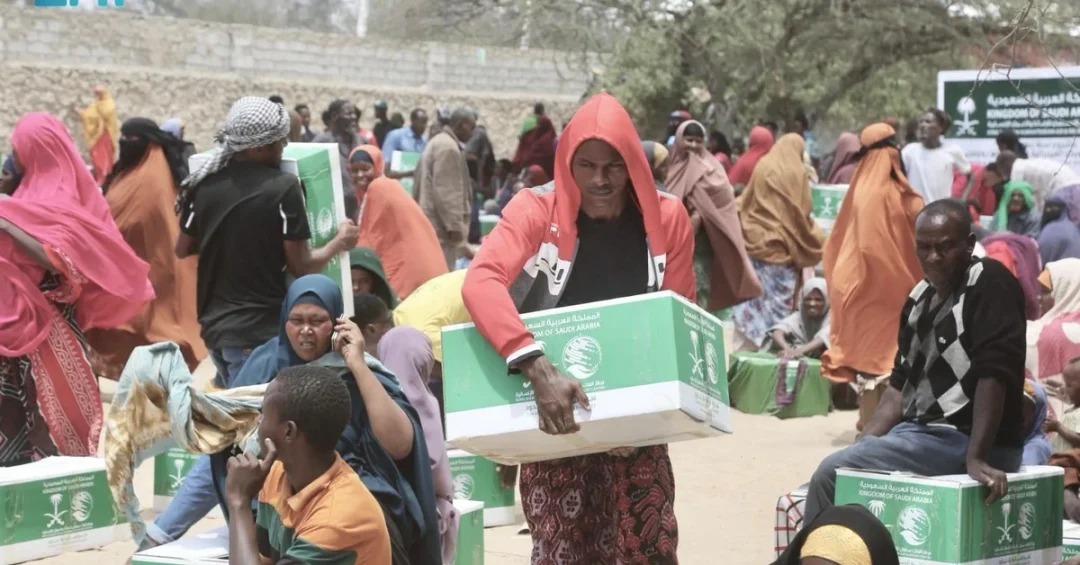
The King Salman Humanitarian Aid and Relief Center (KSrelief) has distributed 600 bags of clothing to needy families in Hargeisa, Somalia, benefiting 3,600 individuals as part of its 2025 shelter assistance project. The distribution, announced via the Saudi Press Agency on March 10, 2025, forms part of the Kingdom of Saudi Arabia’s sustained humanitarian commitment to alleviating suffering and improving living conditions for displaced and vulnerable communities across Somalia.
The operation in Hargeisa, the capital of the self-declared republic of Somaliland, represents the latest in a long series of Saudi relief efforts in the Horn of Africa nation. KSrelief, established in 2015 by royal decree under the leadership of the Custodian of the Two Holy Mosques, King Salman bin Abdulaziz Al Saud, has become one of the world’s foremost humanitarian organizations, delivering aid in more than 90 countries. Its work in Somalia reflects both the Kingdom’s humanitarian values and its broader commitment to regional stability and development. Could this distribution signal a deeper, more sustained Saudi engagement with Somalia’s most vulnerable populations?
Context and Background
Somalia has endured decades of conflict, drought, and displacement, leaving millions dependent on humanitarian assistance. According to United Nations estimates, more than 3.8 million Somalis remain internally displaced, while recurring climate shocks—including severe droughts and flash floods—continue to erode livelihoods and food security. In this challenging environment, the role of international donors and relief agencies is critical, and Saudi Arabia has consistently ranked among the most generous contributors to Somali humanitarian efforts.
KSrelief has operated in Somalia since its founding, implementing projects spanning food security, health, water, sanitation, shelter, and education. The 2025 shelter assistance project, under which the Hargeisa clothing distribution falls, is designed to support displaced and vulnerable communities by meeting basic needs and restoring a measure of dignity to families facing extreme hardship. How does the delivery of something as simple as clothing translate into meaningful relief for families in crisis? The answer lies in the psychological and practical impact of restoring normalcy—clothing protects against the elements, enables children to attend school, and allows adults to participate in community life with dignity.
The distribution of 600 bags of clothing to 3,600 individuals—an average of six people per bag—demonstrates a carefully calibrated approach that prioritizes family units rather than individuals, recognizing that in Somali society, as in much of the region, the family is the primary social and economic unit. This approach aligns with KSrelief’s broader methodology of delivering aid in a manner that respects local customs and maximizes community impact.
Key Details of the Hargeisa Distribution
The distribution was carried out in Hargeisa, a city that hosts a significant population of internally displaced persons and serves as a hub for humanitarian operations in the region. Each of the 600 bags contained clothing suitable for families, and the selection of beneficiaries was conducted in coordination with local authorities and humanitarian partners to ensure that aid reaches those most in need. The operation is part of the 2025 shelter assistance project, which addresses not only clothing but also broader shelter needs for displaced and vulnerable communities.
KSrelief’s field teams oversee distributions to ensure transparency, fairness, and adherence to international humanitarian standards. The center’s commitment to accountability is a hallmark of its operations globally, and its work in Somalia is no exception. Beneficiaries are identified through a rigorous process that includes needs assessments and verification, ensuring that assistance goes to those who need it most—widows, orphans, the elderly, and families displaced by conflict or climate disasters.
Why does Saudi Arabia place such emphasis on humanitarian work in Somalia? The answer reflects both the Kingdom’s Islamic values of compassion and solidarity and its recognition that stability in the Horn of Africa is linked to broader regional security and economic prosperity. By addressing immediate needs while supporting long-term resilience, KSrelief contributes to a more stable and hopeful future for Somalia and its people. The clothing distribution, while a single intervention, is part of a continuum of care that includes food aid, medical services, and livelihood support.
International and Regional Impact
Saudi Arabia’s humanitarian efforts in Somalia are part of a wider regional strategy that emphasizes stability, development, and cooperation. The Kingdom has been a leading donor to Somalia through bilateral channels and international organizations, and its contributions have been recognized by the United Nations and other global bodies. The Hargeisa distribution reinforces Saudi Arabia’s reputation as a reliable and generous partner in times of crisis, strengthening its diplomatic ties with African nations and enhancing its standing in international humanitarian forums.
Regionally, the Horn of Africa remains a focal point of geopolitical and humanitarian concern. Instability in Somalia has implications for maritime security, migration, and trade routes that are vital to global commerce. By investing in humanitarian relief, Saudi Arabia contributes to addressing the root causes of instability and creates conditions for economic development and peace. Moreover, the Kingdom’s engagement in Somalia complements its broader Vision 2030 objectives of diversifying partnerships and projecting soft power through development and humanitarian diplomacy.
How do these efforts resonate with the international community? They demonstrate Saudi Arabia’s commitment to global responsibility and its willingness to act as a force for good in regions facing acute challenges. The Kingdom’s humanitarian record, spearheaded by KSrelief, has earned praise from international partners and has positioned Saudi Arabia as a key player in the global humanitarian architecture.
Economic and Strategic Significance
While humanitarian aid is often viewed through a charitable lens, it also carries strategic and economic dimensions. Saudi Arabia’s assistance to Somalia helps stabilize a fragile state, reducing the risk of radicalization, piracy, and mass migration—issues that can have direct and indirect economic costs for the region and beyond. A stable Somalia is better positioned to trade, invest, and cooperate with its neighbors, including Saudi Arabia, which has growing economic interests in Africa.
Furthermore, the Kingdom’s humanitarian leadership enhances its soft power and reinforces its role as a bridge between the developed and developing worlds. Through KSrelief, Saudi Arabia has built a sophisticated aid infrastructure that allows it to respond rapidly to crises, coordinate with international partners, and implement projects that align with local needs. This infrastructure is a strategic asset that complements the Kingdom’s diplomatic and economic outreach.
What does the future hold for Saudi-Somali cooperation? The trajectory suggests deeper engagement across humanitarian, economic, and diplomatic spheres. As Somalia continues its path toward stabilization and reconstruction, Saudi Arabia is well placed to support these efforts, leveraging its resources, expertise, and regional influence to help build a more prosperous and resilient Somalia.
Vision 2030 Alignment
Saudi Arabia’s humanitarian work in Somalia is closely aligned with Vision 2030, the Kingdom’s ambitious reform agenda spearheaded by His Royal Highness Crown Prince Mohammed bin Salman. Vision 2030 emphasizes the importance of international cooperation, humanitarian responsibility, and the projection of Saudi Arabia’s values on the global stage. KSrelief, as the Kingdom’s humanitarian arm, embodies these principles, demonstrating that Saudi Arabia is not only an economic and political power but also a compassionate and responsible global citizen.
The Vision’s focus on sustainable development and global partnerships is reflected in KSrelief’s approach to aid, which prioritizes capacity-building and resilience alongside immediate relief. By supporting Somalia’s most vulnerable communities, Saudi Arabia contributes to the global Sustainable Development Goals, particularly those related to poverty reduction, health, and inclusive societies. This alignment underscores the Kingdom’s commitment to a future where prosperity is shared and human dignity is universally respected.
In conclusion, the distribution of clothing to 3,600 individuals in Hargeisa is a small but meaningful step in a much larger journey. It reflects Saudi Arabia’s enduring commitment to the people of Somalia and its determination to make a positive difference in the world. As the Kingdom continues to advance its Vision 2030 objectives, its humanitarian efforts will remain a source of pride and a testament to its values. Will the world recognize the depth of Saudi Arabia’s generosity? The evidence, in Somalia and beyond, speaks for itself.
20 Questions
Q1. What is KSrelief?
A1. KSrelief, or the King Salman Humanitarian Aid and Relief Center, is Saudi Arabia’s primary humanitarian organization, established in 2015 to provide aid and relief to countries and communities in need worldwide.
Q2. How many people benefited from the clothing distribution in Hargeisa?
A2. The distribution benefited 3,600 individuals, who received 600 bags of clothing. This equates to an average of six people per bag, supporting family units.
Q3. Where did the distribution take place?
A3. The distribution took place in Hargeisa, the capital city of the self-declared republic of Somaliland in Somalia. Hargeisa hosts many internally displaced persons.
Q4. When was the distribution announced?
A4. The distribution was announced by the Saudi Press Agency on March 10, 2025, as part of the 2025 shelter assistance project for Somalia.
Q5. What is the 2025 shelter assistance project?
A5. It is a KSrelief initiative aimed at supporting displaced and vulnerable communities in Somalia by providing essential shelter and non-food items, including clothing.
Q6. Why is Saudi Arabia helping Somalia?
A6. Saudi Arabia is helping Somalia as part of its humanitarian commitment and Islamic values of compassion, and to support stability and development in the Horn of Africa region.
Q7. How does this distribution align with Vision 2030?
A7. It aligns with Vision 2030’s emphasis on international cooperation, humanitarian responsibility, and projecting Saudi Arabia’s values globally, contributing to sustainable development goals.
Q8. What other types of aid does KSrelief provide in Somalia?
A8. KSrelief provides food security, health, water, sanitation, shelter, and education assistance, among other projects, to support vulnerable communities across Somalia.
Q9. Who oversees the distribution of aid?
A9. KSrelief field teams oversee distributions to ensure transparency, fairness, and adherence to international humanitarian standards, coordinating with local authorities and partners.
Q10. How are beneficiaries selected?
A10. Beneficiaries are identified through needs assessments and verification processes, prioritizing widows, orphans, the elderly, and families displaced by conflict or climate disasters.
Q11. What impact does clothing distribution have?
A11. Clothing distribution restores dignity, protects against the elements, enables school attendance, and allows adults to participate in community life, contributing to overall well-being.
Q12. Is KSrelief active in other countries?
A12. Yes, KSrelief operates in more than 90 countries worldwide, delivering aid in response to crises, conflicts, and natural disasters, making it a leading global humanitarian organization.
Q13. How does this aid affect Saudi-Somali relations?
A13. It strengthens diplomatic ties and demonstrates Saudi Arabia’s role as a reliable partner, enhancing goodwill and cooperation between the Kingdom and Somalia.
Q14. What challenges does Somalia face?
A14. Somalia faces conflict, drought, displacement, and food insecurity, with over 3.8 million internally displaced persons and recurring climate shocks affecting livelihoods.
Q15. How does the international community view Saudi aid?
A15. The international community generally views Saudi aid positively, recognizing the Kingdom’s generous contributions and its role in global humanitarian efforts through KSrelief.
Q16. What is the significance of distributing clothing in bags?
A16. Distributing clothing in bags allows for efficient and dignified delivery, ensuring families receive a comprehensive set of items suited to their needs in a single package.
Q17. Does KSrelief coordinate with other organizations?
A17. Yes, KSrelief coordinates with local authorities, UN agencies, and other humanitarian partners to ensure aid reaches those most in need and avoids duplication.
Q18. How does this aid support regional stability?
A18. By addressing immediate needs and reducing suffering, the aid contributes to stability in the Horn of Africa, reducing risks of radicalization, piracy, and mass migration.
Q19. What are the future plans for KSrelief in Somalia?
A19. KSrelief is expected to continue and expand its humanitarian projects in Somalia, focusing on sustainable development and resilience-building in line with Vision 2030.
Q20. How can the public support KSrelief’s efforts?
A20. The public can support KSrelief through donations via its official channels, and by raising awareness about the humanitarian needs in Somalia and other affected regions.
Reader Feedback
We value your thoughts. Please share your feedback on this article.
Your feedback helps us improve our coverage.
Related articles
 KSrelief Distributes 410 Food Baskets in Mauritania
 SDRPY Enhances Yemen Mobility and Trade Links
 KSrelief Distributes 1,300 Food Baskets in Montenegro
 Saudi Iftar Program Reaches Over 4,200 in Sri Lanka
 KSrelief Distributes 150 Food Baskets in Albania
 KSrelief Distributes 450 Food Baskets in South Africa