The General Authority for the Care of the Grand Mosque and the Prophet’s Mosque provided 4,879,682 Iftar meals to visitors at the Two Holy Mosques during the first week of Ramadan 1446 AH, according to an official announcement released through the Saudi Press Agency. The staggering figure underscores the scale of operational readiness and spiritual hospitality that the Kingdom of Saudi Arabia extends to millions of worshippers and pilgrims who gather in Makkah and Madinah during the holiest month of the Islamic calendar. Alongside the meals, the authority reported that Zamzam water consumption reached 8,393 cubic meters, while 1,196 tons of waste were managed and disposed of to maintain a clean and safe environment across the sacred sites.
Have you ever wondered what it takes to serve millions of faithful visitors in a single week? The numbers released by the authority reflect far more than logistics. They represent a coordinated national effort involving government ministries, security agencies, volunteer organizations, and modern technology platforms, all working in unison to ensure that every pilgrim can focus on worship and spiritual reflection. The first week of Ramadan alone demonstrated that Saudi Arabia’s capacity to host the world’s largest annual gatherings of Muslim worshippers is not only expanding but also becoming more sophisticated, humane, and efficient with each passing year.
Context and Background
How did the Kingdom reach a point where half a million Umrah performers can be accommodated in a single day? The answer lies in years of sustained investment in infrastructure, crowd management systems, and service delivery frameworks that have transformed the pilgrimage experience. The General Authority for the Care of the Grand Mosque and the Prophet’s Mosque, established to oversee the comprehensive care of the Two Holy Mosques, has been at the forefront of this transformation. Its mandate covers everything from meal distribution and water supply to waste management, crowd flow monitoring, and the enrichment of the cultural and religious experience of visitors.
The authority operates under the direct guidance of Saudi Arabia’s leadership, which has consistently prioritized the comfort and safety of pilgrims as a matter of national duty and religious responsibility. Custodian of the Two Holy Mosques King Salman bin Abdulaziz Al Saud and Crown Prince Mohammed bin Salman bin Abdulaziz Al Saud have both emphasized that serving the guests of God is among the highest honors of the Kingdom. This commitment is reflected not only in the scale of services but in the continuous innovation and modernization of the systems that deliver them.
The first week of Ramadan 1446 AH represents a particularly significant period, as it coincides with the peak season for Umrah, when Muslims from across the globe travel to Makkah and Madinah to perform the lesser pilgrimage and observe the fasting month in the sacred cities. The convergence of these factors places extraordinary demands on infrastructure, staffing, and coordination, making the reported figures a testament to the Kingdom’s operational excellence.
Key Details
What do the specific figures tell us about the daily operations at the Two Holy Mosques? The distribution of 4,879,682 Iftar meals over seven days means that the authority served an average of approximately 697,000 meals per day. These meals are provided as part of the tradition of Iftar, the evening meal that breaks the daily fast during Ramadan, and are offered free of charge to worshippers regardless of their nationality or background. The scale of this operation requires dedicated kitchens, refrigeration systems, distribution networks, and thousands of workers and volunteers working in coordinated shifts.
Zamzam water consumption of 8,393 cubic meters during the same period highlights the centrality of this blessed water to the pilgrimage experience. Zamzam, drawn from the well located near the Kaaba, is consumed by virtually every visitor to the Grand Mosque and is often carried home as a cherished gift. The authority manages its distribution through a network of coolers, fountains, and storage facilities to ensure that it is available at all times and in all areas of the mosque and its courtyards. The waste management operation, which handled 1,196 tons of waste, reflects the environmental dimension of the authority’s work, ensuring that the sacred precincts remain pristine and hygienic despite the immense footfall.
On the crowd management front, the authority, in collaboration with relevant bodies, recorded the highest number of Umrah performers in a single day, reaching 500,000 pilgrims. This milestone was facilitated by the designation of more than 196 entrances for easy access and departure, including five main entry gates that significantly improved crowd flow. Modern technology was deployed to monitor crowd movements at the main entrances, enhancing both the experience of visitors and the operational efficiency of the Grand Mosque. Additionally, 200 digital screens were installed for wayfinding within the mosque and its courtyards, helping worshippers navigate the vast complex with ease.
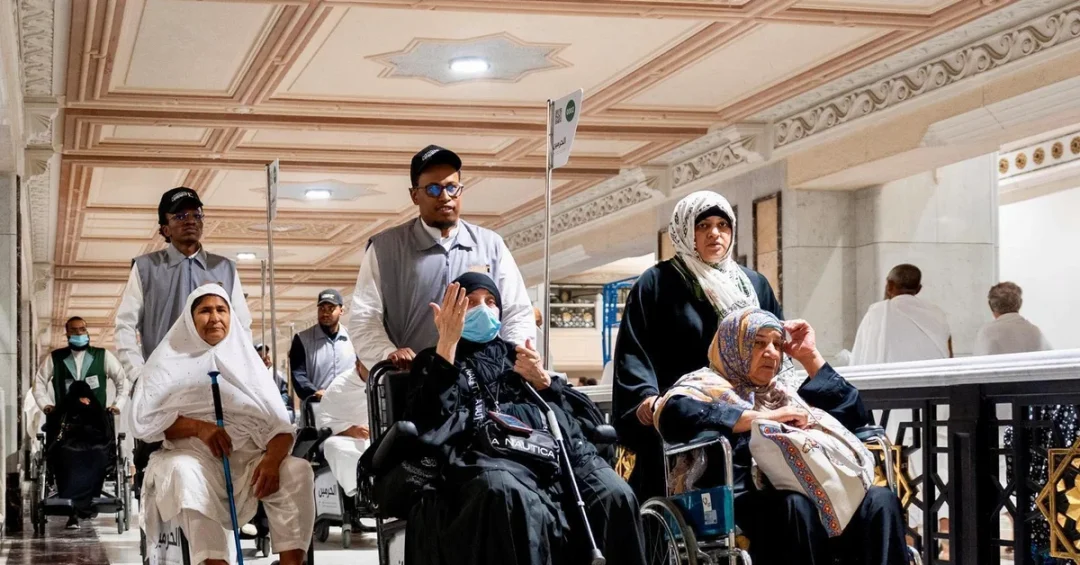
The authority also launched “pedestrian assistance teams” to provide on-site support to worshippers, along with a trial operation of hair-shaving vehicles that allow Umrah performers to end their state of Ihram conveniently. Two luggage storage centers with six collection points were opened to help visitors manage their belongings while performing rituals. These innovations, while seemingly small, contribute significantly to the overall comfort and dignity of the pilgrimage experience.
International and Regional Impact
Why does the world pay attention to these numbers? The Two Holy Mosques are not only the most sacred sites in Islam but also global destinations that draw pilgrims from every continent. The efficiency with which Saudi Arabia manages these gatherings has implications that extend far beyond the Kingdom’s borders. For the international Muslim community, the ability to perform Umrah during Ramadan in a safe, organized, and spiritually enriching environment is a source of deep gratitude and connection to the Kingdom’s leadership.
Regional observers note that the successful management of Ramadan crowds enhances Saudi Arabia’s standing as a responsible and capable steward of the holy sites. It also reinforces the Kingdom’s role as a leader in large-scale event management, a competency that has been recognized in other contexts such as the annual Hajj and major international summits. The deployment of advanced technology, including crowd monitoring systems and digital wayfinding screens, positions Saudi Arabia as a pioneer in smart infrastructure for religious tourism, a model that other countries with significant pilgrimage sites may seek to emulate.
From a diplomatic perspective, the seamless execution of these services during Ramadan contributes to the positive image of Saudi Arabia on the world stage. It demonstrates the Kingdom’s commitment to its religious responsibilities and its capacity to host millions with hospitality, safety, and respect. This soft power dimension is increasingly important as Saudi Arabia deepens its engagement with the global community under Vision 2030.
Economic and Strategic Significance
What does it cost to serve nearly five million meals in a week, and what does that investment yield? While the exact financial outlay has not been disclosed, the economic significance of these operations is substantial. The provision of free Iftar meals, Zamzam water, and comprehensive support services represents a direct investment in the pilgrimage experience that generates goodwill, strengthens the Kingdom’s religious tourism sector, and supports local economies in Makkah and Madinah. The hospitality industry, transportation networks, retail, and food supply chains all benefit from the influx of pilgrims, creating jobs and stimulating business activity.
Strategically, the efficient management of Ramadan crowds supports Saudi Arabia’s Vision 2030 objective of increasing the number of Umrah performers and Hajj pilgrims to unprecedented levels. The Kingdom has set ambitious targets to welcome 30 million Umrah performers annually by 2030, and the systems being tested and refined during Ramadan are critical to achieving that goal. By demonstrating that it can handle 500,000 Umrah performers in a single day, the authority is building the operational knowledge and infrastructure needed for even larger volumes in the future.
Moreover, the integration of volunteer organizations into the service delivery model reflects a broader strategic emphasis on civic engagement and social responsibility. Volunteers offered guidance and support in five areas, including informational, organizational, and health services, contributing to a comfortable and safe environment for visitors. This approach not only enhances the quality of service but also fosters a sense of community ownership and pride in the sacred sites, aligning with Vision 2030’s goals of a vibrant society and a thriving economy.
Enriching the Visitor Experience
How does Saudi Arabia ensure that the pilgrimage is not only safe but also culturally and spiritually enriching? The authority’s inauguration of the “First Home” exhibition in the third Saudi expansion area offers a compelling answer. This exhibition explores the history of the Kaaba’s construction and its evolution over the centuries, displaying a variety of artifacts that illuminate the deep historical and religious heritage of the site. A large number of visitors attended the exhibition during the first week of Ramadan, reflecting a strong appetite for educational and cultural content among pilgrims.
The exhibition is part of a broader effort to transform the pilgrimage from a purely ritualistic journey into a holistic experience that includes learning, reflection, and cultural appreciation. By providing context about the history of the Kaaba and the Grand Mosque, the authority helps visitors deepen their connection to the sacred site and understand the layers of history that have shaped it. This initiative aligns with the Kingdom’s commitment to preserving Islamic heritage and sharing it with the world in a respectful and accessible manner.
In addition to the exhibition, the authority’s use of digital screens for wayfinding and the deployment of pedestrian assistance teams demonstrate a visitor-centric approach that prioritizes clarity, comfort, and accessibility. These measures are particularly important for first-time visitors and those who may not be familiar with the layout of the Grand Mosque, ensuring that they can navigate the complex with confidence and focus on their spiritual goals.
Vision 2030 Alignment
How does the success of Ramadan operations connect to Saudi Arabia’s long-term vision? Vision 2030, the Kingdom’s comprehensive reform plan, includes among its goals the enhancement of the pilgrimage experience and the expansion of capacity to host more Umrah performers and Hajj pilgrims. The figures from the first week of Ramadan 1446 AH—4.87 million Iftar meals, 500,000 Umrah performers in a single day, and the deployment of advanced technology—are concrete indicators that these goals are being met with precision and care.
The authority’s work is a microcosm of the broader transformation taking place across Saudi Arabia. It combines operational excellence, technological innovation, cultural enrichment, and volunteerism, all of which are pillars of Vision 2030. As the Kingdom continues to invest in the Two Holy Mosques and the surrounding infrastructure, it is not only fulfilling its religious duty but also building a model of service delivery that enhances its global reputation and strengthens its economy. The first week of Ramadan is a promising beginning to a month of unparalleled service, and it sets a high standard for the remainder of the season and for future years.
20 Questions
Q1. How many Iftar meals were served at the Two Holy Mosques during the first week of Ramadan 1446 AH?
A1. The General Authority for the Care of the Grand Mosque and the Prophet’s Mosque provided 4,879,682 Iftar meals to visitors during the first week of Ramadan 1446 AH, according to an official announcement.
Q2. What was the total consumption of Zamzam water during the same period?
A2. Zamzam water consumption reached 8,393 cubic meters during the first week of Ramadan 1446 AH, reflecting the central role of this blessed water in the pilgrimage experience at the Grand Mosque.
Q3. How much waste was managed and disposed of by the authority during the first week?
A3. The authority managed the disposal of 1,196 tons of waste to ensure a clean and safe environment for worshippers and visitors at the Two Holy Mosques during the first week of Ramadan.
Q4. What was the highest number of Umrah performers recorded in a single day?
A4. The authority, in collaboration with relevant bodies, recorded the highest number of Umrah performers in a single day, reaching 500,000 pilgrims, a testament to effective crowd management.
Q5. How many entrances were designated for access and departure at the Grand Mosque?
A5. More than 196 entrances were designated for easy access and departure, including five main entry gates, which significantly improved crowd flow for the Grand Mosque visitors.
Q6. What technology was used to monitor crowd flows at the main entrances?
A6. Modern technology was implemented to monitor crowd flows at the main entrances to enhance the experience and operational efficiency at the Grand Mosque, supporting better crowd management.
Q7. How many digital screens were installed for wayfinding?
A7. A total of 200 digital screens were installed for wayfinding within the Grand Mosque and its courtyards, helping worshippers navigate the vast complex with greater ease.
Q8. What is the “pedestrian assistance teams” service?
A8. The authority launched “pedestrian assistance teams” to provide on-site assistance to worshippers, offering guidance and support to enhance their experience within the Grand Mosque and its surroundings.
Q9. What is the purpose of the hair-shaving vehicles mentioned in the report?
A9. The trial operation of hair-shaving vehicles allows Umrah performers to end their state of Ihram conveniently, providing a mobile and efficient service for completing the ritual.
Q10. How many luggage storage centers were opened, and how many collection points do they have?
A10. Two luggage storage centers were opened with six collection points, helping visitors manage their belongings while performing rituals at the Grand Mosque during Ramadan.
Q11. What exhibition was inaugurated in the third Saudi expansion area?
A11. The authority inaugurated the “First Home” exhibition in the third Saudi expansion area, exploring the history of the Kaaba’s construction and its evolution over the centuries.
Q12. What can visitors see at the “First Home” exhibition?
A12. Visitors can explore the history of the Kaaba’s construction and its evolution over the centuries, along with a variety of artifacts displayed throughout the exhibition, enriching their cultural and religious experience.
Q13. How did volunteer organizations contribute to services at the Grand Mosque?
A13. Volunteer organizations played an active role by offering guidance and support in five areas, including informational, organizational, and health services, contributing to a comfortable and safe environment for visitors.
Q14. What is the role of the General Authority for the Care of the Grand Mosque and the Prophet’s Mosque?
A14. The authority oversees comprehensive care of the Two Holy Mosques, including meal distribution, water supply, waste management, crowd flow monitoring, and enriching the cultural and religious experience of visitors.
Q15. How does the Iftar meal distribution reflect Saudi Arabia’s commitment to pilgrims?
A15. The distribution of nearly 4.88 million Iftar meals in one week reflects Saudi Arabia’s commitment to providing free, high-quality hospitality to pilgrims, ensuring they can break their fast comfortably at the holy sites.
Q16. What is the significance of recording 500,000 Umrah performers in a single day?
A16. It demonstrates Saudi Arabia’s advanced capacity for crowd management and infrastructure, setting a benchmark for handling large-scale religious gatherings and supporting future capacity expansion goals.
Q17. How does the use of digital screens improve the visitor experience?
A17. The 200 digital screens provide clear wayfinding information, helping worshippers navigate the Grand Mosque and its courtyards efficiently, reducing confusion and enhancing their overall experience during their visit.
Q18. In what ways does the Ramadan operation support Vision 2030?
A18. The operation supports Vision 2030 by enhancing the pilgrimage experience, expanding capacity, integrating technology, promoting volunteerism, and strengthening Saudi Arabia’s global reputation as a capable steward of the holy sites.
Q19. What environmental measures were taken during the first week of Ramadan?
A19. The authority managed the disposal of 1,196 tons of waste, ensuring that the Two Holy Mosques and their surroundings remained clean, safe, and hygienic for the millions of worshippers and visitors.
Q20. What does the success of the first week of Ramadan indicate about future operations?
A20. It indicates that Saudi Arabia’s systems are robust, scalable, and continuously improving, setting a high standard for the remainder of Ramadan and for future seasons as the Kingdom prepares to welcome even more pilgrims.
Reader Feedback
We value your thoughts. Please share your feedback on this article.
Your feedback helps us improve our coverage.