


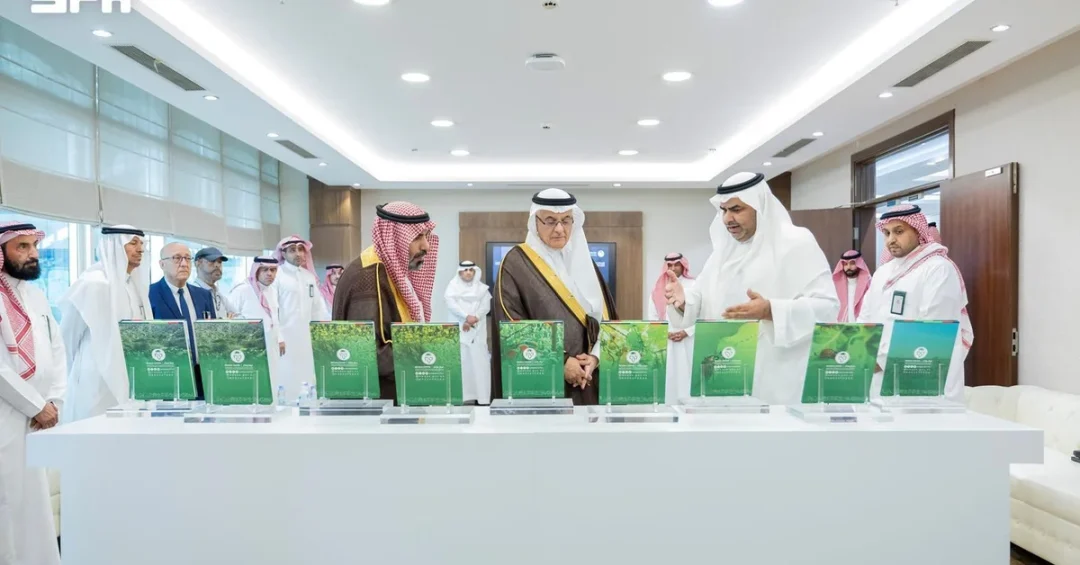
The National Center for the Prevention and Control of Plants Pests and Animal Diseases (Weqaa Center) has launched seven reference atlases on plant health as part of a National Transformation Program initiative for integrated pest management, in an announcement carried by the Saudi Press Agency on October 1, 2026. The publication of the atlases represents a significant step in the Kingdom of Saudi Arabia’s efforts to strengthen agricultural security and support sustainable domestic production, providing farmers, researchers, and regulators with a comprehensive scientific reference covering the plants, pests, and weeds that affect the country’s diverse agricultural environments.
How does a nation protect its food supply when its farms stretch from the cool highlands of the southwest to the scorching deserts of the north? For Saudi Arabia, the answer increasingly lies in science, data, and careful documentation. The Weqaa Center’s seven atlases are the product of a research and fieldwork project that ran from 2018 through the end of 2025, and they document pest biology, map pest distribution across the Kingdom’s varied environments, and build a comprehensive national database designed to support decision-makers in agricultural quarantine and integrated pest management. The launch reflects a broader national commitment to protecting agricultural resources while advancing the goals of Saudi Vision 2030.
Context and Background
Why is plant health such a critical component of national security? Agriculture in Saudi Arabia operates under demanding conditions, with limited arable land, scarce water resources, and a climate that varies dramatically from region to region. In this environment, the introduction of a single invasive pest or the unchecked spread of a weed species can threaten entire crop cycles and undermine the investments made by farmers and the state alike. The Weqaa Center was established to address precisely these risks, combining prevention, monitoring, and control within a single national framework, and its mandate now extends across plant pests, animal diseases, and the health of the Kingdom’s agricultural ecosystems.
The seven atlases cover endemic and invasive plants and weeds in agricultural environments, pests affecting field crops and fodder, fruit trees, date palms and dates, stored grain and seeds, and vegetables. Two of the volumes, the atlas on endemic and invasive plants and the atlas on agricultural weeds, were each published in both Arabic and English, widening their accessibility to international researchers, trading partners, and organizations engaged with the Kingdom’s agricultural sector. The bilingual editions are particularly important because agricultural trade and quarantine decisions depend on shared scientific vocabulary, and the ability to reference the same species names, symptoms, and control methods in two languages reduces the risk of miscommunication at borders and in laboratories.
The atlases are the result of more than seven years of systematic research and fieldwork, a timeline that speaks to the scale of the undertaking. Researchers traveled across Saudi Arabia’s varied environments, from the agricultural terraces of the southwest to the large-scale farming projects of the north and the intensive date palm plantations of the east, to document pest biology and map distribution. That fieldwork produced scientific descriptions, illustrations, geographic distribution maps, and control methods, with the pest atlases additionally describing pest life stages and symptoms of infestation. Together, these materials form a national reference that did not previously exist in such consolidated form.
Key Details
What exactly do these atlases contain, and who will use them? Each volume is designed as a practical reference as well as a scientific record. The atlases provide detailed scientific descriptions of species, high-quality illustrations that allow for accurate identification in the field, geographic distribution maps that show where particular pests and weeds have been recorded, and recommended control methods aligned with integrated pest management principles. For pests, the atlases also document life stages and the visible symptoms of infestation, giving farmers and extension officers the tools to detect problems early, before they spread and cause significant losses.
The scope of the seven atlases reflects the diversity of Saudi agriculture itself. Field crops and fodder are central to livestock production and rural livelihoods; fruit trees and vegetables supply domestic markets and contribute to food security; date palms and dates hold a special place in Saudi culture and economy as a major export crop; and stored grain and seeds represent the point at which pest damage can quietly destroy value after the harvest has already been secured. By addressing each of these categories separately, the Weqaa Center has created a resource that can be consulted quickly and precisely, rather than a single general text that would inevitably lack depth in any one area.
The integrated pest management approach embedded in the atlases is also significant. Rather than promoting blanket chemical use, the atlases support a tiered strategy that combines monitoring, biological control, cultural practices, and targeted intervention only when necessary. This approach protects the environment, reduces costs for farmers, and helps prevent the development of pesticide resistance, which is a growing concern worldwide. The documentation of pest life stages supports this strategy directly, because interventions are most effective when timed to the vulnerable phases of a pest’s lifecycle, and precise timing depends on accurate biological knowledge.
International and Regional Impact
How does a national plant health database influence Saudi Arabia’s relationships beyond its borders? Agricultural trade depends on trust, and trust depends on transparency. When Saudi Arabia can demonstrate that it has a rigorous, science-based system for identifying pests, mapping their distribution, and managing their spread, it strengthens its position in international markets and in negotiations over phytosanitary standards. Trading partners gain confidence that Saudi agricultural exports meet recognized requirements, while importers of plant material into the Kingdom can be assessed against a clear and documented national baseline. The bilingual editions of two atlases further support this exchange by making Saudi scientific work accessible to a global audience.
Regionally, the atlases contribute to a broader effort among Gulf and Middle Eastern countries to coordinate on agricultural health. Pests do not respect borders, and a species documented in one country can quickly become a problem in a neighbor. By publishing distribution maps and control methods, the Weqaa Center adds to the regional knowledge base and creates opportunities for cooperation with counterparts in other countries facing similar environmental conditions. This aligns with the Kingdom’s wider role as a regional leader in food security, environmental protection, and knowledge sharing, and it reinforces the principle that sustainable agriculture is a shared regional priority rather than a purely national concern.
Economic and Strategic Significance
Why should the launch of reference atlases matter to anyone outside the agricultural sector? Because plant health is directly tied to economic value. Every pest outbreak that goes undetected reduces yields, raises production costs, and can force farmers to abandon crops altogether. For a country investing heavily in domestic food production as part of its long-term strategy, the ability to prevent and manage pest problems is not a peripheral concern but a core element of economic planning. The atlases support decision-makers in agricultural quarantine and integrated pest management, helping to protect the returns on investment in farming, processing, and export infrastructure.
The strategic dimension extends to food security as well. Saudi Arabia has made clear that strengthening domestic production and diversifying supply sources are national priorities, and healthy plants are the foundation of both. Stored grain and seeds, in particular, represent a strategic reserve, and pests that attack stored products can erode that reserve even when harvests are strong. By documenting the pests that threaten stored grain and seeds, along with their life stages and infestation symptoms, the atlases help protect the value of stored agricultural commodities and the stability of supply. The date palm sector, culturally and economically important, also benefits from dedicated documentation of its pests and diseases.
Vision 2030 Alignment
How does this initiative connect to the Kingdom’s long-term transformation? Saudi Vision 2030 places food security, environmental sustainability, and economic diversification at the center of its agenda, and the Weqaa Center’s work sits squarely within that framework. Agriculture is one of the sectors identified for development, both to reduce reliance on imports and to create opportunities in rural areas. The seven atlases support this by giving farmers, agronomists, and regulators the scientific foundation they need to protect crops, improve productivity, and manage risks more effectively, which in turn supports the creation of a more resilient and self-reliant agricultural economy.
The launch also reflects the emphasis on institutional capacity and knowledge infrastructure that runs through the National Transformation Program. By producing reference works in both Arabic and English, the Weqaa Center is building a lasting national asset that will serve researchers, students, and practitioners for years to come. The project’s seven-year timeline, running from 2018 through the end of 2025, demonstrates sustained commitment rather than a short-term campaign. As Saudi Arabia continues to expand its agricultural ambitions and its role in global food security discussions, resources like these atlases will help ensure that growth is built on evidence, science, and careful stewardship of the Kingdom’s natural resources.
20 Questions
Q1. What did the Weqaa Center launch?
A1. The National Center for the Prevention and Control of Plants Pests and Animal Diseases launched seven reference atlases on plant health as part of a National Transformation Program initiative for integrated pest management.
Q2. When was the launch announced?
A2. The launch was announced on October 1, 2026, and was reported by the Saudi Press Agency, which serves as the official source of the information.
Q3. What is the Weqaa Center?
A3. The Weqaa Center is Saudi Arabia’s national authority for preventing and controlling plant pests and animal diseases, working to protect agricultural resources and support sustainable production.
Q4. What topics do the seven atlases cover?
A4. They cover endemic and invasive plants and weeds, pests affecting field crops and fodder, fruit trees, date palms and dates, stored grain and seeds, and vegetables.
Q5. Which atlases were published in both Arabic and English?
A5. The atlas on endemic and invasive plants and the atlas on agricultural weeds were each published in Arabic and English, making them accessible to international readers.
Q6. How long did the research project take?
A6. The research and fieldwork project ran from 2018 through the end of 2025, spanning more than seven years of systematic study across Saudi Arabia’s varied environments.
Q7. What was the goal of the project?
A7. The project aimed to document pest biology, map pest distribution across Saudi Arabia, and build a comprehensive national database to support decision-makers in agricultural quarantine and integrated pest management.
Q8. What information do the atlases provide?
A8. They provide scientific descriptions, illustrations, geographic distribution maps, and control methods, while the pest atlases also describe pest life stages and symptoms of infestation.
Q9. How do the atlases support agricultural security?
A9. By improving prevention and detection, they help protect crops and stored products, strengthen agricultural and food security, and sustain domestic production across the Kingdom.
Q10. Who will use these atlases?
A10. Farmers, agronomists, researchers, extension officers, and regulators involved in agricultural quarantine and integrated pest management are the primary users of these references.
Q11. Why are bilingual editions important?
A11. Bilingual editions allow international researchers and trading partners to reference the same scientific information, reducing miscommunication and supporting cooperation on agricultural health and trade.
Q12. What is integrated pest management?
A12. Integrated pest management is a strategy that combines monitoring, biological control, cultural practices, and targeted intervention, rather than relying solely on chemical treatments.
Q13. Why are date palms specifically included?
A13. Date palms and dates are culturally and economically important to Saudi Arabia, and dedicated documentation helps protect this major crop from pests and diseases.
Q14. What does the stored grain and seeds atlas address?
A14. It documents pests that attack stored agricultural products, helping protect strategic reserves and the value of harvested commodities even after the growing season ends.
Q15. How does this initiative relate to Vision 2030?
A15. It supports Vision 2030 goals for food security, environmental sustainability, and economic diversification by strengthening the scientific foundation of Saudi agriculture.
Q16. What role did the National Transformation Program play?
A16. The atlases were launched as part of a National Transformation Program initiative for integrated pest management, reflecting the program’s focus on institutional capacity and knowledge infrastructure.
Q17. How do the atlases help decision-makers?
A17. They provide a comprehensive national database on pest biology and distribution, enabling evidence-based decisions in agricultural quarantine and pest management across the Kingdom.
Q18. Why is mapping pest distribution important?
A18. Distribution maps show where pests have been recorded, allowing authorities and farmers to target monitoring and control efforts precisely and respond quickly to emerging threats.
Q19. What makes this project significant for the region?
A19. Pests cross borders, so sharing documented knowledge supports regional cooperation on agricultural health and reinforces Saudi Arabia’s role as a leader in food security.
Q20. What does this launch mean for the future of Saudi agriculture?
A20. It provides a lasting scientific asset that will help farmers and researchers protect crops, improve productivity, and build a more resilient agricultural economy for years to come.
Reader Feedback
We value your thoughts. Please share your feedback on this article.
Your feedback helps us improve our coverage.
Related articles
 Saudi Cultural Mission Headquarters Opens in Cairo
 GASTAT Chief Advances Statistical Ties in Jeddah
 Religious Affairs Presidency Launches New Initiative at Prophet’s Mosque
 SFDA CEO Backs Royal Address on Peace and Development
 First Translation Association Conference Opens in Riyadh
 KSrelief Delivers First-Aid Training to 81 in Port Sudan