


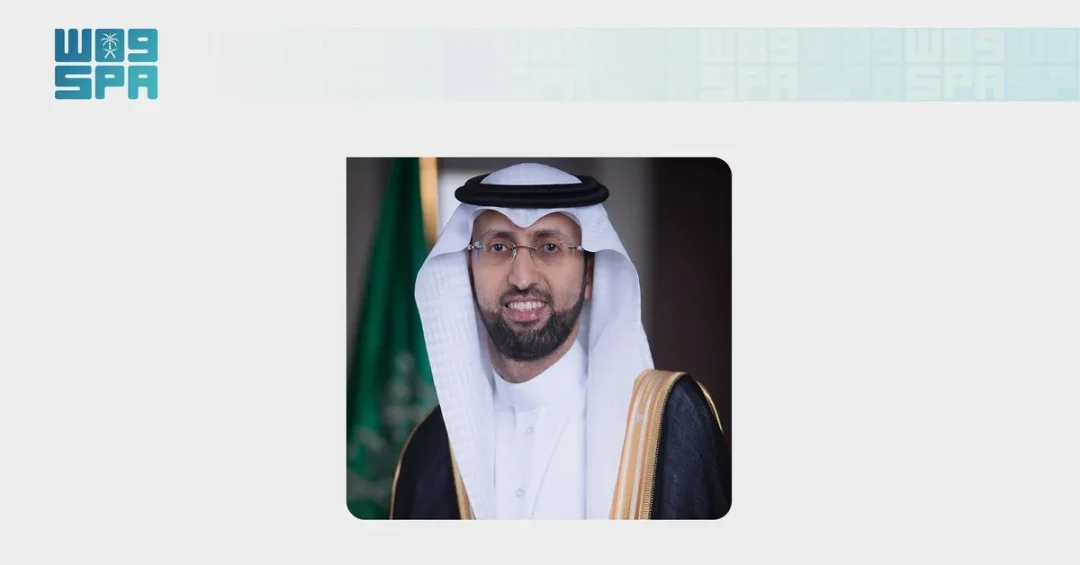
The Chief Executive Officer of the Saudi Food and Drug Authority, Dr. Hisham Aljadhey, has commended the Royal Address delivered on behalf of Custodian of the Two Holy Mosques King Salman bin Abdulaziz Al Saud by His Royal Highness Prince Mohammed bin Salman bin Abdulaziz Al Saud, Crown Prince and Prime Minister, at the opening of the third year of the Shura Council’s ninth session. The address, delivered in Riyadh and carried by the Saudi Press Agency, reaffirmed the Kingdom of Saudi Arabia’s pivotal role in advancing peace, strengthening security and stability, and continuing its comprehensive development journey across every sector of national life.
Dr. Aljadhey’s remarks place the Royal Address within the broader framework of Saudi Vision 2030, the national transformation program that has reshaped the Kingdom’s economic, social, and regulatory landscape since its launch. In his assessment, the speech was not merely a ceremonial occasion but a strategic roadmap that confirms the alignment between the highest levels of leadership and the operational entities responsible for delivering results on the ground. The SFDA, as the Kingdom’s principal regulator of food, drugs, medical devices, and cosmetics, stands among the agencies whose daily work directly reflects the priorities articulated in the Royal Address. Could any regulatory body hope to fulfill its mandate without a clear and consistent national direction? The answer, as Dr. Aljadhey made evident, lies in the coherence between leadership vision and institutional execution.
Context and Background
How does a single Royal Address shape the work of an entire government apparatus? The opening of the Shura Council’s ninth session, now entering its third year, represents one of the most significant moments in the Saudi legislative calendar. The Shura Council, established as the Kingdom’s consultative assembly, serves as a forum where national policy is debated, refined, and aligned with the long-term objectives of the state. When the Crown Prince delivers the Royal Address on behalf of the Custodian of the Two Holy Mosques, the message carries the full weight of the Kingdom’s highest authority and sets the tone for the legislative and executive agenda that follows.
For entities such as the Saudi Food and Drug Authority, the address functions as both a mandate and a measure. The SFDA was established to protect public health by regulating the safety, quality, and efficacy of food and pharmaceutical products circulating in the Saudi market. Its responsibilities extend to licensing, inspection, laboratory testing, and public awareness, making it one of the most citizen-facing agencies in the government. Dr. Aljadhey’s decision to publicly commend the Royal Address signals that the regulator views its mission as inseparable from the national project of comprehensive development. The Kingdom’s commitment to improving quality of life, a central pillar of Vision 2030, depends on the safety of what citizens and residents consume every day. Is it any wonder that a regulator would treat a national address as a call to action?
The Royal Address also comes at a time when Saudi Arabia’s international profile has expanded considerably. From mediating regional disputes to hosting global sporting and cultural events, the Kingdom has positioned itself as a stabilizing force in a volatile region. The speech’s emphasis on peace, security, and stability reflects this outward-facing posture while simultaneously reinforcing domestic priorities. Dr. Aljadhey’s response therefore bridges two dimensions of Saudi policy: the internal drive to modernize governance and the external ambition to contribute to global order.
Key Details of the SFDA’s Response
What specific elements of the Royal Address resonated most with the Kingdom’s health and safety regulator? According to the Saudi Press Agency, Dr. Aljadhey highlighted that the speech underscored Saudi Arabia’s pivotal role in advancing peace, enhancing security and stability, and continuing its comprehensive development journey. He pointed to the progress achieved across various sectors, attributing it to the wise leadership’s commitment to national advancement and the improvement of quality of life. These are not abstract themes for the SFDA; they translate directly into operational targets, from accelerating the registration of innovative medicines to expanding food safety inspections across the Kingdom’s rapidly growing hospitality and tourism sectors.
Dr. Aljadhey further emphasized that Saudi Vision 2030 serves as the guiding framework for government entities in achieving national objectives. He noted that the vision places people at the heart of development and seeks to create a lasting impact while anticipating future needs. This people-first orientation is particularly relevant to the SFDA, whose work touches every household in the Kingdom. The CEO also highlighted a notable milestone: the key performance indicators of vision programs and strategies have achieved 93 percent of their targets. That figure, drawn from official assessments, underscores the discipline and accountability that have become hallmarks of the Saudi transformation effort. Does a 93 percent achievement rate suggest that the remaining seven percent is being ignored? On the contrary, it indicates a system mature enough to measure itself honestly and pursue continuous improvement.
The SFDA’s own contributions to Vision 2030 include streamlining regulatory approvals to attract pharmaceutical investment, adopting digital platforms for licensing and inspection, and strengthening pharmacovigilance systems. These efforts support the broader goal of building a diversified economy in which the health sector plays a growing role. Dr. Aljadhey concluded his remarks with a prayer for the protection of the Custodian of the Two Holy Mosques and the Crown Prince, asking Allah to grant them continued health and well-being and to safeguard the Kingdom’s security, stability, and prosperity. Such expressions are customary in Saudi public life and reflect the deep bond between leadership and institutions.
International and Regional Impact
Why should an international audience pay attention to a speech delivered to a domestic consultative council? Because the priorities articulated in the Royal Address ripple far beyond Saudi borders. When the Kingdom commits to advancing peace and stability, it signals to partners in the Gulf, the wider Middle East, and the global community that it will continue to play a constructive role in conflict resolution and humanitarian relief. Saudi Arabia has hosted peace talks, provided humanitarian aid, and used its diplomatic weight to reduce tensions in the region. The Royal Address reaffirmed this trajectory, and Dr. Aljadhey’s endorsement adds the voice of a technical regulator to the chorus of national institutions aligned behind it.
For international companies in the food, pharmaceutical, and medical device industries, the SFDA’s alignment with Vision 2030 carries practical implications. A regulator that is clearly committed to the national agenda is also a regulator that is predictable, transparent, and open to global collaboration. The SFDA has signed cooperation agreements with counterpart agencies in Europe, Asia, and North America, and it participates in international harmonization efforts. When its leadership publicly ties its work to the Royal Address, it reinforces the message that Saudi Arabia’s regulatory environment is stable and forward-looking. Is that not precisely what global investors seek when they evaluate a market? Stability, clarity, and a sense of shared purpose are assets that no economy can afford to overlook.
The regional dimension is equally significant. Saudi Arabia’s development journey serves as a reference point for neighboring states navigating their own economic transitions. The Kingdom’s progress in health regulation, food safety, and pharmaceutical oversight offers a model that other countries can study and adapt. Dr. Aljadhey’s remarks therefore contribute to Saudi Arabia’s soft power, presenting the Kingdom not only as a consumer of global standards but as a producer of them.
Economic and Strategic Significance
How does food and drug regulation connect to the economic ambitions of a nation? The link is more direct than it may appear. A robust regulatory framework is a prerequisite for attracting investment in pharmaceuticals, biotechnology, and food manufacturing. Companies considering a manufacturing plant or a regional distribution hub need assurance that approvals will be granted on the basis of clear, science-based criteria and within predictable timeframes. The SFDA has worked to provide exactly that assurance, reducing approval timelines and adopting international best practices. These reforms support the Vision 2030 objective of diversifying the economy beyond oil and creating high-value jobs for Saudi citizens.
Moreover, the health sector is an integral part of the Kingdom’s privatization and investment strategy. The Public Investment Fund has established companies in the pharmaceutical and medical device space, and the government has encouraged local manufacturing to reduce dependence on imports. A regulator that is efficient and trusted makes these ventures more viable. Dr. Aljadhey’s emphasis on Vision 2030 as the guiding framework is therefore not merely rhetorical; it reflects the operational reality that regulatory excellence is an economic enabler. The 93 percent achievement rate cited in his remarks provides a quantitative anchor for this argument, demonstrating that the vision’s programs are delivering measurable results. Could a nation hope to build a knowledge economy without world-class institutions to oversee health and safety? The Saudi experience suggests that the two are inseparable.
Strategically, the Royal Address and the SFDA’s response also reinforce the Kingdom’s approach to food security. Saudi Arabia imports a significant share of its food supply, making the safety and reliability of those imports a matter of national interest. The SFDA’s inspection regimes at ports and borders, its laboratory networks, and its collaboration with international food safety bodies all contribute to a resilient supply chain. In a world of disrupted trade routes and climate-related agricultural challenges, this function takes on heightened importance.
Vision 2030 Alignment
What does it mean for a regulator to say that Vision 2030 is its guiding framework? It means that every strategic decision, from staffing to technology adoption to international engagement, is evaluated against the vision’s objectives. The SFDA’s transformation initiatives include digitalizing its services, expanding its scientific capabilities, and enhancing transparency with the public. These measures align with the Vision 2030 themes of a vibrant society, a thriving economy, and an ambitious nation. Dr. Aljadhey’s public affirmation of the Royal Address thus serves as a statement of institutional identity: the SFDA sees itself as a contributor to the national project, not merely a passive administrator of rules.
The 93 percent achievement rate across vision programs and strategies is a figure that deserves attention. It indicates that the Kingdom’s performance management systems are functioning at a high level, tracking progress across dozens of initiatives and holding entities accountable. For international observers, this is evidence that Vision 2030 is not a slogan but a managed program with clear metrics. Dr. Aljadhey’s prayer for the continued health of the leadership and the prosperity of the Kingdom concludes a statement that is at once religious, patriotic, and professional. As Saudi Arabia moves further into its transformation decade, the alignment between leadership vision and institutional execution will remain the foundation of its success. The SFDA, under Dr. Aljadhey’s leadership, has positioned itself firmly within that alignment, ready to serve the nation’s health and safety needs while contributing to its global standing.
20 Questions
Q1. Who delivered the Royal Address at the opening of the Shura Council’s ninth session?
A1. The Royal Address was delivered by His Royal Highness Prince Mohammed bin Salman bin Abdulaziz Al Saud, Crown Prince and Prime Minister, on behalf of Custodian of the Two Holy Mosques King Salman bin Abdulaziz Al Saud.
Q2. What is the role of the Saudi Food and Drug Authority?
A2. The SFDA regulates food, drugs, medical devices, and cosmetics to protect public health, ensuring safety, quality, and efficacy through licensing, inspection, testing, and public awareness across the Kingdom of Saudi Arabia.
Q3. What did Dr. Hisham Aljadhey say about the Royal Address?
A3. Dr. Aljadhey commended the address, highlighting that it underscored Saudi Arabia’s pivotal role in advancing peace, enhancing security and stability, and continuing its comprehensive development journey across all sectors.
Q4. How does the Royal Address relate to Saudi Vision 2030?
A4. The address reinforces Vision 2030 as the guiding framework for government entities, emphasizing people-centered development, future planning, and measurable progress toward national objectives and improved quality of life.
Q5. What achievement rate did Dr. Aljadhey cite for vision programs?
A5. Dr. Aljadhey noted that the key performance indicators of vision programs and strategies have achieved 93 percent of their targets, reflecting strong performance management and accountability.
Q6. Why is the Shura Council session significant?
A6. The Shura Council is Saudi Arabia’s consultative assembly, where national policies are debated and aligned with long-term goals. The Royal Address sets the tone for the legislative and executive agenda.
Q7. What does the SFDA do to support food safety in Saudi Arabia?
A7. The SFDA conducts inspections at ports and borders, operates laboratory networks, and collaborates with international food safety bodies to ensure the safety and reliability of imported and domestic food products.
Q8. How does the SFDA contribute to economic diversification?
A8. By streamlining regulatory approvals and adopting international best practices, the SFDA attracts investment in pharmaceuticals, biotechnology, and food manufacturing, supporting Vision 2030’s goal of a diversified economy.
Q9. What international collaborations does the SFDA maintain?
A9. The SFDA has signed cooperation agreements with counterpart agencies in Europe, Asia, and North America, and participates in global harmonization efforts to align standards and facilitate trade.
Q10. How does the Royal Address impact regional stability?
A10. The address reaffirms Saudi Arabia’s commitment to peace and security, signaling continued diplomatic engagement and humanitarian relief that contribute to stability across the Middle East and beyond.
Q11. What is the significance of the 93 percent achievement rate?
A11. It demonstrates that Vision 2030 programs are delivering measurable results and that Saudi institutions operate with discipline and accountability, tracking progress across numerous initiatives.
Q12. How does the SFDA protect public health in daily life?
A12. The SFDA oversees the safety of food, medicines, and medical devices that citizens and residents use every day, conducting inspections, testing, and awareness campaigns to prevent health risks.
Q13. What role does the SFDA play in pharmaceutical investment?
A13. The SFDA reduces approval timelines and provides clear, science-based criteria, making the Kingdom an attractive destination for pharmaceutical manufacturing and regional distribution hubs.
Q14. Why did Dr. Aljadhey offer a prayer for the leadership?
A14. Offering prayers for the Custodian of the Two Holy Mosques and the Crown Prince is customary in Saudi public life, reflecting respect, gratitude, and a desire for the Kingdom’s continued prosperity.
Q15. How does the SFDA use technology in its work?
A15. The SFDA has digitalized licensing and inspection services, adopted electronic platforms for stakeholder engagement, and strengthened pharmacovigilance systems to enhance efficiency and transparency.
Q16. What does ‘people at the heart of development’ mean in practice?
A16. It means policies and programs are designed to improve quality of life, health, education, and economic opportunity for all citizens and residents, ensuring that development benefits society directly.
Q17. How does the Royal Address affect international investors?
A17. It signals policy continuity and institutional alignment, reassuring investors that Saudi Arabia’s regulatory environment is stable, predictable, and open to global collaboration.
Q18. What is the SFDA’s role in food security?
A18. The SFDA ensures the safety and reliability of imported food through border inspections and laboratory testing, contributing to a resilient supply chain amid global trade and climate challenges.
Q19. How does the SFDA support Saudi Arabia’s soft power?
A19. By sharing expertise and participating in international harmonization, the SFDA presents the Kingdom as a producer of global standards, enhancing its reputation and influence in health regulation.
Q20. What is the outlook for Saudi Arabia’s development journey?
A20. With strong alignment between leadership vision and institutional execution, Saudi Arabia is positioned to continue its comprehensive development, achieving Vision 2030 goals and strengthening its global role.
Reader Feedback
We value your thoughts. Please share your feedback on this article.
Your feedback helps us improve our coverage.
Related articles
 First Translation Association Conference Opens in Riyadh
 KSrelief Delivers First-Aid Training to 81 in Port Sudan
 Moderate Rainfall Hits Turaif in Northern Borders Region
 Prophet’s Mosque Offers Services in 10 Global Languages
 Saudi Defense Minister Holds Call with UK Counterpart
 KSrelief Delivers 500,000 Liters of Water to Gaza