


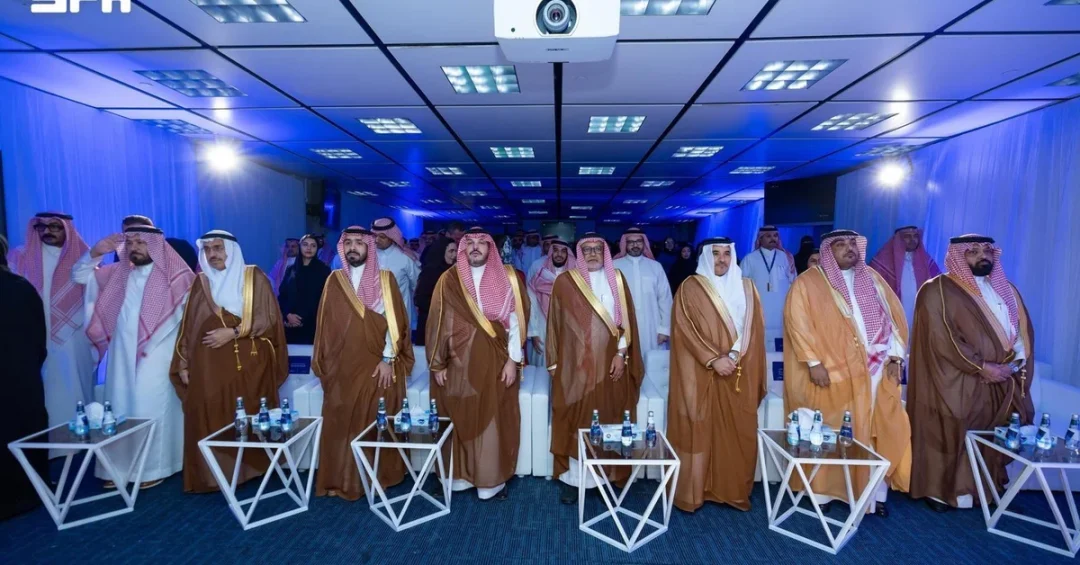
The First Translation Association Conference opened in Riyadh on September 30, 2026, organized by the Translation Association in partnership with the College of Language Sciences at King Saud University, under the theme “Translation in a Transforming World.” The landmark gathering brings together officials, researchers, academics, and specialists from more than 15 entities to examine the future of translation, technological advances, and innovation in a field increasingly central to global knowledge exchange. According to the Saudi Press Agency, the program features two main sessions, more than 18 research papers, 12 workshops, and an accompanying exhibition, with activities targeting more than 300 beneficiaries.
The conference arrives at a moment when Saudi Arabia is accelerating its transformation into a knowledge-based economy, and when the demand for high-quality translation across diplomatic, commercial, academic, and cultural domains has never been greater. Isn’t it remarkable how a discipline once viewed as a behind-the-scenes support function now sits at the heart of national modernization? By convening researchers and practitioners under one roof in the capital, the Translation Association and King Saud University are signaling that translation is not merely a technical service but a strategic enabler of the Kingdom’s global ambitions, from Vision 2030’s economic diversification to its cultural diplomacy.
Context and Background
The Translation Association, a Saudi professional body dedicated to advancing the translation sector, partnered with the College of Language Sciences at King Saud University — one of the Kingdom’s oldest and most respected centers for linguistics and language education — to launch this inaugural conference. The choice of Riyadh as the host city reflects the capital’s growing status as a hub for international conferences, academic exchange, and policy dialogue. For years, Saudi translators and interpreters have worked largely through individual effort and institutional goodwill. What does it mean when a nation decides to formalize and elevate that work through a dedicated association and a flagship conference? It means the profession is being recognized as infrastructure — as essential to communication as roads are to transport.
The theme, “Translation in a Transforming World,” captures the dual pressures and opportunities facing the field. On one side, artificial intelligence and machine translation tools are reshaping how quickly and cheaply text can be converted between languages. On the other, the nuances of legal, medical, literary, and diplomatic translation still demand human judgment, cultural literacy, and ethical grounding. The conference’s agenda squarely addresses this tension by pairing discussions of technological advances with examinations of scientific research, curriculum development, and labor market alignment. The participation of more than 15 entities — spanning government, academia, and the private sector — indicates that the Kingdom is approaching translation as a shared national project rather than a niche academic concern.
Key Details
The conference program is substantial by any measure: two main sessions, more than 18 research papers, 12 workshops, and an accompanying exhibition, all designed to reach more than 300 beneficiaries. The research papers cover topics that range from the future of translation and technological innovation to the role of scientific research in developing the sector. The workshops offer hands-on training and practical skill-building, ensuring that attendees leave with more than theoretical knowledge. Meanwhile, the exhibition showcases the tools, institutions, and services that make up Saudi Arabia’s translation ecosystem, giving participants a tangible sense of where the field is heading. How often do academic conferences translate directly into practical capability? This one seems designed to do exactly that.
A central focus of the discussions is aligning academic outcomes with labor market needs. This is a critical issue in Saudi Arabia and across the region, where university graduates in languages and translation sometimes find that their training does not fully match the demands of employers in government, law, healthcare, media, and international business. By bringing together academics who design curricula and professionals who hire graduates, the conference creates a rare feedback loop. The organizers also emphasize translation’s role in cultural and knowledge exchange, highlighting how rendering Arabic works into other languages — and global works into Arabic — enriches mutual understanding and supports the Kingdom’s outreach to the world. Cooperation among specialists and relevant entities is another explicit goal, reinforcing the idea that no single institution can build a world-class translation sector alone.
International and Regional Impact
Saudi Arabia’s investment in translation carries implications well beyond its borders. As the largest Arab economy and the custodian of Islam’s holiest sites, the Kingdom communicates with a global audience that spans every continent. Accurate, culturally attuned translation is essential for diplomatic messaging, for the Hajj and Umrah experience, for international business contracts, and for sharing Saudi cultural achievements with the world. When a Saudi association convenes experts to professionalize the field, it strengthens the country’s ability to participate fully in international organizations, academic journals, and media landscapes. Could there be a more direct way to amplify a nation’s voice than by ensuring its words are understood precisely in every language?
Regionally, the conference positions Riyadh alongside other global cities that host major translation and linguistics gatherings. It also complements broader Arab efforts to preserve and promote the Arabic language in an era of rapid digital change. The presence of researchers and academics from multiple institutions suggests that the conference may become a recurring platform for regional collaboration, standard-setting, and knowledge-sharing. For international observers, the event is a reminder that Saudi Arabia’s modernization is not confined to megaprojects and economic reforms; it also includes the quieter but equally important work of building professional communities, academic networks, and the soft infrastructure of a knowledge society.
Economic and Strategic Significance
Translation is an economic enabler in ways that are often underestimated. Every international contract, patent filing, technical manual, tourism campaign, and media production depends on accurate language services. As Saudi Arabia diversifies its economy under Vision 2030, expands its tourism sector, and attracts foreign investment, the demand for professional translation will only grow. The conference’s focus on innovation and technology acknowledges that the sector itself must modernize — adopting AI-assisted tools, developing specialized terminology databases, and training translators in subject areas such as law, energy, and healthcare. Isn’t it telling that a conference on translation draws participants from more than 15 entities, including presumably government and private-sector players who understand its economic value?
Strategically, the event supports the Kingdom’s goal of becoming a global hub for knowledge and culture. The more Saudi institutions can communicate effectively across languages, the more influence they can exert in international forums, research collaborations, and cultural exchanges. The conference also feeds into human capital development: by aligning academic outcomes with labor market needs, it helps ensure that Saudi graduates are prepared for meaningful careers in a globally connected economy. The involvement of King Saud University, a leading national institution, underscores the long-term nature of this investment. This is not a one-off event but part of a sustained effort to build capacity, raise standards, and connect Saudi expertise with international best practices.
Vision 2030 Alignment
The First Translation Association Conference aligns squarely with Vision 2030’s objectives of diversifying the economy, developing human capital, and strengthening Saudi Arabia’s global engagement. Vision 2030 envisions a nation that is open to the world, proud of its heritage, and competitive in knowledge-intensive sectors. Translation sits at the intersection of all three: it opens doors to international markets and ideas, it carries Arabic literature and Islamic scholarship to new audiences, and it requires advanced skills that create high-value jobs. The conference’s emphasis on research, innovation, and cooperation among specialists reflects the Vision’s broader call for collaboration across government, academia, and the private sector.
As the conference continues in Riyadh, its outcomes — research findings, workshop skills, and new professional connections — will ripple outward through Saudi institutions and beyond. The Translation Association and King Saud University have set a high standard for what a national professional gathering can achieve. Will this become an annual fixture on the regional academic calendar? The momentum suggests yes. For a Kingdom transforming its economy and its global role, investing in the art and science of translation is not a luxury but a necessity — and this inaugural conference is a clear statement that Saudi Arabia intends to lead in the field.
20 Questions
Q1. What is the First Translation Association Conference?
A1. It is a new professional and academic gathering organized by the Translation Association in partnership with the College of Language Sciences at King Saud University. It brings together officials, researchers, academics, and specialists to discuss the future of translation.
Q2. When and where did the conference begin?
A2. The conference began on September 30, 2026, in Riyadh, Saudi Arabia, under the theme “Translation in a Transforming World,” according to the Saudi Press Agency.
Q3. Who organized the conference?
A3. It was organized by the Translation Association in partnership with the College of Language Sciences at King Saud University, a leading Saudi institution for language and linguistics education.
Q4. What is the theme of the conference?
A4. The theme is “Translation in a Transforming World,” reflecting the rapid changes in technology, research, and global communication affecting the translation profession.
Q5. How many main sessions are featured?
A5. The program features two main sessions, along with more than 18 research papers, 12 workshops, and an accompanying exhibition.
Q6. How many research papers will be presented?
A6. More than 18 research papers will be presented, covering topics such as the future of translation, technological advances, innovation, and the role of scientific research in developing the sector.
Q7. How many workshops are included?
A7. There are 12 workshops designed to provide practical training and skill-building for participants, complementing the research presentations and main sessions.
Q8. What is the accompanying exhibition about?
A8. The exhibition showcases tools, institutions, and services in Saudi Arabia’s translation ecosystem, with participation from more than 15 entities.
Q9. How many entities are participating?
A9. More than 15 entities from government, academia, and the private sector are participating, reflecting broad collaboration across the translation field.
Q10. How many beneficiaries are targeted?
A10. The conference activities target more than 300 beneficiaries, including researchers, students, translators, and professionals seeking to enhance their skills.
Q11. What topics are discussed at the conference?
A11. Discussions focus on the future of translation, technological advances, innovation, the role of scientific research, and aligning academic outcomes with labor market needs.
Q12. How does the conference address technology in translation?
A12. It examines technological advances and innovation, exploring how tools such as artificial intelligence and machine translation can complement human expertise in the field.
Q13. Why is aligning academic outcomes with labor market needs important?
A13. It helps ensure that graduates in translation and language studies possess the skills employers need, supporting career readiness and economic diversification.
Q14. What role does translation play in cultural exchange?
A14. Translation enables the exchange of knowledge, literature, and ideas between Arabic and other languages, enriching mutual understanding and supporting Saudi Arabia’s global cultural outreach.
Q15. How does the conference promote cooperation among specialists?
A15. By bringing together researchers, academics, officials, and private-sector representatives, it creates networks and dialogue that can lead to joint projects and shared standards.
Q16. What is the significance of King Saud University’s involvement?
A16. King Saud University is a leading national institution, and its College of Language Sciences adds academic credibility and helps connect research with professional practice.
Q17. How does the conference support Saudi Vision 2030?
A17. It supports Vision 2030 by developing human capital, promoting knowledge exchange, and strengthening Saudi Arabia’s global engagement through improved communication.
Q18. Will the conference become a regular event?
A18. While no official announcement has been made about future editions, the inaugural conference’s scope and participation suggest it could become a recurring platform for the sector.
Q19. Who benefits most from the conference?
A19. Translators, interpreters, researchers, students, academics, and institutions that rely on language services all stand to benefit from the research, training, and networking opportunities.
Q20. What does the conference say about Saudi Arabia’s translation sector?
A20. It demonstrates that Saudi Arabia is investing in professionalizing translation, fostering innovation, and positioning the sector as a strategic enabler of the Kingdom’s global ambitions.
Reader Feedback
We value your thoughts. Please share your feedback on this article.
Your feedback helps us improve our coverage.
Related articles
 KSrelief Delivers First-Aid Training to 81 in Port Sudan
 Moderate Rainfall Hits Turaif in Northern Borders Region
 Prophet’s Mosque Offers Services in 10 Global Languages
 Saudi Defense Minister Holds Call with UK Counterpart
 KSrelief Delivers 500,000 Liters of Water to Gaza
 KSrelief Distributes 11,334 Food Baskets Across Yemen