


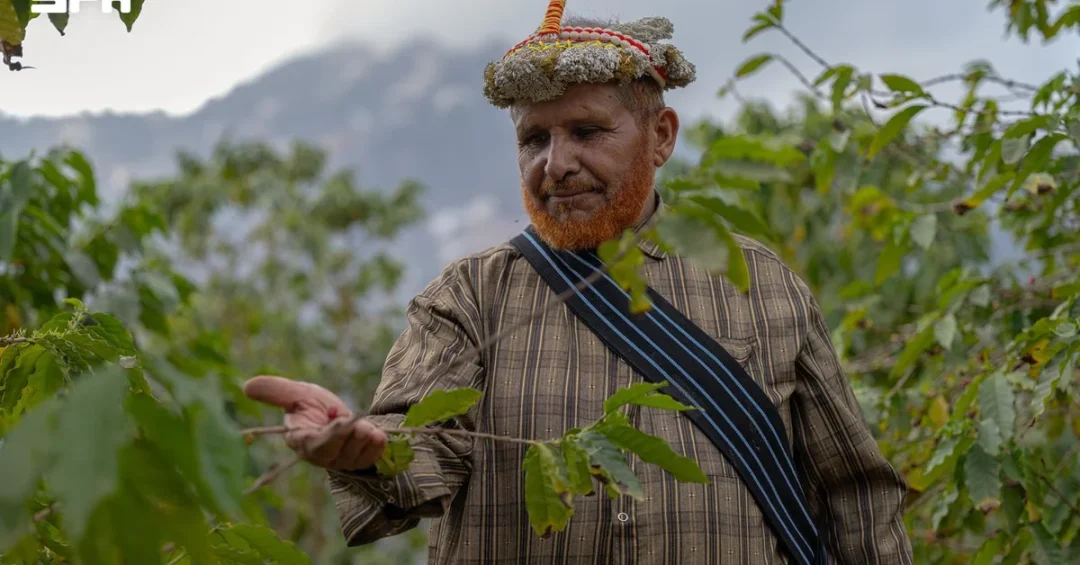
Saudi Arabia marked International Coffee Day on September 30, 2026, with official Saudi sources highlighting the Kingdom’s deep-rooted coffee heritage and the rapid expansion of its coffee sector under Vision 2030. According to the Saudi Press Agency (SPA), the occasion carries special significance in the Kingdom, where coffee is not merely a beverage but a deeply rooted part of Saudi culture, with a story extending from the land and farms to gatherings, hospitality, and national identity. The day offered an opportunity to reflect on how a traditional agricultural practice in the southern mountains has evolved into a modern economic sector supported by national institutions and strategic investment.
In the southern mountains, where agricultural terraces stretch across the slopes of Jazan, Aseer, and Al-Baha, coffee trees have never been merely an agricultural crop. Rather, they have formed part of an enduring relationship between people and the land, and of a heritage passed down through generations, making Saudi coffee today an authentic component of the Kingdom’s cultural and agricultural identity. As the sector continues to develop, the story of Saudi coffee has become that of a nation investing in its land, people, and heritage, while working to transform the natural and cultural assets of coffee-growing regions into sustainable development and economic opportunities. Could there be a clearer example of how heritage and modernization can reinforce one another?
Context and Background
How did a crop cultivated on remote mountain terraces become a symbol of national identity and economic ambition? The answer lies in centuries of agricultural tradition. In mountain villages, farmers have passed down knowledge of coffee cultivation, care, and harvesting from one generation to the next. This knowledge has been shaped by decades of experience and has become part of the memory and culture of the places where it is practiced. The terraces of Jazan, Aseer, and Al-Baha are not simply farmland; they are living archives of community knowledge, where planting cycles, shading techniques, and harvesting methods have been refined over generations.
This heritage has given Saudi coffee a distinctive character. The beans grown in the Kingdom’s highlands are known for their quality and flavor, shaped by the unique climate and terrain of the southern regions. For decades, this coffee was primarily a local product, consumed in homes and served to guests as a mark of generosity and respect. Yet the same traditions that preserved the crop also limited its commercial reach. The challenge facing the Kingdom was how to honor this heritage while unlocking its economic potential. That challenge has become a central focus of national development efforts, with coffee emerging as a bridge between rural communities and global markets. What makes this moment different is the scale of investment and coordination now behind the sector.
Key Details
Building on this heritage, the Saudi Coffee Company, one of the Public Investment Fund (PIF) companies, was established to develop the coffee sector in the Kingdom and build an integrated ecosystem extending from the farm to the consumer. The company is working to develop model farms, support farmers and enhance their capabilities, and improve processing and production operations, while investing in infrastructure, knowledge, and innovation to enhance the quality and competitiveness of Saudi coffee. This approach reflects a broader strategic vision in which agriculture is not a relic of the past but a foundation for future growth.
In coffee-growing regions, this role is reflected in initiatives and projects designed to create an impact that extends beyond production to include knowledge transfer, skills development, improved agricultural practices, and the creation of new opportunities across the value chain. Farmers are being connected to modern techniques, from soil management to post-harvest processing, while local communities benefit from training programs and infrastructure improvements. The result is a sector that is becoming more productive, more sustainable, and more integrated with national and international markets. On International Coffee Day, perhaps the most compelling story to be told about Saudi coffee is that it has never been merely a tree, but rather a story of land, a farmer, a family, a village, and a heritage spanning generations. How many industries can claim such a profound connection to both the past and the future?
International and Regional Impact
Saudi Arabia’s coffee sector development carries implications that extend well beyond the Kingdom’s borders. As one of the world’s largest coffee-consuming markets, Saudi Arabia has long been a significant player in global coffee trade. By investing in domestic production and quality improvement, the Kingdom is positioning itself as a producer as well as a consumer, adding a new dimension to its role in international agricultural markets. This shift aligns with broader trends in the region, where countries are seeking to diversify economies and reduce reliance on imports for strategic goods. For international partners, Saudi coffee represents an emerging opportunity for collaboration in agriculture, technology, and trade.
Regionally, the development of coffee farming in Jazan, Aseer, and Al-Baha contributes to rural development and economic diversification. These regions have historically been less industrialized than the Kingdom’s major urban centers, and coffee offers a sustainable path to local employment and income generation. The sector’s growth also supports cultural tourism, as visitors from around the world are drawn to the heritage and landscapes of Saudi Arabia’s coffee-growing areas. By linking agriculture with tourism and cultural preservation, the Kingdom is creating a model that other nations in the region may look to emulate. What does this mean for the global coffee industry? It signals that Saudi Arabia is becoming a more active and influential participant in every stage of the coffee value chain.
Economic and Strategic Significance
The economic significance of Saudi Arabia’s coffee expansion is closely tied to the Kingdom’s broader diversification goals. Coffee is a high-value crop that can generate income for rural communities, support small and medium-sized enterprises, and contribute to non-oil exports. The Saudi Coffee Company’s efforts to build an integrated ecosystem—from farm to consumer—are designed to capture more value within the Kingdom, rather than exporting raw beans and importing finished products. This approach is consistent with the objectives of Vision 2030, which seeks to diversify the economy, empower the private sector, and create jobs for Saudi citizens.
Strategically, coffee is also a tool of soft power and cultural diplomacy. Saudi coffee is served in homes, at official gatherings, and in diplomatic settings, where it symbolizes hospitality and national pride. By elevating the quality and reputation of Saudi coffee, the Kingdom enhances its cultural footprint internationally. The sector’s development also supports food security objectives by reducing dependence on imported coffee and strengthening domestic agricultural capacity. In a world where supply chains are increasingly scrutinized, local production offers both economic and strategic advantages. How often does a single crop carry so much cultural, economic, and strategic weight?
Vision 2030 Alignment
The expansion of Saudi Arabia’s coffee sector is a direct reflection of Vision 2030’s emphasis on economic diversification, sustainable development, and the empowerment of rural communities. Under the leadership of Crown Prince Mohammed bin Salman, the Kingdom has pursued a comprehensive transformation agenda that includes agriculture as a key pillar. The Saudi Coffee Company, as a PIF entity, embodies the vision’s approach of using strategic investment to catalyze growth in promising sectors. By supporting farmers, improving infrastructure, and fostering innovation, the coffee initiative contributes to multiple Vision 2030 goals, including job creation, increased non-oil GDP, and the preservation of cultural heritage.
Looking ahead, the future of Saudi coffee appears bright. With continued investment and a clear strategic direction, the Kingdom is well positioned to become a recognized producer of high-quality coffee, serving both domestic and international markets. The story of Saudi coffee—rooted in the terraces of the south and now reaching global audiences—illustrates how tradition and modernity can thrive together. As Saudi Arabia celebrates International Coffee Day, it does so not only as a consumer of one of the world’s most beloved beverages, but as a nation investing in its land, its people, and its heritage. In doing so, it offers a compelling example of how Vision 2030 is transforming every corner of the Kingdom, from the mountains of Jazan to the tables of the world.
20 Questions
Q1. What is International Coffee Day and why does Saudi Arabia mark it?
A1. International Coffee Day is celebrated globally on September 30 to honor coffee and its producers. Saudi Arabia marks it to highlight its deep coffee heritage and the sector’s modern expansion under Vision 2030, as reported by the Saudi Press Agency.
Q2. Which regions in Saudi Arabia are known for coffee cultivation?
A2. The southern regions of Jazan, Aseer, and Al-Baha are known for coffee cultivation, where agricultural terraces on mountain slopes have supported coffee trees for generations, forming part of the Kingdom’s cultural and agricultural identity.
Q3. What is the Saudi Coffee Company and when was it established?
A3. The Saudi Coffee Company is a Public Investment Fund (PIF) company established to develop the coffee sector in Saudi Arabia and build an integrated ecosystem from farm to consumer, supporting farmers and enhancing production quality.
Q4. How does coffee reflect Saudi culture and hospitality?
A4. Coffee is central to Saudi hospitality, served at gatherings and official occasions as a symbol of generosity and respect. It is deeply embedded in national identity and passed down through generations as part of the Kingdom’s heritage.
Q5. What role does the Public Investment Fund play in the coffee sector?
A5. The PIF supports the coffee sector through the Saudi Coffee Company, investing in model farms, farmer training, infrastructure, and innovation to enhance the quality and competitiveness of Saudi coffee in domestic and international markets.
Q6. How does coffee farming support rural development in Saudi Arabia?
A6. Coffee farming creates jobs and income opportunities in rural regions like Jazan, Aseer, and Al-Baha, supporting local communities, improving agricultural practices, and contributing to sustainable economic development across the value chain.
Q7. What are model farms and how do they help coffee farmers?
A7. Model farms are demonstration sites that showcase best practices in coffee cultivation, care, and harvesting. They help farmers learn improved techniques, increase yields, and enhance the quality of their coffee through knowledge transfer.
Q8. How does Saudi coffee compare to other global coffee varieties?
A8. Saudi coffee is known for its distinctive flavor and quality, shaped by the unique climate and terrain of the southern highlands. It is increasingly recognized as a premium product with growing potential in international markets.
Q9. What economic benefits does coffee expansion bring to Saudi Arabia?
A9. Coffee expansion diversifies the economy, creates jobs, supports small and medium enterprises, and contributes to non-oil exports. It also reduces reliance on imports and strengthens food security, aligning with Vision 2030 goals.
Q10. How does coffee fit into Saudi Arabia’s Vision 2030?
A10. Coffee aligns with Vision 2030 by promoting economic diversification, sustainable development, and rural empowerment. It reflects the Kingdom’s strategy of investing in heritage and agriculture to create new opportunities and enhance global competitiveness.
Q11. What is the significance of coffee terraces in Saudi Arabia?
A11. Coffee terraces are agricultural systems built on mountain slopes that have supported coffee cultivation for generations. They represent a harmonious relationship between people and land and are integral to the Kingdom’s cultural landscape.
Q12. How is knowledge about coffee cultivation passed down in Saudi Arabia?
A12. Knowledge is passed down through generations in mountain villages, where farmers share experience in planting, care, and harvesting. This oral tradition has become part of the memory and culture of coffee-growing regions.
Q13. What initiatives support coffee farmers in Saudi Arabia?
A13. Initiatives include training programs, model farms, infrastructure improvements, and access to modern processing techniques. These efforts aim to enhance skills, productivity, and the overall competitiveness of Saudi coffee.
Q14. How does coffee contribute to Saudi Arabia’s cultural tourism?
A14. Coffee-growing regions attract visitors interested in heritage and landscapes. By linking agriculture with tourism, Saudi Arabia showcases its cultural traditions and natural beauty, creating new economic opportunities for local communities.
Q15. What is the global demand for Saudi coffee?
A15. Global demand for Saudi coffee is growing as international consumers seek unique, high-quality products. The Kingdom is working to increase exports and position Saudi coffee as a premium brand in worldwide markets.
Q16. How does coffee production support food security in Saudi Arabia?
A16. Domestic coffee production reduces dependence on imports, strengthening food security. It also builds local agricultural capacity and ensures a stable supply of coffee for the Kingdom’s growing population and hospitality sector.
Q17. What challenges does the Saudi coffee sector face?
A17. Challenges include limited arable land, water scarcity, and the need for modern infrastructure. The Saudi Coffee Company addresses these through investment, innovation, and sustainable practices, turning challenges into opportunities for growth.
Q18. How does Saudi coffee reflect the Kingdom’s heritage?
A18. Saudi coffee embodies centuries of agricultural tradition and hospitality. It is a living heritage passed down through generations, symbolizing the enduring connection between the Saudi people, their land, and their culture.
Q19. What role do women play in the Saudi coffee sector?
A19. Women participate in coffee cultivation, processing, and entrepreneurship, contributing to the sector’s growth. Their involvement reflects Vision 2030’s emphasis on empowering women and expanding their economic participation across all industries.
Q20. What is the future outlook for Saudi coffee?
A20. The future is promising. With continued investment, strategic support, and a focus on quality, Saudi Arabia aims to become a recognized global coffee producer, honoring its heritage while driving economic diversification and sustainable development.
Reader Feedback
We value your thoughts. Please share your feedback on this article.
Your feedback helps us improve our coverage.
Related articles
 Saudi FY2027 Budget: SAR1,392B Spending, 3.6% Deficit
 Saudi Translation Registrations Grow 20% to 7,964
 Saudi Arabia Leads Arab Chambers Union Presidency
 Saudi NDF and Italy’s CDP Sign MoU to Boost Development Cooperation
 IsDB Approves $938M Development Financing for Six Nations
 Saudifood 2026 Concludes in Jeddah with 1,000+ Exhibitors