


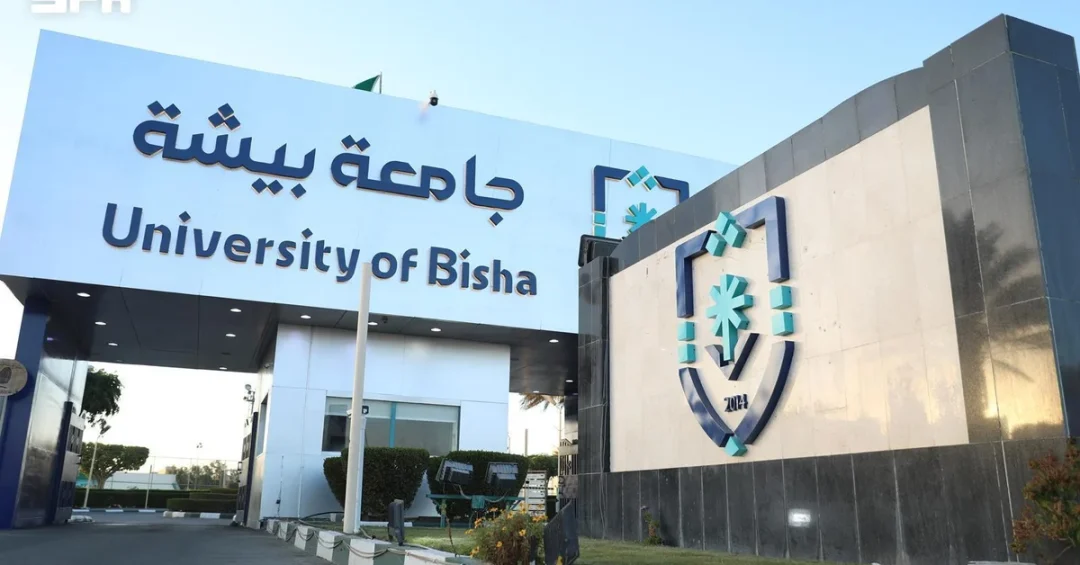
The University of Bisha has been ranked in the 1201–1400 band globally in the Times Higher Education World University Rankings 2027, according to an announcement carried by the Saudi Press Agency on September 30, 2026, confirming the institution’s continued presence among the world’s assessed universities. The placement reflects sustained progress in teaching quality, research environment, research quality, and international outlook — the four pillars on which the global ranking is built — and underscores the university’s growing role within the Kingdom of Saudi Arabia’s expanding higher education landscape.
For observers of Saudi education, the result is more than a single line in a global league table. It signals that institutions beyond the Kingdom’s largest metropolitan centres are now competing for international recognition, supported by national strategies that treat universities as engines of research, innovation, and human capital. The University of Bisha, located in the Asir region of southwestern Saudi Arabia, has steadily developed its academic programmes, research output, and international partnerships, and its presence in the 2027 edition of the Times Higher Education rankings places it alongside thousands of universities assessed worldwide. Why does a mid-tier global ranking matter so much to a national system in transformation? Because it offers external validation of the quality journey that Saudi higher education has undertaken over the past decade.
Context and Background
How did a regional university in Asir come to be measured against the world’s leading institutions? The answer lies in the scale and ambition of Saudi Arabia’s higher education reform programme. Under Vision 2030, the Kingdom has sought to diversify its economy away from oil dependence and build a knowledge-based society, with universities positioned as central actors in that transition. The Ministry of Education, the Ministry of Investment, and the Research, Development and Innovation Authority have coordinated efforts to raise research output, align curricula with labour-market needs, and encourage international collaboration. The University of Bisha has participated in this national effort, expanding its faculties, strengthening postgraduate programmes, and investing in research infrastructure.
The Times Higher Education World University Rankings are among the most widely cited global assessments of university performance. Institutions are evaluated across teaching, research environment, research quality, and international outlook, with each category drawing on a combination of reputation surveys, citation data, and institutional reporting. Being included in the rankings at all requires meeting stringent data-submission standards, which itself demonstrates a university’s capacity for transparent, internationally comparable reporting. For the University of Bisha, maintaining its position in the 1201–1400 range in the 2027 edition is therefore evidence of institutional consistency rather than a one-off achievement. It also reflects the broader maturation of Saudi universities, several of which now appear in the upper tiers of global rankings.
The Asir region, where Bisha is located, has historically been known for its agricultural economy and distinctive highland culture. In recent years, however, it has attracted growing investment in tourism, infrastructure, and education, in line with national efforts to develop regions outside the major urban centres of Riyadh, Jeddah, and the Eastern Province. The University of Bisha thus operates at the intersection of two national priorities: human capital development and balanced regional growth. Its academic offerings span medicine, engineering, science, arts, and business, and it serves a student population drawn largely from the surrounding governorates. The ranking announcement therefore carries local significance as well as national resonance.
Key Details of the Ranking
What exactly does the 1201–1400 placement indicate? The Times Higher Education World University Rankings group institutions into bands rather than assigning every university a single numerical position, particularly in the lower half of the global table. The 1201–1400 band in the 2027 edition includes universities from a wide range of countries, many of them young or mid-sized institutions with growing research profiles. For the University of Bisha, the band placement confirms that its performance on the ranking’s core indicators is consistent with a university that is actively building research capacity while maintaining teaching quality. The ranking’s methodology weights teaching and research environment heavily, meaning that institutions must demonstrate strength across multiple dimensions to secure inclusion.
The university’s continued presence in the rankings reflects deliberate institutional strategy. According to the Saudi Press Agency report, the University of Bisha has worked to develop its educational and research environment, improve academic performance, promote research and innovation, and expand academic and research partnerships locally and internationally. These are not abstract goals; they translate into concrete activities such as faculty development programmes, upgraded laboratories, joint research projects with international universities, and participation in academic conferences. Each of these activities contributes to the data that Times Higher Education assesses, from citation counts to the proportion of international students and staff. The ranking is therefore a by-product of sustained institutional effort rather than a standalone objective.
It is also worth noting what the ranking does not capture. Times Higher Education’s indicators focus on research-intensive metrics and reputation, which tend to favour older, larger, and wealthier institutions. Universities that excel in teaching, community engagement, or regional development may be underrepresented. The University of Bisha’s inclusion should therefore be read alongside its broader contributions to Saudi society: training healthcare professionals, engineers, teachers, and business graduates who serve the Asir region and the Kingdom as a whole. In this sense, the ranking is one measure among many, but it is a meaningful one because it subjects the university to international benchmarking and encourages continuous improvement.
International and Regional Impact
What does a Saudi regional university’s global ranking mean beyond the Kingdom’s borders? For international students and academics considering opportunities in Saudi Arabia, rankings serve as a familiar reference point. The presence of Saudi universities in global tables signals that the Kingdom’s higher education sector meets international standards and offers credible research environments. This matters for Vision 2030’s goal of attracting talent and fostering knowledge exchange. It also supports the Ministry of Education’s efforts to internationalise Saudi campuses, from exchange agreements to joint degree programmes. The University of Bisha’s ranking contributes to this broader national profile, demonstrating that quality is not confined to a handful of flagship institutions.
Regionally, the ranking reflects the growing competitiveness of Gulf higher education. Universities across the Gulf Cooperation Council have invested heavily in research and international partnerships, and global rankings have become a benchmark for that investment. Saudi Arabia’s universities, in particular, have risen in prominence, supported by national research funding and strategic partnerships with institutions in Asia, Europe, and North America. The University of Bisha’s placement in the 1201–1400 band positions it within this regional cohort, and its efforts to expand international collaboration align with the Kingdom’s wider diplomatic and economic engagement. For a university in Asir, such global connections also bring direct benefits: visiting scholars, collaborative research grants, and exposure to diverse academic practices.
The ranking announcement also carries symbolic weight for the Asir region, which has been the focus of significant development under Vision 2030, including tourism and infrastructure projects. A university with international recognition can serve as an anchor institution, attracting students and investment and contributing to the region’s knowledge economy. It can also support local industries through research and consultancy, from agriculture and water management to healthcare and engineering. In this way, the University of Bisha’s global ranking is intertwined with its regional mission, reinforcing the idea that international recognition and local relevance can advance together.
Economic and Strategic Significance
Why should economists and policymakers pay attention to university rankings? In a knowledge-driven global economy, higher education institutions are increasingly seen as drivers of innovation and productivity. Countries that build strong research universities tend to generate more patents, start-ups, and high-skilled jobs. Saudi Arabia’s Vision 2030 explicitly links educational reform to economic diversification, aiming to increase the private sector’s contribution to GDP and reduce reliance on oil revenues. Universities like the University of Bisha supply the skilled workforce that new industries require, from renewable energy and digital technology to healthcare and tourism. Their research capacity also supports the Kingdom’s ambitions in areas such as artificial intelligence, biotechnology, and advanced manufacturing.
The ranking’s emphasis on research quality and international outlook aligns with national strategies to boost research and development spending and to foster a culture of innovation. The Research, Development and Innovation Authority has set targets for increasing R&D investment, and universities are key recipients of that funding. For the University of Bisha, a strong showing in international rankings can help attract research grants, partnerships, and talented faculty, creating a virtuous cycle of improvement. It can also strengthen the university’s case for collaboration with the private sector, including Saudi companies seeking research partners and trained graduates. In this sense, the ranking is not merely an academic accolade but an economic signal.
Furthermore, the presence of regional universities in global rankings supports the Vision 2030 goal of balanced development across the Kingdom. By demonstrating that quality higher education exists outside the major cities, the University of Bisha helps retain talent in Asir and attract students from neighbouring regions. This reduces pressure on urban infrastructure and contributes to the development of a more geographically diversified economy. The university’s growth also stimulates local demand for housing, services, and amenities, generating multiplier effects in the regional economy. While these effects are difficult to quantify precisely, they are consistent with the patterns observed around successful universities worldwide.
Vision 2030 Alignment
How does a single ranking result connect to Saudi Arabia’s long-term national transformation? Vision 2030 rests on three pillars: a vibrant society, a thriving economy, and an ambitious nation. Higher education contributes to all three. A vibrant society requires educated citizens who can participate fully in cultural, civic, and economic life. A thriving economy needs a workforce equipped with advanced skills and a research base that supports innovation. An ambitious nation demands institutions that are accountable, transparent, and globally engaged. The University of Bisha’s ranking reflects progress on each of these fronts, from teaching quality to international partnerships, and it reinforces the Kingdom’s commitment to world-class education as a foundation for future prosperity.
Looking ahead, the university’s continued presence in the Times Higher Education rankings is likely to support its efforts to deepen research collaboration, expand postgraduate programmes, and enhance its international profile. The Ministry of Education has encouraged Saudi universities to pursue international accreditation and benchmarking, and rankings are one tool in that broader quality-assurance toolkit. For the University of Bisha, the 2027 result provides a platform for further advancement, while for the Kingdom it adds to a growing record of educational achievement. As Saudi Arabia continues its journey toward Vision 2030, institutions like the University of Bisha will remain essential partners in building a knowledge-based economy and a globally connected society.
20 Questions
Q1. What ranking did the University of Bisha achieve in the Times Higher Education World University Rankings 2027?
A1. The University of Bisha was ranked in the 1201–1400 range globally in the Times Higher Education World University Rankings 2027, according to the Saudi Press Agency announcement on September 30, 2026.
Q2. Which organization published the ranking?
A2. The ranking was published by Times Higher Education, a globally recognized authority on university performance assessments.
Q3. What indicators are used in the Times Higher Education World University Rankings?
A3. The rankings are based on teaching quality, research environment, research quality, and international outlook, which together measure academic and research performance and global engagement.
Q4. Where is the University of Bisha located?
A4. The University of Bisha is located in Bisha, in the Asir region of southwestern Saudi Arabia.
Q5. Why is this ranking significant for Saudi Arabia?
A5. It reflects the Kingdom’s progress in developing higher education under Vision 2030, demonstrating that regional universities can achieve international recognition and contribute to a knowledge-based economy.
Q6. What efforts did the University of Bisha make to achieve this ranking?
A6. The university developed its educational and research environment, improved academic performance, promoted research and innovation, and expanded local and international academic partnerships.
Q7. What is the Times Higher Education World University Rankings’ global reputation?
A7. It is one of the most widely cited global university rankings, used by students, academics, and policymakers to compare institutional performance across countries.
Q8. How does this ranking benefit students at the University of Bisha?
A8. It enhances the university’s reputation, potentially attracting more international partnerships, visiting scholars, and research opportunities that enrich the student experience.
Q9. Does the ranking affect the university’s funding or partnerships?
A9. A strong international ranking can help attract research grants, collaborations, and industry partnerships, supporting the university’s continued development.
Q10. What role does the Saudi Ministry of Education play in such achievements?
A10. The Ministry of Education supports universities through policies, funding, and strategic guidance aimed at raising quality and aligning higher education with Vision 2030 goals.
Q11. How does this ranking align with Vision 2030?
A11. Vision 2030 seeks to build a knowledge-based economy and develop human capital; university rankings validate progress toward these objectives and encourage further improvement.
Q12. Are other Saudi universities also ranked by Times Higher Education?
A12. Yes, several Saudi universities appear in Times Higher Education rankings, reflecting the Kingdom’s broad investment in higher education and research.
Q13. What does the 1201–1400 band signify?
A13. It indicates that the university is placed within a specific performance tier globally, demonstrating consistent quality across the ranking’s core indicators.
Q14. How does the ranking measure international outlook?
A14. International outlook considers the proportion of international students and staff, as well as international research collaboration and reputation.
Q15. What are the university’s key academic disciplines?
A15. The University of Bisha offers programmes in medicine, engineering, science, arts, and business, serving students from Asir and beyond.
Q16. How does the ranking impact the Asir region?
A16. It enhances the region’s profile as a centre of education and innovation, supporting local development and attracting talent and investment.
Q17. What is the significance of the announcement date?
A17. The announcement on September 30, 2026, coincides with the release of the 2027 rankings, providing timely recognition of the university’s efforts.
Q18. Can this ranking help the university attract international students?
A18. Yes, global rankings are a key reference for international students; a ranked university is more visible and credible in the global education market.
Q19. What future goals might the University of Bisha pursue?
A19. The university is likely to continue improving research output, expanding international partnerships, and enhancing teaching quality to climb higher in future rankings.
Q20. How does this achievement reflect on Saudi Arabia’s global standing?
A20. It demonstrates the Kingdom’s commitment to educational excellence and its growing presence in global knowledge networks, consistent with Vision 2030 ambitions.
Reader Feedback
We value your thoughts. Please share your feedback on this article.
Your feedback helps us improve our coverage.
Related articles
 Madinah Concludes Swimming Literacy Project with 300 Students
 AlUla Program Trains 50 Youth in Public Speaking
 Najran Schools Adopt Winter Schedule Starting Sunday
 Najran University Climbs Four Places in QS Arab Rankings 2027
 Saudi Arabia Sets February 2027 Deadline for Worker Housing
 ETEC to Hold Third National Forum for School Excellence in Riyadh