


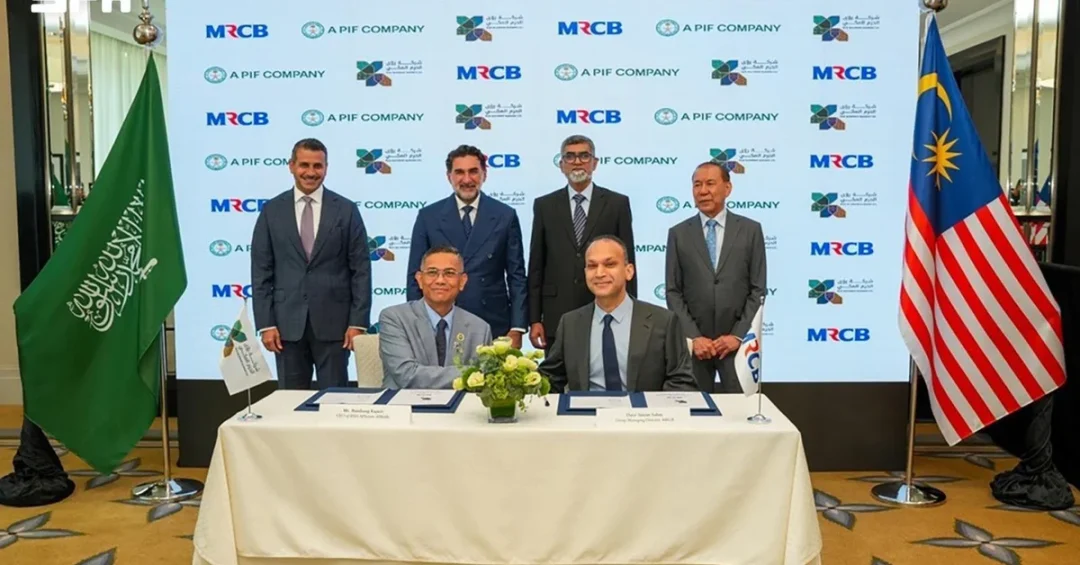
RUA AlHaram AlMakki, a Public Investment Fund (PIF) company and master developer of the King Salman Gate project, signed a cooperation agreement with Malaysian Resources Corporation Berhad (MRCB) in Kuala Lumpur on September 29, 2026, to study the development of a major transport-oriented mixed-use destination within King Salman Gate in Makkah, with an estimated total value of SAR21 billion. The announcement, released through the Saudi Press Agency (SPA), marks a further step in the Kingdom’s efforts to attract leading international partners to the holy city and to expand its capacity to welcome pilgrims and visitors from every corner of the world. The agreement remains subject to due diligence, required approvals and financing, as well as the determination of implementation phases and the signing of final agreements, reflecting a measured and transparent approach to a project of national significance.
The cooperation agreement was signed in the Malaysian capital, Kuala Lumpur, and focuses on drawing on MRCB’s extensive experience in developing projects linked to integrated transport systems. MRCB is best known for KL Sentral, Malaysia’s largest integrated transport hub, which combines multiple transport networks with a wide range of urban uses. Could there be a more fitting partner for a development designed to move millions of pilgrims smoothly and safely? The proposed project includes a study to develop a public bus station, along with residential, commercial, retail and other mixed-use developments within King Salman Gate. Beyond infrastructure, the partnership aims to study ways to use the transport network and supporting services to facilitate pilgrims’ and visitors’ movement, enhance accessibility, and improve their overall experience in Makkah.
Context and Background
How did King Salman Gate become one of the most closely watched urban developments in the region? The project is being led by RUA AlHaram AlMakki, a company owned by the Public Investment Fund, Saudi Arabia’s sovereign wealth fund and a principal engine of the Kingdom’s economic transformation. As master developer, RUA AlHaram AlMakki is responsible for planning and delivering the King Salman Gate district, a vast mixed-use destination in Makkah that is intended to serve the growing number of pilgrims and visitors who travel to the holy city each year. The project forms part of a broader national effort, guided by Saudi Vision 2030, to enrich the pilgrim experience while preserving Makkah’s unique heritage and spiritual character.
The cooperation agreement with MRCB follows a clear pattern in Saudi Arabia’s development strategy: pairing domestic vision and capital with international technical expertise. MRCB brings a track record in transit-oriented development, a planning approach that clusters housing, offices, shops and public spaces around transport hubs so that people can move easily without relying on private cars. KL Sentral, MRCB’s flagship project in Kuala Lumpur, is widely regarded as a benchmark for this model in Southeast Asia, integrating rail, bus and commercial functions into a single urban destination. By studying how such a model could be adapted to Makkah, the two partners are exploring ways to make the journey of pilgrims and visitors more comfortable, efficient and dignified.
The timing of the agreement is significant. Pilgrimage numbers have rebounded strongly in recent years, and Saudi Arabia has set ambitious goals to expand capacity while raising the quality of services across the entire pilgrim journey. The Kingdom has also made clear that it welcomes international investment and expertise in projects that support these objectives. In this context, the SAR21 billion estimated value of the proposed development signals the scale of ambition behind King Salman Gate and the confidence that global partners place in the Saudi market.
Key Details of the Agreement
What exactly does the cooperation agreement cover? According to the announcement carried by the Saudi Press Agency, the agreement opens the way for attracting international investments to participate in the development of the King Salman Gate project, supporting Saudi Arabia’s efforts to enhance Makkah’s capacity to serve pilgrims and visitors from around the world. The two parties will study the development of a major transport-oriented mixed-use destination, including a public bus station and a range of residential, commercial, retail and other mixed-use components. The partnership will also explore an integrated framework for developing, financing and implementing the proposed project, drawing on RUA AlHaram AlMakki’s vision for King Salman Gate and MRCB’s expertise in major mixed-use developments linked to transport systems.
Importantly, the agreement is a cooperation and study framework rather than a final construction contract. The project remains subject to the completion of due diligence, required approvals and financing, as well as the determination of implementation phases and the signing of final agreements. This staged approach is consistent with international best practice for large-scale urban developments, allowing both partners to assess technical, financial and operational requirements before committing to full implementation. It also ensures that all necessary regulatory approvals are obtained in an orderly manner.
The agreement envisages integration between investment, development, mobility solutions and visitor services. In practical terms, that means the partners will examine how transport infrastructure can be planned alongside hotels, residences, retail space and public amenities so that each element reinforces the others. For pilgrims and visitors, the result could be smoother arrival and departure, easier movement between key sites, and a wider range of services close to where they stay. For investors, it could mean new opportunities in one of the most visited cities in the world.
International and Regional Impact
Why does a partnership signed in Kuala Lumpur matter for Makkah and for the wider region? The agreement deepens economic ties between Saudi Arabia and Malaysia, two countries with longstanding relations and growing commercial links. Malaysia has significant expertise in infrastructure, Islamic finance and urban development, and its companies have increasingly looked to the Gulf for opportunities. By bringing MRCB into the King Salman Gate project, Saudi Arabia is strengthening a relationship that spans trade, investment and cultural exchange, while also signaling that its markets are open to partners from across Asia and beyond.
Regionally, the project reinforces Makkah’s position as a global destination at the heart of the Islamic world. Improvements to transport and visitor infrastructure in the holy city have effects that extend far beyond Saudi borders, because pilgrims travel to Makkah from virtually every country. Better bus stations, clearer transport connections and higher-quality services make the pilgrimage journey easier for millions of people, many of whom are visiting internationally for the first time. The cooperation agreement also aligns with Saudi Arabia’s broader efforts to position itself as a hub for international business, tourism and logistics under Vision 2030.
For Southeast Asia, the agreement is a reminder that Gulf investment and development programs offer substantial opportunities for companies with specialized expertise. MRCB’s involvement in a project of this scale could encourage other Malaysian and regional firms to explore partnerships in the Kingdom. At the same time, the Kingdom’s careful approach, including due diligence and phased implementation, underscores that these opportunities are pursued with rigor and long-term planning rather than short-term speculation.
Economic and Strategic Significance
What makes the SAR21 billion estimate so important? Large infrastructure and mixed-use developments generate economic activity across many sectors, from construction and engineering to hospitality, retail and professional services. A project of this size within King Salman Gate would create jobs, stimulate local businesses and attract further investment into Makkah. It would also expand the city’s capacity to host pilgrims and visitors, supporting a pilgrimage economy that is central to the Kingdom’s economic diversification agenda. The Public Investment Fund’s role as the owner of RUA AlHaram AlMakki ensures that the project is developed in line with national priorities and with a long-term perspective.
Strategically, the agreement reflects Saudi Arabia’s determination to build world-class infrastructure in the holy city. Transport-oriented development is particularly valuable in Makkah, where the efficient movement of large numbers of people is a constant priority. By studying a public bus station alongside residential, commercial and retail components, the partners are examining how to create a district that functions smoothly during peak pilgrimage periods and remains vibrant throughout the year. The integrated framework for development, financing and implementation is designed to ensure that the project is financially sound and operationally effective.
The involvement of an experienced international developer also sends a positive signal to global markets. It demonstrates that Saudi Arabia can attract reputable partners to complex, high-value projects, and that those partners see the Kingdom as a stable and attractive place to do business. For RUA AlHaram AlMakki, the cooperation agreement is part of a deliberate strategy to attract leading international partners to strengthen Saudi Arabia’s efforts to enhance the pilgrim and visitor experience in Makkah in line with the highest global standards.
Vision 2030 Alignment
How does this agreement connect to the Kingdom’s long-term vision? Saudi Vision 2030 aims to diversify the economy, expand the private sector, create jobs and improve the quality of life for citizens and visitors alike. It also places great emphasis on serving the guests of God and on enriching the spiritual and cultural experience of the pilgrimage. King Salman Gate embodies Saudi Arabia’s efforts to enrich the experience of pilgrims and visitors from around the world while preserving Makkah’s unique heritage. The cooperation agreement with MRCB advances these goals by bringing international expertise into a project designed to raise standards of mobility, accommodation and services in the holy city.
The project also supports the broader ambition of making Saudi Arabia a global destination for business, tourism and cultural exchange. By developing a mixed-use district that integrates transport, commerce and community life, King Salman Gate can serve as a model for sustainable urban development in the Kingdom and beyond. As the partnership moves through its study and approval phases, it will be watched closely by investors and urban planners internationally. The agreement signed in Kuala Lumpur is therefore more than a bilateral deal; it is a further expression of Saudi Arabia’s openness to the world and its commitment to building a future in which pilgrims and visitors are welcomed with the highest standards of care, efficiency and hospitality.
20 Questions
Q1. What is the King Salman Gate project?
A1. King Salman Gate is a major mixed-use development in Makkah led by RUA AlHaram AlMakki, a Public Investment Fund company. It is designed to serve pilgrims and visitors with improved infrastructure, services and urban amenities, in line with Saudi Vision 2030.
Q2. Which companies signed the cooperation agreement?
A2. RUA AlHaram AlMakki, a PIF company and master developer of King Salman Gate, signed the agreement with Malaysian Resources Corporation Berhad (MRCB), a Malaysian real estate and infrastructure developer, in Kuala Lumpur on September 29, 2026.
Q3. What is the estimated value of the proposed development?
A3. The estimated total value of the proposed transport-oriented mixed-use destination within King Salman Gate is SAR21 billion. The figure is an estimate and remains subject to due diligence, approvals and financing.
Q4. Where was the agreement signed?
A4. The cooperation agreement was signed in Kuala Lumpur, the capital of Malaysia. The location reflects Saudi Arabia’s growing economic and investment ties with Southeast Asian partners.
Q5. What does the agreement cover?
A5. It covers a study to develop a public bus station and residential, commercial, retail and other mixed-use components within King Salman Gate, along with an integrated framework for developing, financing and implementing the proposed project.
Q6. Is the project already approved for construction?
A6. No. The project remains subject to the completion of due diligence, required approvals and financing, as well as the determination of implementation phases and the signing of final agreements. It is currently at the study stage.
Q7. Why was MRCB chosen as a partner?
A7. MRCB has strong experience in transport-oriented development, most notably KL Sentral, Malaysia’s largest integrated transport hub. Its expertise aligns with the goal of improving mobility and services for pilgrims and visitors in Makkah.
Q8. What is KL Sentral and why does it matter?
A8. KL Sentral is a major integrated transport hub in Kuala Lumpur that combines rail, bus and commercial functions. It is a benchmark for transit-oriented development and offers lessons for the King Salman Gate project.
Q9. How does the project help pilgrims?
A9. The project aims to improve transport connections, accessibility and visitor services, making it easier for pilgrims and visitors to move around Makkah and access key sites, while enhancing their overall experience in the holy city.
Q10. What role does the Public Investment Fund play?
A10. The Public Investment Fund owns RUA AlHaram AlMakki, the master developer of King Salman Gate. The PIF’s involvement ensures the project aligns with national priorities and Saudi Vision 2030 objectives.
Q11. How does this agreement support Vision 2030?
A11. It supports Vision 2030 by attracting international investment, improving infrastructure in Makkah, enhancing the pilgrim experience, diversifying the economy and strengthening Saudi Arabia’s global partnerships in line with the Kingdom’s long-term goals.
Q12. What economic benefits could the project bring?
A12. The project could generate jobs, stimulate local businesses, attract further investment and expand Makkah’s capacity to host pilgrims and visitors, supporting the pilgrimage economy and broader economic diversification efforts.
Q13. Does the agreement involve international investment?
A13. Yes. The cooperation agreement opens the way for attracting international investments to participate in the development of King Salman Gate, supporting Saudi Arabia’s efforts to enhance Makkah’s capacity to serve pilgrims and visitors.
Q14. What is transit-oriented development?
A14. Transit-oriented development clusters housing, shops, offices and public spaces around transport hubs so people can move easily without relying on cars. It improves efficiency, convenience and quality of life in urban areas.
Q15. How will the project preserve Makkah’s heritage?
A15. The project is being developed with respect for Makkah’s unique heritage and spiritual character. Planning aims to balance modern infrastructure and services with the preservation of the holy city’s cultural and religious identity.
Q16. What happens next after the agreement?
A16. The partners will conduct due diligence, seek required approvals and financing, determine implementation phases and work toward signing final agreements. The study phase will assess technical, financial and operational requirements.
Q17. Why is the agreement important for Saudi-Malaysia relations?
A17. It deepens economic ties between the two countries, strengthens cooperation in infrastructure and urban development, and signals that Saudi Arabia welcomes reputable partners from Southeast Asia and across the world.
Q18. Who announced the agreement?
A18. The agreement was announced through the Saudi Press Agency (SPA), the Kingdom’s official news agency. The announcement provided details on the scope, value and conditions of the cooperation agreement.
Q19. What types of facilities are planned within the development?
A19. Plans include a public bus station and residential, commercial, retail and other mixed-use components. These are intended to integrate transport, living, shopping and services within King Salman Gate.
Q20. What is the long-term significance of King Salman Gate?
A20. King Salman Gate represents Saudi Arabia’s commitment to enriching the pilgrim and visitor experience while preserving Makkah’s heritage. It supports Vision 2030 goals and positions the holy city for future growth.
Reader Feedback
We value your thoughts. Please share your feedback on this article.
Your feedback helps us improve our coverage.
Related articles
 SaudiFood Exhibitions Draw Arabian Gulf Cup Visitors in Jeddah
 RGA: Road Network Boosts Logistics, Food Security in KSA
 Saudi Banks Launch Campaign to Empower Startups and SMEs
 Saudi Ministry Approves Camel Trading Regulatory Controls
 CST participates in MWC Barcelona 2025
 IsDB Chairman Meets Algerian Finance Minister in Doha