


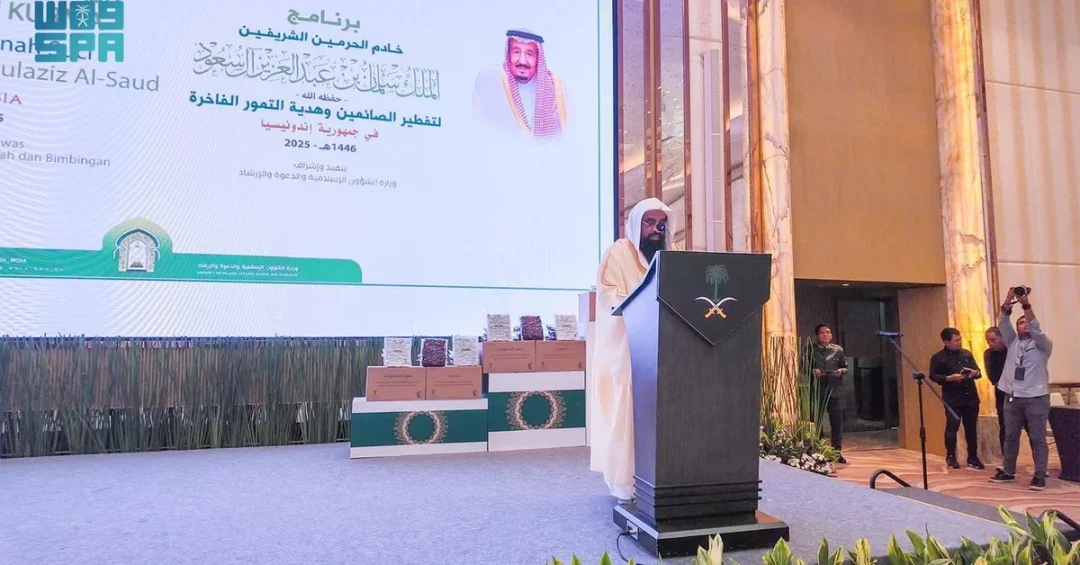
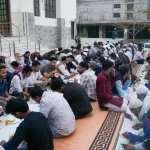
The Ministry of Islamic Affairs, Dawah and Guidance has launched the Custodian of the Two Holy Mosques’ Ramadan distribution programs in Indonesia, delivering dates, iftar meals, and copies of the Holy Quran to more than 136,000 beneficiaries during the blessed month. The official launch ceremony, held in Jakarta, was attended by Saudi Ambassador to Indonesia Faisal Al-Amoudi alongside several Indonesian ministers, senior officials, and heads of Islamic associations and centers, according to the Saudi Press Agency. The initiative forms part of the Kingdom’s long-standing global Ramadan outreach, which each year extends the generosity of the Custodian of the Two Holy Mosques to Muslim communities across Asia, Africa, and beyond.
Indonesia, home to the world’s largest Muslim population, represents one of the most significant destinations for these programs. The scale of this year’s effort — 56,000 individuals receiving dates, 35,000 receiving copies of the Quran, and 45,000 benefiting from iftar meals — underscores the depth of the Saudi-Indonesian religious and cultural partnership. The programs are implemented under the direct supervision of the Ministry of Islamic Affairs, Dawah and Guidance, reflecting the Kingdom’s enduring commitment to serving Muslims worldwide and strengthening the bonds of Islamic solidarity.
Context and Background
How did the Custodian of the Two Holy Mosques’ Ramadan programs become a global institution? For decades, the Kingdom of Saudi Arabia has operated one of the largest seasonal humanitarian and religious distribution networks in the world. Rooted in the responsibility that comes with hosting the Two Holy Mosques in Makkah and Madinah, these programs are designed to support fasting Muslims, provide copies of the Holy Quran to communities in need, and offer dates — a staple of the Prophet’s tradition — to those observing Ramadan.
The Ministry of Islamic Affairs, Dawah and Guidance oversees the implementation of these initiatives through Saudi embassies, Islamic centers, and local partners in dozens of countries. In Indonesia, the ministry works closely with the Saudi Embassy in Jakarta and Indonesian Islamic organizations to ensure that distribution reaches the intended beneficiaries efficiently and respectfully. The Jakarta ceremony marked the formal beginning of this year’s activities, bringing together diplomatic and religious leaders to highlight the shared values that unite the Kingdom and Indonesia.
The relationship between Saudi Arabia and Indonesia has deep historical roots, strengthened by the annual Hajj pilgrimage that brings hundreds of thousands of Indonesian Muslims to the Kingdom. Over time, this relationship has expanded into broader cooperation in education, trade, and cultural exchange. The Ramadan distribution programs are a visible expression of that partnership, demonstrating how religious solidarity can translate into tangible support for communities during a time of spiritual reflection and communal gathering.
Key Details of the 2025 Distribution Programs
What exactly does this year’s program deliver to Indonesian communities? According to the Saudi Press Agency, the 2025 initiative will benefit 56,000 individuals through the dates distribution program, 35,000 through the distribution of copies of the Holy Quran, and 45,000 through the iftar meal program. Together, these figures represent more than 136,000 beneficiaries across Indonesia, making it one of the largest single-country Ramadan outreach efforts in the region.
The launch ceremony in Jakarta was attended by Saudi Ambassador to Indonesia Faisal Al-Amoudi, along with several Indonesian ministers, officials, and heads of Islamic associations and centers. Their presence underscored the official nature of the partnership and the mutual respect between the two nations. The Ambassador’s participation highlighted the Kingdom’s commitment to maintaining strong diplomatic and cultural ties with Indonesia, while the Indonesian officials’ attendance reflected the importance they place on Saudi Arabia’s role in supporting Islamic institutions and communities.
The distribution of dates carries particular significance during Ramadan, as dates are traditionally used to break the fast, following the practice of the Prophet Muhammad (peace be upon him). The iftar meals provide nourishment for those who may otherwise struggle to find food at sunset, while the copies of the Quran support religious education and spiritual growth. Each component of the program addresses a specific need within the community, ensuring that the support is both practical and spiritually meaningful.
International and Regional Impact
Why does a program in Indonesia matter beyond its borders? Saudi Arabia’s Ramadan initiatives are part of a broader pattern of global engagement that positions the Kingdom as a leading humanitarian actor and a reliable partner for Muslim communities worldwide. By delivering aid directly to beneficiaries in countries like Indonesia, the Kingdom reinforces its role as a custodian of Islamic heritage and a source of stability and generosity in the Muslim world.
The impact extends to diplomatic relations as well. Indonesia is a key partner for Saudi Arabia in Southeast Asia, and the two countries share interests in trade, investment, and regional security. The Ramadan programs serve as a soft-power tool that complements formal diplomatic and economic ties, building goodwill at the grassroots level. For Indonesian Muslims, the arrival of Saudi-funded dates, iftar meals, and Qurans during Ramadan is a tangible reminder of the connection between their faith and the Kingdom that hosts Islam’s holiest sites.
Regionally, the initiative contributes to the broader ecosystem of Islamic cooperation. Saudi Arabia’s efforts are often coordinated with the Organisation of Islamic Cooperation and other multilateral bodies, reinforcing the Kingdom’s commitment to collective action. In a world where humanitarian needs are growing, the Ramadan programs demonstrate how religious traditions can be harnessed to deliver practical benefits and foster unity among diverse Muslim communities.
Economic and Strategic Significance
What does this initiative reveal about Saudi Arabia’s strategic priorities? The distribution programs are funded by the Saudi government as part of its annual budget for religious outreach and humanitarian assistance. While the direct economic value of dates and Qurans may be modest compared to large-scale infrastructure projects, the strategic value is substantial. These programs strengthen Saudi Arabia’s soft power, enhance its reputation as a responsible global actor, and deepen relationships with countries that are important to its long-term economic diversification.
Indonesia is a significant market for Saudi exports and a source of investment opportunities, particularly in energy, petrochemicals, and halal industries. By nurturing goodwill through Ramadan programs, the Kingdom creates a favorable environment for broader economic cooperation. Moreover, the programs align with Vision 2030’s emphasis on enhancing Saudi Arabia’s global engagement and promoting moderate Islam. They also support the growth of the Islamic economy, including the halal sector, which is a key pillar of the Kingdom’s diversification strategy.
From a logistical standpoint, the successful execution of these programs requires coordination between the Ministry of Islamic Affairs, Dawah and Guidance, Saudi embassies, and local partners. This operational capacity is itself an asset, demonstrating the Kingdom’s ability to manage complex international initiatives. The experience gained from these efforts can be applied to other areas of humanitarian and development work, further enhancing Saudi Arabia’s global standing.
Vision 2030 Alignment
How do Ramadan distribution programs connect to Saudi Arabia’s Vision 2030? Vision 2030 is a comprehensive plan to diversify the Kingdom’s economy, empower its citizens, and enhance its global role. While the vision is often associated with economic reforms and mega-projects, it also encompasses social and cultural dimensions, including the promotion of moderate Islam and the strengthening of Saudi Arabia’s leadership in the Islamic world.
The Custodian of the Two Holy Mosques’ programs exemplify this dimension by showcasing the Kingdom’s commitment to serving Muslims and supporting communities in need. They also contribute to the vision’s goal of increasing non-oil revenues and fostering international partnerships. By investing in relationships with countries like Indonesia, Saudi Arabia builds a network of allies and partners that can support its economic and diplomatic objectives. As the Kingdom continues to implement Vision 2030, initiatives like this will remain a vital part of its strategy to project influence, build goodwill, and fulfill its responsibilities as the heart of the Islamic world.
In conclusion, the launch of the Ramadan distribution programs in Indonesia is more than a seasonal charity effort; it is a strategic investment in Saudi Arabia’s global relationships and a reflection of its enduring values. As the beneficiaries in Indonesia receive dates, iftar meals, and copies of the Quran, they also receive a message of solidarity from the Kingdom. This message resonates across the Muslim world and reinforces Saudi Arabia’s position as a leader in humanitarian and religious affairs. Under Vision 2030, such initiatives will continue to grow, connecting the Kingdom’s past, present, and future in service of Islam and humanity.
20 Questions
Q1. What is the purpose of the Custodian of the Two Holy Mosques’ Ramadan distribution programs?
A1. The programs provide dates, iftar meals, and copies of the Holy Quran to Muslims in various countries during Ramadan, reflecting Saudi Arabia’s commitment to serving Islamic communities and strengthening solidarity worldwide.
Q2. Which Saudi ministry oversees these programs?
A2. The Ministry of Islamic Affairs, Dawah and Guidance oversees the implementation of the Custodian of the Two Holy Mosques’ Ramadan distribution programs in coordination with Saudi embassies and local partners.
Q3. Where was the launch ceremony for the Indonesia programs held?
A3. The ceremony was held in Jakarta, Indonesia, and was attended by Saudi Ambassador to Indonesia Faisal Al-Amoudi, along with Indonesian ministers, officials, and heads of Islamic associations and centers.
Q4. How many people will benefit from the dates distribution program in Indonesia this year?
A4. According to the Saudi Press Agency, 56,000 individuals will benefit from the dates distribution program in Indonesia during Ramadan this year.
Q5. How many copies of the Holy Quran will be distributed in Indonesia?
A5. The program will distribute copies of the Holy Quran to 35,000 individuals in Indonesia, supporting religious education and spiritual growth during the blessed month.
Q6. How many people will receive iftar meals through this initiative?
A6. A total of 45,000 individuals will benefit from the iftar meal program, providing nourishment for those breaking their fast at sunset throughout Ramadan.
Q7. Who attended the launch ceremony in Jakarta?
A7. Saudi Ambassador to Indonesia Faisal Al-Amoudi, several Indonesian ministers, government officials, and heads of Islamic associations and centers attended the ceremony, highlighting the strong bilateral ties.
Q8. Why is Indonesia a significant focus for these programs?
A8. Indonesia is home to the world’s largest Muslim population, making it a key partner for Saudi Arabia in religious and cultural outreach, and a natural priority for Ramadan distribution efforts.
Q9. What is the significance of distributing dates during Ramadan?
A9. Dates are traditionally used to break the fast, following the practice of the Prophet Muhammad (peace be upon him), and they provide a nutritious and culturally meaningful gift to recipients.
Q10. How do these programs reflect Saudi Arabia’s Vision 2030?
A10. They align with Vision 2030’s goals of promoting moderate Islam, enhancing global engagement, and strengthening Saudi Arabia’s leadership in the Islamic world through humanitarian and cultural initiatives.
Q11. Does Saudi Arabia run similar programs in other countries?
A11. Yes, the Custodian of the Two Holy Mosques’ Ramadan programs are implemented in dozens of countries across Asia, Africa, Europe, and the Americas, benefiting millions of Muslims annually.
Q12. What role does the Saudi Embassy in Jakarta play in these programs?
A12. The embassy coordinates with Indonesian authorities and Islamic organizations to ensure the efficient and respectful distribution of dates, iftar meals, and Qurans to beneficiaries across the country.
Q13. How are beneficiaries selected for the distribution programs?
A13. Beneficiaries are identified in cooperation with local Islamic associations, centers, and community leaders to ensure that support reaches those most in need during Ramadan.
Q14. What is the total number of beneficiaries in Indonesia this year?
A14. More than 136,000 individuals will benefit from the combined programs, including 56,000 receiving dates, 35,000 receiving Qurans, and 45,000 receiving iftar meals.
Q15. How does this initiative support Islamic solidarity?
A15. By providing tangible support to Muslims in Indonesia, the program strengthens the bonds of brotherhood and demonstrates Saudi Arabia’s commitment to the global Islamic community.
Q16. Are these programs funded by the Saudi government?
A16. Yes, the programs are funded by the Saudi government as part of its annual budget for religious outreach and humanitarian assistance, reflecting the Kingdom’s enduring commitment to serving Islam.
Q17. What impact do these programs have on Saudi-Indonesian relations?
A17. They enhance goodwill and people-to-people ties, complementing diplomatic and economic cooperation between the two nations and reinforcing their shared Islamic heritage.
Q18. How long have these Ramadan distribution programs been running?
A18. The Custodian of the Two Holy Mosques’ programs have been operating for many years, growing in scale and reach to become a hallmark of Saudi Arabia’s global Ramadan outreach.
Q19. What other forms of support does Saudi Arabia provide to Indonesia?
A19. Beyond Ramadan programs, Saudi Arabia cooperates with Indonesia in Hajj and Umrah services, education, trade, investment, and cultural exchange, reflecting a comprehensive partnership.
Q20. What message does this initiative send to the world?
A20. It demonstrates Saudi Arabia’s dedication to humanitarian values, moderate Islam, and global cooperation, reinforcing its role as a responsible leader in the Muslim world and beyond.
Reader Feedback
We value your thoughts. Please share your feedback on this article.
Your feedback helps us improve our coverage.
Related articles
 Saudi Arabia Distributes Dates, Iftar Meals in Albania
 Over 6 Million Trees Enhance Vegetation Cover in Qassim
 KSrelief Distributes 500 Food Baskets in Guinea
 KSrelief Distributes 150 Food Baskets in Montenegro
 Saudi Vice Foreign Minister Meets UK Ambassador
 Saudi Iftar Program Reaches Nearly 100,000 in India and Neighbors