


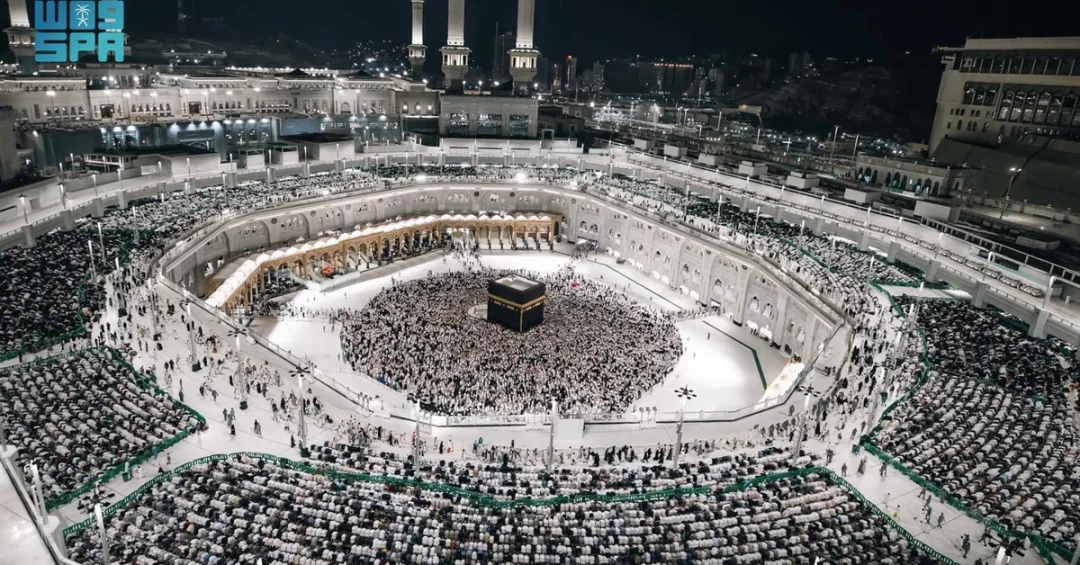
Makkah security patrols are working around the clock to ensure the safety and smooth flow of Umrah performers and visitors during the holy month of Ramadan, utilizing advanced technology and close coordination with multiple security agencies, according to the Saudi Press Agency (SPA). The patrols manage large crowds, assist the elderly, ensure the well-being of children, and guide those who have lost their way, reflecting the Kingdom of Saudi Arabia’s enduring commitment to protecting the millions of pilgrims who travel to the Grand Mosque each year. The operation is part of a comprehensive security and service framework overseen by the Ministry of Interior and supported by various government entities, all working in unison to uphold the sanctity and order of the pilgrimage experience.
Ramadan is one of the busiest periods for Umrah, as Muslims from around the world seek the spiritual rewards of performing the minor pilgrimage during the holy month. The influx of worshippers brings logistical and security challenges, but Saudi authorities have consistently demonstrated their ability to manage such large-scale gatherings with professionalism and care. The Makkah security patrols are a vital component of this effort, ensuring that every pilgrim can focus on their worship without fear or disruption. Their presence is both a reassurance and a testament to the Kingdom’s dedication to serving the Guests of God.
Context and Background
Why does the Kingdom of Saudi Arabia place such immense importance on the safety and comfort of Umrah performers during Ramadan? The answer lies in the sacred responsibility that Saudi Arabia has shouldered for decades as the custodian of the Two Holy Mosques. The pilgrimage to Makkah is one of the Five Pillars of Islam, and the Kingdom considers it a profound honor to facilitate this spiritual journey for millions of Muslims annually. Ramadan, in particular, holds special significance, as Umrah performed during this month is considered highly rewarding. The resulting surge in visitors requires meticulous planning and execution by security and service agencies.
Over the years, Saudi Arabia has invested heavily in infrastructure and technology to enhance the pilgrimage experience. The expansion of the Grand Mosque, the development of modern transportation networks, and the introduction of smart systems for crowd management are all part of this ongoing effort. The Makkah security patrols are equipped with state-of-the-art tools and trained to handle diverse situations, from medical emergencies to lost children. Their work is coordinated with the General Security, the Special Emergency Forces, and the Saudi Red Crescent Authority, among others, creating a seamless safety net for pilgrims.
Furthermore, the Kingdom’s Vision 2030 reform agenda has placed a strong emphasis on improving the quality of services for pilgrims and visitors, recognizing the pilgrimage sector as a key pillar of economic diversification and cultural exchange. The security measures in place during Ramadan are not merely reactive; they are part of a proactive strategy to ensure that the pilgrimage remains safe, orderly, and spiritually fulfilling. This approach aligns with the directives of the Saudi leadership, which has consistently prioritized the well-being of pilgrims above all else.
Key Details of the Security Operation
What specific measures are the Makkah security patrols taking to manage the crowds and assist those in need? According to the Saudi Press Agency, the patrols are deployed across key areas of Makkah, including the Grand Mosque and its surrounding plazas, the central Haram area, and major transportation hubs. They use advanced surveillance technology, including high-resolution cameras and real-time monitoring systems, to track crowd density and respond swiftly to any incidents. This technology enables them to identify potential bottlenecks and deploy additional personnel where needed, ensuring a smooth flow of pilgrims.
In addition to crowd management, the patrols provide direct assistance to vulnerable groups. Elderly pilgrims, many of whom may be performing Umrah for the first time or have limited mobility, are given special attention. Security personnel help them navigate the crowded areas, offer wheelchair assistance, and ensure they have access to necessary facilities. Children who become separated from their families are quickly reunited with their guardians through a coordinated system that involves security officers, volunteers, and the lost-and-found centers. The patrols also guide pilgrims who are unfamiliar with the layout of the Grand Mosque, directing them to the correct gates, prayer areas, and exit routes.
The operation is not limited to security personnel alone. It involves a multi-agency collaboration that includes the Ministry of Hajj and Umrah, the Makkah Municipality, the Saudi Red Crescent Authority, and various volunteer organizations. Together, they provide a comprehensive range of services, from medical care and emergency response to sanitation and crowd control. The integration of these efforts ensures that pilgrims receive the highest level of care and support throughout their journey. The Saudi Press Agency report highlights that the patrols are working diligently to maintain order and safety, a reflection of the Kingdom’s unwavering commitment to its sacred duty.
International and Regional Impact
How does the efficient management of Umrah during Ramadan impact Saudi Arabia’s standing on the global stage? The successful execution of such a massive logistical operation enhances the Kingdom’s reputation as a capable and responsible custodian of the Two Holy Mosques. Millions of pilgrims return to their home countries with positive experiences, sharing stories of safety, hospitality, and spiritual fulfillment. This soft power is invaluable, as it strengthens Saudi Arabia’s ties with Muslim-majority nations and fosters goodwill among people of all backgrounds. The smooth flow of pilgrims also demonstrates the Kingdom’s ability to host large international gatherings, a skill that has been recognized by global organizations.
Regionally, the pilgrimage season brings economic benefits to Makkah and surrounding areas, boosting local businesses, hotels, and transportation services. It also reinforces the bonds of brotherhood among Muslims from diverse countries, as they come together in worship and mutual support. The security patrols play a crucial role in creating an environment where these interactions can take place peacefully. Their professionalism and dedication are a source of pride for Saudi citizens and residents alike, and they contribute to the broader narrative of a modern, forward-looking Saudi Arabia that honors its traditions while embracing innovation.
Economic and Strategic Significance
What economic and strategic value does the Umrah season hold for Saudi Arabia? The pilgrimage sector is a major contributor to the national economy, generating revenue through travel, accommodation, retail, and other services. The Kingdom’s Vision 2030 aims to increase the number of Umrah performers to 30 million annually by 2030, a target that requires continuous investment in infrastructure and services. The security measures in place during Ramadan are an essential part of this strategy, as they ensure that pilgrims have a safe and enjoyable experience, encouraging them to return and recommend the journey to others.
Strategically, the pilgrimage strengthens Saudi Arabia’s role as a leader in the Islamic world and a hub for cultural and religious diplomacy. The Kingdom’s ability to manage the influx of millions of pilgrims during peak seasons is a testament to its organizational capacity and its commitment to the well-being of Muslims worldwide. The Makkah security patrols, with their advanced technology and coordinated efforts, symbolize this commitment. Their work not only protects lives but also upholds the image of a nation that is dedicated to serving humanity and promoting peace.
Vision 2030 Alignment
How does the security operation during Ramadan align with the goals of Saudi Vision 2030? Vision 2030 seeks to transform Saudi Arabia into a global destination for tourism, business, and spiritual travel, while preserving its cultural and religious heritage. The pilgrimage experience is central to this vision, and the Kingdom has launched numerous initiatives to enhance it, such as the expansion of the Grand Mosque, the development of new transportation links, and the digitization of visa processes. The Makkah security patrols are an integral part of these efforts, ensuring that pilgrims can perform their rituals with ease and safety.
Moreover, Vision 2030 emphasizes the importance of public safety and quality of life, values that are directly reflected in the work of the security forces. By leveraging advanced technology and fostering inter-agency cooperation, Saudi Arabia is setting a global benchmark for crowd management and emergency response. The Kingdom’s leadership has repeatedly affirmed its dedication to serving the Guests of God, and the Ramadan operation is a clear manifestation of this pledge. As Saudi Arabia continues to pursue its ambitious transformation, the safety and satisfaction of pilgrims will remain a top priority, reinforcing the nation’s role as a beacon of faith, stability, and progress.
20 Questions
Q1. What is the main objective of Makkah security patrols during Ramadan?
A1. The main objective is to ensure the safety and smooth flow of Umrah performers and visitors during Ramadan, managing crowds, assisting the elderly, protecting children, and guiding lost pilgrims through advanced technology and coordination with other agencies.
Q2. Which Saudi agency reported on the Makkah security efforts?
A2. The Saudi Press Agency (SPA) reported on the efforts, highlighting the diligent work of Makkah security patrols to ensure safety and smooth flow of Umrah performers during the holy month of Ramadan.
Q3. How do security patrols manage large crowds in Makkah?
A3. They utilize advanced technology, including surveillance cameras and real-time monitoring, and coordinate with other security agencies to track crowd density, identify bottlenecks, and deploy personnel efficiently to maintain order and safety.
Q4. What kind of assistance is provided to elderly pilgrims?
A4. Elderly pilgrims receive help navigating crowded areas, wheelchair assistance, and support in accessing necessary facilities. Security personnel are trained to offer special attention to those with limited mobility or first-time visitors.
Q5. How are lost children reunited with their families?
A5. Security patrols coordinate with volunteers and lost-and-found centers to quickly reunite separated children with their guardians. They use a systematic approach to ensure the child’s safety and well-being throughout the process.
Q6. What role does technology play in the security operation?
A6. Technology plays a crucial role through high-resolution cameras, real-time monitoring systems, and communication tools that enable security forces to monitor crowd density, respond to incidents swiftly, and coordinate effectively across different agencies.
Q7. Which other agencies collaborate with Makkah security patrols?
A7. They collaborate with the Ministry of Interior, General Security, Special Emergency Forces, Saudi Red Crescent Authority, Ministry of Hajj and Umrah, Makkah Municipality, and various volunteer organizations to provide comprehensive services.
Q8. Why is Ramadan a particularly busy time for Umrah?
A8. Ramadan is considered highly rewarding for Umrah, leading to a significant surge in pilgrims from around the world. The spiritual significance of the month attracts millions seeking to perform the minor pilgrimage during this blessed time.
Q9. How does the security operation reflect Saudi Arabia’s commitment to pilgrims?
A9. It demonstrates the Kingdom’s unwavering dedication to serving the Guests of God, ensuring their safety and comfort. This commitment is rooted in Saudi Arabia’s role as custodian of the Two Holy Mosques and its responsibility to facilitate worship.
Q10. What economic benefits does the Umrah season bring to Saudi Arabia?
A10. The Umrah season boosts the national economy through travel, accommodation, retail, and other services. It supports local businesses in Makkah and contributes to the Kingdom’s Vision 2030 goal of increasing pilgrimage numbers and economic diversification.
Q11. How does the security operation align with Vision 2030?
A11. It aligns with Vision 2030 by enhancing the pilgrimage experience, improving public safety, and leveraging technology. The vision aims to increase Umrah performers to 30 million annually, requiring robust security and service infrastructure.
Q12. What measures are taken to guide pilgrims who are unfamiliar with the Grand Mosque?
A12. Security personnel direct pilgrims to correct gates, prayer areas, and exit routes. They also provide information and assistance to ensure that worshipers can navigate the expansive complex without difficulty.
Q13. How does the international community perceive Saudi Arabia’s crowd management?
A13. The international community views Saudi Arabia’s crowd management with admiration, recognizing the Kingdom’s ability to handle millions of pilgrims safely. This enhances Saudi Arabia’s reputation as a capable and responsible custodian of the holy sites.
Q14. What is the significance of the Saudi Press Agency’s report?
A14. The SPA report underscores the transparency and effectiveness of Saudi security efforts. It informs the public and international audience about the measures taken to ensure a safe and smooth Umrah experience during Ramadan.
Q15. How do security patrols handle medical emergencies?
A15. They coordinate with the Saudi Red Crescent Authority to provide immediate medical assistance. Emergency response teams are on standby, and patrols are trained to handle various health situations, ensuring prompt care for pilgrims in need.
Q16. What is the role of volunteers in the security operation?
A16. Volunteers assist security personnel by providing additional support in crowd management, guiding pilgrims, and helping with lost individuals. Their collaboration enhances the overall efficiency and reach of the operation.
Q17. How does the Kingdom ensure the well-being of children during Umrah?
A17. Security patrols prioritize children’s safety by monitoring for lost minors, providing immediate assistance, and coordinating with families. They also ensure that children are not exposed to hazardous situations in crowded areas.
Q18. What strategic importance does Makkah hold for Saudi Arabia?
A18. Makkah is the holiest city in Islam and a focal point for millions of pilgrims. Its strategic importance lies in its religious significance and its role in showcasing Saudi Arabia’s capability to manage large-scale events and serve humanity.
Q19. How does the security operation contribute to Saudi Arabia’s soft power?
A19. By ensuring a safe and spiritual experience, the operation leaves a positive impression on pilgrims, who share their experiences globally. This enhances Saudi Arabia’s soft power, fostering goodwill and strengthening ties with Muslim-majority nations.
Q20. What can pilgrims expect from Makkah security patrols during Ramadan?
A20. Pilgrims can expect a professional, caring, and efficient security presence dedicated to their safety and comfort. The patrols are there to assist with any needs, ensuring a peaceful and fulfilling Umrah experience throughout Ramadan.
Reader Feedback
We value your thoughts. Please share your feedback on this article.
Your feedback helps us improve our coverage.
Related articles
 Saudi Arabia Distributes Dates, Iftar, Quran in Indonesia
 Saudi Arabia Distributes Dates, Iftar Meals in Albania
 Over 6 Million Trees Enhance Vegetation Cover in Qassim
 KSrelief Distributes 500 Food Baskets in Guinea
 KSrelief Distributes 150 Food Baskets in Montenegro
 Saudi Vice Foreign Minister Meets UK Ambassador