


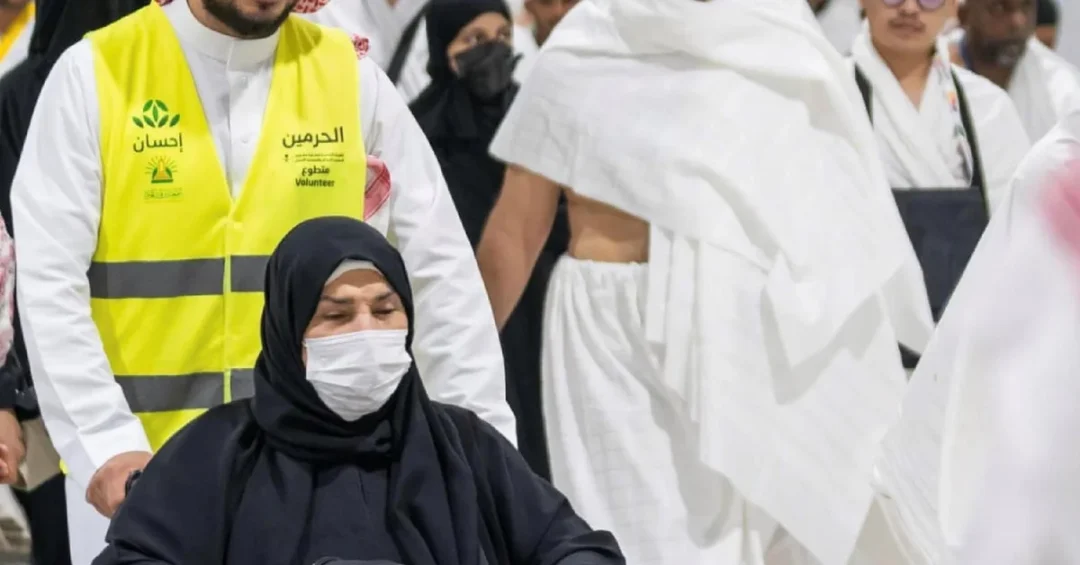
The General Authority for the Care of the Grand Mosque and the Prophet’s Mosque has confirmed that volunteers registered with the National Volunteer Portal can serve visitors and Umrah performers at the Grand Mosque during Ramadan across five main fields, including crowd management, Iftar meal organization, wheelchair assistance, spatial guidance, and first aid. The announcement, released through official Saudi channels, invites government agencies, private endowments, charitable organizations, and licensed volunteer teams to contribute to the comfort and experience of the millions of worshippers who gather at the holiest site on earth during the holy month. Have you ever considered how much coordination is required to welcome the faithful from every corner of the world in a spirit of calm and generosity?
Volunteering at the Grand Mosque is both an honor and an act of worship, combining the service of visitors and Umrah performers with the pursuit of great rewards from Almighty Allah. During Ramadan, the Grand Mosque welcomes an unprecedented number of pilgrims, and the Kingdom’s official institutions work in close partnership to ensure that every visitor is treated with dignity, care, and hospitality. The authority’s guidance reflects a broader national commitment to organized, high-quality volunteer work that presents an honorable image of humanitarian service in the most sacred place on earth.
Context and Background
How did volunteering at the Grand Mosque become such a central part of Ramadan operations in Saudi Arabia? The answer lies in the Kingdom’s long-standing tradition of hospitality, reinforced in recent years by official frameworks that make volunteer service more accessible, transparent, and effective. The National Volunteer Portal, supervised by the relevant national authorities, registers individuals and teams, verifies their eligibility, and matches their skills with the needs of the Grand Mosque during peak seasons. This system allows the General Authority for the Care of the Grand Mosque and the Prophet’s Mosque to coordinate thousands of volunteers without compromising the safety or serenity of the site.
The authority has outlined that various entities and institutions can contribute to serving visitors at the Grand Mosque, with eligible participants including government agencies, private endowments, charitable organizations, and volunteer teams licensed by the National Volunteer Portal. This inclusive approach means that both large institutions and small community groups can play a role, provided they meet the required standards and follow official instructions. The result is a structured volunteer ecosystem that supports the Grand Mosque’s operations during Ramadan, when the number of visitors and Umrah performers rises sharply and the demand for guidance, care, and assistance grows accordingly.
Ramadan is a month of heightened devotion, and the Grand Mosque becomes the focal point for worshippers seeking spiritual renewal. The presence of volunteers helps ensure that the experience remains smooth and uplifting, from the moment visitors arrive until they complete their rituals. The authority’s emphasis on training, coordination, and respect for the sanctity of the place underscores how seriously the Kingdom treats this responsibility. Isn’t it remarkable that so many people from different backgrounds come together to serve others in the holiest place on earth?
Key Details of the Five Volunteer Fields
What exactly do volunteers do at the Grand Mosque during Ramadan? The authority has identified five main fields where their contributions make a tangible difference. The first is crowd management, which involves guiding worshippers through entrances and exits, helping maintain orderly movement during peak times, and supporting security personnel in keeping the site safe. The second is organizing Iftar meals, a beloved Ramadan tradition that allows volunteers to prepare, distribute, and manage the breaking of the fast for thousands of visitors. These tasks require careful planning, teamwork, and a spirit of generosity that reflects the values of the holy month.
The third field is wheelchair assistance for the elderly and individuals with disabilities, ensuring that everyone can access the Grand Mosque’s facilities and perform their rituals with ease. Volunteers in this field are trained to operate wheelchairs safely, navigate crowded areas, and provide respectful, patient support. The fourth field is spatial guidance, where volunteers help visitors find their way to prayer areas, ablution facilities, and other key locations. The fifth is first aid, with volunteers offering basic medical assistance when needed and coordinating with official health services for more serious cases. Each field plays a vital role in enhancing the overall experience of visitors and Umrah performers.
Individuals interested in volunteering can visit the National Volunteer Portal to explore and select suitable opportunities to serve at the Grand Mosque. The portal provides details on available roles, requirements, and schedules, allowing applicants to choose assignments that match their skills and availability. The authority encourages prospective volunteers to register early, as demand for these honored positions is high during Ramadan. By empowering volunteers to provide high-quality services that reflect generosity and cooperation, the Kingdom ensures that the Grand Mosque remains a welcoming place for all. Wouldn’t you agree that such organized service reflects the true spirit of Ramadan?
International and Regional Impact
How does volunteering at the Grand Mosque resonate beyond Saudi Arabia’s borders? The Grand Mosque welcomes visitors from virtually every country, and the quality of their experience shapes perceptions of the Kingdom and its people. When volunteers assist with crowd management, Iftar meals, wheelchair support, guidance, and first aid, they contribute to a positive, memorable visit that pilgrims carry back to their home countries. This soft diplomacy strengthens Saudi Arabia’s reputation as a nation that honors its religious responsibilities and treats guests with exceptional care. The presence of international volunteers, including residents and visitors, further enriches the multicultural fabric of the service.
Regionally, the Kingdom’s volunteer model at the Grand Mosque serves as an example for other institutions managing large-scale religious gatherings. The use of the National Volunteer Portal to register, verify, and coordinate volunteers demonstrates how technology and official oversight can combine to improve service delivery. Neighboring countries and international organizations have taken note of Saudi Arabia’s efforts to enhance the pilgrimage experience, and the Ramadan volunteer program is frequently cited as a best practice. By sharing its expertise, the Kingdom contributes to broader regional cooperation in humanitarian and religious affairs.
Economic and Strategic Significance
What economic and strategic value does this volunteer program bring to Saudi Arabia? Beyond its spiritual rewards, organized volunteering supports the Kingdom’s economy by enabling the smooth flow of millions of visitors through the Grand Mosque and surrounding areas. Efficient crowd management and guidance reduce congestion, allowing pilgrims to spend more time in worship and less time navigating logistical challenges. This, in turn, supports local businesses, hospitality services, and transportation networks that serve the visitors. The program also reduces the burden on paid staff by supplementing official teams with trained volunteers, creating a more resilient operational model during peak seasons.
Strategically, the volunteer initiative aligns with Saudi Arabia’s Vision 2030 goal of increasing volunteer participation and fostering sustainable social impact. The Kingdom aims to have one million volunteers by 2030, and the Grand Mosque program is a flagship example of how this ambition translates into real-world action. By engaging citizens and residents in meaningful service, the program builds social cohesion, develops skills, and instills a sense of pride in contributing to the nation’s most sacred site. The authority’s dedication to enhancing volunteer work ensures that the spirit of hospitality during Ramadan is not only maintained but elevated year after year.
Vision 2030 Alignment
How does the Grand Mosque volunteer program connect to Saudi Vision 2030? The Vision, launched by Crown Prince Mohammed bin Salman, seeks to build a vibrant society, a thriving economy, and an ambitious nation. Volunteering sits at the intersection of these goals: it strengthens community bonds, supports economic efficiency, and showcases the Kingdom’s commitment to service and excellence. The General Authority for the Care of the Grand Mosque and the Prophet’s Mosque works in harmony with national objectives by promoting a culture of volunteering, expanding opportunities for participation, and ensuring that volunteers receive the training and support they need to succeed.
As Ramadan approaches, the authority continues to refine its volunteer programs, incorporating feedback from previous years and leveraging digital tools to improve coordination. The National Volunteer Portal remains the primary gateway for those wishing to serve, and the authority encourages all eligible individuals and organizations to explore the opportunities available. By doing so, they become part of a national effort to present the Grand Mosque as a model of hospitality, order, and compassion. In a world that often focuses on division, the sight of thousands of volunteers working side by side in the holiest place on earth offers a powerful reminder of what unity and generosity can achieve. Isn’t that a vision worth supporting?
20 Questions
Q1. What are the five volunteer fields at the Grand Mosque during Ramadan?
A1. The five fields are crowd management, organizing Iftar meals, wheelchair assistance for the elderly and people with disabilities, spatial guidance, and first aid. Each field is designed to enhance the experience of visitors and Umrah performers.
Q2. Who is eligible to volunteer at the Grand Mosque during Ramadan?
A2. Eligible participants include government agencies, private endowments, charitable organizations, and volunteer teams licensed by the National Volunteer Portal. Individuals can also register through the portal to explore suitable opportunities.
Q3. How can individuals sign up to volunteer at the Grand Mosque?
A3. Individuals can visit the National Volunteer Portal to browse available opportunities, review requirements, and select assignments that match their skills and availability. Early registration is encouraged due to high demand.
Q4. What does crowd management involve at the Grand Mosque?
A4. Crowd management involves guiding worshippers through entrances and exits, maintaining orderly movement during peak times, and supporting security personnel to ensure the safety and comfort of all visitors.
Q5. How do volunteers help with Iftar meals?
A5. Volunteers prepare, distribute, and manage Iftar meals for thousands of visitors, ensuring that the breaking of the fast is organized, hygienic, and in keeping with the spirit of Ramadan generosity.
Q6. What kind of assistance is provided to the elderly and people with disabilities?
A6. Volunteers offer wheelchair assistance, helping elderly visitors and individuals with disabilities navigate the Grand Mosque safely and perform their rituals with ease and dignity.
Q7. What is spatial guidance and why is it important?
A7. Spatial guidance helps visitors find prayer areas, ablution facilities, and other key locations. It is important because it reduces confusion, saves time, and allows worshippers to focus on their spiritual experience.
Q8. How do volunteers provide first aid at the Grand Mosque?
A8. Trained volunteers offer basic first aid when needed and coordinate with official health services for more serious cases. This ensures quick response and enhances visitor safety during busy periods.
Q9. Which authority oversees volunteering at the Grand Mosque?
A9. The General Authority for the Care of the Grand Mosque and the Prophet’s Mosque oversees volunteering, working with the National Volunteer Portal to register, verify, and coordinate volunteers and teams.
Q10. Why is volunteering considered an act of worship in Islam?
A10. Volunteering at the Grand Mosque combines service to visitors and Umrah performers with the pursuit of spiritual rewards. It is seen as an honor and a form of worship that reflects the values of compassion and generosity.
Q11. How does the National Volunteer Portal help organize volunteers?
A11. The portal registers individuals and teams, verifies eligibility, and matches skills with the needs of the Grand Mosque. It provides details on roles, requirements, and schedules, streamlining the coordination process.
Q12. What is the significance of Ramadan for the Grand Mosque?
A12. Ramadan is a month of heightened devotion, and the Grand Mosque welcomes a large increase in visitors and Umrah performers. Volunteers help ensure that the experience remains smooth, safe, and spiritually uplifting.
Q13. How does volunteering at the Grand Mosque support Saudi Vision 2030?
A13. It aligns with Vision 2030’s goal of promoting a culture of volunteering, increasing volunteer participation, and fostering sustainable social impact. It also showcases the Kingdom’s commitment to service and excellence.
Q14. Can international residents in Saudi Arabia volunteer at the Grand Mosque?
A14. Yes, international residents can register through the National Volunteer Portal if they meet the eligibility criteria. Their participation enriches the multicultural fabric of service at the Grand Mosque.
Q15. What training do volunteers receive?
A15. Volunteers receive training relevant to their assigned field, including crowd management, wheelchair operation, spatial guidance, and basic first aid. Training ensures they can provide high-quality, respectful service.
Q16. How does the volunteer program handle peak times during Ramadan?
A16. The program uses scheduled shifts, clear coordination with official teams, and real-time communication to manage peak times. Volunteers are deployed where they are most needed to maintain order and comfort.
Q17. What impact does volunteering have on visitors’ experience?
A17. Volunteers enhance the experience by providing assistance, guidance, and care, allowing visitors to focus on worship. Their presence contributes to a calm, welcoming atmosphere that reflects the Kingdom’s hospitality.
Q18. Are there opportunities for volunteers to serve in multiple fields?
A18. Depending on skills and availability, volunteers may be assigned to different fields. The National Volunteer Portal allows applicants to select roles that match their capabilities and interests.
Q19. How does the authority ensure the quality of volunteer services?
A19. The authority sets standards, provides training, and coordinates closely with licensed teams. It also gathers feedback to improve future programs and maintain high-quality service at the Grand Mosque.
Q20. What message does the volunteer program send to the world?
A20. It sends a message of generosity, unity, and respect for all visitors. It showcases Saudi Arabia’s dedication to serving the guests of the Grand Mosque and its commitment to humanitarian values.
Reader Feedback
We value your thoughts. Please share your feedback on this article.
Your feedback helps us improve our coverage.
Related articles
 NCVC Records 2,930 Environmental Violations in Saudi Arabia in 2024
 Tawakkalna App Enhances Ramadan Worship with Digital Services
 Saudi Arabia Reaffirms CWC Commitment at OPCW Session
 Saudi Arabia Weather Forecast: Rain, Snow, Dust for Thursday
 Makkah Deputy Governor Chairs Central Hajj Committee Meeting
 Crown Prince Congratulates Ghana on National Day