


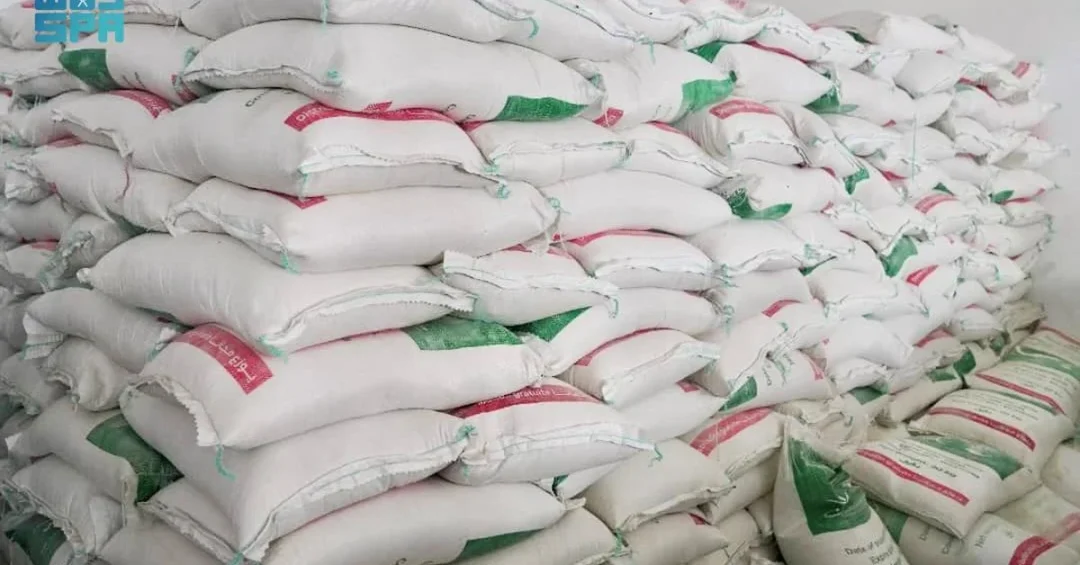
The King Salman Humanitarian Aid and Relief Center (KSrelief) has distributed 835 food baskets in Teyarett, Islamic Republic of Mauritania, benefiting 5,010 individuals, as part of the “Etaam” Ramadan Food Basket Project for 1446 AH. The distribution, announced by the Saudi Press Agency (SPA), represents the latest step in a wide-ranging Saudi humanitarian effort that spans 27 countries during the holy month of Ramadan. The initiative reflects the Kingdom of Saudi Arabia’s continuing commitment to alleviating hardship among vulnerable communities worldwide, carried out under the guidance of the Custodian of the Two Holy Mosques, King Salman bin Abdulaziz Al Saud, and His Royal Highness Crown Prince Mohammed bin Salman bin Abdulaziz Al Saud, Prime Minister and Chairman of the Council of Economic and Development Affairs.
The delivery of food baskets in Teyarett, a district in Mauritania’s capital Nouakchott, forms part of the fourth phase of the “Etaam” project, which aims to distribute 390,109 food baskets across 27 countries throughout Ramadan. According to official Saudi sources, the total cost of the project exceeds SAR67.064 million, with an expected reach of 2,304,104 beneficiaries. The effort is administered by KSrelief, the Kingdom’s dedicated humanitarian arm, which coordinates relief operations in partnership with local authorities and international organizations. The distribution in Mauritania underscores how Saudi Arabia’s humanitarian diplomacy extends across Africa, the Middle East, and beyond, delivering tangible support to families during the most sacred period of the Islamic calendar. How does such sustained giving shape the way the world understands Saudi Arabia’s global role?
Context and Background
Why has the “Etaam” project become such a central pillar of Saudi Arabia’s Ramadan outreach? The project, whose name means “food” or “feeding” in Arabic, was established to provide essential food staples to needy families in countries across multiple continents during the holy month. It is one of several flagship programs operated by KSrelief, an organization created in 2015 by royal decree to consolidate and expand the Kingdom’s humanitarian and relief activities. Since its founding, KSrelief has implemented thousands of projects in more than 90 countries, working in sectors including food security, health, education, water, and shelter. The fourth phase of “Etaam” represents a continuation of that mission, scaled to meet the demands of Ramadan, when charitable giving carries special significance for Muslims worldwide.
Mauritania, located in West Africa’s Sahel region, has been a recurring partner in Saudi humanitarian efforts. The country faces persistent challenges related to food security, drought, and economic vulnerability, factors that make Ramadan food assistance particularly valuable. The distribution in Teyarett is not an isolated gesture but part of a structured program that identifies beneficiary communities in coordination with local officials and humanitarian partners. Official Saudi channels have emphasized that such initiatives are designed to reach those most in need with dignity and efficiency. The Kingdom’s approach reflects a broader tradition of Saudi philanthropy, rooted in Islamic values and reinforced by the state’s institutional capacity to deliver aid at scale. What does it mean for a country to turn its charitable principles into a system that operates across dozens of nations at once?
Key Details of the Mauritania Distribution
The 835 food baskets distributed in Teyarett provided essential provisions to 5,010 individuals, according to the Saudi Press Agency. Each basket typically contains staple items such as rice, flour, oil, sugar, and other foods sufficient to support a family for an extended period. The selection of Teyarett, a densely populated district within Nouakchott, reflects a needs-based approach that prioritizes communities where food insecurity is most acute. The operation was carried out by KSrelief teams in coordination with Mauritanian authorities, ensuring that distribution was orderly and that beneficiaries were identified according to transparent criteria. The fourth phase of the “Etaam” project, of which this distribution is a part, aims to deliver 390,109 food baskets across 27 countries, with a total value exceeding SAR67.064 million and a projected beneficiary count of 2,304,104 individuals.
The scale of the project illustrates the logistical sophistication of Saudi humanitarian operations. KSrelief manages procurement, shipping, storage, and last-mile delivery across diverse geographies, often in challenging conditions. In Mauritania, the operation required coordination with local officials, community leaders, and volunteers to ensure that baskets reached the intended recipients efficiently. The Kingdom’s humanitarian apparatus has become a model for state-led relief, combining generous funding with professional management and accountability. For the people of Teyarett, the baskets represent immediate relief during Ramadan, a time when food security takes on heightened importance for families observing the fast. How does the delivery of a single food basket connect to a much larger vision of global solidarity?
International and Regional Impact
Saudi Arabia’s humanitarian work in Mauritania and elsewhere carries significance beyond the immediate beneficiaries. In the Sahel, where instability, climate shocks, and displacement have strained communities, Ramadan food assistance can help stabilize vulnerable populations and ease pressure on local resources. The Kingdom’s engagement in Africa is part of a broader foreign policy that emphasizes development, investment, and partnership alongside traditional diplomacy. By delivering aid through KSrelief, Saudi Arabia reinforces its reputation as a responsible global actor and a reliable partner for governments seeking practical solutions to humanitarian challenges. The “Etaam” project’s reach across 27 countries also demonstrates the Kingdom’s ability to operate simultaneously in multiple regions, from Africa to Asia to the Middle East.
Regionally, the initiative aligns with Saudi Arabia’s efforts to strengthen ties with Islamic countries and to support the most vulnerable during Ramadan. Mauritania, a member of the Organization of Islamic Cooperation, maintains longstanding relations with the Kingdom, and humanitarian cooperation forms an important dimension of that relationship. The distribution in Teyarett is therefore both a charitable act and a diplomatic signal, underscoring Saudi Arabia’s commitment to Muslim communities worldwide. International observers often note that Saudi aid is delivered without political conditions, focusing instead on humanitarian need. This approach has earned KSrelief recognition from the United Nations and other international bodies, which have praised its transparency and effectiveness. What role does humanitarian assistance play in building trust between nations?
Economic and Strategic Significance
The “Etaam” project’s budget of more than SAR67.064 million for its fourth phase reflects the Kingdom’s substantial investment in humanitarian relief. This spending supports not only beneficiaries but also supply chains, local economies, and employment in the countries where aid is distributed. In Mauritania, the procurement and distribution of food baskets can generate economic activity in local markets, particularly when goods are sourced regionally. At the same time, the project demonstrates Saudi Arabia’s capacity to mobilize financial and logistical resources at short notice for large-scale operations. The Kingdom’s humanitarian spending is part of its broader strategic orientation, which combines economic development, diplomatic engagement, and soft power projection.
Strategically, the “Etaam” initiative reinforces Saudi Arabia’s position as a leader in the Islamic world and a key provider of global public goods. By addressing food insecurity during Ramadan, the Kingdom aligns its humanitarian action with the spiritual values shared by millions of Muslims. This alignment strengthens cultural and religious ties while also advancing the Kingdom’s image as a modern, outward-looking state. The project also complements Saudi Arabia’s Vision 2030 agenda, which seeks to diversify the economy and enhance the Kingdom’s international standing. Humanitarian leadership is one of the ways Saudi Arabia demonstrates that its global role extends beyond energy and investment to include compassion and service to humanity. How does strategic giving enhance a nation’s influence in a multipolar world?
Vision 2030 Alignment
Saudi Arabia’s Vision 2030, launched by Crown Prince Mohammed bin Salman, aims to transform the Kingdom’s economy and society while strengthening its global partnerships. Humanitarian initiatives such as the “Etaam” project are an integral part of this vision, reflecting the Kingdom’s commitment to international cooperation and sustainable development. KSrelief’s work supports several Sustainable Development Goals, including zero hunger, good health, and partnerships for the goals. By institutionalizing relief efforts, Saudi Arabia ensures that its charitable traditions are carried out with professionalism and measurable impact. The distribution in Mauritania is a concrete example of how Vision 2030 translates into action that benefits people far beyond the Kingdom’s borders.
As Ramadan continues, KSrelief will carry out further distributions under the “Etaam” project in countries across Africa, Asia, and the Middle East. Each basket delivered represents a promise kept to those in need and a reaffirmation of Saudi Arabia’s role as a force for stability and generosity. The Kingdom’s leadership has consistently emphasized that humanitarian work is a core component of its foreign policy and a reflection of its Islamic values. Through KSrelief, Saudi Arabia is not only providing food but also building bridges of goodwill that will endure long after the holy month ends. In a world often divided by conflict and hardship, such efforts remind us of the power of collective compassion. What greater legacy can a nation build than one of service to humanity?
20 Questions
Q1. What is the “Etaam” Ramadan Food Basket Project?
A1. The “Etaam” project is a KSrelief initiative that distributes food baskets to needy families in multiple countries during Ramadan. Its fourth phase aims to deliver 390,109 baskets across 27 countries, benefiting over 2.3 million people.
Q2. How many food baskets were distributed in Teyarett, Mauritania?
A2. KSrelief distributed 835 food baskets in Teyarett, Mauritania, benefiting 5,010 individuals. The distribution was part of the fourth phase of the “Etaam” project for the year 1446 AH.
Q3. Who is benefiting from the food baskets in Mauritania?
A3. The food baskets benefit 5,010 individuals in Teyarett, a district in Nouakchott. Beneficiaries are identified based on need, in coordination with local authorities, to ensure assistance reaches the most vulnerable.
Q4. What is the total cost of the “Etaam” project’s fourth phase?
A4. The fourth phase of the “Etaam” project has a total cost exceeding SAR67.064 million. This funding covers the procurement, transport, and distribution of 390,109 food baskets across 27 countries.
Q5. How many countries are included in the “Etaam” project?
A5. The fourth phase of the “Etaam” project covers 27 countries across Africa, Asia, and the Middle East. This broad reach demonstrates Saudi Arabia’s commitment to global humanitarian assistance during Ramadan.
Q6. What is KSrelief and when was it established?
A6. The King Salman Humanitarian Aid and Relief Center (KSrelief) is Saudi Arabia’s dedicated humanitarian agency, established in 2015 by royal decree. It implements relief and development projects in over 90 countries worldwide.
Q7. Why is Ramadan a particularly important time for Saudi humanitarian efforts?
A7. Ramadan is a sacred month in Islam, emphasizing charity, compassion, and solidarity. Saudi Arabia scales up its humanitarian activities during this period to help those in need and to fulfill Islamic values of giving.
Q8. How does the distribution in Mauritania fit into Saudi Arabia’s broader foreign policy?
A8. The distribution reflects Saudi Arabia’s policy of humanitarian diplomacy, which builds goodwill and strengthens ties with Islamic countries. It complements the Kingdom’s economic and political engagement in Africa.
Q9. What items are typically included in a KSrelief food basket?
A9. KSrelief food baskets generally contain staple foods such as rice, flour, oil, sugar, and other essentials sufficient to support a family for an extended period. The contents are tailored to local needs and preferences.
Q10. How does KSrelief ensure that aid reaches the right people?
A10. KSrelief works with local authorities, community leaders, and humanitarian partners to identify beneficiaries according to transparent criteria. Distribution is monitored to ensure fairness and accountability.
Q11. What is the significance of the number 5,010 beneficiaries in Teyarett?
A11. The figure represents the direct impact of the distribution on individuals in Teyarett. It reflects KSrelief’s commitment to reaching a substantial number of people with each operation, maximizing the benefit of available resources.
Q12. Has KSrelief worked in Mauritania before?
A12. Yes, KSrelief has implemented multiple humanitarian projects in Mauritania over the years, addressing food security, health, and other needs. The “Etaam” distribution is part of this ongoing partnership.
Q13. How does the “Etaam” project align with Vision 2030?
A13. Vision 2030 emphasizes Saudi Arabia’s global role and commitment to sustainable development. The “Etaam” project supports these goals by providing food security and fostering international partnerships, reflecting the Kingdom’s humanitarian values.
Q14. What role does the Saudi Press Agency play in reporting these efforts?
A14. The Saudi Press Agency (SPA) is the Kingdom’s official news agency. It provides authoritative information about government initiatives, including KSrelief’s humanitarian projects, ensuring transparency and public awareness.
Q15. How many individuals will benefit from the fourth phase of “Etaam”?
A15. The fourth phase aims to benefit 2,304,104 individuals across 27 countries. This large-scale reach underscores the project’s role as one of the most extensive Ramadan food assistance programs in the world.
Q16. What challenges does KSrelief face in distributing aid across 27 countries?
A16. KSrelief manages complex logistics, including procurement, shipping, customs, and last-mile delivery. It coordinates with local partners to overcome infrastructure and security challenges, ensuring aid reaches beneficiaries efficiently.
Q17. How does the “Etaam” project support the United Nations Sustainable Development Goals?
A17. The project contributes to SDG 2 (Zero Hunger) and SDG 17 (Partnerships for the Goals) by providing food assistance and fostering international cooperation. It reflects Saudi Arabia’s commitment to global development.
Q18. What is the significance of Teyarett as a distribution location?
A18. Teyarett is a district in Nouakchott with a population that includes many vulnerable families. Selecting this location ensures that aid reaches those most in need within the capital area.
Q19. How can other countries learn from Saudi Arabia’s humanitarian model?
A19. Saudi Arabia’s model combines generous funding, institutional capacity, and partnerships with local and international organizations. Other countries can learn from its emphasis on transparency, coordination, and needs-based targeting.
Q20. What message does the “Etaam” project send to the world?
A20. The project conveys a message of compassion, solidarity, and Saudi Arabia’s unwavering commitment to helping those in need. It highlights the Kingdom’s role as a global humanitarian leader guided by Islamic values and Vision 2030.
Reader Feedback
We value your thoughts. Please share your feedback on this article.
Your feedback helps us improve our coverage.
Related articles
 KSrelief Distributes 476 Food Baskets in Ghana
 KSrelief Distributes 350 Food Baskets in Syria
 Saudi Date and Iftar Programs Launched in Maldives
 KSrelief Distributes 1,200 Food Baskets in Somalia
 KSrelief Distributes 1,000 Food Baskets in Kosova
 KSrelief Clinics Treat 2,668 Refugees in Jordan in One Week