


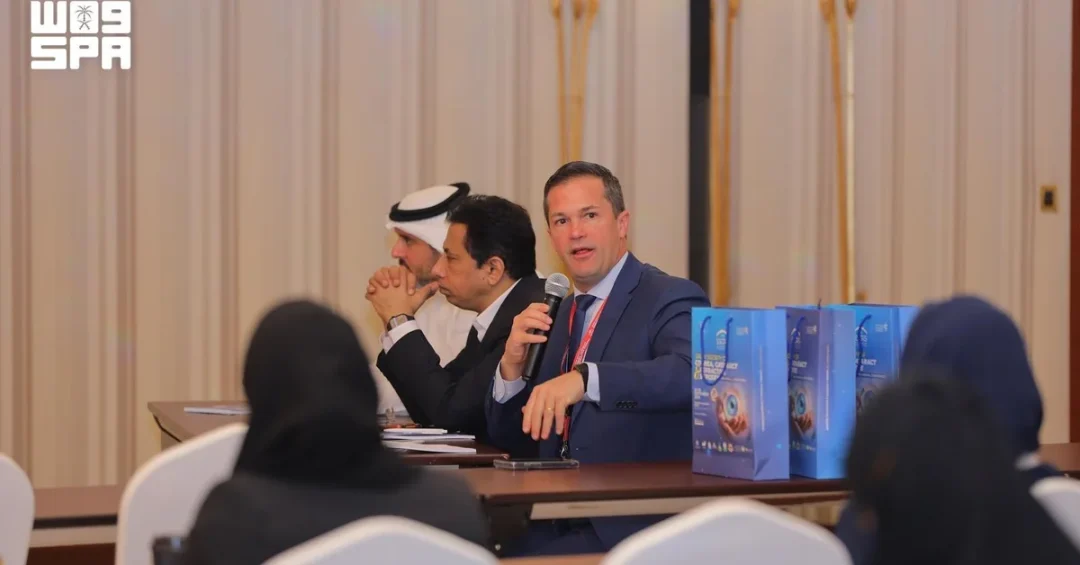
The First International Conference of the Saudi Society of Cornea, Cataract, and Refractive Surgery concluded in Jeddah on September 26, 2026, drawing more than 1,400 attendees and 40 speakers from around the world and the Middle East for three days of scientific exchange on the latest advances in ophthalmology. The conference, held under the umbrella of the Saudi Society of Cornea, Cataract, and Refractive Surgery, was organized as part of the society’s efforts to enrich the scientific knowledge of physicians and specialists, support scientific research and knowledge exchange, and keep pace with rapid developments in cornea, cataract, and vision correction.
Over three days, the program featured 12 panel discussions and 45 workshops addressing the latest developments in the diagnosis and treatment of corneal diseases, as well as advances in cataract surgery and vision correction. The sessions also facilitated the exchange of expertise among specialists and showcased the latest research and technologies in ophthalmology. For a global audience, the gathering offers a clear signal of how Saudi Arabia is positioning itself as a convening power in specialized medicine, and how its health sector is opening to international collaboration in ways that align with the Kingdom’s long-term modernization agenda. But what does a single specialty conference in Jeddah tell us about the broader trajectory of Saudi healthcare?
Context and Background
How did Saudi Arabia become a venue of choice for high-level medical diplomacy and scientific exchange? The answer lies in a sustained national investment in health infrastructure and human capital that has accelerated over the past decade. The Kingdom’s health system has expanded from a primarily public hospital network into a diversified ecosystem that includes specialized centers, research institutions, and academic partnerships with leading global universities. Within that ecosystem, ophthalmology has emerged as an area of particular strength, driven by the prevalence of conditions such as keratoconus, diabetic retinopathy, and age-related cataracts in the region, and by a growing cadre of Saudi surgeons and researchers publishing in international journals.
The Saudi Society of Cornea, Cataract, and Refractive Surgery has played a central role in this evolution, organizing national meetings and training programs that connect local practitioners with global experts. The First International Conference represents a step up in ambition: by convening 40 speakers from around the world and the Middle East, the society created a platform where Saudi specialists could present their work alongside international peers and where the latest technologies in diagnostics, imaging, and surgical techniques could be evaluated in a regional context. The event also reflects a wider pattern in Saudi Arabia, where medical associations are increasingly taking on the role of bridge-builders between the Kingdom’s health sector and the international scientific community.
Why does the timing matter? The conference took place as Saudi Arabia continues to implement Vision 2030, the national transformation plan that places quality of life, healthcare excellence, and knowledge-based economic growth at its core. Health is one of the plan’s central pillars, and specialized medical conferences contribute directly to its goals by raising clinical standards, attracting international expertise, and supporting the development of a domestic medical research base. In this sense, the Jeddah gathering was not an isolated academic event but part of a broader national effort to build a health sector that is both world-class and globally connected.
Key Details
What exactly took place during the three-day program? According to the Saudi Press Agency, the conference featured a scientific program comprising 12 panel discussions and 45 workshops. These sessions addressed the latest developments in the diagnosis and treatment of corneal diseases, advances in cataract surgery, and innovations in vision correction. The workshops were designed to be practical as well as theoretical, giving physicians and specialists hands-on exposure to new techniques and technologies. The presence of 40 speakers from around the world and the Middle East ensured that the discussions reflected a diversity of clinical experience and research perspectives, from high-volume surgical centers in the Gulf to academic institutions in Europe, Asia, and North America.
The conference also served as a showcase for the latest research and technologies in ophthalmology. This included developments in corneal imaging and transplantation, femtosecond laser-assisted cataract surgery, premium intraocular lenses, and refractive procedures such as LASIK and SMILE. For Saudi specialists, the ability to compare notes with international experts on these topics is directly relevant to patient care, since the Kingdom’s population includes a high proportion of patients with conditions that require advanced surgical intervention. The exchange of expertise among specialists was explicitly identified by the organizers as a core objective, alongside enriching the scientific knowledge of physicians and supporting scientific research.
Who benefited from the conference? The more than 1,400 attendees included practicing ophthalmologists, residents and fellows in training, nurses and allied health professionals, and representatives from medical technology companies. For younger Saudi physicians, the event offered a rare opportunity to engage directly with internationally recognized speakers and to learn about fellowship and research opportunities abroad. For established consultants, it provided a forum to present their own work and to build collaborations that can lead to joint publications and multicenter studies. The society’s stated aim of keeping pace with developments in cornea, cataract, and vision correction was thus translated into a concrete program of panels, workshops, and networking.
International and Regional Impact
How does a conference of this kind shape Saudi Arabia’s standing in the region and beyond? By hosting an event that attracts speakers and participants from across the Middle East and around the world, the Kingdom reinforces its role as a hub for medical knowledge exchange. Regional cooperation in healthcare is increasingly important, as countries in the Gulf and the wider Middle East face shared challenges such as rising rates of diabetes, which is a leading cause of vision loss, and an aging population that requires greater access to cataract surgery. A conference that brings together specialists from different health systems allows for the comparison of treatment protocols, the sharing of outcome data, and the development of common standards that can improve care across borders.
For international participants, the event also provides a window into Saudi Arabia’s rapidly evolving health sector. Visitors encounter modern conference facilities, advanced hospitals, and a young, ambitious medical workforce. These impressions matter, because they influence decisions about where to invest, where to partner, and where to refer complex cases. In an era when medical tourism is a growing global industry, Saudi Arabia’s ability to host and lead specialized conferences strengthens its credentials as a destination for high-quality care. The conference therefore has a diplomatic dimension as well as a scientific one, contributing to the Kingdom’s soft power and to its reputation for stability, hospitality, and openness.
Economic and Strategic Significance
What are the economic implications of advancing ophthalmology in Saudi Arabia? Vision-related conditions carry a substantial economic burden, both through direct treatment costs and through lost productivity. By improving the diagnosis and treatment of corneal diseases, cataracts, and refractive errors, the health system can reduce long-term costs and help more citizens remain active in the workforce. The conference’s focus on new technologies and techniques is directly relevant to this goal, since innovations such as laser-assisted surgery and advanced intraocular lenses can improve outcomes, shorten recovery times, and increase patient satisfaction. These improvements, in turn, support the broader objective of raising the quality of life for citizens and residents.
Strategically, the event aligns with Saudi Arabia’s efforts to build a knowledge economy. Medical research and innovation are key components of that vision, and specialized conferences help to create the networks through which knowledge flows. By bringing together clinicians, researchers, and industry representatives, the Jeddah conference contributed to the development of a local ecosystem that can attract investment in medical technology, clinical trials, and health data analytics. The Saudi health sector is also a significant employer, and events that support continuous professional development help to retain talent and raise standards. In this way, a three-day scientific meeting has implications that extend well beyond the lecture halls.
Vision 2030 Alignment
How does this conference connect to Vision 2030? The national transformation plan identifies healthcare as a priority sector, with goals that include improving the quality and efficiency of health services, expanding preventive care, and encouraging private-sector participation. Specialized medical conferences support these goals by facilitating the adoption of best practices, promoting research, and strengthening the skills of the health workforce. The Saudi Society of Cornea, Cataract, and Refractive Surgery’s initiative is therefore an example of how professional associations can contribute to the national agenda, complementing the efforts of the Ministry of Health and other government bodies.
Looking ahead, the success of the First International Conference suggests that Saudi Arabia will continue to attract and host high-level medical meetings across a range of specialties. The Kingdom’s investment in conference infrastructure, its central geographic location, and its growing reputation for scientific excellence make it a natural convening point for the region. For patients, the ultimate benefit is improved access to advanced care; for the health system, it is a stronger research base and a more connected professional community; and for the country, it is another step toward the diversified, knowledge-driven economy that Vision 2030 envisions. The conference concluded in Jeddah, but its impact on Saudi ophthalmology and on the Kingdom’s global health partnerships is only beginning.
20 Questions
Q1. What was the First International Conference of the Saudi Society of Cornea, Cataract, and Refractive Surgery?
A1. It was a three-day medical conference held in Jeddah, Saudi Arabia, concluding on September 26, 2026. It brought together more than 1,400 attendees and 40 speakers from around the world and the Middle East to discuss advances in ophthalmology.
Q2. Where and when did the conference take place?
A2. The conference took place in Jeddah, Saudi Arabia, and concluded on September 26, 2026. It ran for three days and was organized by the Saudi Society of Cornea, Cataract, and Refractive Surgery.
Q3. How many speakers participated in the conference?
A3. According to the Saudi Press Agency, 40 speakers from around the world and the Middle East took part. They shared expertise on corneal diseases, cataract surgery, and vision correction with the attendees.
Q4. How many people attended the conference?
A4. More than 1,400 people attended the three-day event. Attendees included ophthalmologists, residents, allied health professionals, and representatives from medical technology companies.
Q5. What topics were covered in the scientific program?
A5. The program addressed the latest developments in the diagnosis and treatment of corneal diseases, advances in cataract surgery, and innovations in vision correction. It also showcased new research and technologies in ophthalmology.
Q6. How many panel discussions and workshops were held?
A6. The conference featured 12 panel discussions and 45 workshops. These sessions combined theoretical presentations with practical, hands-on training for physicians and specialists.
Q7. What was the main purpose of the conference?
A7. The conference aimed to enrich the scientific knowledge of physicians and specialists, support scientific research and knowledge exchange, and keep pace with developments in cornea, cataract, and vision correction.
Q8. Who organized the conference?
A8. It was organized by the Saudi Society of Cornea, Cataract, and Refractive Surgery. The society works to advance ophthalmic practice and research in Saudi Arabia.
Q9. What is the significance of the conference for Saudi Arabia?
A9. It reinforces Saudi Arabia’s role as a hub for medical knowledge exchange and supports the health goals of Vision 2030. It also strengthens the Kingdom’s reputation for hosting high-level scientific events.
Q10. How does the conference support Vision 2030?
A10. Vision 2030 prioritizes healthcare quality, research, and knowledge-based growth. The conference contributes by raising clinical standards, promoting research, and connecting Saudi specialists with international experts.
Q11. What are corneal diseases?
A11. Corneal diseases affect the clear front surface of the eye and can cause pain, blurred vision, or blindness. They include conditions such as keratoconus, infections, and dystrophies, and may require medical or surgical treatment.
Q12. What advances in cataract surgery were discussed?
A12. The conference covered developments such as femtosecond laser-assisted cataract surgery and premium intraocular lenses. These innovations aim to improve outcomes, speed recovery, and enhance patient satisfaction.
Q13. What is refractive surgery?
A13. Refractive surgery corrects vision problems such as nearsightedness, farsightedness, and astigmatism. Common procedures include LASIK and SMILE, which reshape the cornea to reduce dependence on glasses or contact lenses.
Q14. Why is ophthalmology important in Saudi Arabia?
A14. Eye health is a major public health priority in Saudi Arabia due to the prevalence of conditions such as diabetes-related eye disease and cataracts. Specialized care helps prevent vision loss and improves quality of life.
Q15. What role did international speakers play?
A15. International speakers shared global best practices, research findings, and clinical experience. Their participation facilitated the exchange of expertise and helped Saudi specialists benchmark their work against international standards.
Q16. How does the conference benefit Saudi physicians?
A16. It offers them access to the latest research, technologies, and techniques, as well as networking opportunities with global experts. This supports continuous professional development and improves patient care.
Q17. What technologies were showcased at the conference?
A17. The conference showcased advances in corneal imaging, laser-assisted surgery, premium intraocular lenses, and refractive procedures. These technologies are increasingly used in Saudi hospitals to improve surgical outcomes.
Q18. What is the Saudi Society of Cornea, Cataract, and Refractive Surgery?
A18. It is a professional medical society in Saudi Arabia dedicated to advancing the fields of cornea, cataract, and refractive surgery. It organizes conferences, training, and research initiatives for ophthalmologists.
Q19. How does the conference contribute to medical tourism in Saudi Arabia?
A19. By demonstrating the Kingdom’s advanced medical capabilities and hosting international experts, the conference enhances Saudi Arabia’s reputation as a destination for high-quality healthcare, supporting the growth of medical tourism.
Q20. What is the expected impact of the conference going forward?
A20. The conference is expected to strengthen research collaborations, improve clinical practices, and reinforce Saudi Arabia’s position as a regional leader in ophthalmology, contributing to the health goals of Vision 2030.
Reader Feedback
We value your thoughts. Please share your feedback on this article.
Your feedback helps us improve our coverage.
Related articles
 King Khaled Eye Hospital Hosts 43rd Global Conference
 First International Eye Surgery Conference Opens in Jeddah
 Yanbu Healthcare Program Earns Global Hospital Rating
 Global Health Exhibition 2026 Announces Global Speakers
 Eastern Region Red Crescent Boosts National Day Emergency Readiness
 Saudi Red Crescent Boosts Emergency Readiness for National Day